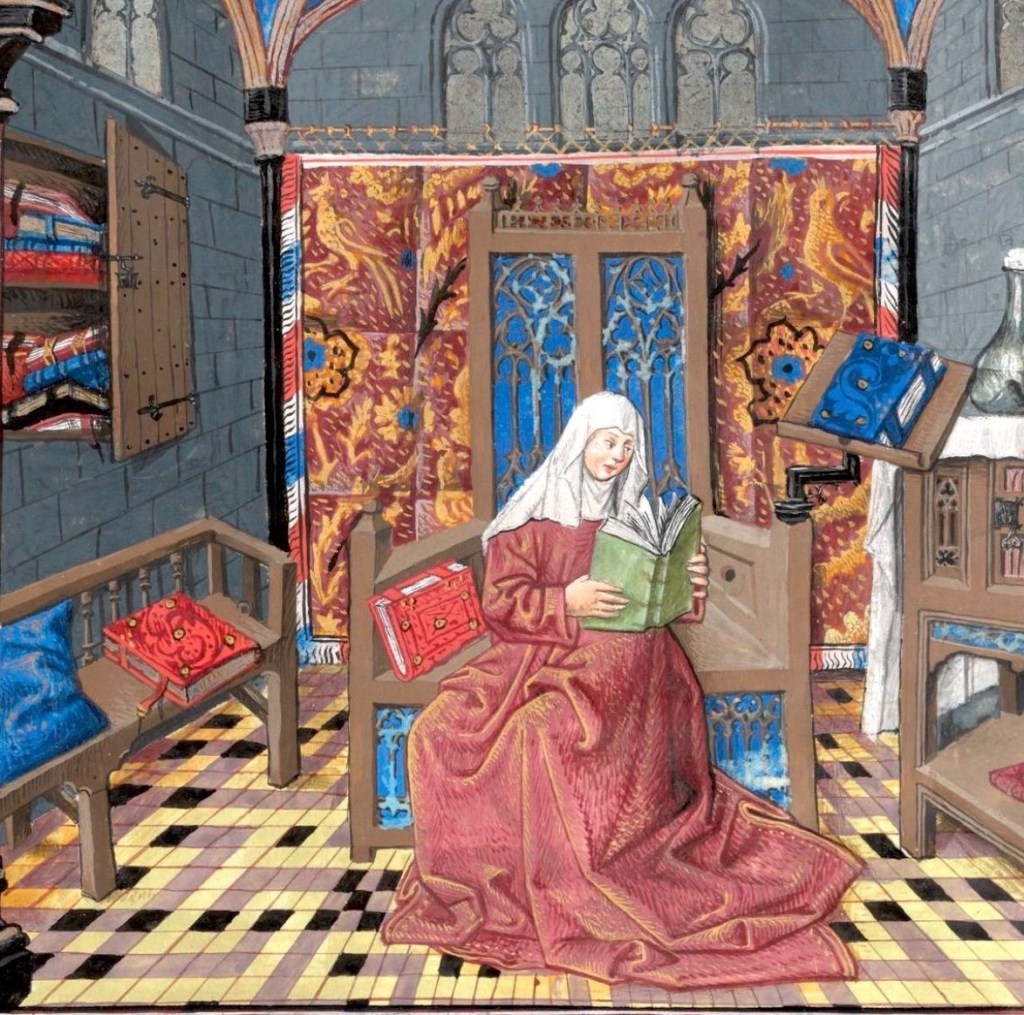
I originally was going to start off this discussion with a statement that was something to the effect of, “I don’t read a lot of medieval historical fiction,” but even a cursory glance through my shelves on Goodreads belies that. I’ve actually read quite a bit of medieval historical fiction, which I find falls broadly into three categories: 1) historical high fantasy, 2) swords and court drama, and 3) the medieval wretched of the earth.
[Looking back at some of the medieval books I’ve encountered over my lengthy reading life really highlights my general ethos as a writer. People ask me where I get my ideas from, and there are individual, specific answers to that for all my books, but the umbrella response is basically: “I needed to write this book because I couldn’t find the story I actually wanted to read out in the wild.” The Gourd and the Stars is the medieval novel I wanted to read, but had never found until I wrote it.]
Now, I don’t have a problem with any of these categories in of themselves, I just tend to find them limiting (similar categories and critiques could be applied to most eras of historical fiction, after all). Category 3 has been very popular for a couple of decades now because of its supposed populism (this is not about kings and queens!) and realism (the Middle Ages were nasty and brutish), but because of its focus on brutality, it can be a real slog to read. Perhaps unfortunately, this probably means the market is going to course correct into Category 1, if only to ingratiate itself with the Fantasy/Romantasy crowd. Category 2 is closest to my heart, because of its focus on the history of the period, but that also makes it, at least on the surface, the least innovative and the most dated to a lot of modern readers. As a historical fiction writer who loves the hard history, but dabbles in the fantastic, I prefer a blended approach, but this can be harder to achieve convincingly.
Unintentionally, I’ve actually read a representative of each category this year, and while, as my title suggests, I want to focus on Helen C. White’s midcentury novel about Matilda of Tuscany, Not Built With Hands (1935), a thoroughly Category 2 medieval novel, and demonstrate why I think the passé model of historical fiction is still the best. But to make my point, I want to contrast it to two other books I’ve read this year that fit the remaining two categories: Katherine Arden’s The Unicorn Hunters (2026)(Category 1), and Ken Follett’s World Without End (2007)(Category 3), and show what I think the weaknesses of their approach is to the genre as a whole.
[Spoilers ahead for all of these books, but especially Arden’s which is new enough and plot-plastic enough that it can be spoiled.]
First off, let me say that I was disappointed to not like Unicorn Hunters or WWE more, because Arden and Follett are authors who I think write well (read: are prose competent) and whose work I have enjoyed in the past. While not invested enough to have worked my way around to finishing the trilogy, I liked Arden’s smash historical Russian folkloric fantasy, The Bear and the Nightingale, quite a lot; and I could say the same for WWE’s predecessor, Follet’s surprise bestseller, The Pillars of the Earth. That said, I do find it telling, as I do often do when talking about historical fiction, that arguably neither Arden nor Follett are primarily historical fiction writers. I would consider Arden mostly a fantasy/mythology writer (I hate that folklore/mythology are genre-lumped with general fantasy currently, btw), and Follett as mostly a thriller author.
At first blush, my criticisms of particularly The Unicorn Hunters are probably going to come off as highly hypocritical coming from the author of the God’s Wife books, but let me explain myself. Ostensibly, TUH is about a real historical person, Anne of Brittany (1477-1514 CE), but most of the historicity of Anne’s life is thrown over for a plot where Anne learns magic and saves her independent duchy from being taken over by France with the help of a literal fairy realm. Okay, some of you are saying, this sounds like The God’s Wife, but with fairies, what’s your beef? Again, a lot of it comes back to balance. My girl Arsinoë can receive the help of the gods, but not in a way that fundamentally changes her story. Some of you would then reply, okay, but you’re saying that with the ending you wrote? And I would answer, yes, I changed something pretty important there, but even then, not to this degree. A God’s Wife that was comparable to what Arden does with Anne would be one where Arsinoë doesn’t die in Ephesus and she uses god heka to dethrone Cleopatra and becomes queen of Egypt in her place. So much is changed you might as well have used OCs in a fictional kingdom for this story.
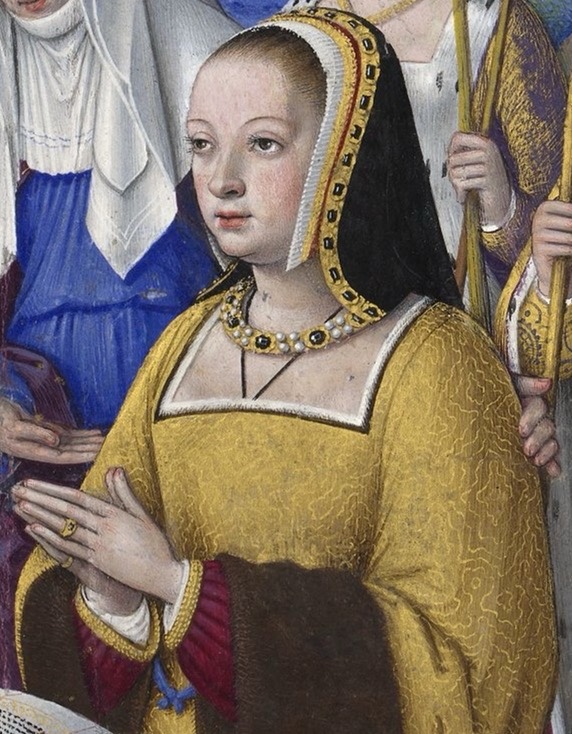
[Sorry, TUH fans: Anne definitely had to marry Charles VIII of France before Louis XII, the latter of which was hardly some grand love affair, either. Plus, Brittany does get eaten by France, the only concession being that the duchy title passes to her daughter, Claude—but since Claude ends up marrying a king of France (Francis I), the dukedom just becomes another title the successive French kings have. Oh, and Anne dies young at 36, no thanks to the fae.]
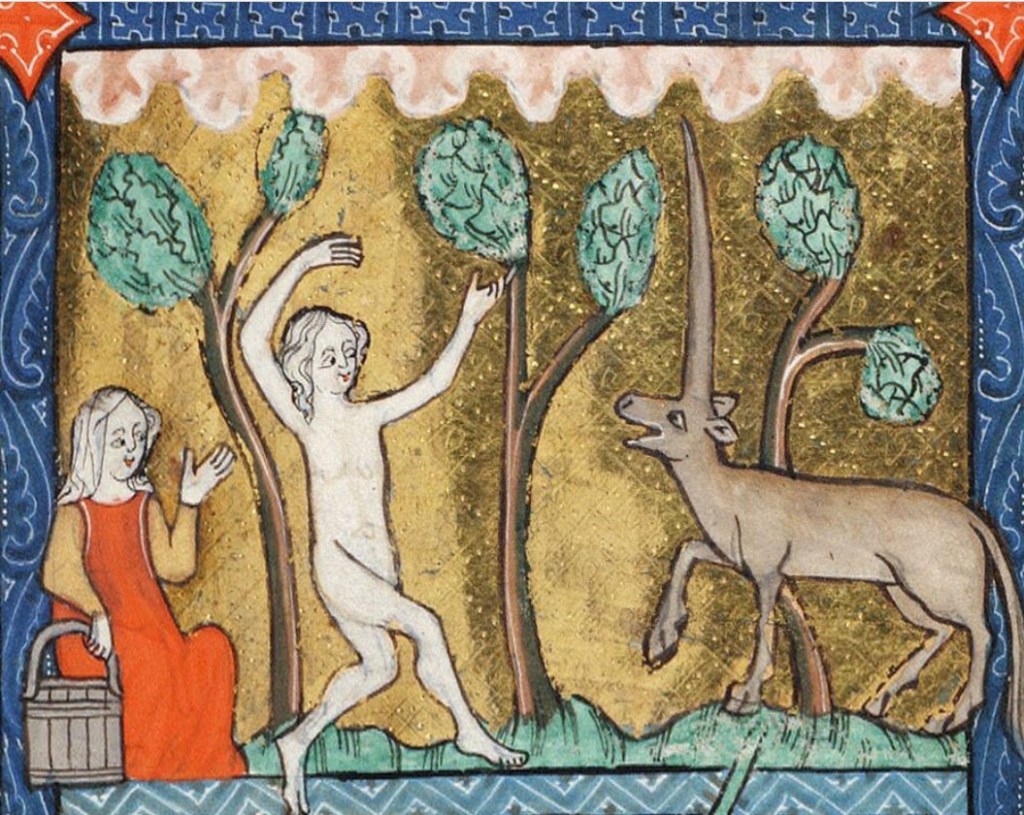
Arden, by her own admission in the afterword, says she wanted to write more of an alternate history rather than the one in the historical record, hence why she basically completely rewrites Anne’s story. Okay, my readers counter, then it’s no better or worse than what you did with Theo Burr in Flight of Virtue. And again, I would respond that when you’re introducing magic or being hinky with the historical record, you have to be careful not to overshoot the mark. Arden wanted the kind of untainted happily-ever-after that is often a genre touchstone in (big R) Romance and Fantasy, but that can often undercut the emotional heart of a historical fiction story, and emotionality/emotional connection is a genre touchstone of historical fiction (because otherwise it’s just pop nonfiction). I can save Arsinoë and Theo, but they still have to lose, essentially. Just as the “fiction” shouldn’t outweigh the “historical” in historical fiction, I think you have to be wary of the “fantasy” outweighing the “historical” in historical fantasy. I found Anne’s meeting with the unicorn in Brocéliande to be evocative and interesting, but I think the rest of story would have been better served by her using the mystery around that encounter to move through the historical world instead of the story after flipping over to the fully magical realm of Keris.
And maybe that comes from what I’ve talked about in the past about the potential ethics, so to speak, of this particular genre. However remote they may be, these were real people, and there is an instinctual obligation to be cautious how you use them. As we mentioned last time, that leads some writers like Wilkie Collins to dislike using historical figures at all in their historical stories. I personally don’t think you have to be that puritanical, but I do think you need to be cognizant. And in her desire to make Anne the heroine of her own life, Arden has constructed an Anne who is unrecognizable to that life, and I think that undercut the emotional impact that this novel could have had.
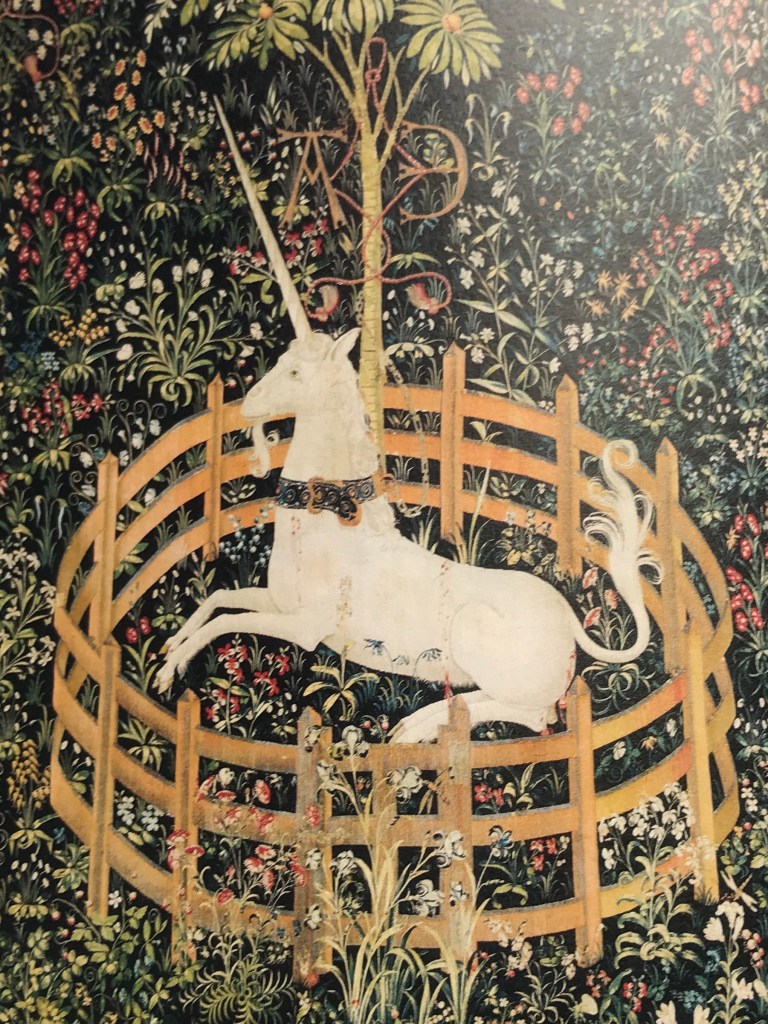
[Arden could have even kept in the romance plot with future Louis XII—it was mostly fictional, but it worked with the historical plot and added some stakes. I mostly just object to Anne becoming the queen of fairy Keris and duchess of Brittany while telling Charles VIII to go f*ck himself. It would have been way more engaging to watch Anne figure out what fae magic can and can’t help her change, rather than being a literal deus ex machina. It just threw every scrape of historicity out the window, and that was too much.]
All right, I’ve beat down on people getting too frou-frou with the Middle Ages, now let’s turn to the folks making Medieval Brand Misery Porn! This one I could probably come up with a dozen examples of, because Category 3 is also General Literary Fiction and Horror’s entré into Historical Fiction as a genre. These books are the literary equivalent of the broader trend in the Middle Ages in film: gritty, gray, and very violent. The bridge between Categories 1 and 3 is obviously George RR Martin’s Game of Thrones, but many authors have been more than happy to follow his lead sans dragons. I applaud Category 3’s interest in expanding the definition of who gets to be a medieval story’s protagonist beyond the aristocracy, but every woman is abused (sometimes just physically, but usually sexually) and accused of being a witch; all of the clergy are evil (as are the lords); everyone is wretched and death is everywhere. The other part of why I wanted to write Gourd and the Stars was to have a medieval story that was serious and pragmatic about the times, but was also not an unrelenting downer the whole time…
[God, there’s so much sexual assault in these books. To the point that I almost couldn’t bring myself to put a scene like that in Gourd and the Stars, even though it was necessary for the plot, because it has been so cheapened by overuse in the industry.]
Ken Follett himself is a major offender in the Category 3 arena. While not the most graphic user of sex and violence that I’ve read, he is a frequent flyer, so to speak, and the original novel of what became his Knightsbridge series, The Pillars of the Earth, published as it was in 1989, is sort of the godfather of this category. The heroes are all mostly regular people, led by Tom Builder, a carpenter/stonemason/proto-architect tasked with building a cathedral. Not all of his priests and lords are bad in this one, but the violence stems from the aristocracy, and the sex and brutality translate easily from Follett’s more contemporary thrillers. Like Game of Thrones, Pillars was revolutionary when it was written, but so much of what made it unique in the ‘80s and ‘90s has become cliché in the interim. Which wouldn’t necessarily be a problem on its own, except that Follett decided to go back to the well eighteen years later.
World Without End’s gimmick is that it takes place in Knightsbridge, the same town as Pillars of the Earth, but jumps ahead in the timeline some 180 years and intersects with some of the Pillar’s characters’ descendants. This is clearly mostly because Follett wanted to tell a Black Death story, which in of itself isn’t a bad thing (aside from a truly baffling ending, Geraldine Brooks does a decent job of this in her plague book, Year of Wonders, although that’s the 1666 plague). But WWE is like a parody of Pillars: more rape, more evil priests, more witchcraft allegations. The sexual assault served less of a specific narrative purpose and felt more like a lurid shorthand for explaining that the times were tough. I know by harping on it, I sound like a prude, but I really don’t have a problem with violence generally or sexual violence specifically in a story, as long as the narrative can justify its inclusion. But so many times in Category 3 medieval books, it feels like a facile way for authors to express the oppression of their lower class characters (or women of all classes), without really engaging with the history. Aside from it also being gargantuan in length at over 1200 pages, it just felt like we were hitting the same beats as Pillars with thinner characters while we waited for the plague to show up.
So we’ve seen Happy Rainbow Medieval Times (now with 60% more fairies!), and A Court of Rape and Plague (now with 58% more peasant stabbings!)—where does this leave us with Not Built With Hands? Well, we have a medieval story grounded in its era with real historical characters, but one that can still have a spunky female protagonist like the Category 1 folks want, as well as the realism the Category 3 people want, but without some of the excesses they both fall into.
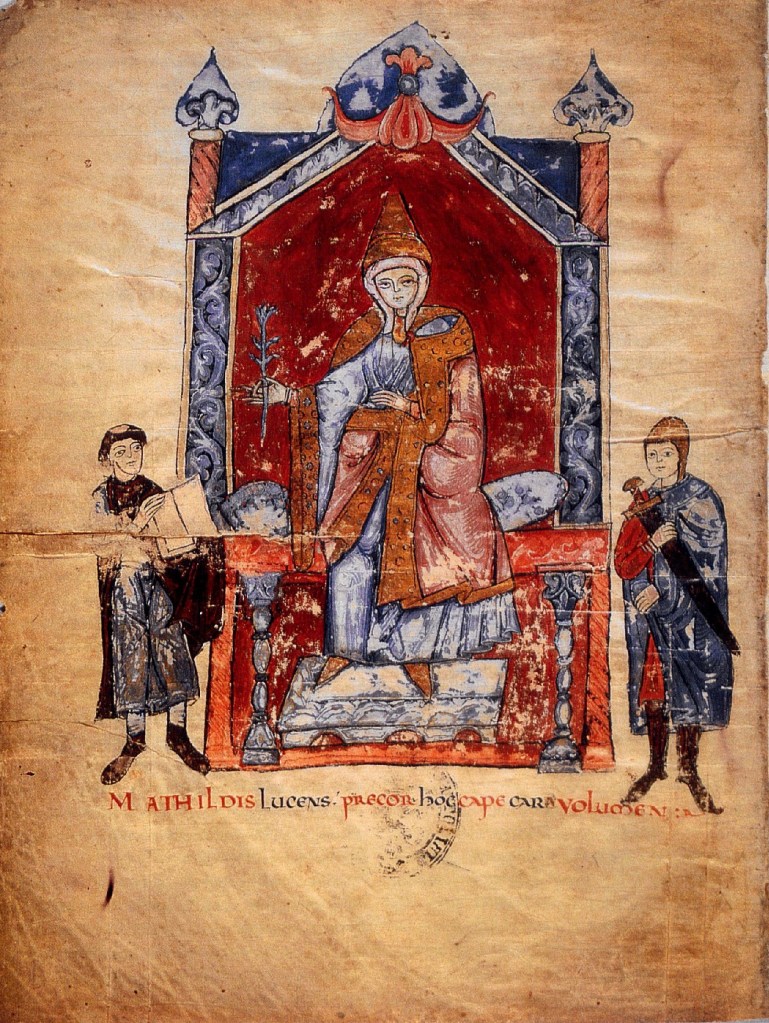
A contemporary of midcentury American prose stylists like Thornton Wilder and John Steinbeck, Helen C. White shares a lot of their writing technique, where she can write descriptive sentences that are lush, but much less florid than what was typical a generation before her. A pioneering woman academic in the United States, particularly in the field of 17th century English devotional poetry, White’s scholarly focus as well as her fiction interests were driven by her devout Catholic upbringing, and historical Catholic figures make up the protagonists of her novels. However, interestingly enough, NBWH is the only one that I’m aware of that features a female lead, namely, Matilda di Canossa (c. 1046-1115 CE), the highly influential Margravine of Tuscany and one of only six women to be buried in St. Peter’s Basilica in Rome. Called la Gran Contessa (“The Great Countess”) in her lifetime, both for of the vastness and import of the land she controlled, and for the comparative political power she wielded because of it, Matilda was best known as an instrumental mediator between the Pope and the Holy Roman Emperor during the earliest battles between the Church and the emperor over the ability to appoint high-ranking clergy who also held political power in their jurisdictions (what is generally referred to as the Investiture Controversy/Crisis). A devout supporter of the pope and his ability to wield temporal political authority, Matilda nonetheless was a vassal, albeit a powerful one, of the emperor, and had to walk a line between these two giants, while ruling and defending her large duchy and its satellite territories.
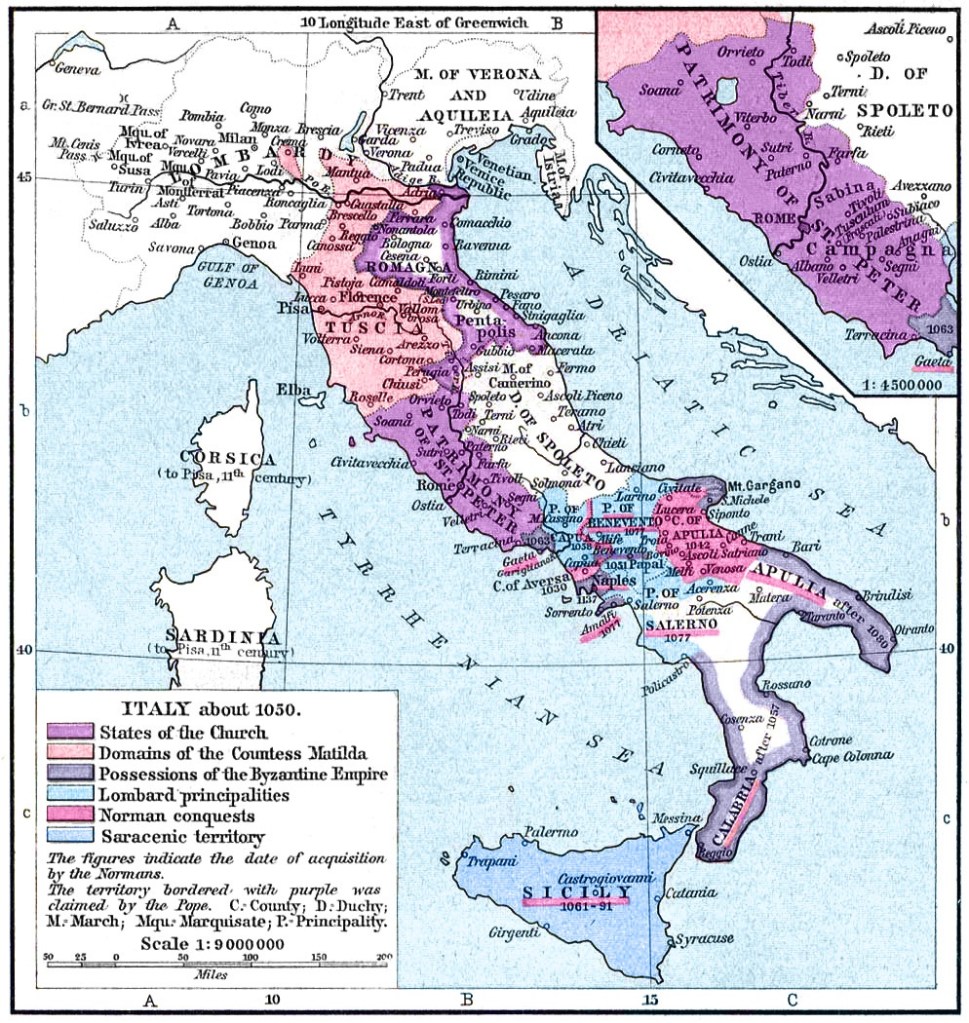
[Part of Matilda’s power derived from the House of Canossa’s land (highlighted here in pink) essentially being the gateway between the Holy Roman Emperor’s kingdoms to the north and the Papal States to the south. Crucially in a time before airborne military, when Matilda was in full control of her territories, she controlled access to all of the major mountain passes through the Apennines into Italy. A major consideration for the emperor when he was trying to move his armies against her or the pope.]
If White was writing today, she’d make Matilda into the ultimate medieval girlboss, and she wouldn’t even be totally off the mark for that framing. For a woman of her times, Matilda was extremely rich and powerful, who advised kings and even personally rode into battle. She had a husband (who supported the emperor and whom she mostly ignored), and she supported numerous monastic establishments and artists with her wealth. But it’s as we get into that last bit where White really shows us how a writer can temper the girlboss-ery as well as create the Realism that the Category 3 crowd want without simply mountains of blood and guts.
White begins Matilda’s story relatively young, but also in media res, where we find her traveling to Rome after fighting (and winning) her first military battle. Our girl is successful, but still very much a girl, learning about the world she will rule largely in the shadow of her powerful mother, Beatrice of Lorraine, who is ruling Tuscany as Matilda’s regent until she comes of age. Like many a uniquely powerful medieval woman before her, Matilda benefits from a strong female role model, and indeed, arguably most of NBWH is her learning and growing, rather than being a badass in control of the situation. I think White is using this slightly Soft Girl framing as a narrative shorthand for Matilda’s humility before God (and His representative, the pope), but it is a good example of how you can use framing to bend the strict historical record to what you want to say without actually wholesale changing anything like Katherine Arden does. For example, White puts most of the blame for the breakdown in Matilda’s marriage to the untimely death of the couple’s only child and some on Matilda’s desire to rule her lands how she saw fit; whereas, most of the problem lay in the pair being on opposite sides of a large, intractable political debate (and her husband—whose epithet was Godfrey the Hunchback, btw—felt she should give him her by then late mother’s lands in Lorraine… she disagreed).
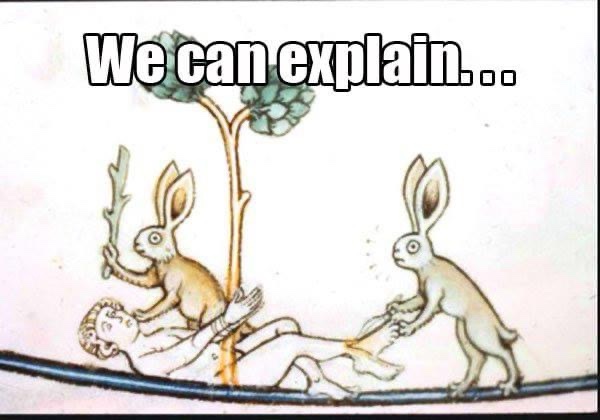
[Things White chose not to include, but that definitely would not be cut from the story in a modern Realism version of Matilda’s life: Godfrey the Hunchback being ambushed and killed while on the toilet; Matilda marrying her second husband, Welf V of Bavaria—when she was 40ish and he was 16–and on Day 3 of the marriage when he still hadn’t slept with her, Matilda strapping herself naked to a table in front of him while slapping and taunting him to be a man and do the deed. Remember, this woman is buried in the greatest church in Christendom.]
As great as a scene of the Defender of the Papacy engaging in a little light marital bondage play would be, just because White by inclination chooses to focus on Matilda’s faith and less on her frankly iron-fisted approach to life and power (no shade—as the Category 3 folks would tell you, it was a rough world for a woman in the 11th century), that doesn’t mean that White isn’t being Real with her subject. One thing that usually gets pretty short shrift among all the categories of current medieval historical fiction is the subject of religion. God is absent in TUH, aside from Mass being something vaguely attended in the background, and most of the good guys in WWE are basically agnostic, which is pretty much as anachronistic as having Henry IV roll up to Castle of Canossa for his penance to Pope Gregory VII in a Tesla. As I hope I’ve achieved in Gourd and the Stars, you can show differences of opinion on doctrine, people expressing doubts and even tolerance—but at this point in history, you basically can’t have full-on atheists or just ignore the role of religion if you want a truly medieval story. Religion was a lived experience to your characters: it’s their frame of reference for almost everything, and you have to put aside your own skepticism if you want to write authentically in this period. In this regard, White, arguably writing “naively” from her own position of faith writes a more realistic story about Matilda than one written about a feminist girlboss and her peccadilloes. Matilda’s actions are expressly driven by a religious vision of a world ruled by the word of God (embodied by the papacy) and not the whims of man (embodied by the emperor). It may not be an instantly “relatable” position for your audience, but it is true to the heroine’s times without turning her into someone (or something) she isn’t.
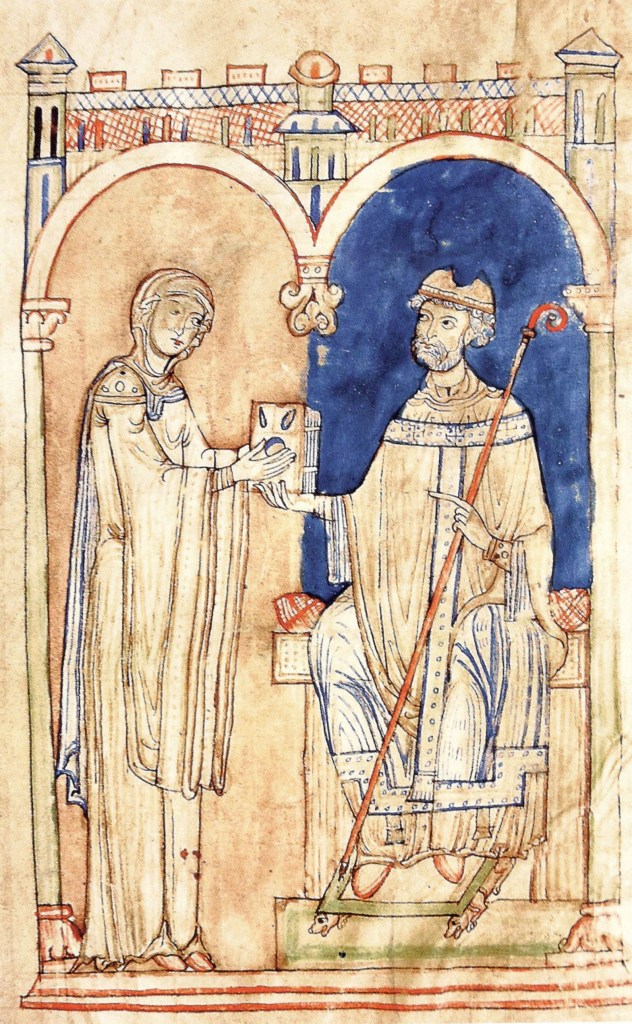
To wrap up, firstly, as critical as I’ve been of some of the types of medieval historical fiction, I do want to say that obviously, it’s not all bad. There are some iterations in all three categories that I think bring interesting ideas to the table, and at the end of the day, everyone’s preferences are largely their own. Out of print for many years, but recently republished by the Catholic press, Cluny, I do think Not Built With Hands deserves a renaissance, and encourage you to give it a shot. It’s very much a throwback in style, but since so many people have been enjoying the resurgence of older works like John Williams’ Stoner, it might scratch an itch for those who are looking for some meatier prose than a lot of new releases tend to have these days. And I’ve included what I could find in my back lists of medieval novels I’ve enjoyed in categories 2 and 3 to give you some other titles that I think are worth checking out (sorry, I haven’t apparently read much in medieval historical fantasies aside from Game of Thrones, which I’m ambivalent about as a series). Happy reading!
Category 2: Classic medieval historical fiction
The Hunchback of Notre Dame (Victor Hugo)
The Corner That Held Them (Sylvia Townsend Warner)
In a Dark Wood Wandering (Hella Haasse)
Gilles and Jeanne (Michel Tournier)
Gunnar’s Daughter (Sigrid Undset)
Alamut (Vladimir Bartol)
The Marriage Portrait (Maggie O’Farrell) (Like The Unicorn Hunters, this is a closer to a Renaissance novel, but we’ll allow it since we were talking about TUH)
Category 3: Medieval historical realism/cross-genre works
Company of Liars (Karen Maitland)
Everyone Knows Your Mother Is a Witch (Rivka Galchen) (This one is also more Renaissance-y, but since it’s small-town Renaissance, it maintains some of a medievalish feel)
Laurus (Eugene Vodolazkin)
Catherine, Called Birdy (Karen Cushman) (This is YA, but it’s extremely charming at all ages)
The Pillars of the Earth (Ken Follett) (this first one really is pretty good—just don’t bother with the sequels)
Year of Wonders (Geraldine Brooks) (The epilogue felt tacked on, but the rest of the book was worth reading)


Leave a Reply