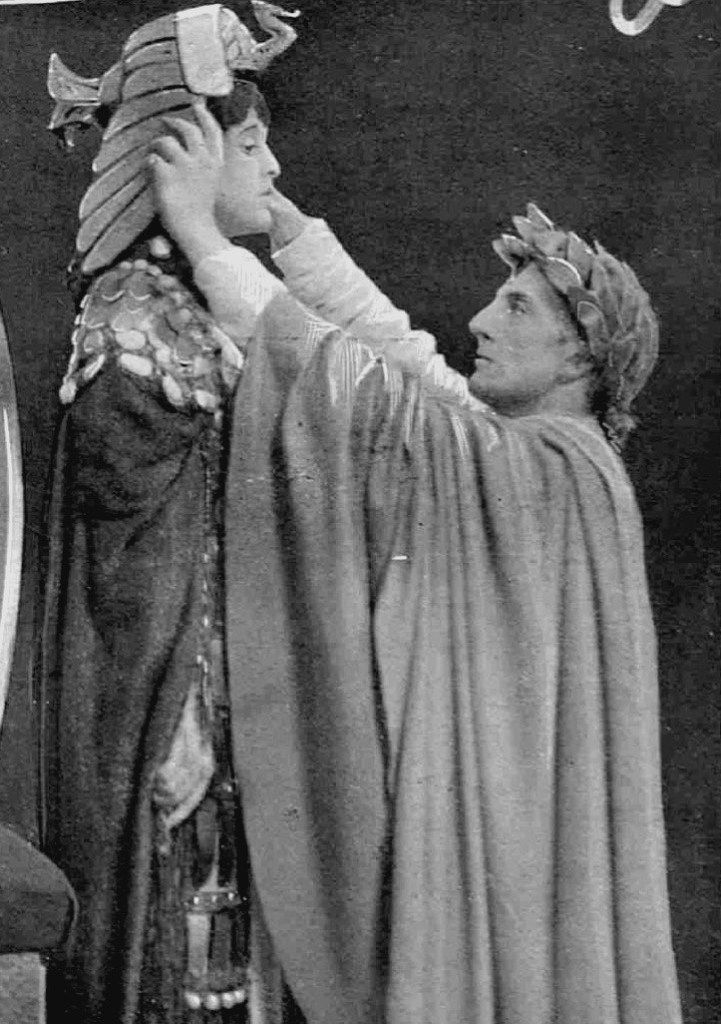
[Shaw’s Caesar about Cleopatra and Ptolemy, probably]
Like a lot of people, what I was exposed to in high school was formative for me as a reader. I had been a “serious” reader for five years by then, but I feel like high school was where I had read enough to start having real opinions about what I read. And while many of my most passionate biblio loves date from these years (Shakespeare, Jane Eyre, To Kill a Mockingbird, Antigone, The Pillow Book, Edith Hamilton’s Mythology…), so, too, do some of my passionate vendettas. In addition to my ongoing feud with Samuel Clemens, my raw, burning hatred for Billy Budd and A Portrait of the Artist as a Young Man denied me the pleasures of Moby Dick and Finnegans Wake for a decade because I was fighting with their authors. But like a good Irish girl, James Joyce wasn’t even the only writer from the Old Country that I was annoyed with at the time. Because high school is also where I first met Irish playwright George Bernard Shaw (1856-1950 CE) and got off on a bad foot with him, too. Some of that was his fault, some of it was me, and the rest was some extremely stupid/embarrassing-in-hindsight circumstances that I feel I need to explain.
[Story time!]
So, I really liked my 10th grade English teacher, and I was hardly alone in that opinion. With the benefits of an adult perspective, I’m don’t think he was a particularly good person—for some reasons that will become clearer as we go—but he was very charismatic in that snarky Gen-X way that older millennials such as myself ate up as teenagers, and he was a talented educator. However, a few months into the school year, we got a student teacher, who was supposed to be with us for I’m guessing, like, six weeks. My class was already a little salty to not have the teacher we all liked running our lessons, and it turned out that the student teacher was a charisma void who wasn’t able to figure out how to connect with us. It wouldn’t be his worst mistake, but it was fatal in retrospect that he told us in his Day 1 getting-to-know-you introduction that his grandfather had paid for him to attend NYU. This was mostly just an odd thing to tell us, but he also did so without knowing that my school was just middle class enough for that kind of generational family wealth to be a resentment point rather than a brag among us. Very few kids in my school were truly poor, but nobody’s family was rich enough that it was something discussed by the student body at large.
[We, as a group, used to tease one of my history teachers for driving a Jaguar (that I’m sure he’d spent a long time saving up for, the high quality of the teacher’s union in New York State notwithstanding). My point is, the luxury car was the butt of a gentle joke with him, not something that was admired by us.]
This poor student teacher never really got the class back after that. He was not helped by the fact that he was given Shaw’s 1894 play, Arms and the Man, to teach, and he started off with an entire day devoted just to breaking down the set dressing and stage directions for the opening scene to us. And Shaw’s opening set design directions are always too long to begin with anyway. It remains, to this day, one of the most boring classes in any subject at any educational level I have ever sat through—and I completed law school, remember. And I was a Good Kid, even among my Honors English peers, so if I had this reaction, you know that the rest of the class was post-catatonic. And unfortunately, advanced class kids or not, we were still teenagers, and teenagers will act out if pushed. We were not the kids from Dangerous Minds or anything, but we all, collectively though not in an organized act of defiance, just stopped participating in the discussion after that. Granted, I would have been hard-pressed to contribute anything of note to our equally glacially-paced analyses of Shaw in the days that followed, but eventually this guy was just addressing a blank wall of students while our actual teacher sat complacently in the back of the class, letting it happen. I understand he was probably not supposed to interfere with the student teacher’s placement, but he probably should have taken us all aside at some point before the student teacher’s arrival for the day and told us to stop being little shits for basically no reason.
Anyway, I think this slow death of participation was more unnerving than if we’d been physically acting out or something, and the student teacher ended up leaving the placement with us weeks early, and we got our real teacher back. It’s possible that there was some personal issue behind his sudden departure, but the optics were that we’d driven him out. Part of my reason for thinking that was that our real teacher exuded a pronounced disdain for this poor guy after he left, which read more like snark about a teacher who couldn’t hack it rather than someone experiencing a more acceptable personal emergency. This was further supported by a well-timed sardonic reference about the infamous stage dressing lesson with a week of this kid’s departure, which unfortunately tacitly signaled to us that he was on our side and destroyed any chance of us feeling remorseful about the whole affair after the fact. He also just shunted Arms and the Man from our curriculum without us finishing it. So my introduction to Shaw was reading a fourth of one of his plays and being a passive member of a lowkey bully mob against a twenty year old. Savory!
[None of this should be confused with the time a substitute for my Jag-owning history teacher got us all in trouble for laughing a joke in a video that he was too zoned out to notice, and he thought we were laughing at him. That time, we were wrongly accused—though I’ll admit that Colin probably shouldn’t have called the guy a fascist to his face while he was yelling at us… god, I don’t miss high school…]
After that awkward introduction, my relationship with Shaw largely failed to improve much after high school. As a chronic reader of Best-of list works in my twenties, I managed to slog through Mrs. Warren’s Profession, Major Barbara, Pygmalion, Man and Superman, and even—finally—the rest of Arms and the Man, none of which moved my general opinion of Shaw’s oeuvre past, “Wow, Mr. X really helped us dodge a bullet by junking AatM that year…” Even though, as I alluded to in my entry about Salman Rushdie’s Knife, my mom and I didn’t love the play we saw at the Shaw Festival in Niagara-on-the-Lake, I will admit that what we saw—his playlet, The Man of Destiny—was by far my favorite of what I’d been exposed to. Maybe because it was shorter (even contemporary theater critics constantly complained that Shaw’s plays were always at least an hour longer than they should be, and I agree). But in spite of all the high school drama, as well as falling backwards into familiarity with six of his plays, I didn’t consider myself an active Shaw Hater in the way I fought with Twain or Joyce. I just didn’t devote a lot of brain space to him when I wasn’t reading one of his plays.
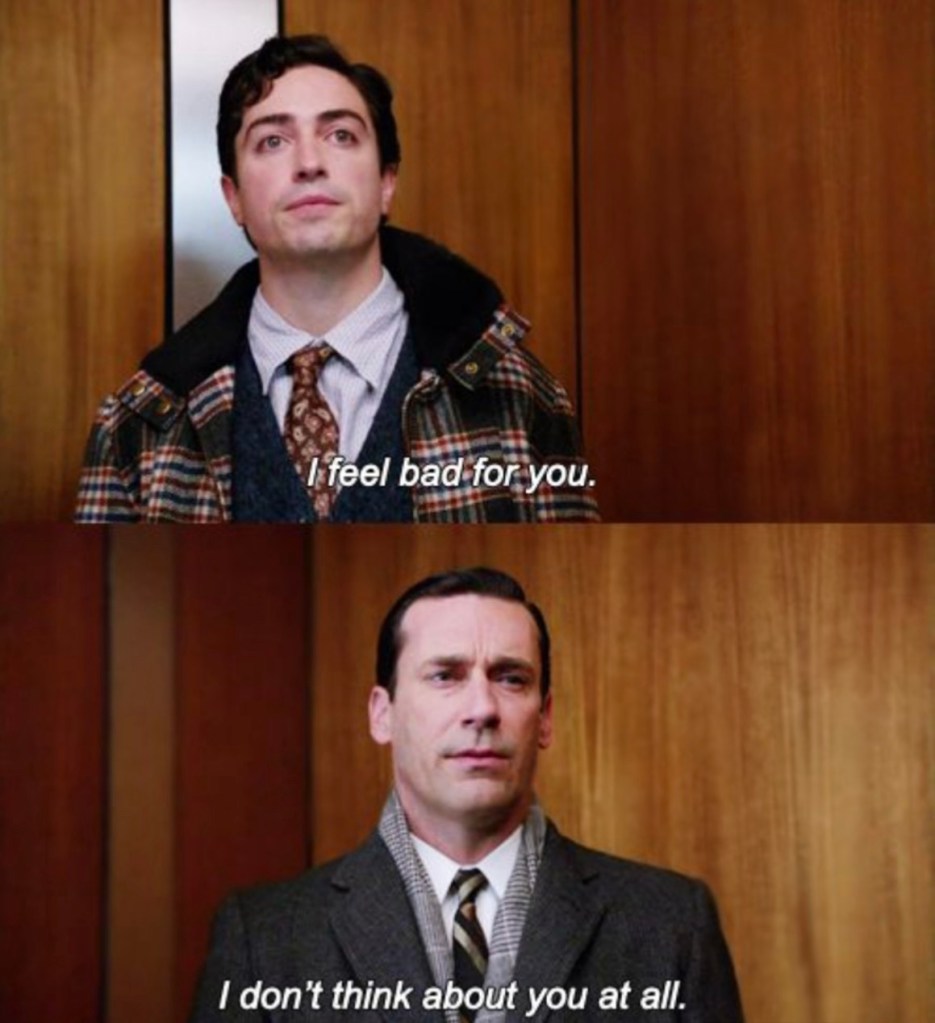
[Shaw and I both think that we’re Don Draper in this meme]
Which on one level is a shame, because Shaw was a weird dude. Man was like the archetype of the infuriating Median American Voter before that was even a thing. Reading about his socio-political beliefs even just in summary on Wikipedia will give you whiplash: he was simultaneously a socialist who was entranced by the fascist dictators of his era; he was against antisemitism, but thought Hitler was a great man; he was for Irish Home Rule (though against violence to get it) but anti-Indian Home Rule; he believed in racial equality while being a eugenist; he was anti-vax; he thought Shakespeare was overrated; he was relatively pro-women’s rights while seemingly having a lot of post-Victorian hang ups about women and sexuality; he was anti-religion but thought that the theory of evolution was “blasphemous”; he campaigned for regularizing English spelling and grammar by clinging to archaic iterations of both—the list goes on.
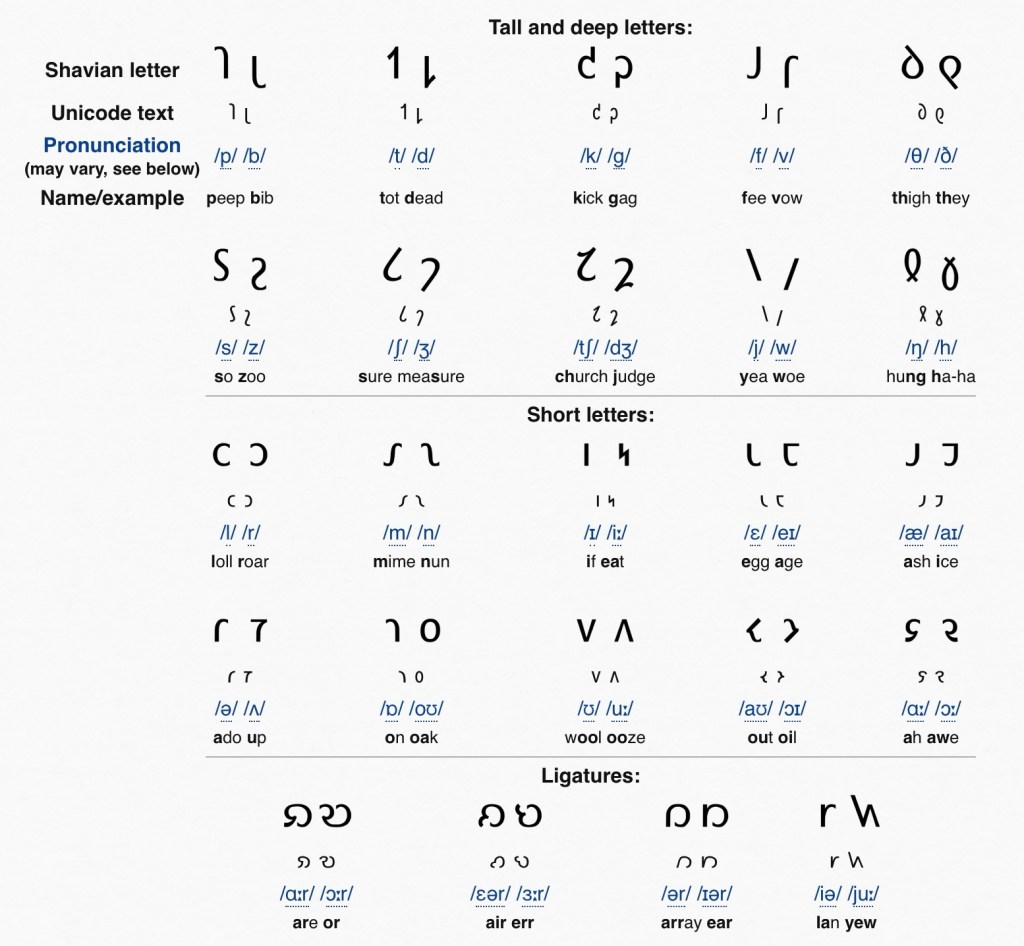
[The spelling issue solution invented by people funded by a posthumous trust of Shaw’s estate is the so-called Shavian alphabet, delineated by this Wikipedia graphic. I personally don’t find it very intuitive at a glance, but you might disagree.]
But here’s the problem: crazy personal life and secondary school-bugbears aside, I may not like Shaw much, but he is kind of—ironically—considered the most significant English playwright next to Shakespeare, and the most famous of his plays that I hadn’t read yet is squarely in my wheelhouse as a reader and as a writer. How could I continue to ignore the fact that he wrote a play about Julius Caesar, Cleopatra, and the Alexandrian War? If I read The Ides of March and Augustus last year, how could I not address the Anglo-Irish elephant in the room?

Also, to link back to the dedicated literary hater I was in high school, how can I not grudgingly respect the fact that Shaw largely wrote the play that I want to talk about (I swear we’re getting there…), Caesar and Cleopatra (1899), for the same reason that I entered that Mark Twain literary contest in 11th grade: to prove I could write something better? Shaw thought that the late 19th century obsession with Shakespeare was dumb as hell, and wrote C&C as largely a rejoinder to Antony and Cleopatra, as well as Julius Caesar, calling the former “love-obsessed” and the latter “[a] travestying of a great man as a silly braggart.” By contrast, he claimed, his play would be “real.” But turnabout is fair play, George, and you have to be prepared to face a hater to be a hater, and I would argue that there are few modern literary fiction authors more qualified to go toe to toe with you on this very specific moment in history than me. So let’s go to the tape!
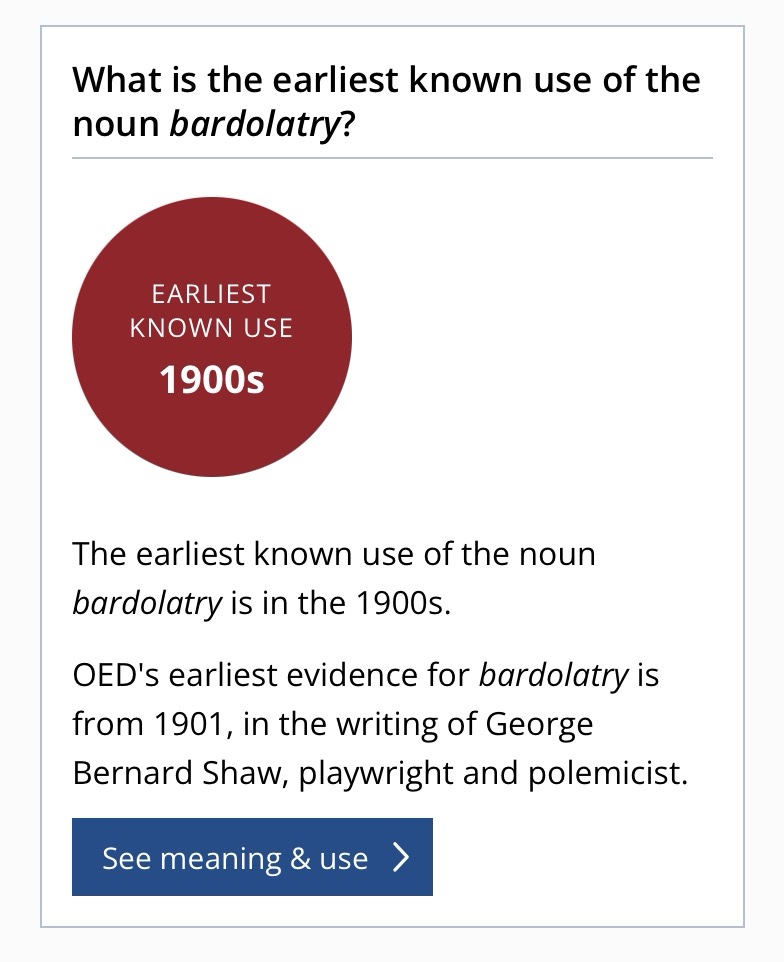
[Imagine the fury of my inner child stuck in that interminable Arms and the Man lesson upon learning that Shaw is the derisive inventor of one of my favorite portmanteaus, bardolatry, to describe his contempt for those of us who worship Will…]
How does Shaw do serving up unadulterated Realness to his audience? Well, let me start with some positives. The broad stroke facts about the Alexandrian War are largely intact—Caesar veni vidi vicis his way into Egypt and back out again, taking Cleopatra’s side. For a play with not an especially large cast, he manages to get almost everyone in. Ptolemy XIII’s whole gang is here: Pothinus, Achillas, Lucius Septimus… heck, even Theodotus. And Cleopatra gets her Apollodorus, too, and eventually Charmion and Iras (the latter who even I didn’t bother with in The God’s Wife). He has all of these major event players, and even manages to allude to Arsinoë and Ptolemy XIV, though they are not present. Very historical.
And obviously as someone more tickled than not by the historical Julius, I’m not going to be radically put out with Shaw hate-writing a pro-Caesar play against Shakespeare’s Julius Caesar. As intimated by my gleeful love of Lucan’s evil kaiju Caesar in Pharsalia, I am also perfectly at peace with Will’s less-than-worshipful portrayal of him in JC, but Shaw is much less pacific about our special boy. Like, goddamn, is Shaw’s Caesar just the coolest customer. Very drily witty, completely in control at basically all times, always in the right—utterly unflappable. Shaw, the guy who literally wrote Man and Superman, may have tried to pretend he thought that Nietzsche was a little silly, but his version of Caesar is like the ultimate Übermensch. And that’s not totally surprising, either, given Shaw’s personal fascination with Great Men. It’s not shocking that the two of his plays I’ve ended up liking the most are about Julius Caesar and Napoleon (The Man of Destiny), though Shaw clearly saw the emperor of the French as a dim shadow of the superlative Roman he was so often compared to, as evidenced by Napoleon largely being the butt of the action in TMoD.
But Shaw does make one pretty big change in characterization for Caesar, and that, too, seems to be the result of Shaw’s personal idiosyncrasies: his Caesar is for all intents and purposes, sexless. Oh, he lets his Birthday Boy be a little vain (there are several scenes where Cleopatra offhandedly makes comments about how old and/or bald he is, and Julius is like 🫤), but History’s Most Chaotic Bisexual is nowhere to be seen. Some of this is tied to Shaw’s decision to age down Cleopatra—which we’ll get more into in a minute—and Shaw is already, as I said, a little weird about sex between regular adults as is, but the rest of that is part of his campaign against what he sees as the icky, love-obsessed characters in Antony and Cleopatra. His Caesar does not have sex with Cleopatra (so long, Caesarion…), and he definitely isn’t in love with her. He’s vain enough that if he thought that she was in love with him, he’d be flattered, but he would not be enticed. Caesar may have a vague, sexy reputation floating around in the background, but Shaw is clearly, morally offended by the idea that his Caesar could ever be seduced by anyone.
In this instance, that may ultimately be a good thing, because more than any fictional iteration of the woman that I have ever read, Shaw has written Cleopatra as a child. Shaw says she’s supposed to be sixteen (down from her historical nineteen/twenty), but for most of the play, she acts like she’s ten. Like, Ptolemy is ten in the script, and in their only scene together, he and his ostensibly older sister basically act exactly the same. Caesar is like some world-weary daycare worker holding these two kids apart (see my banner picture). I have to retract some of the mild stink-eye I gave Thornton Wilder in The Ides of March last year for making some of Cleopatra’s personal accomplishments the instigation of Caesar, because Shaw writes a version of the queen that is almost entirely Caesar’s creature. Anything she is that isn’t a semi-illiterate, superstitious, spoiled baby is what she’s learned from being around him. Thornton’s Cleopatra has a brat routine (arguably so does Zora Neale Hurston’s in Herod the Great), but it is wholly an affectation to disarm her opponents. Shaw makes this Cleopatra’s true self, and it’s the canny sophistication that is the pose. The first three acts of C&C give us a petulant, feral child who must be babysat and trained by Caesar to be anything worthwhile, and it is only in Act IV that the more recognizable languid, intelligent queen shows up. Caesar Pygmalions her in just six months! Indeed, there is an element of C&C that feels like a narrative dry run for Shaw’s later, most popular play. Caesar is a nobler, less obnoxious Henry Higgins, and Cleo’s his Eliza Doolittle. The impression is so strong that I Mandela Effect-ed Rex Harrison into the 1945 movie version of C&C with Vivian Leigh.
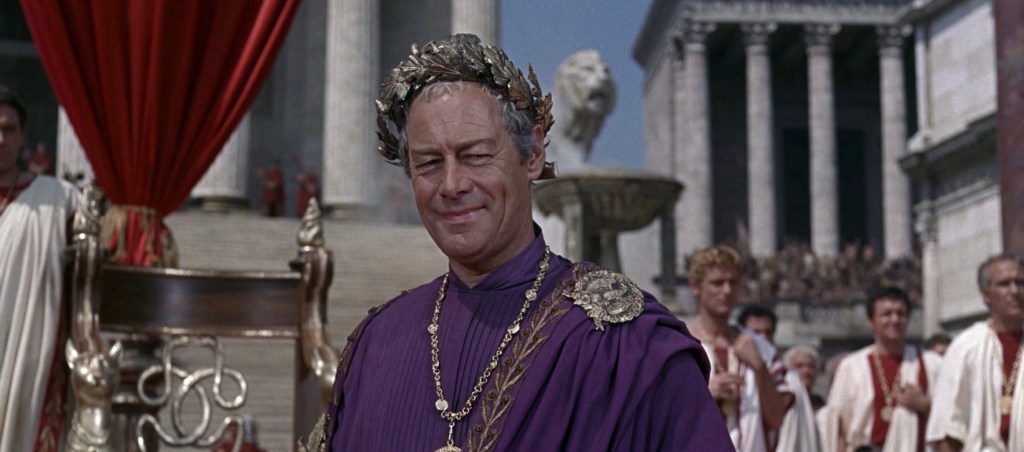
[It was actually Claude Rains, but I feel like Joe Mankiewicz and I were picking up on the same vibe here later…]
But, as I said, the “real” Cleopatra remains just a mask the child wears, which is a real downer, honestly. When Act IV began, I actually—for the first time interacting with a Shaw work—got excited. I wasn’t completely against the bratty Cleopatra he’d written in the first acts (at least it was very different than anything else I’d ever read), but here I felt like we were getting a version of the Pygmalion turn. “Oh!” I exclaimed, “Caesar thinks he’s made this Cleopatra and it’s time for her to turn the tables on him, if only a little!” I was rapt: was this going to be Shaw’s first four-star play with me?? Alas, Cleopatra tries assert her independence by having Pothinus killed behind Caesar’s back, and the play frames this as her being her sneaky, impulsive Egyptian self, and Caesar tells her she’ll regret it, and though it’s not as if he really holds it against her, it shows that he’s still the master even as he’s on his way back to Rome. Honestly, baffling framing—especially since at this eleventh hour in the play Shaw portrays Pothinus as popular with Alexandria at large (???) and not someone incredibly dangerous for Cleopatra to keep alive particularly if Caesar is back in Rome.
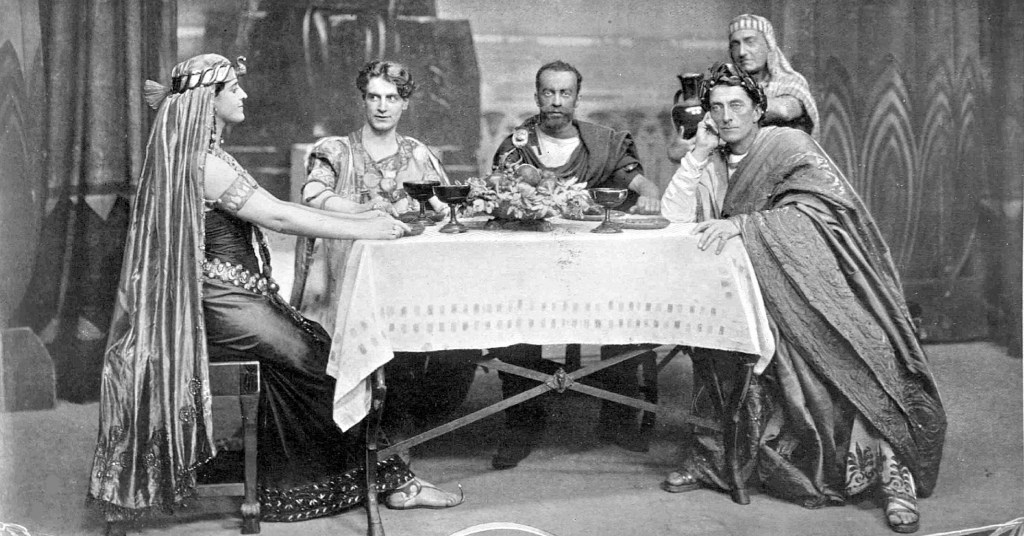
It’s not a major complaint of mine for the play, but weird, largely ahistorical (as far as can be gathered) characterization choices are a running theme for the henchmen. Pothinus = mostly good guy trying to do the right thing; Lucius Septimus = the coolest operator sans Caesar; Achillas = almost a nonentity; Apollodorus = effete around town. Only Theodorus as kind of the doddering tutor stays pretty true to form.]
So, to return to our first conceit: did Shaw manage to outdo the master and write a better play than Antony and Cleopatra or Julius Caesar? Short answer: no. JC is very good, and A&C is probably one of the greatest pieces of theater ever written; by contrast, C&C is, at best, diverting. It is often interesting and even witty, but it equal often feels insubstantial. Shaw might turn up his nose at A&C’s Big Feelings, but those are the very things that give the play its weight and universality. I don’t like Mark Antony the Historical Figure or the Literary Character, but I can recognize that his struggle between his loyalty to his friends and his people, and the love of his life and his personal desires is the very bones of what theater and literature are. Shakespeare has gotten to the place he occupies not only in English or Western culture, but in many places he’d never even heard of, because he understood this. Shaw, on the other hand, I think is the kind of writer who would rather be technically correct than acknowledging that Art is meant to move us, too.
And because Arsinoë is my best girl, you know that I’m not the first person to go to bat for Historical or Fictional Cleopatra either, but Shakespeare’s Cleopatra is an Archetype, she is Greek in every sense of the word. She is a Lysistrata who understands her sexual and political power; she is an Antigone who can’t be cowed by love or might. She is a Medea torn between her own strength and a love that cuts the feet out from under her; she surrenders in the end to that love, even though she knows it might kill her children. Will’s Cleopatra is a human queen and a literary goddess. To strip that power away from her feels like an act of cowardice, a futile attempt to make her smaller than she was in life. You can take the Mommsen/Syme route and claim that her wiles and achievements have been, to paraphrase my nemesis, greatly exaggerated, but that doesn’t explain why she managed to loom so large in the Roman psyche in her afterlife, or why we still look for her everywhere.
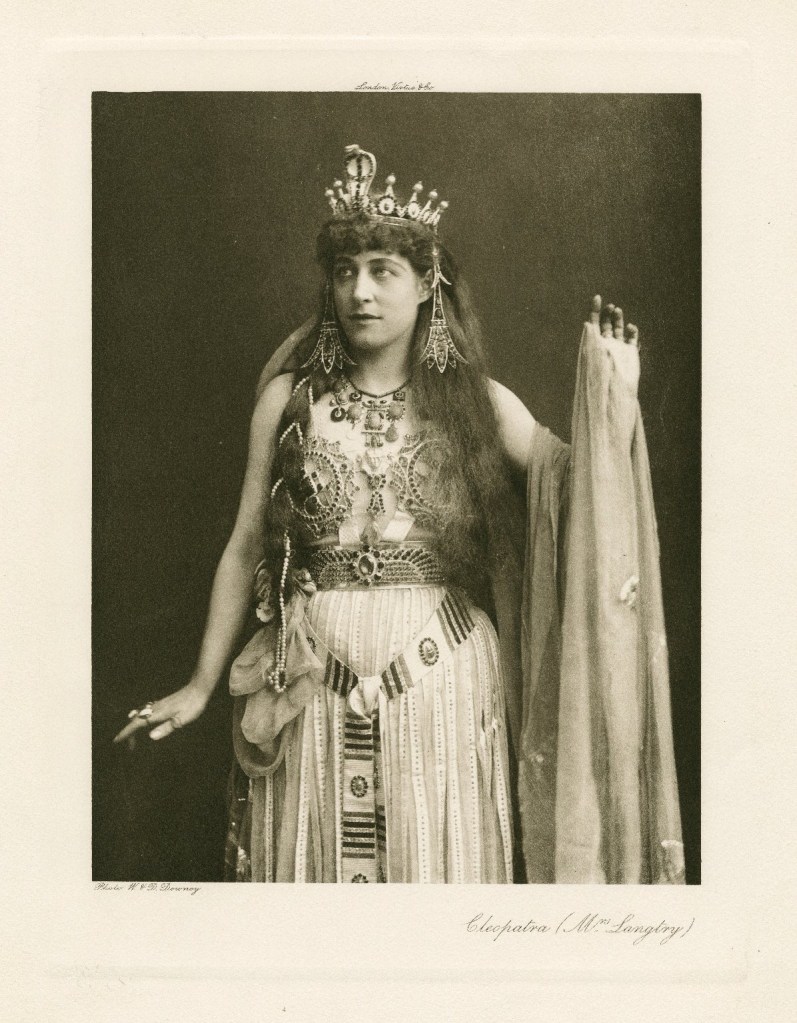
[Lillie Langtry as Cleopatra in Antony and Cleopatra from the same era as Shaw’s play (1891)]
And even with Caesar, as admiring as he is, Shaw has ultimately cheapened his hero with an overabundance of praise. Like Hurston with Herod, Shaw falls into the trap of making Caesar too perfect to be interesting. Even at the time of its first performances, critics seemed to agree with me that by making Caesar so cool, so philosophical, so already beyond ambition (for real—for Julius Caesar, of all people…) that one wonders why the hell the great general bothered to come Egypt in the first place. I’d make the further observation that—to egotistically paraphrase myself—by taking away Caesar’s two biggest vices, ambition and flesh, you’ve turned the complex man (whether the Historical or Literary) into a shambling golem of himself, bloodless and boring. I agree with Shaw that Julius Caesar was intelligent and talented, a rare person in world history… but he was also insanely ambitious and deeply curious and fatally overconfident and sexually omnivorous. He found the world fascinating, he found women fascinating, and he died doing what he loved: telegraphing to everyone that he thought that he was better than most of them. In some ways, by putting forward a bemused, flawed Napoleon in The Man of Destiny, Shaw does more credit to a man he had more mixed feelings about than the one he called a “great man.”

[Also, like, come on. If Shaw wanted a sixteen year old Ptolemaic princess that badly, there was already one right there he could have used!]


Leave a Reply