“He [Shirakawa] controlled everything except the Kamo floods, sugoroku game dice, and the unruly Mount Hiei monks.” – The Tale of Heike
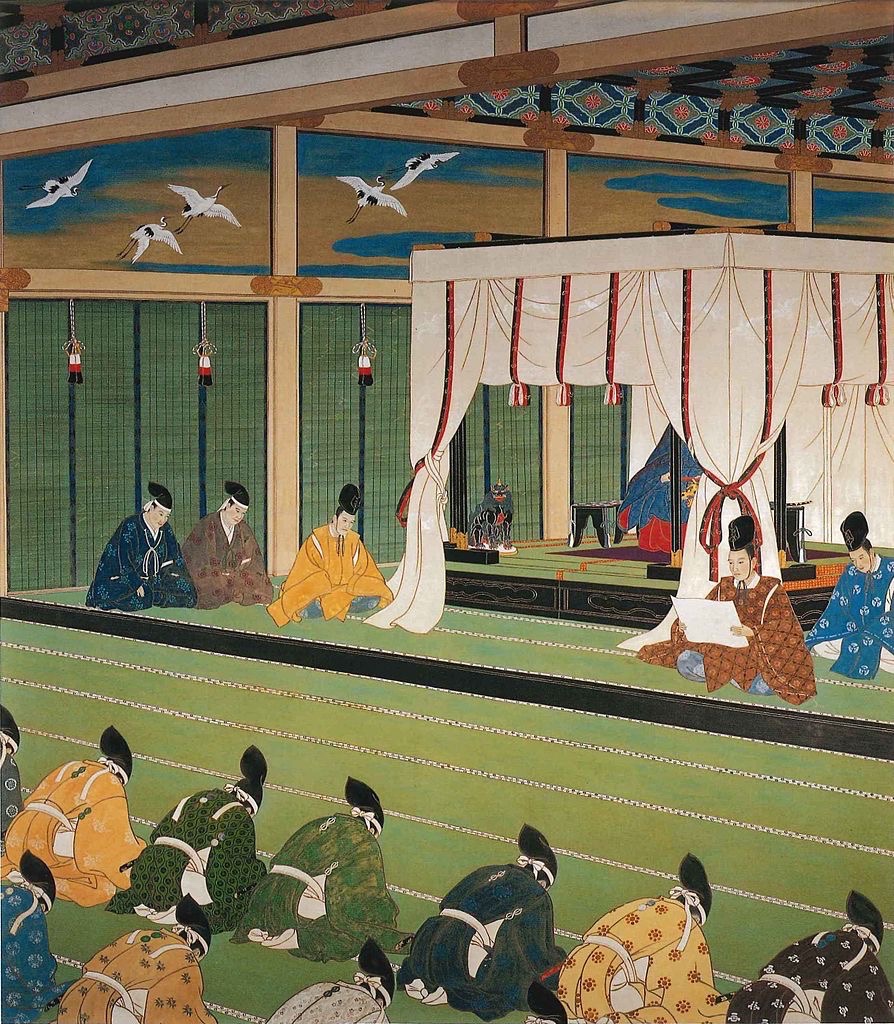
Fortunately or unfortunately for all of you, I want to get through one more major Heian history lesson before I stop hyper-focusing on Lady Safflower content here. So today we’re going to look at Nagako’s emperors—in particular emperors Shirakawa, Horikawa, and Toba—and try to suss out both some of their history and why their reigns ended up starting the slow slide of Heian Japan into the very different world of Kamakura and shōgunate Japan that followed it.
And that does take some sussing and extrapolating, because like many liminal periods of decline, this eighty-ish-year timeframe is low on historical documents and high on the historical rumor/folklore created by the people who came after it. But I tend to find folklore very revealing, if not entirely truthful, so we’ll talk about it too, and see what it can tell us about this time as well.
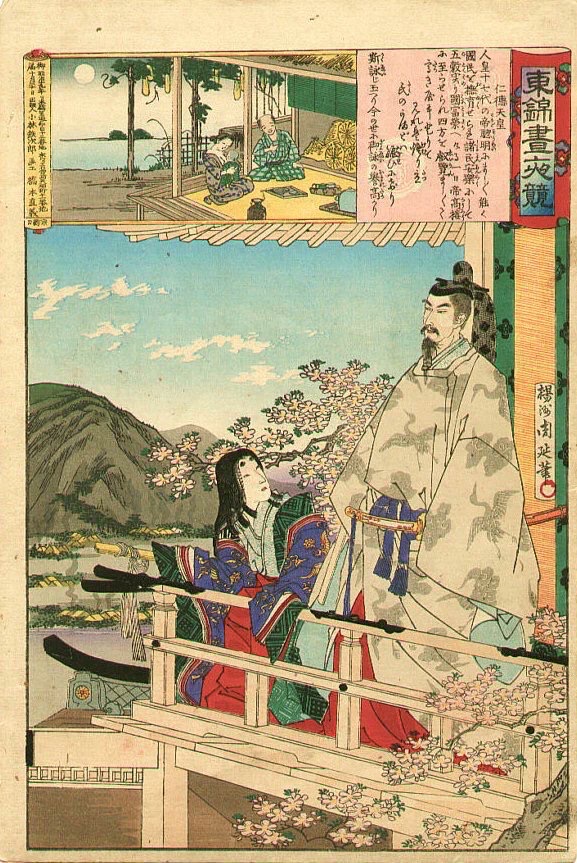
[Two quick reminders about Japanese imperial naming conventions before we get too deep: One, remember that names like “Horikawa” are the posthumous names of these rulers, and not how they would be addressed during their lifetimes (just as the modern emperor most people in the west know as Hirohito is only known as Shōwa in Japan now that he is deceased). For emperors farther back in the historical record like the ones we’re going to talk about today, it is less clear if their birth names like Horikawa’s—Taruhito—were also their ruling names, so for the sake of clarity if not accuracy, I will refer to all our emperors by their more well known posthumous names. Also, the prefix Go in imperial names like Go-Sanjō and Go-Shirakawa most closely translates to “later,” and isn’t technically part of those emperors’ actual names. Japanese imperial ordering doesn’t have a convention like western rulers’ use of numerical ordering (i.e., Richard II, III, etc.), so Go is a script indication meant to alert someone that we’re talking about the second Emperor Sanjō (r. 1068-1073 CE) and not the first (r. 1011-1016 CE). This might sound more complicated on its face, but it has the advantage of generally keeping imperial names from being reused more than twice—you don’t get those thirteen Hugh de Lusignans in this system…]
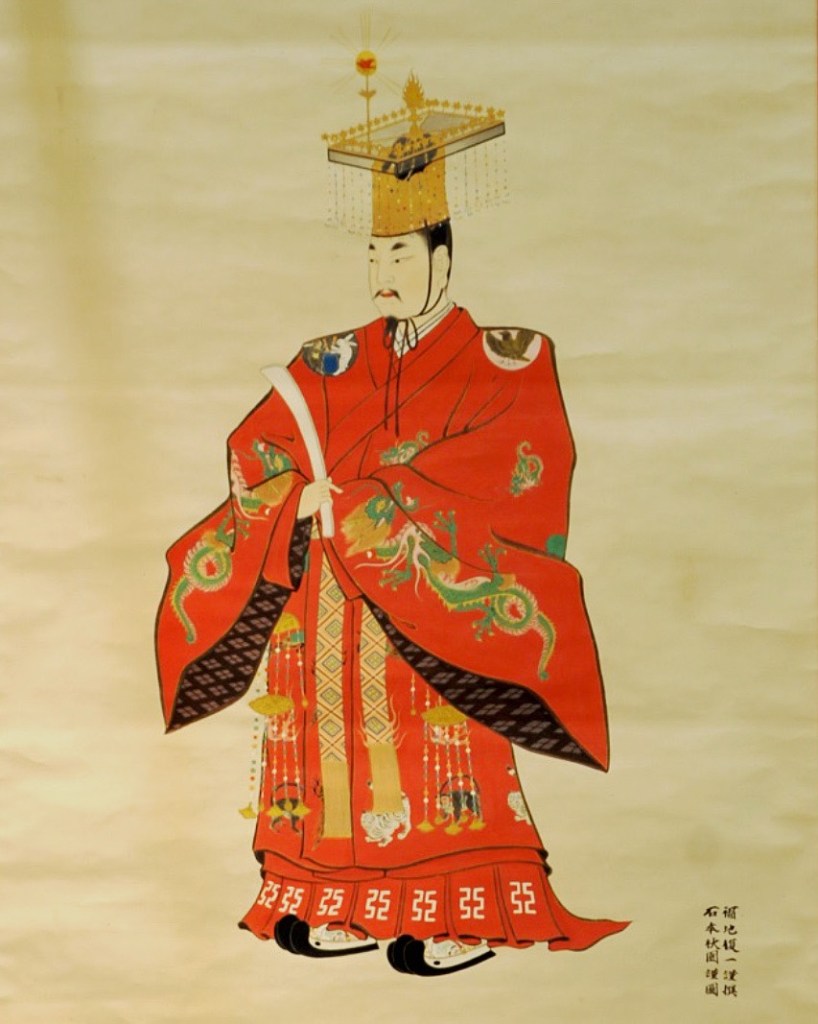
It’s helpful for us that one of the better documented and more dominant figures of the six emperors from the imperial bloodline of this period is in fact the first. Emperor Shirakawa (r. 1073-“1087” CE—the quotation marks will become clearer as we get farther along) was the eldest son of aforereferenced Emperor Go-Sanjō (r. 1068-1073). Go-Sanjō’s ascension to the throne was notable because he was the first emperor in two hundred years to not be the child of a Fujiwara empress. As we discussed in my Heian crash course entry, the Fujiwara clan had a stranglehold on court power through most of the Heian period by the clan head holding the most powerful imperial office, kampaku, and using that political power to ensure that the wives married to the emperors were all related to the Fujiwara clan. This was important because we also mentioned how because of the way Heian marriages were structured, children were typically more aligned with their mother’s family than their fathers, meaning that these emperors with Fujiwara mothers were more likely to ally themselves with the kampaku’s aims than anything anyone in the strict imperial line was doing.
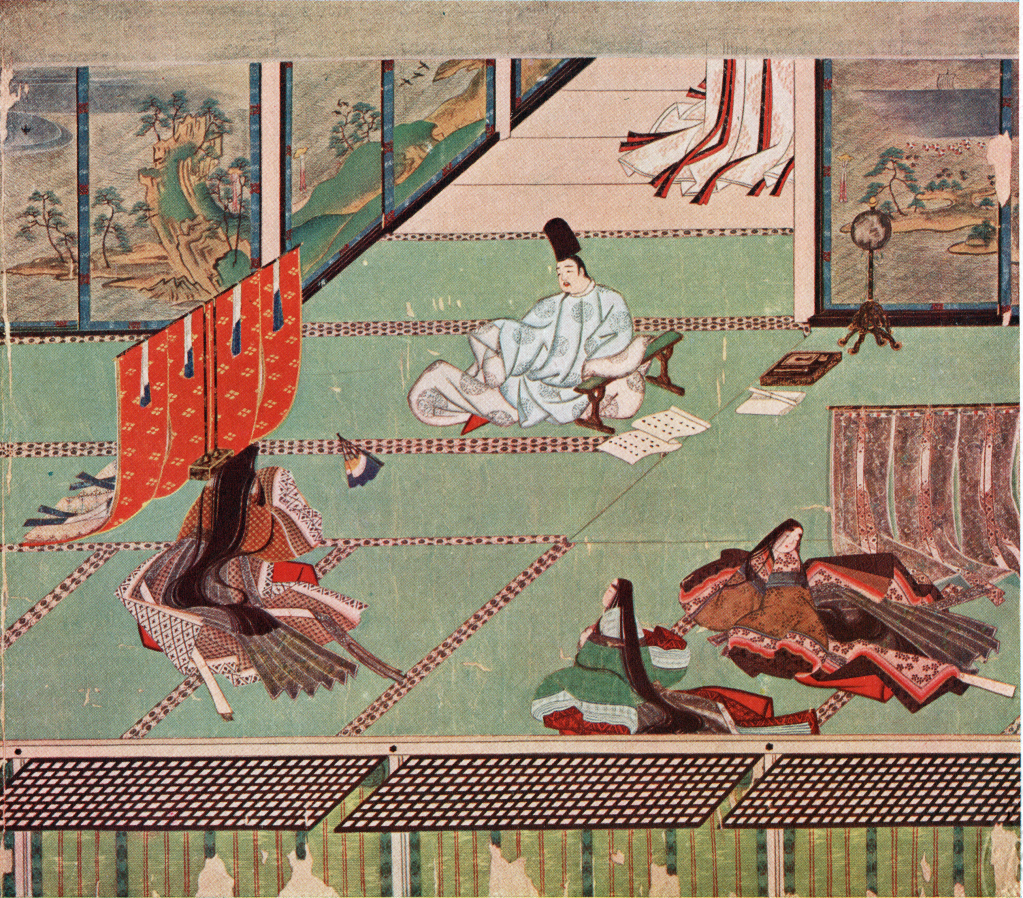
[The highest office in the imperial court is called kampaku, usually translated in English as “regent.” Though, English translations rarely differentiate between this word and when a regent held the post during what we in the west would identify as a “true” regency scenario: that is, when the emperor was a minor. But of course the rules-obsessed Heian did: a kampaku who was serving a child emperor was called a sesshō until the boy came of age, at which time the regent would then be identified as a kampaku. In my novel, I tracked this change with Fujiwara no Tadazane (pictured in the woodblock cut above at center) in the only way I’ve seen even partially differentiated in English—as “regent” for sesshō and “regent-chancellor” for kampaku.]
Go-Sanjō’s mother, Empress Teishi (d. 1094) was actually an imperial princess (daughter of the OG Emperor Sanjō), and she wielded significant influence during Go-Sanjō’s time on the throne and the early parts of her grandson Shirakawa’s reign. This aligned both emperors with the imperial line and away from the Fujiwaras. This was certainly not the aim of Go-Sanjō’s kampaku, Fujiwara no Yorimichi (son of the great Heian kampaku, Michinaga), but Yorimichi had the bad luck of the Fujiwara-connected emperor (Go-Sanjō’s half brother, Go-Reizei) dying without an heir, so he really had no choice but to elevate Go-Sanjō. Aside from his brother’s death, Go-Sanjō’s campaign to wrest power back from the Fujiwara regents was aided by the fact that Yorimichi was caught in a protracted power struggle within the clan with his own brother, Norimichi, and was probably not as attentive to matters as he should have been.
But Go-Sanjō’s modest successes at restoring some of the power to the emperor could only be kept through sustained efforts, and in this he ran into somewhat of a problem. Because his eldest son, Shirakawa, was the child of his Fujiwara consort, Shigeko, which probably meant that the kampaku would just take back what he’d gained after Go-Sanjō was off the throne. Shirakawa was aligned with him and his imperial grandmother for now, but what would happen later?—life was often short and unpredictable in Heian Japan. Case in point, by 1073, the only thirty-eight year old emperor appears to be in failing health. So, Go-Sanjō made a plan: he agreed to abdicate in favor of Shirakawa, but with the promise that Shirakawa would pass the throne not to any of his sons, but to his half brother, Sanehito, who was the son of Go-Sanjō’s consort, Motoko. This was important because rather than a Fujiwara, Motoko was from the Minamoto clan, who were both demoted members of the imperial line themselves and the only family even close to having the influence of the Fujiwaras. Shirakawa agrees to this plan and ascends the imperial throne in 1073 at the age of twenty, and given his age and the age of Sanehito (barely two years old), he probably figures he has plenty of time to rule on his own and figure things out later.
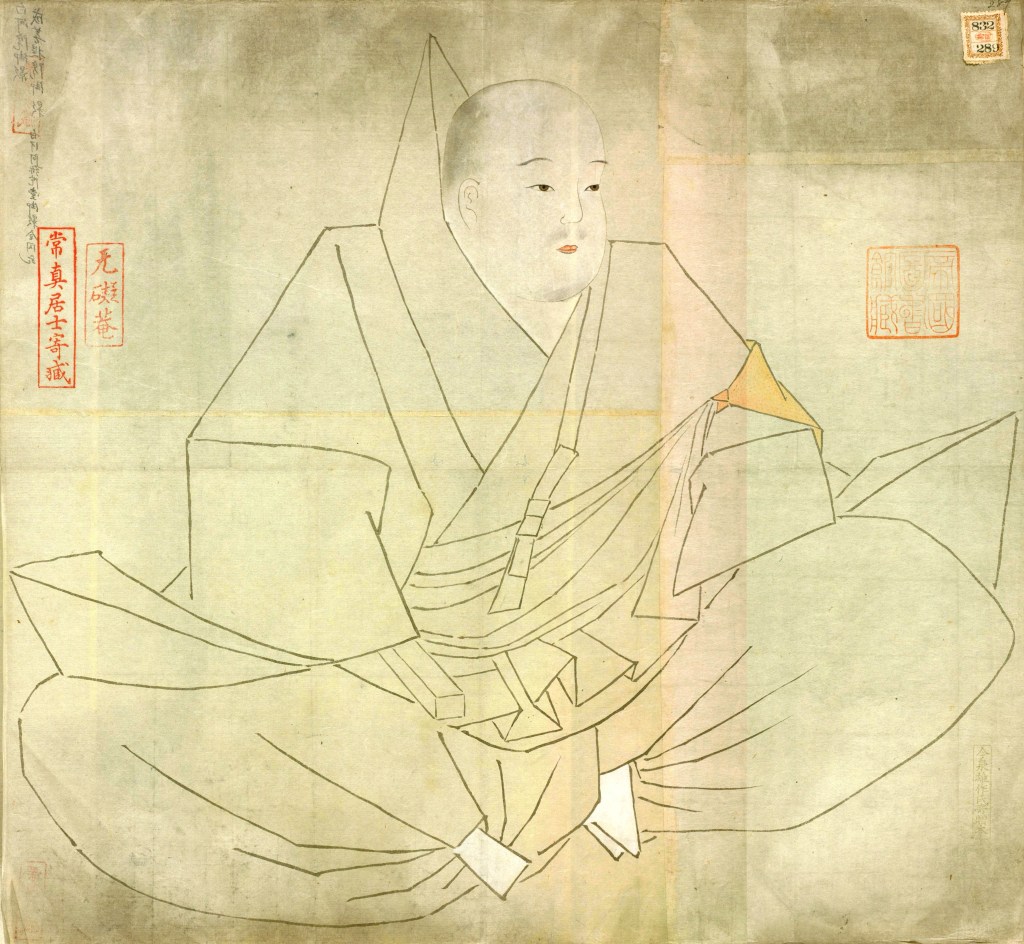
But in the next few years, a handful of key events happen that seem to cause Shirakawa to flip the script he’d been given. The first being, as would not be the case with the long-lived (especially by Heian standards) Shirakawa, Go-Sanjō was dead within six months of his abdication. So the former emperor was not around to interfere in his son’s decisions, nor, as was sometimes the case, create a rivaling quasi-court away from the actual imperial court. The second was in 1085, the fourteen year old Sanehito died with no direct heirs (it has to be said—some of these Heian boys were married and getting it on with results by that age…). So the heir designated by his father, the one Shirakawa had made his promise on, was gone. Now, most of the court believed that the spirit of the promise Shirakawa had made to Go-Sanjō meant that the emperor should transfer heir status to Sanehito’s twelve year old full brother Sukehito, who was, obviously, also a Minamoto prince. However, by this time, Shirakawa had experienced two major deaths in his own side of his family that might have encouraged him to see his promise to his father as only conditional on Sanehito.
[For those of you doing the math, yes, Go-Sanjō managed to father Sukehito less than a year before his death #Men In Male-Dominated Fields]
The first was the death of his eldest son, the two year old Atsufumi in 1077, whom we last saw being healed, then cursed to death by the yōkai rat-monk, Raigō-Tesso. Back in the real world, Atsufumi most likely died of smallpox and a few years before his little uncle, Sanehito, but the timing of these two deaths is massaged and remarked upon in post-Heian commentaries. Some say rather than the spurned Raigō, Atsufumi’s death was a ghostly rebuke from the late Go-Sanjō, because Shirakawa must have already been scheming to disinherit his brother and place his son on the throne instead. This seems like a stretch, but it ties into the second death in Shirakawa’s life: that of his beloved empress, Kenshi, only a year before Sanehito’s death.
Like Sanehito, Kenshi was by birth a Minamoto, (although she had been later adopted by Fujiwara regent Yorimichi’s son, Morozane, who became regent after his father). But adoption aside, Shirakawa seems to have made the argument—at least to himself—that his sons were just as Minamoto as Sanehito had been, and if his father’s first choice as heir (Sanehito) was as dead as his own first choice (Atsufumi), why should he pick Sukehito over his second son, Horikawa (r. 1087-1107)? So he made Horikawa his heir instead, and it was probably a mark of how potentially unpopular this decision was that Shirakawa abdicated within two years of Sanehito’s death in favor of his ten year old minor son in 1087. He might also have done this when he did while he had the grudging support of the kampaku, Morozane, who, as the adopted grandfather of Horikawa, had more reason to support the crown prince over the unrelated Sukehito.
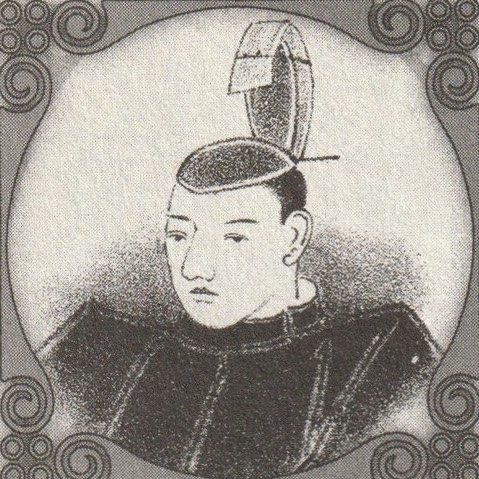
But while this appeared on paper to be the correct tack for Morozane to take in this situation, his acquiescence to Shirakawa’s change of plans only emboldened Shirakawa to continue to make more decisions independent of both the stumbling Fujiwara regency and the Minamoto relations he’d cut out of imperial power. Because while he had been willing to abdicate in order to secure the succession he desired, it turned out that Shirakawa had no intention of surrendering the imperial authority his father had fought so hard to regain. As I said earlier, retired emperors (who often took nominal monastic vows, as Shirakawa also did) usually retained some level of involvement and even influence in imperial affairs, so Shirakawa doing so wasn’t in of itself something novel. What would become novel was the extent of the power and influence Shirakawa would wield from ostensibly his retirement palace for the next forty-two years. Ensconced in the White River Palace, Shirakawa would invent an entirely new political entity, one that would dominate the rest of the Heian period, and the view of many contemporaries and later observers, possibly lead to the era’s collapse: the insei, or “cloistered government.”
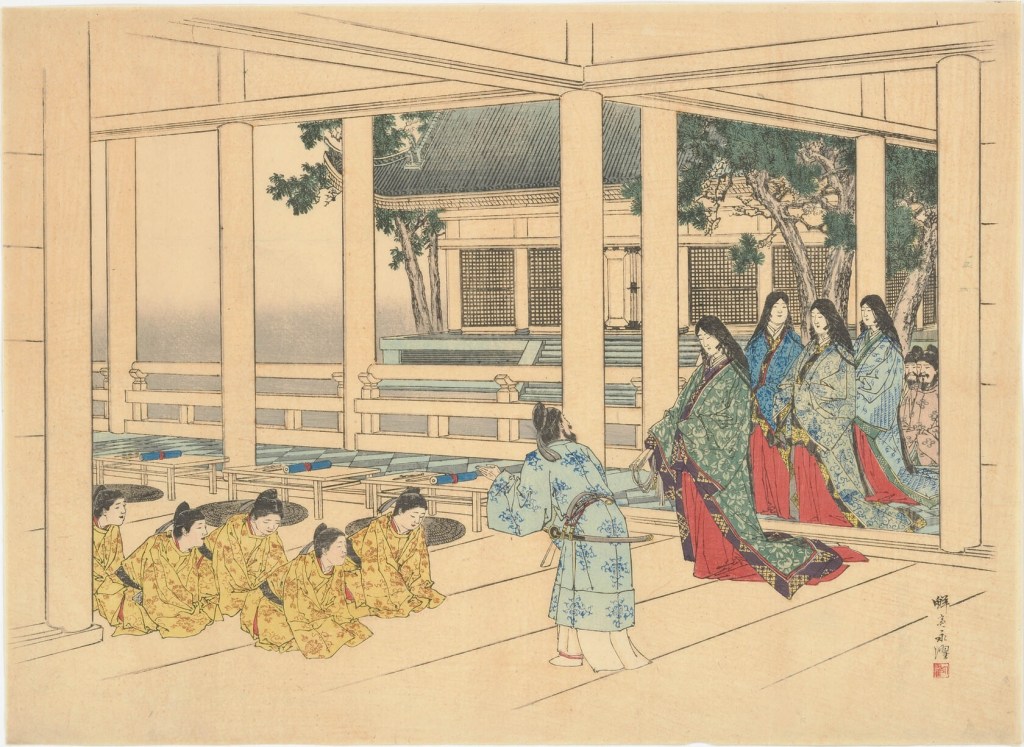
[Shirakawa is the Japanese name of the White River Palace, and it is emblematic of how intertwined in the emperor’s post-reign image it became that it was chosen as his posthumous name.]
Under the insei system, the retired emperor’s household was built up to almost exactly copy the reigning emperor’s household, with its own ministers and officiaries. While Shirakawa and his defenders would claim that this was all meant as a counterweight against the unchecked power of the Fujiwaras, in practice, insei would always exist in tension with any of the reigning emperor’s own power, especially once any emperor came of age. Because now an adult emperor would have to fight not only with his Fujiwara kampaku for influence at court, but also with the retired emperor. When the two emperors were of the same mind, obviously everything was fine. But while most scholarly sources will attempt to be diplomatic and present Shirakawa, the longest-serving insei emperor, as a “complex” man who lived long enough that it would be almost impossible for him to not have mixed reviews in the historical record, it is really hard to get away from the fact that he comes off as a real handful in most sources.
Jennifer Brewster makes the most strident pro-Shirakawa case I’ve come across in her extended introduction to her translation of the Sanuki no suke nikki, painting him as man forced to wield power due to circumstances, but I confess I don’t find it particularly convincing. There is probably some truth in that—during Horikawa and Toba’s minorities, for example. But it becomes a lot less convincing when he’s still butting in all the time in during both of their adult rules, especially Toba’s. The Cambridge History of Japan describes Shirakawa as a man who was capable of loving deeply (Kenshi is the main example of this), but that he hated with equal ferocity and rarely forgave anyone who crossed his volcanic temper (II, p. 602-3). This was less of a problem during Horikawa’s reign, as Shirakawa’s son has largely been described by history as possessing a generally placid, easygoing personality; but it will prove disastrous during Toba’s reign, as grandson and grandfather seem to have had very similar temperaments that would clash often over political control.
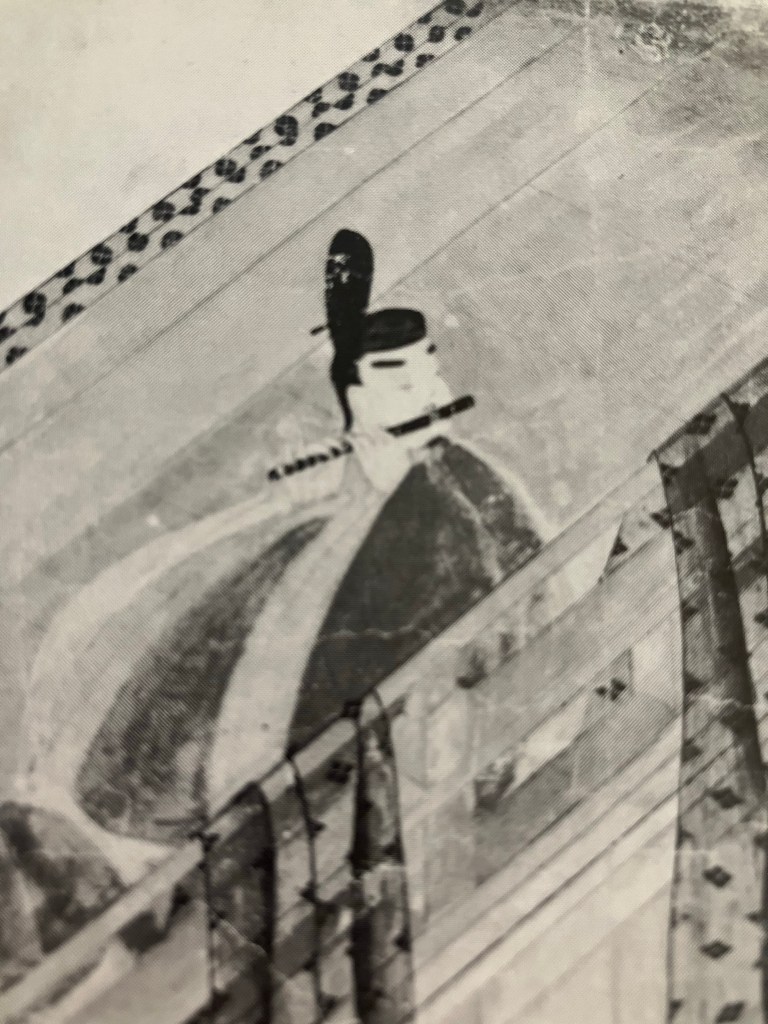
Outside of the Sanuki no suke nikki, one of the few contemporary sources for what the otherwise obscure (read: often overshadowed by his interfering father) Horikawa is the Chūyūki, a diary kept by courtier Fujiwara no Munetada, who, like Nagako, speaks of the late emperor more of as a treasured friend than a monarch. Munetada talks about Horikawa’s personal devotion Buddhist and Confucian ideals; his love of learning; and describes the emperor in terms almost opposite of how other contemporary sources speak of his father: how quick to reward anyone Horikawa was, and how reluctant to punish (Travelers of a Hundred Ages, p. 75-7). Indeed, it was interesting to see while I was doing my research how near-contemporary sources spoke of Horikawa in similar terms as to how post-Crusader Palestinian sources spoke of Baldwin IV of Jerusalem, as rulers who were the last righteous kings of a lost golden era. Obviously, some of that is the benefit of hindsight, but it speaks to how people living in these men’s aftermath and that of the political choices made after them viewed the world that resulted from it.
Shirakawa benefitted not only from his son’s generous nature, but also from Horikawa’s chronic poor health, which is probably why Shirakawa felt he had reason to step into his adult son’s affairs as often as he did. But Horikawa’s bad constitution wasn’t the only windfall that came Shirakawa’s way in this department and helped him strengthen the position of his insei rule. In 1101, the Fujiwara kampaku, Morozane, died; and not only did the retired emperor no longer have to worry about appeasing his sort-of father-in-law anymore, but Morozane’s son had died two years before as well. This meant that the person stepping into the position of kampaku and Fujiwara clan head was Morozane’s twenty-two year old grandson, Tadazane. And while Tadazane would prove to generally be a measured, capable leader of his clan and member of the imperial government, it would also mean he would never have the sort of nigh-limitless authority his forebearer Michinaga enjoyed, because he had been so young when he was thrust into his position. Ironically, it put him in a very similar position to his next emperor, Toba (r. 1107-“1123”), who inherited the throne at Horikawa’s early death in 1107, but would spend both his minority and his adult rule under the thumb of his grandfather, Shirakawa, who had already reinforced his position against both the Fujiwara regent and the ruling emperor.
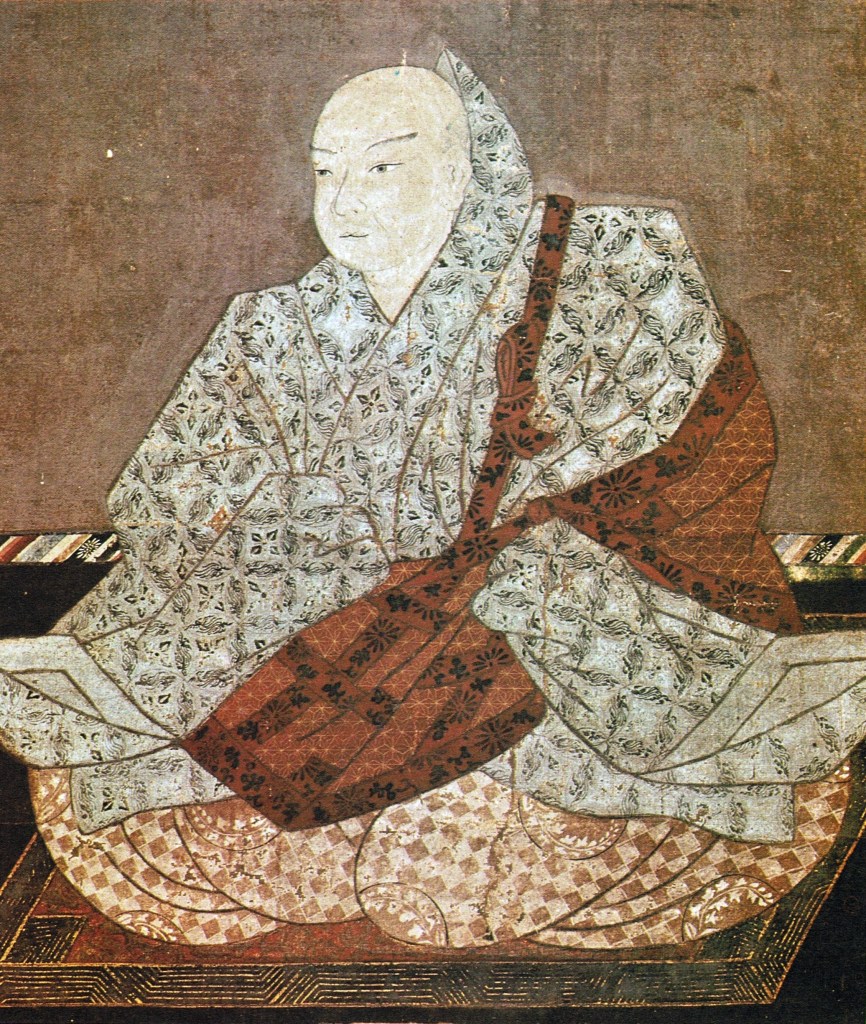
Another reason that Toba and Tadazane are never able to join forces even after Toba becomes an adult, is that arguably someone else had already tried to bring down Shirakawa, failed, and had ultimately left the retired emperor in a stronger position—all while Toba was still a child. You see, while you may have forgotten about the Minamoto prince, Sukehito, I assure you that the Minamoto had not, nor had they forgiven Shirakawa for stealing the throne out from underneath them. The records about what exactly happened are a little murky—in part because Shirakawa probably didn’t want to draw to much attention to the whole affair—but at least Sukehito’s son and two sons of the Minamoto Minister of the Left (the #2 official in the government, second only to Tadazane) were supposedly caught in an assassination plot against Toba, with the intention of replacing the young emperor with Sukehito. The plot was uncovered via an anonymous note dropped in the courtyard of Princess Reishi (Shirakawa’s daughter and Toba’s honorary-but-not-actual empress).
The scandal for everyone, including the ostensible victims, was enormous, and it is probably a measure of how damaging it was to even Shirakawa that almost no one was executed for the attempt. Because evidence of the plot was flimsy, and if he just killed all the Minamoto for this, it would end up looking like Shirakawa was conveniently getting rid of all his rivals in his Minamoto family. So most of the major players were simply exiled for a few years, including Sukehito and the Minister of the Left, whose active involvement hadn’t been fully proven. This seems like a nice Horikawa-esque act by Shirakawa, but in truth, he could afford to be magnanimous. Since the plot failed, the Minamoto had effectively removed themselves from their hopes in the succession, because while they weren’t executed, no one would entertain ideas of Sukehito or his son becoming emperor after this, even if the young Toba died before begetting an heir. Like so many things that happened to align so perfectly for Shirakawa and his continued control over the imperial government, the resolution of the Minamoto plot is so pat for him and the details so spotty, that it’s hardly any wonder that some have accused the whole thing of being a frame-up job by Shirakawa himself.
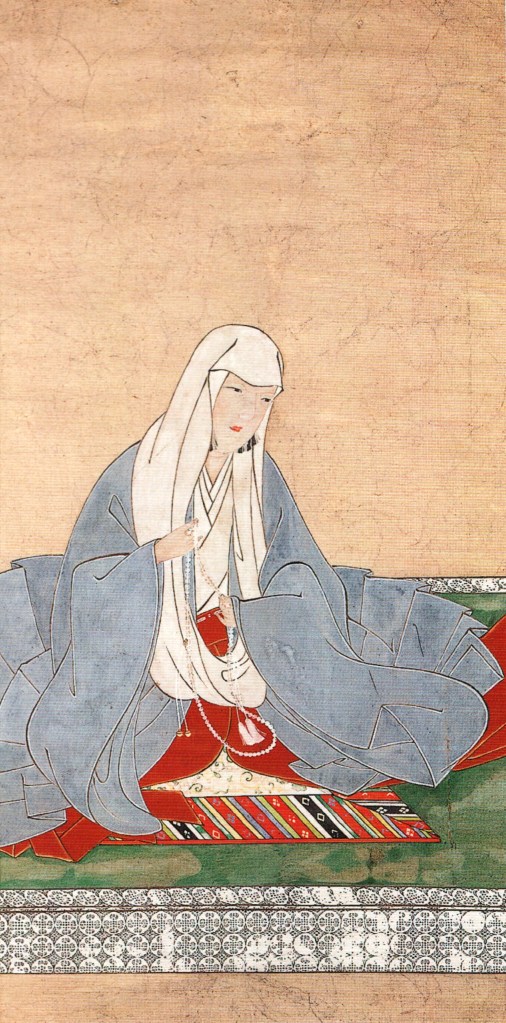
Despite the strength of his overall position, Shirakawa seemed ever cognizant that he could be shunted to the side if he let his guard down—another sign to me at least that he wasn’t wielding power out of concern for Toba and the realm as Brewster wants to interpret it. Every time he is presented with an opportunity to let Toba, or even Tadazane, make a decision, he makes it instead. The selection of Toba’s first empress when the emperor comes of age is a great example of this. As was Fujiwara tradition, Tadazane puts forward his daughter, Taishi, for the position, but Shirakawa also puts forward his own candidate: his adopted daughter, Tamako (known as Shōshi as empress). This on its face would be understandable, as one of Shirakawa’s overarching goals is to—like his father, Go-Sanjō—break the stranglehold the Fujiwaras have on the position of empress in favor of women aligned with the imperial house. But it’s his insistence on Tamako that’s the problem.
Tamako was the younger sister of one of Toba’s wet nurses (a position of high honor given to the best candidates among the nobility) and originally a member of a cadet, competing branch of the ruling Fujiwara clan. Again, none of this is extraordinary, but when she was adopted by Shirakawa, she was raised by him and one of his remaining concubines in the White River Palace (monastic vows always meant different rules for the former emperors) in a manner that at best had left her with a public reputation for being rather spoiled, and at worst had led to persistent rumors that Shirakawa’s relationship with her was less-than-fatherly. Whether these rumors were true or not is, unfortunately for Tamako, kind of beside the point for our purposes. As we’ve discussed, chastity was not a necessity for young Heian women, but discretion definitely was, and Tamako’s reputation among the wider aristocracy was that she was capricious in an indiscreet way that would have reflected badly on her as a marriage match. Shirakawa had already tried to marry her off to Tadazane’s eldest son (and expected kampaku successor) Tadamichi, but Tamako’s alleged reputation was so bad by that point Tadazane actually dared to break off the engagement (the imperial records say that the regent referred to his ex-future-daughter-in-law with the phrase kikai fukashigi, which The Cambridge History of Japan translates as “outrageous and unusual” (II, p. 611, n. 53)). Shirakawa was furious, but holds back his revenge until Tadazane puts Taishi forward for empresss, at which time he suggests Tamako as co-empress (some sources say that he suggested Tamako for empress and Taishi to serve in the lower position of imperial consort). Either way, Tadazane correctly sees this as the retired emperor’s revenge for what the regent said about his special girl—one that will force Tadazane to stand by his words, or accept the “insult” of putting his daughter on the same level with a girl who he has claimed is a scandal and disgrace.
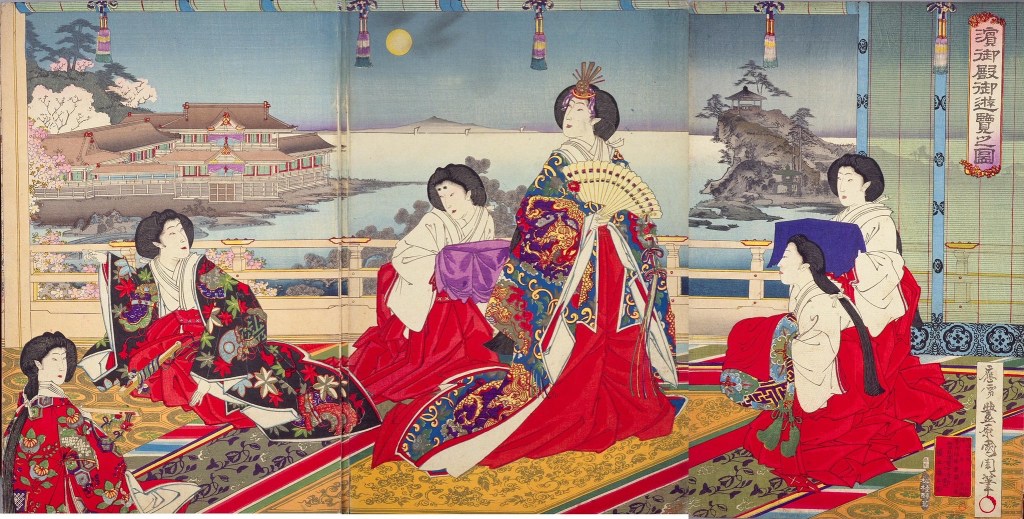
Perhaps surprisingly to Shirakawa, Tadazane calls his bluff and removes his daughter from consideration for empress. Tadazane defends Taishi’s honor, but at the cost of essentially underlining his insults of Tamako’s. Shirakawa, the man who rarely forgives being crossed, is enraged, and within a year of Tamako becoming empress, he has forced Tadazane out of the position of kampaku to be replaced by his son, Tadamichi. This might have satisfied Shirakawa’s pride, but the fallout was arguably disastrous for his family as well as Tadazane’s. His replacement as kampaku would create a slowly widening rift between Tadazane and the son who let it happen; but it would also not only leave Toba stripped of the only remaining potential check on his grandfather’s insei power, but it would saddle him with an empress whom half his court believed had been the retired emperor’s mistress.
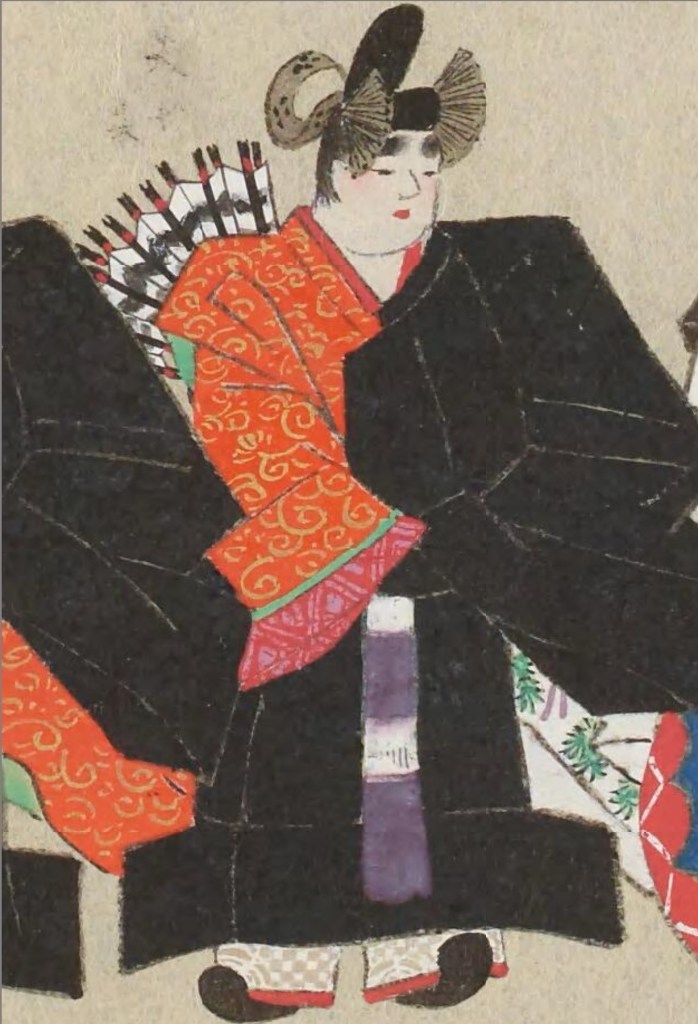
[Tadazane’s downfall at court happens at almost the exact same time as Nagako’s, and it’s hard to view that as solely a coincidence. Both of them appear in the records as more loyal to Toba than Shirakawa, and—crucially—the Sanuki no suke nikki speaks positively of Tadazane as a man and as a regent. Nagako specifically mentions at a chronologically early time in her service to Toba that she saw Tadazane as a potential patron and ally to her at court (where she needed that as a woman with few remaining useful family connections and no husband). It is not hard to imagine her building a working connection (if not the semi-romantic one I imagine in my novel) with the regent in the intervening years and being caught in the fallout of the empress selection scandal for backing both Toba and Tadazane.]
The uncomfortable situation between Toba and his new empress is not helped by her producing a baby very early into their marriage. Normally, it would be a relief to a young, politically vulnerable emperor like Toba to have a crown prince on hand so soon. But unfortunately for all involved, the timing is just wiggly enough to fuel uncontrollable rumors that Tamako’s baby, the future Emperor Sutoku (r. 1123-1142) (who we last saw as a yōkai rage-monster), is in fact Shirakawa’s son and not Toba’s. For the record, this is probably not true, but it causes an irreparable rift between Toba and Tamako (who he will keep as his empress, but whom he clearly never loves), and especially between Toba and Sutoku, the son he can never be sure of.
Rage appeased, none of this heartache seems to bother Shirakawa, though. For him, Sutoku—whether he’s a great-grandson or son—is great news. Because after giving the baby a few years to make sure he plans to stick around, Shirakawa can strong-arm his increasingly difficult grandson into abdicating in favor of another child emperor whom Shirakawa can essentially rule for. Not to mention he’s also replaced the forty-something Tadazane with his twenty-something son who owes his position to the insei, so the Fujiwaras are basically taken care of, too. Again, it’s hard to see these as the actions of a concerned paterfamilias and not a man uninterested in even sharing power with his own family.
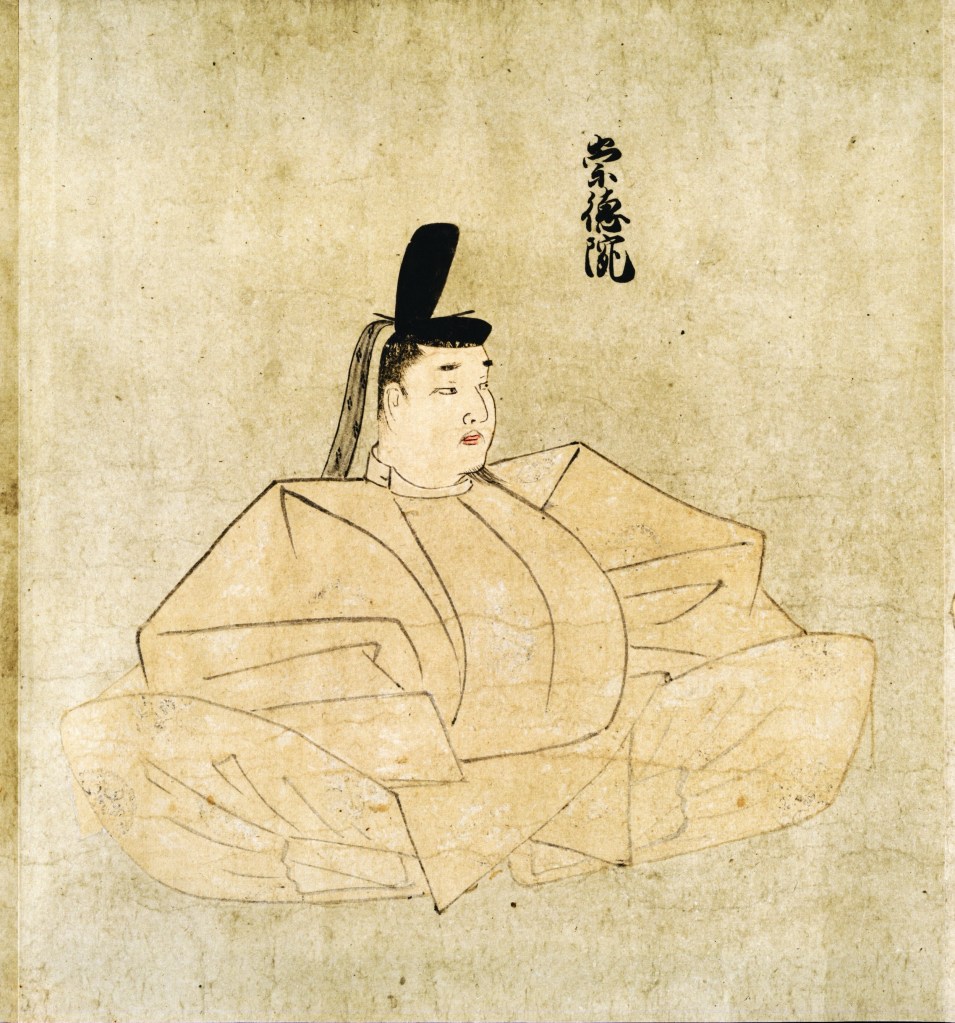
Toba spends the next six miserable years as a completely powerless second retired emperor, where he doesn’t have the influence or resources to set up a competing insei government. But Shirakawa finally kicks the bucket in 1129 at the ripe old age of seventy-six, and there is a seismic shift in the balance of imperial power. Toba becomes the powerful retired emperor, a position that he would hold through the reigns of three of his sons; and he immediately recalls Tadazane to the position of kampaku (which is great for Tadazane, but does nothing to improve his relationship with his now-demoted son Tadamichi). While not quite as long-lived as his indomitable grandfather, Toba will rule as cloistered emperor for nearly thirty years. Which will be long enough for him to at last taste the power that had been so long withheld from him, but also long enough to repeat a lot of Shirakawa’s mistakes. A likely fault of grandfather and grandson being so alike in personality.
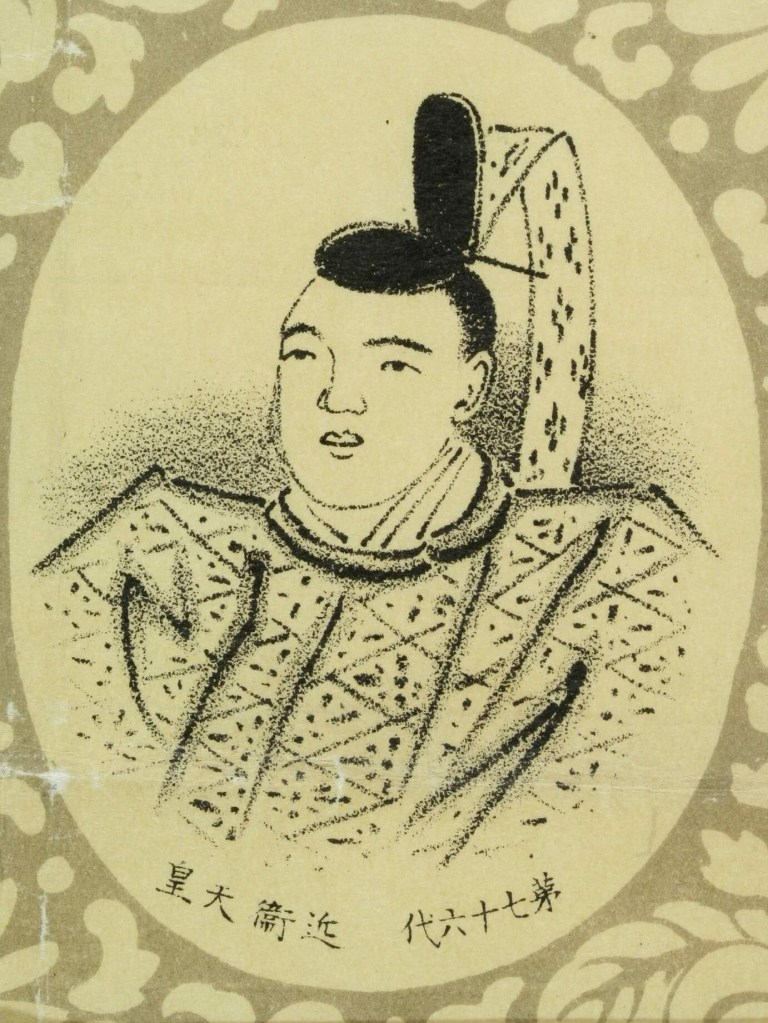
Toba’s biggest and most far-reaching mistake arguably comes when he forces his little-loved son, Sutoku, to abdicate the throne at nineteen in favor of his three year old half brother Konoe (r. 1142-1155), the son of Toba’s beloved post-abdication empress Nariko. Despite knowing what that humiliation felt like, Toba does this to his son (maybe uncle) essentially on personal whim and based on an unproven rumor. This was considered bad form by the court even at the time—bad enough that it in turn fueled the counter-rumor that Nariko was a kitsune who’d bewitched the retired emperor into such a cruel decision in favor of her own demon child. Either way, the retired emperor and empress are seen as justly punished when the frail Konoe dies only a little while later at the age of sixteen.
Konoe’s death opens up a succession crisis for Toba. Konoe was Nariko’s only son, so he can’t get another emperor from her. Toba has at least some of his other eight-odd sons still alive, but the most obvious candidate is the Fourth Prince, the second-eldest of Tamako’s sons (he might not love Tamako, but Toba seems more confident that he’s actually his son…). But that’s when Sutoku, languishing as another powerless second retired emperor, comes to his father with a proposal: just make Sutoku emperor again. It was a radical idea, but no less crazy than Shirakawa’s insei government. Toba even had the opportunity to perhaps redress a wrong: look at the son who’d he disliked through no fault of the child’s, the only one who understood how it felt to sit with nothing in a secondary cloistered emperorship, and maybe mend what was broken between them.
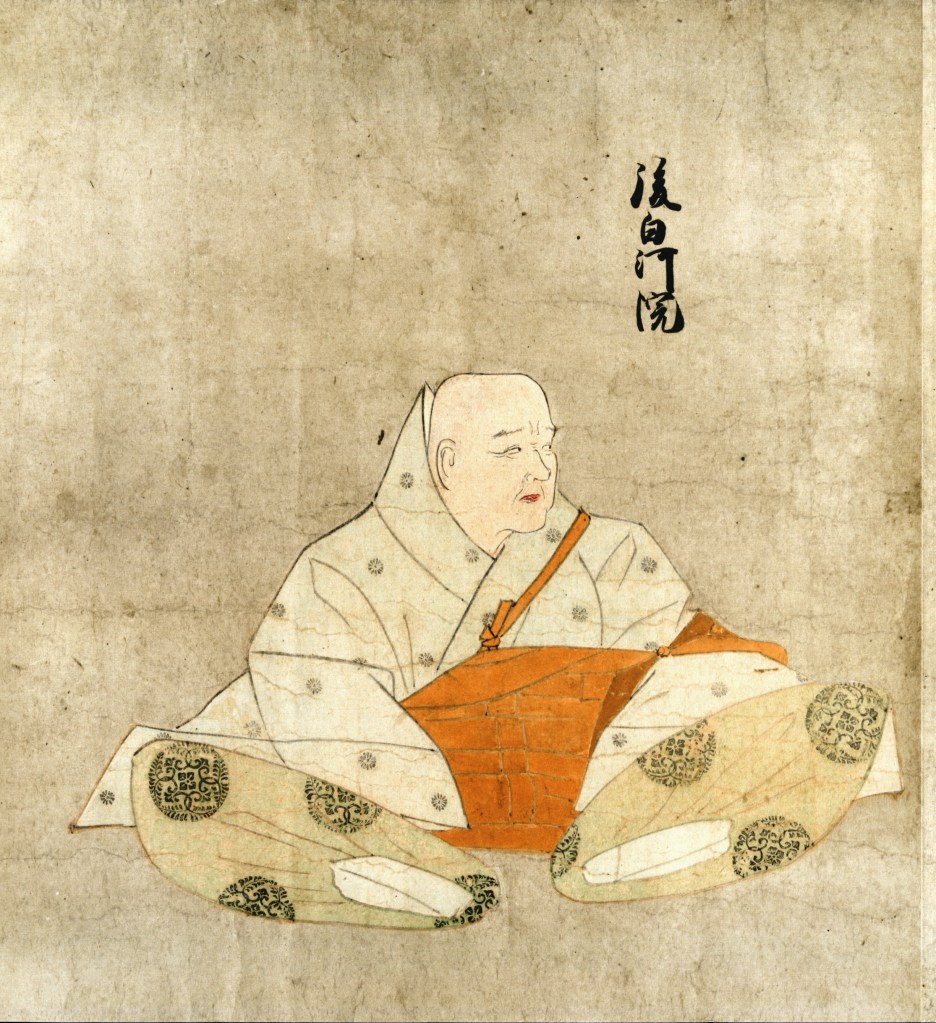
Alas, Toba was as much Shirakawa’s creation as he was his grandson, and he said no. He much preferred, if pressed to have a twenty-eight year old Go-Shirakawa (r. 1155-1158) under him than the thirty-six year old Sutoku, who might be looking for revenge on his dad once he was back on the throne. But then, catastrophically, it didn’t end up mattering all that much for Toba, who died a year into Go-Shirakawa’s reign. The still-enraged Sutoku launched a full-scale rebellion against his younger brother barely a week later—the so-called Hōgen Rebellion—in an attempt to take by force that which his father had refused to return to him. Sutoku would lose this bid within two weeks, but he would fatally weaken both the imperial house and the Fujiwaras in the process. Because the house of Tadazane split between the two emperors, with Tadazane and his favorite son Yorinaga siding with Sutoku and his other son Tadamichi siding with Go-Shirakawa. Like Sutoku, Tadazane and Yorinaga will be exiled rather than executed, but for all his talents, Tadamichi couldn’t stem the power gained by the Fujiwaras’ underling clan, the Taira, who now had largely supplanted their overlords in the imperial service, nor the all-but-united Minamotos, who also sided with Go-Shirakawa. And even Go-Shirakawa’s reign was doomed—to be swept away within two years of his victory over his brother by the warlord shōgunate ushered in by the Genpei War that the Minamoto will ultimately wage against the Taira and the emperor.
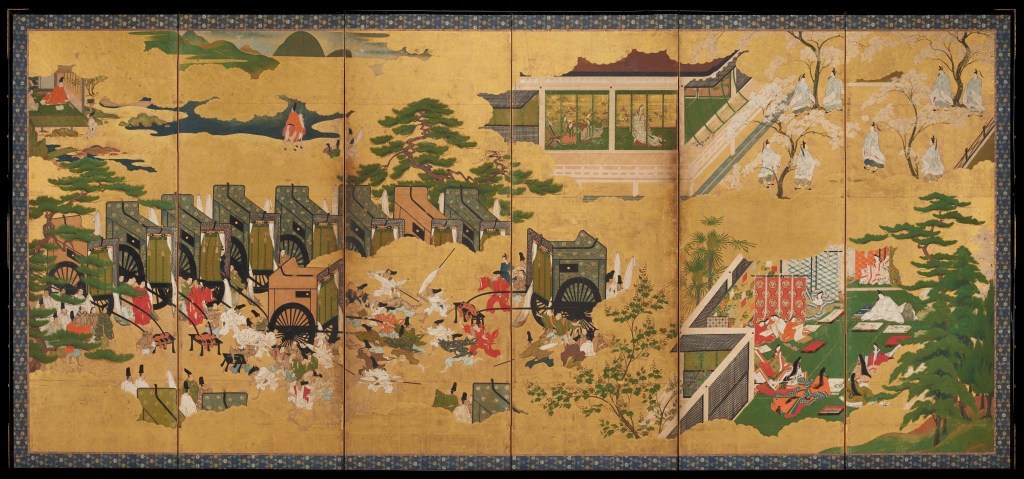
So, at the end of the Heian, the question usually is: was this all the fault of Shirakawa’s insei government? The people who lived in the aftermath of the destructive Genpei War seemed to have often thought so. The imperial throne was believed to survive on balance and continuity, something many observers felt Shirakawa had broken when he insisted on reigning over Toba, if not even earlier during Horikawa’s reign. Certainly insei seemed to solve few of the Heian period’s actual political problems, which were an increasingly dangerous capital outside the palace, unrest in the largely ignored provinces, and multiple sects of militant Buddhist monks causing violence and mayhem in several places (all of Raigō’s folklore is another afterburn of this). There were multiple, serious crop failures in these decades, which left many poorer people exploited and starving.
The great beauty of the Heian did almost nothing to address these deeper societal issues, and it is likely that even if the Fujiwaras had maintained their grip on power, or power had been revested in the emperor, that little would have changed in anyone’s approach to the larger problems of the time. And it is this failure to re-balance Japan itself, rather than Shirakawa, the insei, or any other single cause or style of government that probably made the Genpei War and the structural political change it ushered in inevitable.


Leave a Reply