Some of you were probably impressed that I managed to write a book of a more reasonable length in Lady Safflower this past year. But apparently writing for me is like a liquid that will spread to fill a space, so the extra thousands of words that would have been poured into, say, a God’s Wife novel had to go somewhere. The result of which is I’m already ordering paperback proofs for the next release, and since my editor’s been talking about it on Instagram, the cat’s well and truly out of the bag. So we might as well get hype here, too—and I am pretty hype, because my next book, Helikon Queens, will not only be my newest book, but it will be my first short story collection.
[I know—me and short fiction. I was shocked, too.]
Previously, I’ve always told people that I see short fiction as my least intuitive literary form. I find it relatively easy to compress ideas down to the impressionistic minuteness of a poem, and clearly I have little difficulty expanding out to full novel length. But working in the middle-of-the-road, no man’s land of short story or even novella takes the most effort for me. To tell a whole story in seventy pages or less (that’s what my editor says are the technical parameters for a short story), one worth your reader’s time, I think that’s a real challenge, and I admire writers who work fluidly in that space. I have wanted to try, though, and Helikon Queens is the result; and mercifully, the result is better than I could have hoped for in a first, serious attempt.
And it wasn’t a totally crazy leap to try. I have plenty of ideas and interests that even I haven’t figured out how to expand into a full-length novel, and shorter fiction is an obvious solution for that. Also, even though I think the market has been oversaturated and a lot of what’s out there is pretty banal, I have really wanted to write something in Greek mythology, especially something with the Muses. The main problem with that is all of the Muses were more of an idea to the ancient world than characters the way many of the other gods were. Aside from a divine revenge story written by Ovid in The Metamorphoses, they have pretty limited mythologies mostly tied up in the few people/creatures said to be their children.
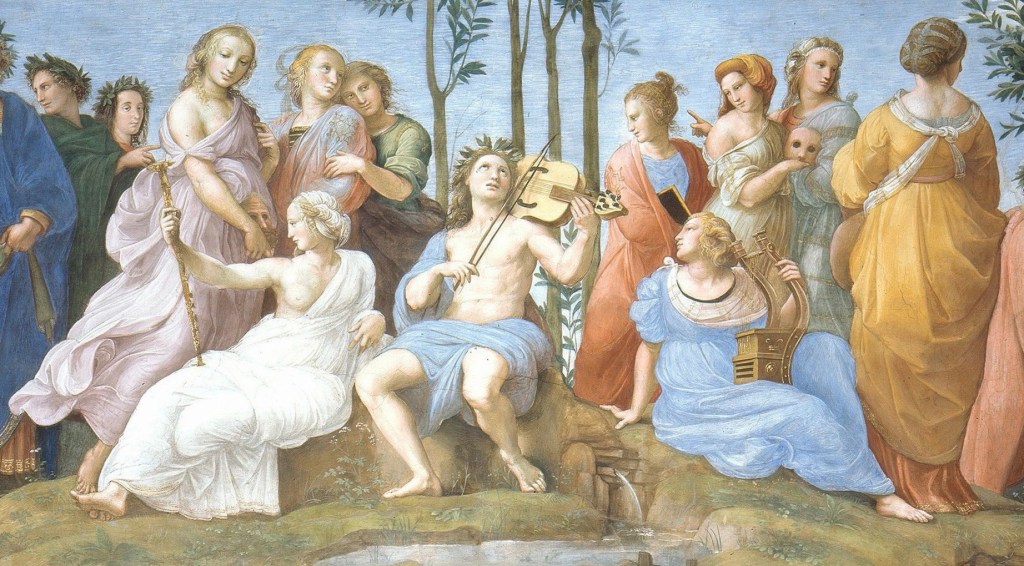
The pairings go as follows:
Erato (muse of erotic and love poetry)/ Tiresias
Thalia (muse of comedy and light verse)/ Dante
Ourania (muse of astronomy)/ Vincent van Gogh
Euterpe (muse of music)/ Mozart
Kalliope (muse of epic poetry)/ Mary Wroth
Terpsichore (muse of dance)/ Josephine Baker
Polyhymnia (muse of sacred poetry and pantomime)/ Hildegard of Bingen
Melpomene (muse of tragedy)/ Edwin Booth
Kleio (muse of history)/ Hyacinth, herself
Obviously, some of my protagonists are very well known, others less so (and Mary Wroth is probably only known to people who read this blog). But I have tried to tell perhaps less-expected stories with everyone, to give them and the Muses room to breathe. For example, using Mozart as my music artist is probably the most on-the-nose of any of my subject choices, but the story is told through Euterpe, who plays the composer semi-famous pet starling. Likewise, perhaps to everyone’s disappointment, the Edwin Booth story is not focused on the Lincoln assassination (don’t worry, we can’t avoid it entirely), but conversely, and possibly on the upside, the Josephine Baker story is less about dance and more about her and Terpsichore spying for the Allies during World War II. The Muses give and the Muses take.
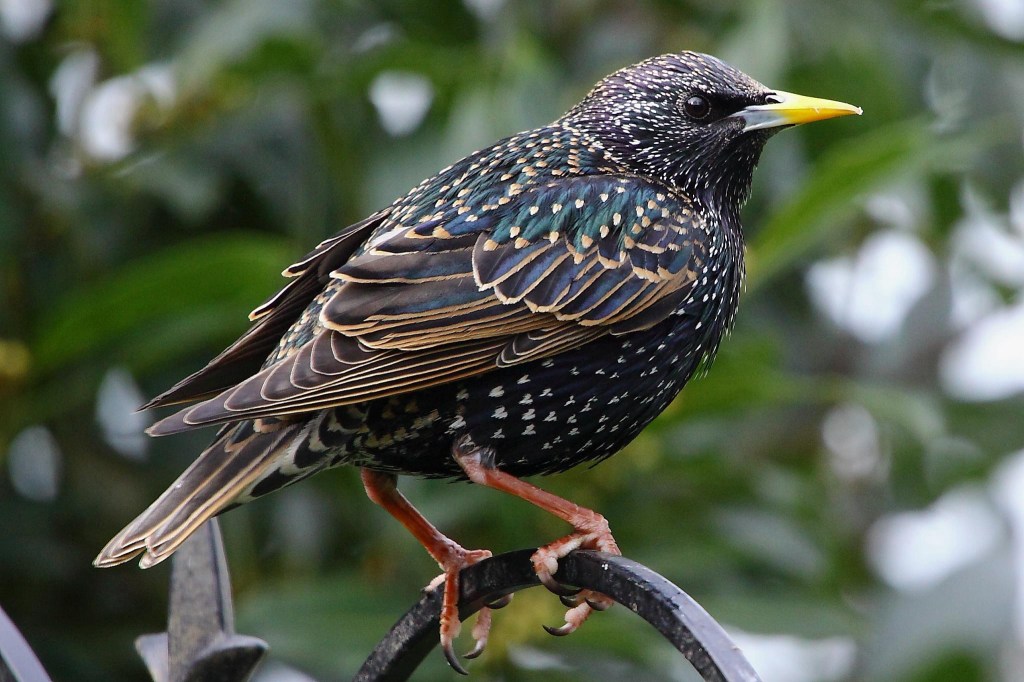
[Mozart’s starling is a favorite subject of children’s books, for obvious reasons, but I wanted a crack at an adult (or at least all-ages) version of the story.]
But because the Muses are sisters, and I am ultimately a novelist temporarily masquerading as a mostly competent short story writer, while each story is a story unto itself, they are somewhat interconnected and self-referential. The girls pop up in each other’s stories, and chronologically later stories often mention things that happened in the earlier ones. Some of that is just because it was fun to do, but the rest was because the Muses are goddesses who are less separate entities than a sort of divine hive mind and they also exist simultaneously at all points in history. They are Nine, but they are also One. Creativity often works that way.
In addition to being able to play with a bunch of different people and time periods, I also used this opportunity and the aegis of the Muses’ different spheres to dabble in different literary structures. Most of the stories are in typical short story form, but one is entirely epistolary; another is in stage play structure; and I regret to inform the trepidatious among you that one is a series of narrative poems (the last one couldn’t be helped—Kalliope is Musagetes, Muse Leader, and she demands a story in her own style).
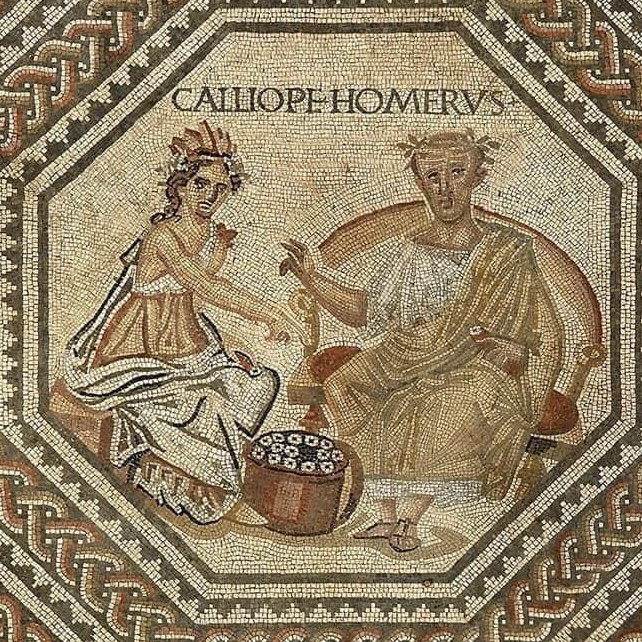
Right now, I’m looking at roughly next February as my release target for this one, mostly to give Lady Safflower a little more time to breathe; and since my digital publisher, Draft2Digital, seems to have finally managed to successfully integrate its print editions onto Amazon, I am planning to try to have just one print edition this time around. But as we move between the holidays and calendar years, I will keep you updated on all of this, including when preorders are available. I’m always excited to share new material with all of you, but as we’ll be in new territory with this one, I’m especially excited for you all to meet the girls and their protégés.
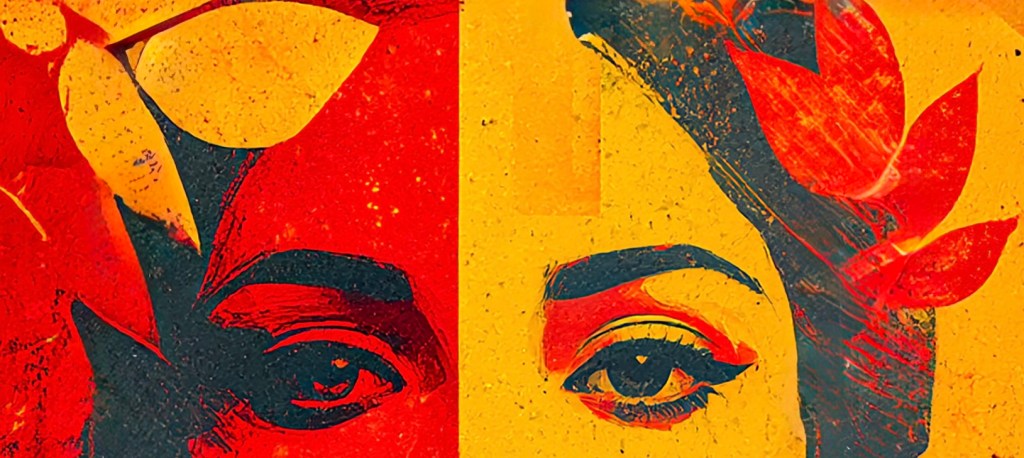
[Cover preview: I know I say this every time, but this one is really gorgeous. I can’t wait for everyone to see it all.]
So that’s the big upcoming project, but I alluded to a secret, second project, so what’s up with that? This one is a little more lowkey and even more niche than my usual fare, and I’ll confess that it’s something I’ve been sitting on for almost two years because I wasn’t sure if I could bring myself to publish it. But I’ve finally convinced myself that it really is a publish-or-perish world out here, so in the end, I must.
As people who know me will (groaningly) attest and as I have briefly alluded to once or twice on here, I did the internationally-famous Semester at Sea study abroad program in the spring of my junior year of college. Which—as the aforementioned loving groans imply—was largely an amazing and transformative experience for me that I generally look back on very fondly. But less known to you all here, that semester also comprised three and a half of the last five months of my youngest brother’s life before he lost his battle with cancer a few months shy of his fifteenth birthday. I will get into more specifics at a later date, but when I started the voyage, we believed he was (miraculously) headed toward remission, but within two weeks of my departure, the complexion of both my program and his prognosis changed dramatically, and while I would ultimately decide to continue with my journey, it would be in the knowledge that we no longer had any idea of how much time my brother had left, and he could die before I got back. This didn’t end up happening, but I would still have to reckon with how much I was gone in his last days, even if there had really been no “right” answer to what I should have done.
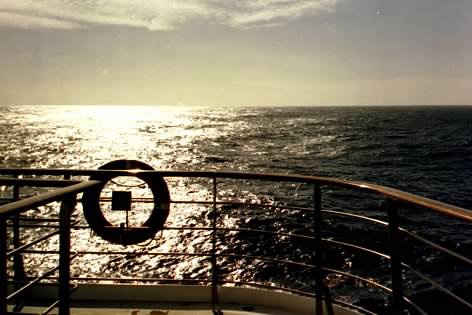
Anyway, this was 2005, so two years ago in January 2025 to mark the 20th anniversary of both my voyage and my brother’s passing, I went back to the daily journal I kept for the hundred days I was away for the first time since I wrote them. Obviously, a lot of my journal entries were about my voyage and all that I was doing, but an equal amount of them were grappling with the antecedent grief of losing my brother in the middle of what was supposed to be a joyous, once-in-a-lifetime experience. I had not touched these journals for so long because the emotional record was so volatile, and I correctly expected that going back to the granular details of those days beyond my recollections or, say, my photos and the voyage video, would be very difficult. But I did manage to do it, even if it made for a very emotionally draining spring.
Reading one entry a day on the anniversary of the day I wrote it, I decided the entries themselves weren’t really worth much on their own, but what I did instead was to turn each day’s emotions and experiences, and mine reading them twenty years on, into poems that I wrote as I was reading. The result is this second project: The Last Ocean. Part travelogue, part poetic memoir, it goes through the incredible, the mundane, and the absolute insanity of these one hundred days in one hundred poems. It’s a reflection on love and grief, but it’s also an offering of sheer gratitude for everything and everyone I met on my voyage, both shipside and in nine different countries on four continents.
My years-long hesitation on actually doing anything with this has been in part because poetry is such a hard sell and (despite my WordPress header) I find it even harder to label myself a poet than I do a writer or novelist. But mostly because this is such an intensely personal piece for me, with no veil of fiction to hide behind, which makes it scarier to my own ego. So, I know that this will be an even further-afield release than anything I’ve put out before it (or HQ, which will follow it), but I plan to have The Last Ocean out on January 26th of next year (the date is another anniversary of sorts for this whole adventure, but we’ll get into that another time).
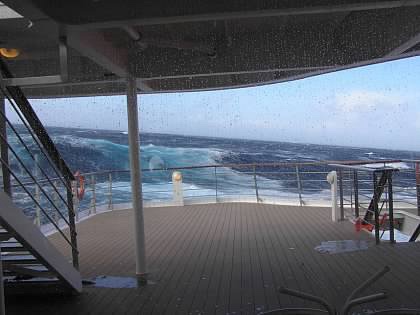
[Just you waaaaaait…]
Like with HQ, I will keep you all posted with more information, including preorders, as we get closer to the new year. Despite my anxieties, I am equally excited to get both of these projects out into the world to you, and I can’t wait to get deeper into both here soon. We’ll start off with a bang in 2027–thanks as always for all your support and encouragement!🏺🌊


Leave a Reply