In my post about Mary Wollstonecraft’s novels, I intimated that the Enlightenment had a bit of a fictional literature problem. In the broad strokes, it’s just very hard to create compelling fiction if you were a serious adherent of the period’s new cult of reason (if not the literal Cult of Reason…) and science. At least, fiction that doesn’t devolve into didacticism, and nobody really enjoys didactic fiction. So what’s a writer to do? Well, if you’re the French priest Jean Terrasson (1670-1750), you try to take the mytho-historical folklore of ancient Greece and Rome and turn it into something capable of beginning the bridge from ancient fantasy into modern science fiction, and you write a 900-page novel about an Egyptian prince who conquers the world with the power of science, virtue, and proto-Freemasonry.
[Wait, what?]
Um, yeah, beneath a fairly pedestrian folkloric hero’s journey story, there is a lot to unpack both inside and out of The Life of Sethos, so I thought today we’d at least attempt to scratch the surface of what’s going on with it. And don’t worry, there’s going to be a little something for everyone.

[This club has everything: Egyptian history, Greek literature, Parisian university beefs, colonialism, secret societies, modern Classics department beefs, opera…]
To start with though, Terrasson seems like an unlikely author for what amounts to an early historical fantasy novel. Although an abbé, like many priests of his time, Terrasson was more of an academic than a true man of the cloth. A member of the Académie française, and a professor of Greek at the institution that would eventually become the Collège de France, Terrasson seems to have generally positioned himself as a proponent of the “modern school” in scholastic France’s decades-long debate colloquially referred to as the Querelle des Anciens et des Modernes. To be very brief, the argument was essentially whether the achievements of contemporary French literature and art were because of the greatness of ancient Greek and Roman art; or whether modern French culture, typified by Louis XIV’s glittering cultural milieu and benefiting from the “truth” of Christianity, was inherently superior to anything the ancients had produced.
So why would Terrasson write a story about an ancient Egyptian prince if he thought Christ and le Roi Soleil were so great? I’m only speculating here, but it could be that Terrasson was attempting to create a “new” ancient mythos more grounded in the the humanistic virtues that came out of the Renaissance and the emerging science of the Enlightenment, rather than the typical ancient tales of the fantastic. Essentially, it is possible Terrasson wrote this story to prove that he could write a better, more rational story than Herodotus.
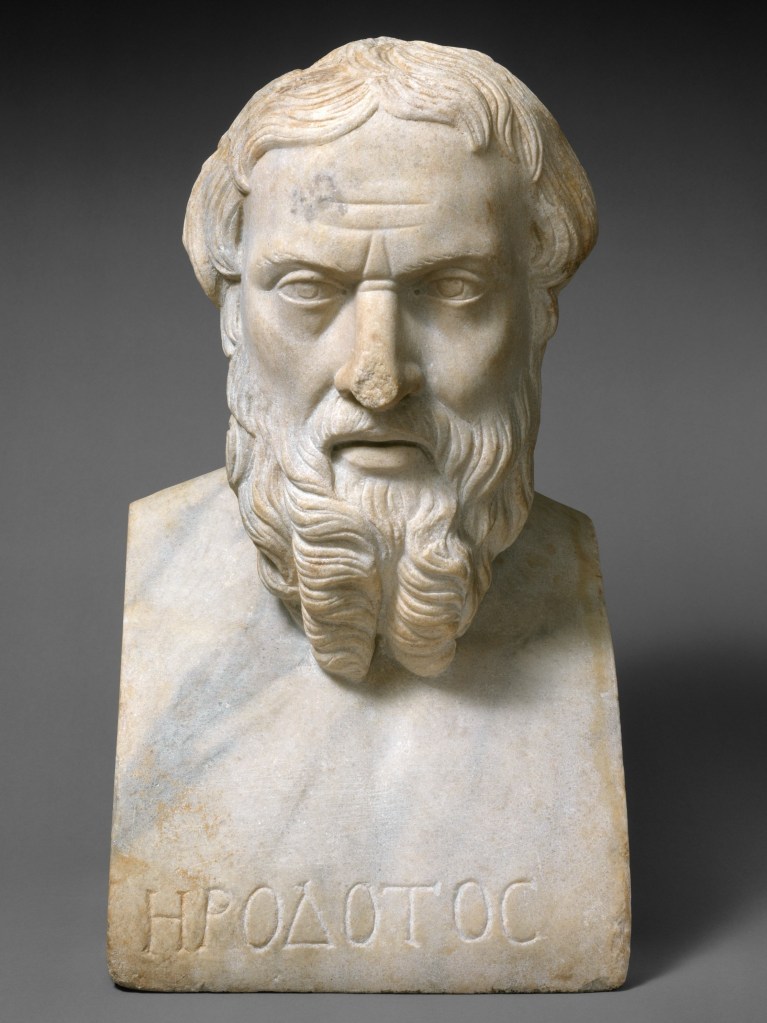
Because Herodotus is indubitably the inspiration for Sethos, right down to the titular character’s name. In Book II (chapter 141), one of the Greek historian’s wild and wacky Egypt books, he writes:
“After him there came to the throne the priest of Hephaistos [Ptah], whose name was Sethos. This man, they said, neglected and held in no regard the warrior class of the Egyptians, considering that he would have no need of them; and besides other slights which he put upon them, he also took from them the yokes of corn-land which had been given to them as a special gift in the reigns of the former kings, twelve yokes to each man. After this, Sanacharib king of the Arabians and of the Assyrians marched a great host against Egypt. Then the warriors of the Egyptians refused to come to the rescue, and the priest, being driven into a strait, entered into the sanctuary of the temple and bewailed to the image of the god the danger which was impending over him; and as he was thus lamenting, sleep came upon him, and it seemed to him in his vision that the god came and stood by him and encouraged him, saying that he should suffer no evil if he went forth to meet the army of the Arabians; for he himself would send him helpers. Trusting in these things seen in sleep, he took with him, they said, those of the Egyptians who were willing to follow him, and encamped in Pelusion, for by this way the invasion came: and not one of the warrior class followed him, but shop-keepers and artisans and men of the market. Then after they came, there swarmed by night upon their enemies mice of the fields, and ate up their quivers and their bows, and moreover the handles of their shields, so that on the next day they fled, and being without defence of arms great numbers fell. And at the present time this king stands in the temple of Hephaistos in stone, holding upon his hand a mouse, and by letters inscribed he says these words: “Let him who looks upon me learn to fear the gods.”
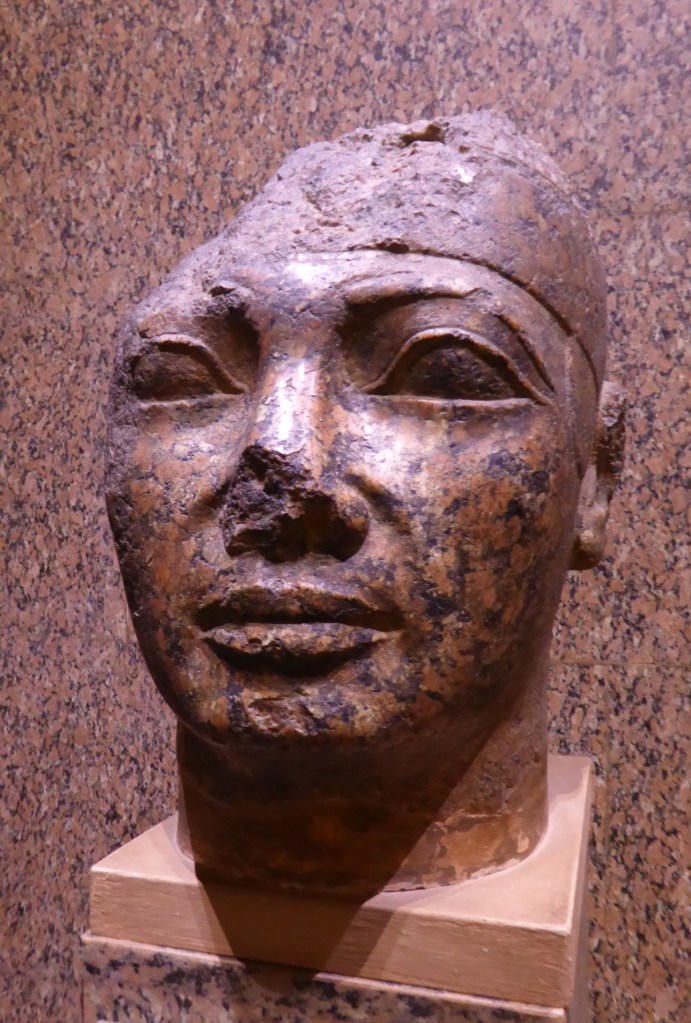
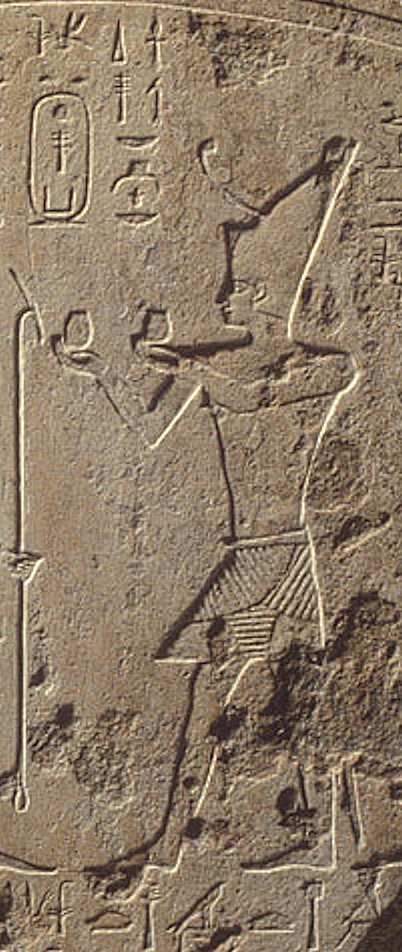
[Shebitku]
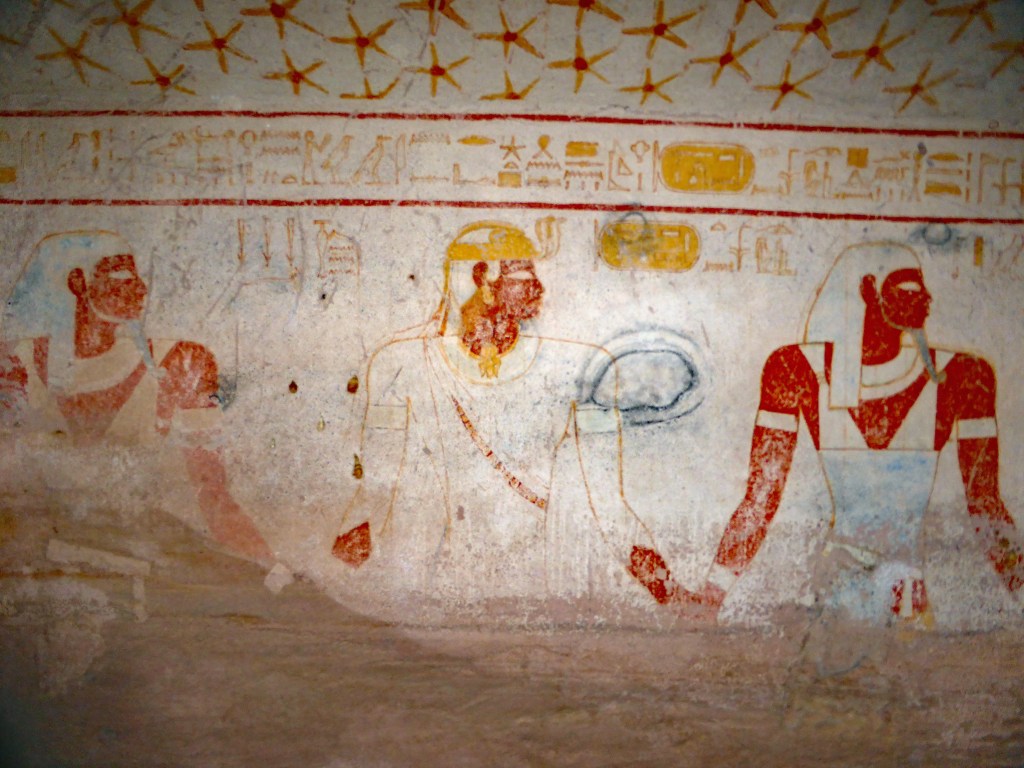
We think that, rather than either of the 19th dynasty pharaohs called Sethos (Seti) by the Greeks—because of the Assyrian connection—that Herodotus is actually referring to the 25th dynasty Nubian/Kushite pharaoh Shebitku, who would have been ruling at the correct time (~8th century BCE), and had defeated the rebel king (or governor—the Assyrian word is flexible) Yamanni and turned him over to Assyrian king of kings, Sargon II. Having Herodotus’ Sethos be Shebitku in the chaotic Third Intermediary Period, rather than Setis in the more stable New Kingdom fits better with Terrasson’s descriptions of several interlocking pharaonic strongholds within Egypt, as opposed to a single, unified kingdom as would have been the case for the Setis.
Like many a historical fiction novelist before and after him, Terrasson also uses some academic disavowal for his wild ancient story, telling us that it is merely his gloss of a (fictional) older Greek manuscript supposedly written by some long-ago Alexandrian scholar that was that guy’s gloss of even older ancient sources now lost. Terrasson doubly indemnifies himself by asserting in his introduction that the whole story is probably fictional, which is definitely true, but also another strange disavowal. One gets the impression that the modernist Terrasson is a little embarrassed to have wrote this Greco-Egyptian history fanfic.
The early parts of The Life of Sethos are the most Herodotian, where we are treated to long quasi-mythological origin stories for Egypt’s kings and gods, and of ancient Egypt’s intellectual achievements. Modern Egyptology was in its fetal stage at this point, but non-Greek Europeans had been traveling to Egypt and observing its monumental ruins since the Middle Ages, and baby Enlightenment scientists had already recognized—for example—the mathematical significance of the pyramids’ construction. This combined with Egypt’s persistent reputation for the mystical led to it being thought of as an early font of human knowledge.
Sethos himself is born the eldest son and heir of Osoroth, the king of Memphis. Osoroth is kind of a hilarious character, in that he is lazy and sensual and spends the entire story getting other people to do his job for him. In the beginning of the story, this is—thankfully for Memphis—his beautiful and hyper-competent queen, Nephte (Sethos’ mother), but later it will be Osoroth’s second wife, the scheming noblewoman Daluca. When we start getting into the meat of this part of the novel is when Terrasson is at his most Charles Perrault. The fairytale Duped King, the Good (Dead) Queen/Mother, the Wicked Queen/Stepmother—they’re all present and accounted for. Our virtuous young hero Sethos even has his Merlin-esque godmother character in his tutor Amedes. Sethos has a lot of innate qualities, but he only makes it out of the precarious situation caused by his mom essentially working herself to death because Amedes has his back. Amedes gets Sethos out of Memphis before Daluca gets too many ideas about him, and is the one who fast tracks Sethos’ initiation into the Egyptian priesthood’s cult of knowledge, embodied by the Divine Mother, Isis, that will fortify him through the trials ahead of him so that he might return to Memphis fully worthy of the throne.
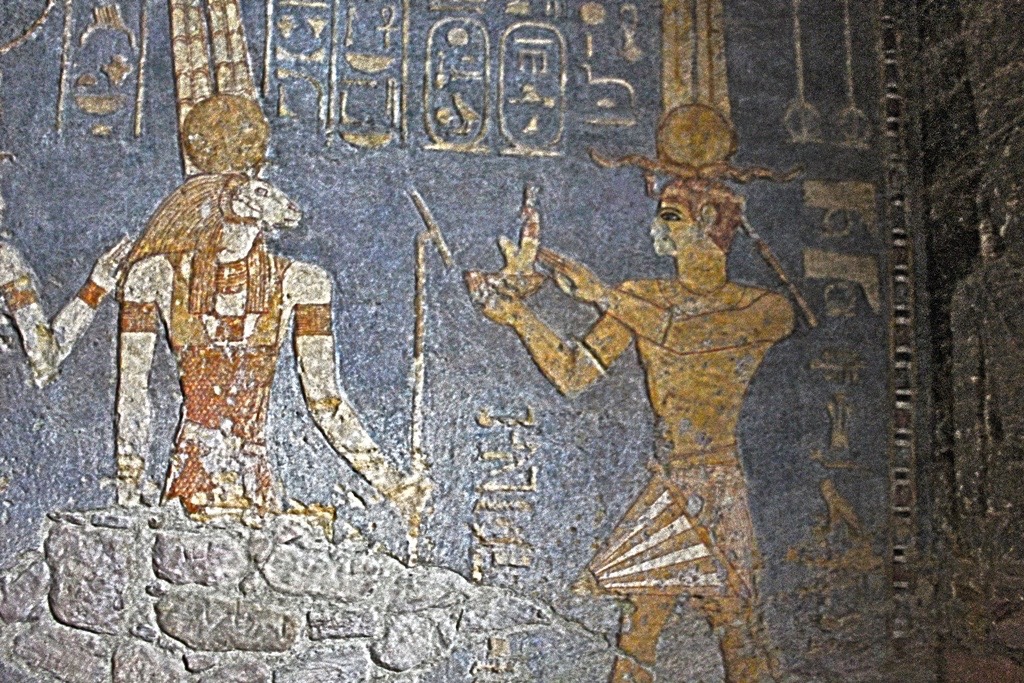
Sethos’ education and initiation through Amedes brings another literary genre into Terrasson’s narrative, the medieval/Renaissance Mirror of Princes, where the young prince is instructed and tested by his tutor and the priests in the philosophy of morality and good kingship. It is not enough for Sethos to be a good man, he must show himself to be a good ruler: pious, brave, and just. A lot of his temple initiation is a bunch of esoteric rituals meant to be ancient trust-falls that simulate the passage of life into death (or ignorance into truth) very much meant to invoke Orphism or the other Greek mystery cults. Indeed, the Egyptian priests claim that it was Orpheus and other Greek heroes that transmitted these rites to Attica in modified forms the Greeks would understand.
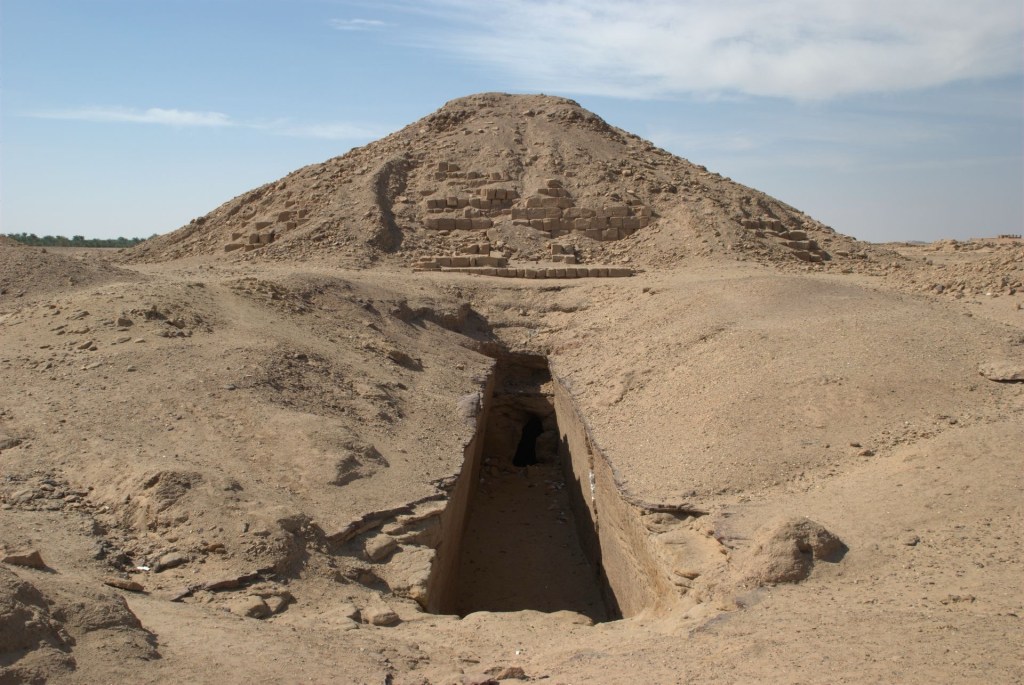
[As saw in Jane Webb Loudon’s The Mummy!, Terrasson, like all Europeans, was sure that we were going to eventually find something incredible inside the Great Pyramid, and part of Sethos’ training is being permitted inside the secret temple it must surely have in it somewhere. (Pyramid 1 at El Kurru, the necropolis of Nubian pharaohs of the 25th dynasty like Shebitku)]
Aside from being just spooky, secret rituals, much of Sethos’ training involves the kind of Socratic debates Terrasson and his fellow academics sparred with in the Parisian universities. He is given a concrete example of the thin eye of the needle that is moral kingship in the form of two brothers from neighboring Carthage, neither of whom are perfect princes (like Sethos, natch…), but are trying to prove their individual worthiness to inherit their father’s throne. Both will be recurring characters in the story, and both make big mistakes along the way, but they give Sethos positive and negative examples to follow or avoid as he comes into his own.
Because he is meant to be a worthy prince, Sethos is not like his version in Herodotus, and is quick to come to Memphis’ military aid when it is attacked by its enemies. He fights valiantly, but is injured and taken captive, after which he is sold as a slave to the Phoenicians. Hiding his real identity under the name Cheres, Terrasson’s narrative becomes an udapted version of the medieval wonder travelogues as Sethos/Cheres sails to India and then all the way around Africa with the Phoenicians, helping them set up trading posts as they go—making alliances with “enlightened” kingdoms and colonizing/enslaving areas considered too barbarous for enlightened government yet. Sethos/Cheres proves too amazing and useful to stay a slave, sure, but he has no trouble making slaves of others not as great as he is. The style of this part of the narrative is less “these are what ancient times were like” and more “it’s the mid-18th century here and we have the white man’s burden.” The racial divides as Sethos/Cheres works his way around Africa are the most contemporary-to-publication part of the novel, and therefore this is the part that least stand the test of time. I haven’t said as much before, but it kind of goes without saying that Terrasson is aligned with the early modern view of the pyramid-building Egyptians as a white(ish) race that was divorced from the Arab and Black Egyptians they saw in their own contemporary Egypt. Any time Sethos/Cheres is making an alliance in Africa instead of a conquest, it is always with acknowledged “advanced” kingdoms in Congo, Mali, Senegal, and North African countries (who also acknowledge the superior “beauty” and intellect of the whiter Sethos); or it is literally with a made up entity like the Atlanteans (who are of course Greco-Phoenician or similar).
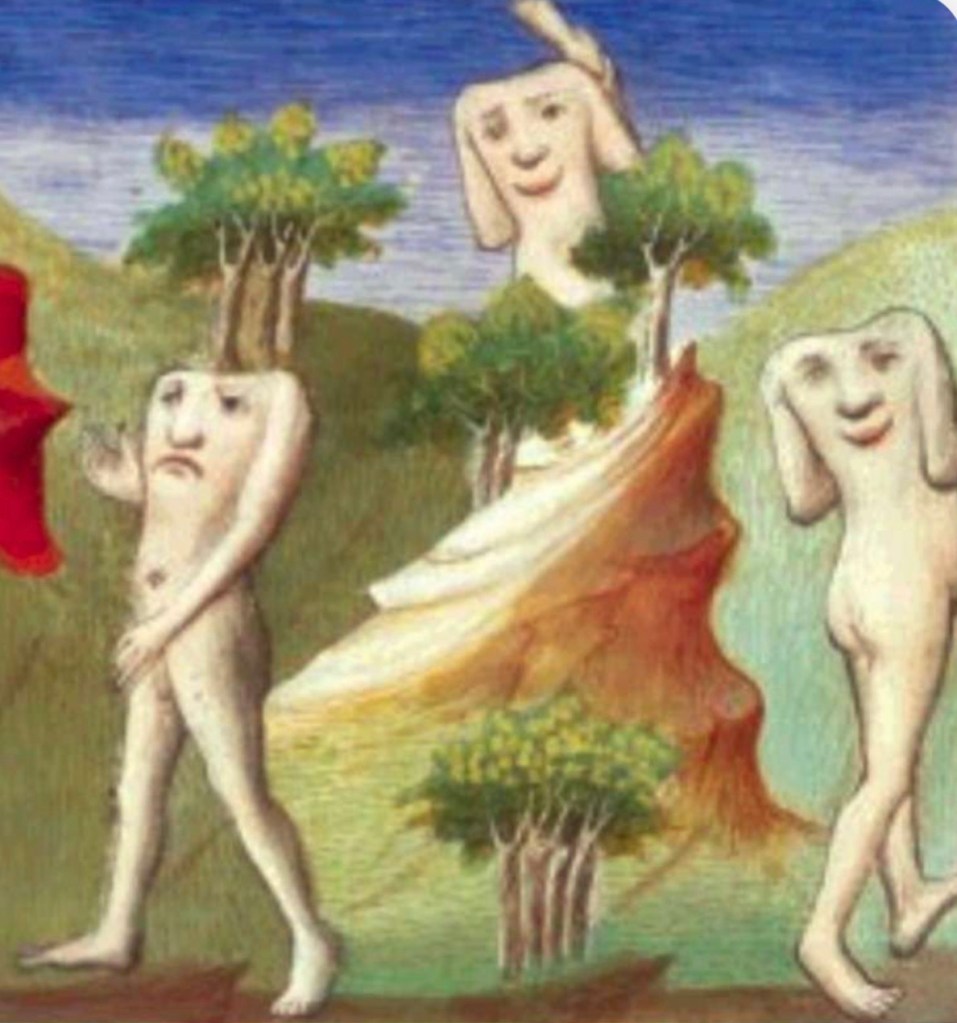
[Sethos/Cheres defeats a group called Anthrophopagi, but this is mainly used as a byword for cannibals, so it’s unclear if they are the classic medieval anthropophagi that have their faces in the middle of their chests…]
The racist colonial tour bleeds into a protracted battle to get the inheritance situation in Carthage sorted out, both of which really drag down the back end of the story. But we get through it all, and Sethos—still masquerading as Cheres—finally returns to Egypt to figure out his own inheritance situation. Daluca has two sons of her own by Osoroth, but in a very Ramayana-style twist, despite having two objectively terrible parents, Sethos’ half-brothers are genuinely good dudes and bear him no ill will. The younger of the two, Pemphos, actually joins Sethos for part of his Africa “adventure,” pretending to be a noble nobody who wants to learn by the famous Cheres’ example. While Sethos is trying to figure out how to outmaneuver Daluca, he helps one of the other Egyptian kings—Spanius of Thais (maybe Thebes? not 100% on this ID)—and falls in love with Spanius’ daughter and heir, Mnevia. This is a double problem for Sethos because one, in an attempt to preserve his daughter’s royal autonomy, Spanius has decreed that her husband must not be heir to one of the other kingdoms (as Sethos is, unbeknownst to him); and two, Pemphos is already in love with the princess, and Sethos doesn’t want to do his younger brother dirty.
In the end, Sethos defeats Daluca (who poisons herself), and proves he has ascended into another astral plain of virtue by giving rule of Memphis to his brother Beon, and Mnevia’s hand to Pemphos (he convinces Mnevia, Abelard-style, to agree to this as the more moral choice than their love). Sethos lives out his days as a kind of supreme governor-general of all Egypt beneath the pharaohs, and everyone is just beside themselves at his spiritual perfection.
Always kind of an oddity, perhaps because it is so sprawling and encyclopedic in nature, The Life of Sethos was never especially popular, even in its own time. As Margaret Geoga noted in a 2018 lecture, it has also been “largely forgotten” through the present day by literary scholars and modern Egyptologists. Reading it, I was struck by both how emblematic it felt of the Enlightenment’s hodgepodge approach to knowledge, but also how it felt like something that would have been dated even at the time it was written. There was, aside from the interminable colonial section and most of the saga about Carthage’s problems, a lot that I found interesting, and if it wouldn’t just stop the story in jarring bits, I’d actually recommend at least the first five books or so and the last two. But I have unconventional tastes, Anastasia—people would probably get mad at me for suggesting that even those parts weren’t weird and off-putting. As a result of all of this, the abbreviated afterlife of Sethos, created by the few people like me who found any of it interesting, is downright bizarre.
Arguably the most enduring claims to fame Sethos has is as a supposed inspiration for Mozart and his librettist, Emanuel Schikaneder’s, opera, The Magic Flute (Die Zauberflöte). Honestly, having now read Sethos and being at least passingly familiar with the plot of Flute, it is a very tenuous connection. But the priest Sarastro’s mystical knowledge and the trials by ordeal that Tamino and Pamina undergo to prove themselves and their love, in part to defeat an evil queen are reminiscent of Sethos. Unfortunately, Mozart and Schikaneder’s connections to continental Freemasonry also mean that the imagery from both Flute and Sethos’ other notoriety has come from being attached to every whackadoo theory you’ve ever heard about the Freemasons plotting the end of Christianity and civilization as we know it through satanic occult rituals. For that, I’m sure Abbé Terrasson is spinning in his grave.
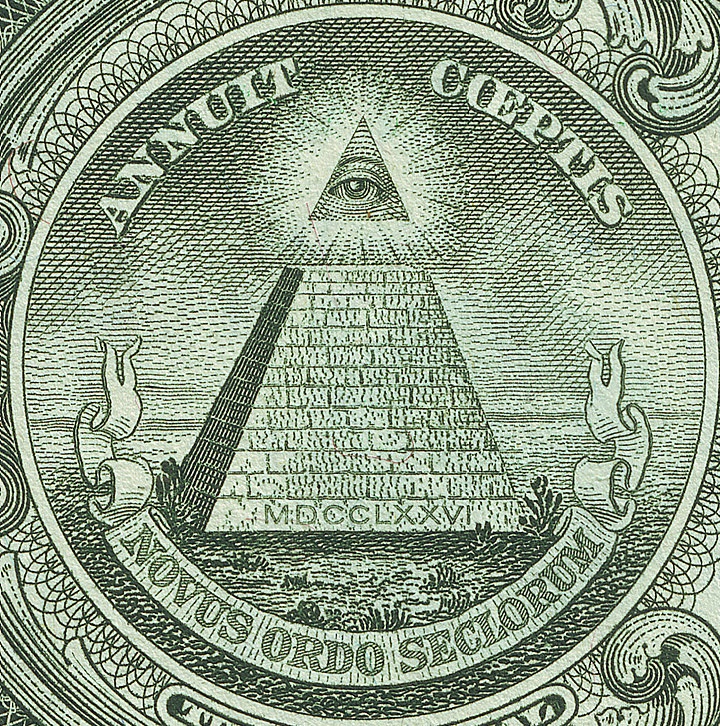
[“Because he’s probably a secret Jesuit occultist!” screams someone from the aether…]
More respectable than conspiracy webs about the New World Order—but only just, at the moment—is Sethos’ inspiration as a foundational text in modern Afrocentrism, especially in regards to Martin Bernal’s controversial book, Black Athena (pub. 1987-2006). Bernal and other historians, particularly Black American and African scholars, have used the more Herodotian parts of Sethos and other commentary from ancient Greek sources to posit that much of the supposed grandeur of Classical Greek (and therefore Roman and European) achievement came directly from prior Egyptian and Semitic Phoenician knowledge. I.e., rather than the Egyptian goddess Neith being syncretized with the Greek Athena during the Ptolemaic period, Athena started out as the Egyptian Neith and moved north as Greeks learned Egyptian mathematics, astronomy, and literature. In defense of the Masons, Terrasson would probably spin at the idea of this, too.
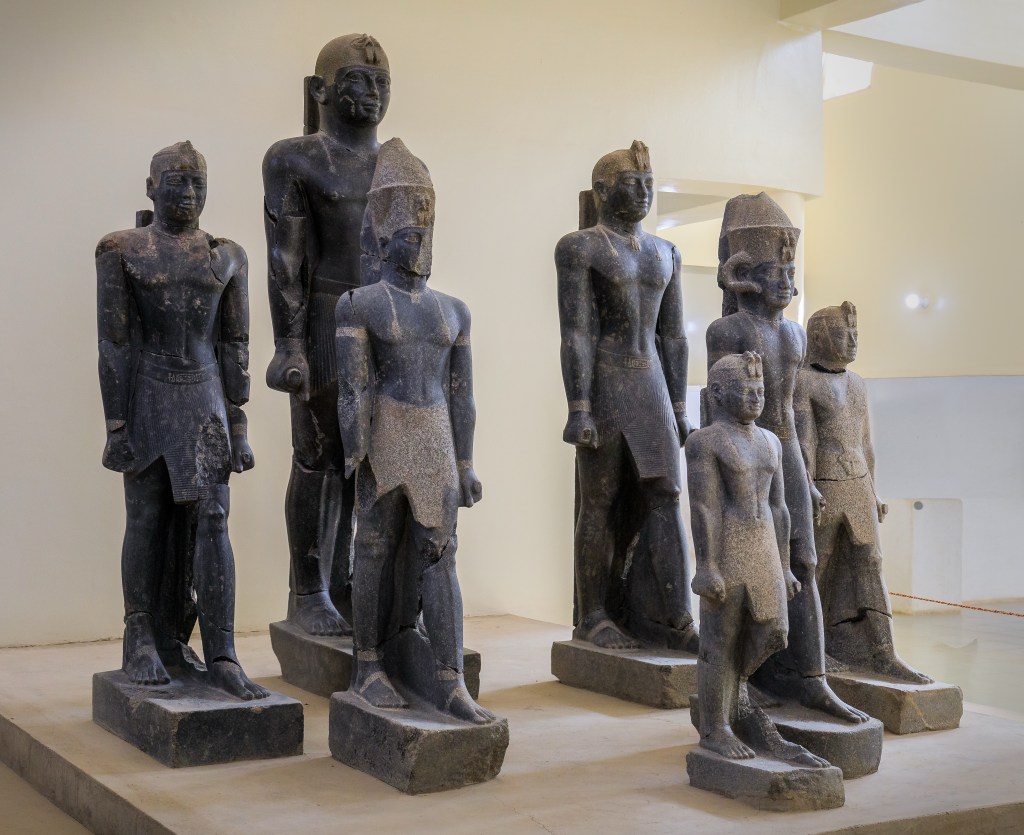
[“Because he was a imperialist racist!” screams someone else from an entirely different part of the aether…]
Because the Afrocentric evidence rests primarily in things like Greek literature and alleged Greek linguistic word roots, and not “hard” archeology, mainstream Classics is extremely skeptical, if not downright hostile, to most Afrocentrism generally and Black Athena in particular. Having read the three-volume monstrosity that is the unabridged Black Athena last year, I do think that Bernal probably does overstate the case to some extent. I believe it is very probable that at least some Greek culture came from Egypt and Phoenicia, but it is much less likely that basically all of it came from those sources, especially in light of the complete lack of archaeological evidence. That said, Afrocentrism is at its heart an attempt to course-correct against the very real, very overwhelming, very present (still present) white racism in the Classics and archaeology as disciplines, and Sethos’ casual 18th century whitewashing of Egyptian history and anti-Black African racism are evidence of just how normalized these positions were from the very cradle of modern Egyptology. Afrocentrism might course-correct against this grim institutional history too strongly, but it is an understandable reaction to the sheer magnitude of the problem. Even if the later conclusions might be a bit dodgy from an evidentiary perspective, I really do recommend Volume One of Black Athena, which gives an unflinchingly thorough overview of the anti-Black foundations of modern Classical studies, archaeology, and Egyptology. Not so we burn down those disciplines, but as knowledge we can carry forward to make them better and see how contemporary biases influence how we talk about the past. Because at the end of the day, Terrasson may have thought the Egyptians were geniuses, but that’s because he also thought that they—and his fictional hero—were racially white. The irony that he took a half-remembered Greek story about one of the most ethnically African, unequivocally Black Egyptian pharaohs to do it is a cruel dramatic irony so thick it belongs in a Sophocles play (or the Egyptian one he based it on😉).
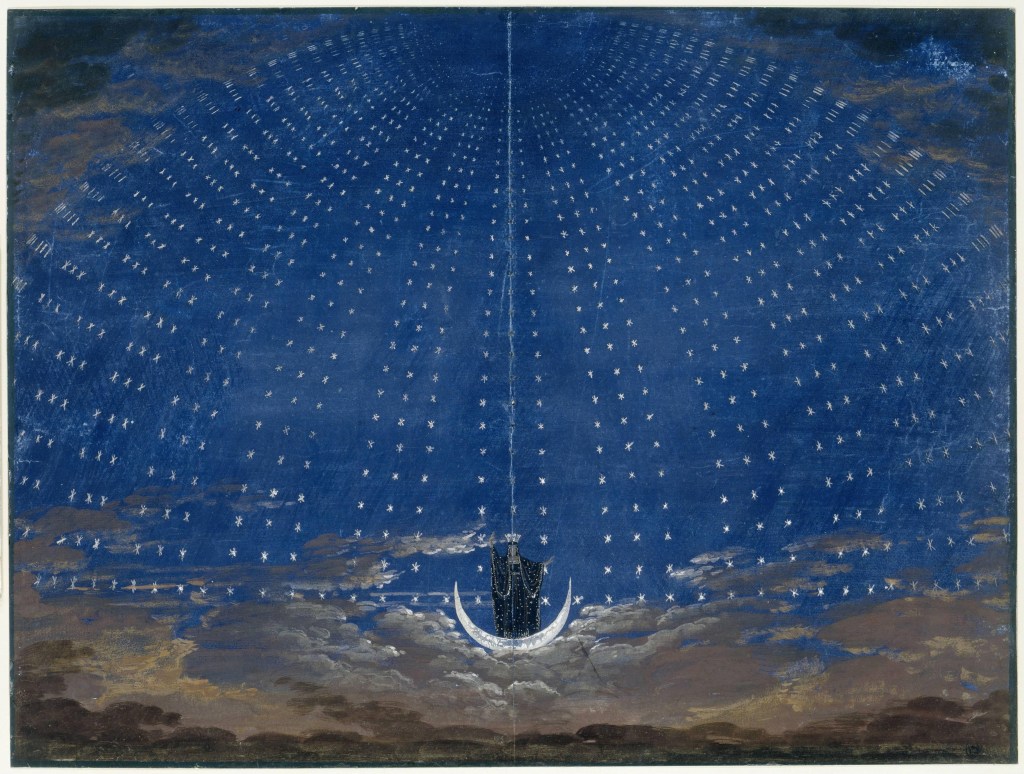
[You could even say that it’d make a great opera…]


Leave a Reply