“Happy families are all alike; every unhappy family is unhappy in its own way.” – Lev Tolstoy, Anna Karenina
“Some families will literally write four different versions of The Kreutzer Sonata rather than go to therapy…” – Me
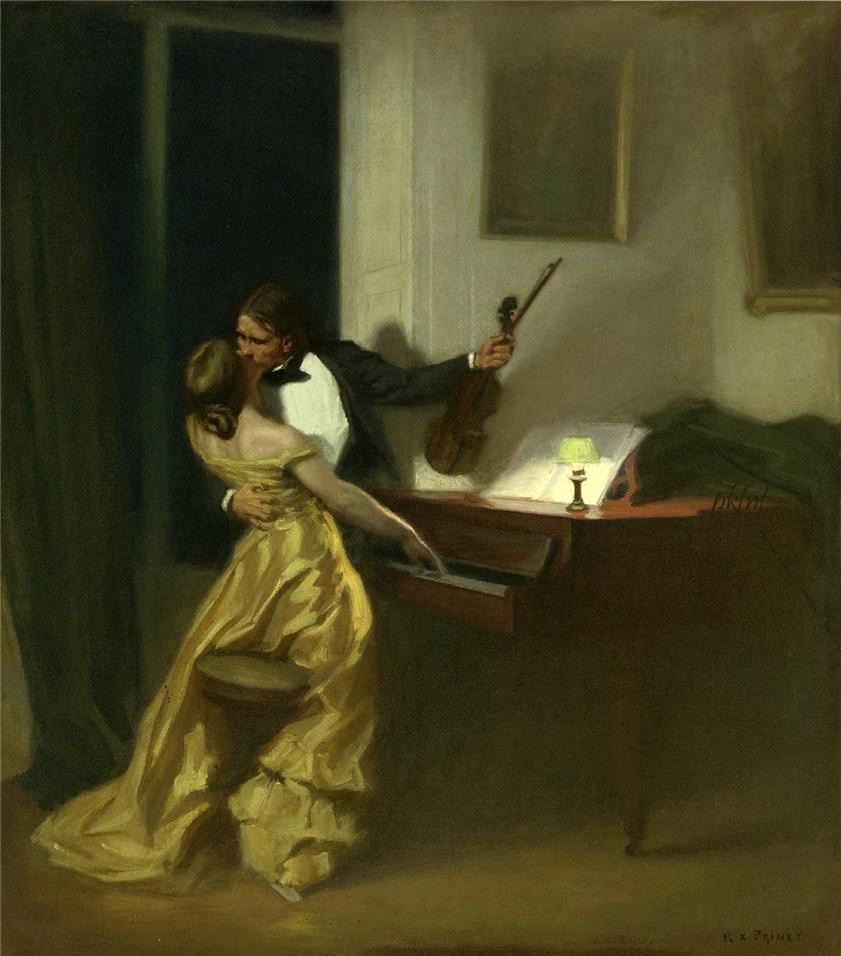
[La Sonate à Kreutzer, René-Xavier Prinet (1901)]
Lev Tolstoy’s 1889 work The Kreutzer Sonata is one of those famous, top-cited short stories that tends to make all of the “Greatest” listicles—like Ernest Hemingway’s “A Clean, Well-Lighted Place” (1933); Flannery O’Connor’s “A Good Man is Hard to Find” (1953); Guy de Maupassant’s “The Necklace” (1884–my personal favorite in this list); or indeed, fellow Russian Anton Chekov’s “The Lady With the Dog” (1899). However, unlike most of the proceeding short works, The Kreutzer Sonata doesn’t get taught as much, except perhaps at the college level. Some of this is due to its length, which straddles the murky line between short story and novella (my editor tells me that anything up to seventy-five typeset pages technically qualifies as a short story, which KS meets). But the other, likely more compelling reason—especially as it pertains to say, high school curriculums—is its content.
As Paul McCartney would say, simply put, The Kreutzer Sonata is a dirty story of dirty man (and his clinging wife doesn’t understand…). Told as mostly a monologue in flashback to a cornered stranger-narrator on a train, KS is the story of Pozdnyshev, a man who has killed his wife in a jealous rage over an alleged affair, with long digressions by Pozdnyshev as to the “swinish” nature of human sexuality. It is a deeply devastating portrait of a man obsessed with and haunted by his own sexuality in a way that warps his entire relationship with his wife and projects his own neurotic guilt onto her, with homicidal results. In my opinion, though, it isn’t its distasteful subject matter that truly hurts the KS’s general popularity, because as I’ve implied, it is well-written and intensely psychologically compelling. No, arguably the real problem with the story is that if you know even a little about Tolstoy, you come to realize (against his very weak arguments to the contrary, and with dawning horror) that the author-insert of KS isn’t the anonymous “I” narrator of the story, it’s Pozdnyshev. And that Tolstoy mostly agrees with the unhinged, incel rants of his troubling protagonist.
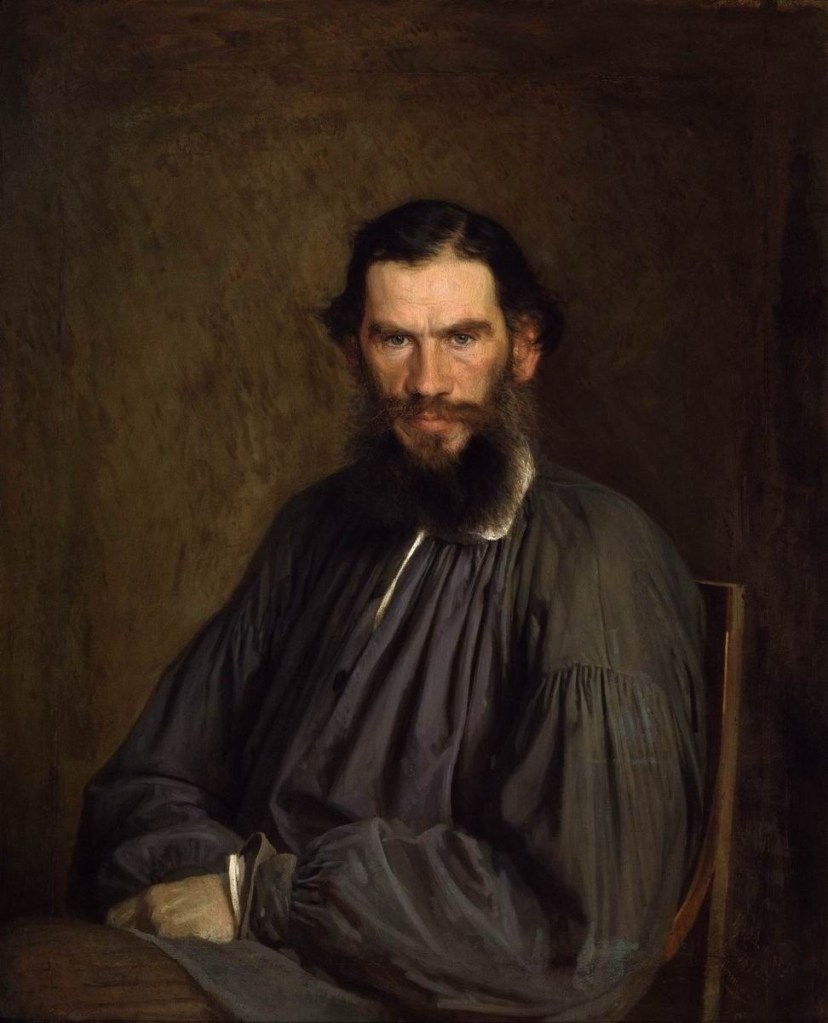
And this isn’t some postmodernist autobiographical backfill on our part. When it was first published, everyone in Russia, knowing the aging Tolstoy’s increasingly radically conservative ideas about sex, religion, and society at large, viewed it as autobiographical, and many people openly sympathized and worried about his wife, Sophia Behrs Tolstoya.
Sophia had at this point been married to Tolstoy for nearly thirty years, and probably the best way to describe their overall relationship is that it was “volatile.” Sixteen years younger than her husband, Sophia—the daughter of a German-born physician—had been raised in the sheltered manner of a “respectable,” middle class girl of the 19th century, and was arguably wildly unprepared to move into looser milieu of Russia’s minor aristocracy that Tolstoy himself both lived and wrote about so vividly in War and Peace and Anna Karenina. To be clear, this naïveté was part of her initial attraction for Tolstoy, who had reached his thirties and felt like he should “settle down” with a “nice” girl and stop screwing everything that moved. Of course, Tolstoy proceeded to fall into the classic Victorian Madonna/whore trap where once Sophia was his wife, her “purity” was tainted by sexual knowledge, and because he’d spent his whole life associating sex with moral depravity, she was now largely tarred with the same brush as all of the prostitutes and peasant girls he’d been sleeping with before. Compounded with the fact that he was increasingly forming an ideology that insisted all sex was hopelessly sinful while unable to completely suppress his own sexual urges (cf. Sophia’s sixteen known pregnancies), made him also resentful of Sophia—because obviously her feminine wiles were driving him to this hypocrisy.
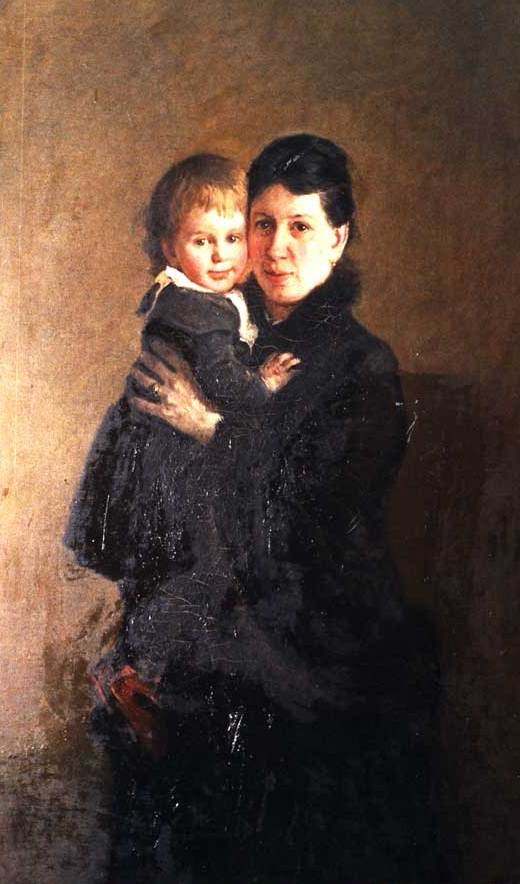
This is, again, a lot of projection, because it is clear from Sophia’s own voluminous journals that—like a lot of Victorian girls of her class—she did not enjoy sex, and mostly tolerated it because it was one of the few occasions when her otherwise distant husband paid attention to her. Her journals repeatedly describe her yearning for an emotional, spiritual connection to her husband, but Tolstoy just wasn’t in the market for that from a Wife. Early in their marriage, they would discuss his writing and Sophia was a respected collaborator whose insight was valued as much as her more manual labor as Tolstoy’s copyist (the fate of many wives of Great Male Authors of the period), as well as his liaison with his publishers.
But as the years wore on, Tolstoy withdrew into his work and a growing cadre of “disciples” who encouraged his radical conservatism: leaving a beleaguered Sophia to copy out his chicken-scratch; run interference with his publishers (and the tsar’s increasingly annoyed censors); birth, tend, and educate their ten children who survived infancy (Tolstoy was not particularly interested in his children until they were adults); and manage the entire running of their domicile estate and other properties (including making sure that Tolstoy got his finicky vegetarian meals on time)—while Tolstoy shut himself up to think and write, emerging only for sex and to complain about how she was doing things. Sophia was not perfect—who is?—but the fact that she didn’t Kreutzer Sonata Tolstoy at some point is a testament to how much she loved him, even when he seemed to be doing everything in his power to send her around the bend.
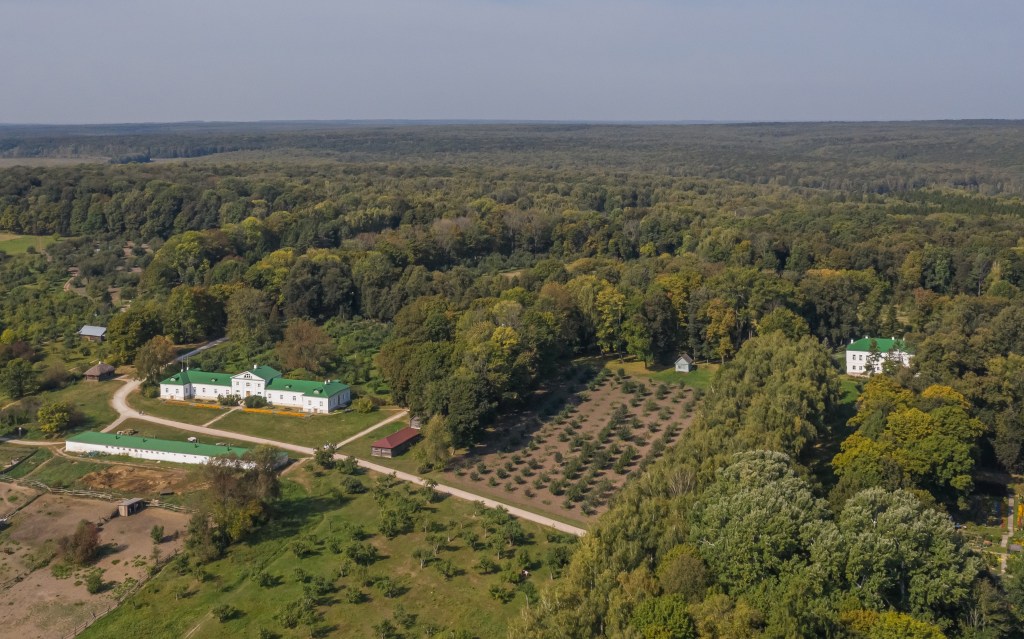
[Tolstoy’s ancestral estate at Yasnaya Polyana, now a museum dedicated to the author. In another example of his inability to practice what he preached, Tolstoy was constantly deriding wealth and threatening to give away the copyright of his works—the family’s main source of income—and then mocking Sophia as a money-grubbing bourgeois when she understandably flipped out and tried to stop him. He, and the children, did this while constantly asking Sophia, as the accounts manager, for more money. Honestly, if this woman was crazy, it was in a completely understandable “The Yellow Wallpaper” (1892–another stellar classic short story) kind of way…]
Spending most of her time on a country estate caring for a family that often treated her like a hysterical nag while worshipping her genius husband, Sophia was starved for emotional and intellectual stimulation. A lifelong lover of music, she became friendly with the composer Sergei Taneyev, and while she might have experienced an emotional crush on him—born of loneliness and the enjoyment of being something other than a workhorse—it is doubtful that it was anything more serious than that (Taneyev was gay, for one). But Tolstoy lost his f***ing mind. He raged at Sophia as an adulterous whore and forbid Taneyev from the house, conditions she ultimately agreed to. This being the germ of truth on which Tolstoy will build The Kreutzer Sonata. Some Tolstoy apologist will say that Sophia acted similarly strongly against Tolstoy’s shady acolyte, Vladimir Chertkov, but again, in her defense, this was a rando who showed up and tried to get Tolstoy to sign away all of his literary rights “to the people” (i.e., him) and cut the author’s own family out of his will. Chertkov was way more of a threat to the family Tolstoy than Sergei Taneyev ever was.
So what did Sophia think of The Kreutzer Sonata? Initially, her objections to it were purely literary. She thought the story and message crude, and it simply was not one of her favorite of her husband’s works—of whom she was a measured and astute fan and critic. But as the scandal of KS spiraled, with the government banning it and people gossiping about how much of it was a truthful portrait of the Tolstoy marriage, her dislike also stemmed from embarrassment at being a public object of talk and pity. Sophia was more than capable of wallowing in self pity—her journals are full of it, and she acknowledges this—but to her credit, she never sought public attention for the disappointments in her marriage. She wanted understanding from Tolstoy, not from people on the street. And nothing demonstrates this more than the fact that it is her—because she’s Tolstoy’s copyeditor, agent, and publicist—who will fight for The Kreutzer Sonata. She personally traveled to Moscow on her husband’s behalf and finagled a private interview with Tsar Alexander III to plead for the story’s ban to be lifted—and she succeeded. She might have hated KS, but Sophia believed enough in Tolstoy’s art that she was willing to fight where even he wouldn’t. Every writer should be so lucky to have a Sophia Tolstoya in their corner.
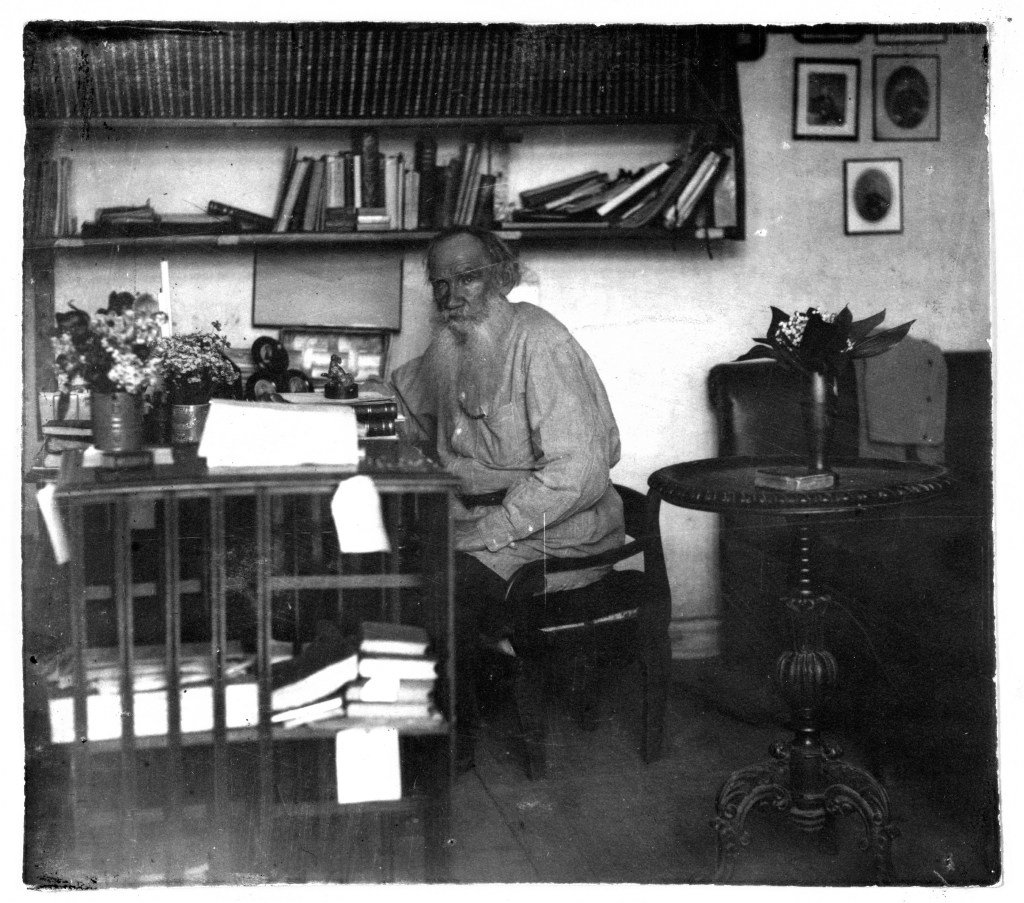
Sophia might have gone to the mat for the story where her husband fantasized about stabbing her to death, but that doesn’t mean her heart was wholly unbruised by the brutal Kreutzer Sonata. So, privately, Sophia did what her husband had: she turned to fiction to process her feelings. This was not Sophia’s first foray into literature—although little acknowledged until recently, Tolstoy himself admitted that the idea for what would become War and Peace’s plucky heroine Natasha Rostova came from an unpublished short story Sophia had written (again, an unfortunately common thread between Great Male Authors and their unsung spouses). Although discouraged from publishing either during her lifetime, Sophia wrote two stories in response to KS: Whose Fault? and Song Without Words.
The earlier of these two, Whose Fault?, is the more baldly autobiographical of the two. Most of the story between “Anna” and “Prince Prozorsky” (clearly a play on the name of the Kreutzer protagonist) is just a lightly fictionalized version of the Tolstoys’ courtship, marriage, and Sophia’s affectionate but platonic relationship with Taneyev (fictionalized as “Bekhmetev”). We see “the Prince”’s emotional coldness to Anna, his insane jealousy toward any man who so much as looks at her (contrasted with the Prince’s flirty relationships with other women and his premarital sexual relationships with his peasants). Anna admits that she is drawn to Bekhmetev, but only because her marriage is so starved of emotional intimacy, and she steadfastly refuses to allow it to go further than a vague, wistful yearning. But like in The Kreutzer Sonata, where even at his most rageful, Tolstoy can’t definitively say that Pozdnyshev’s wife is actually having an affair with the interloping musician (not that it matters: part of Pozdnyshev/Tolstoy’s point is even thinking lustfully of someone, even one’s spouse, is an unmitigated sin), Sophia’s Anna must still be killed in a fit of jealous rage by the Prince.
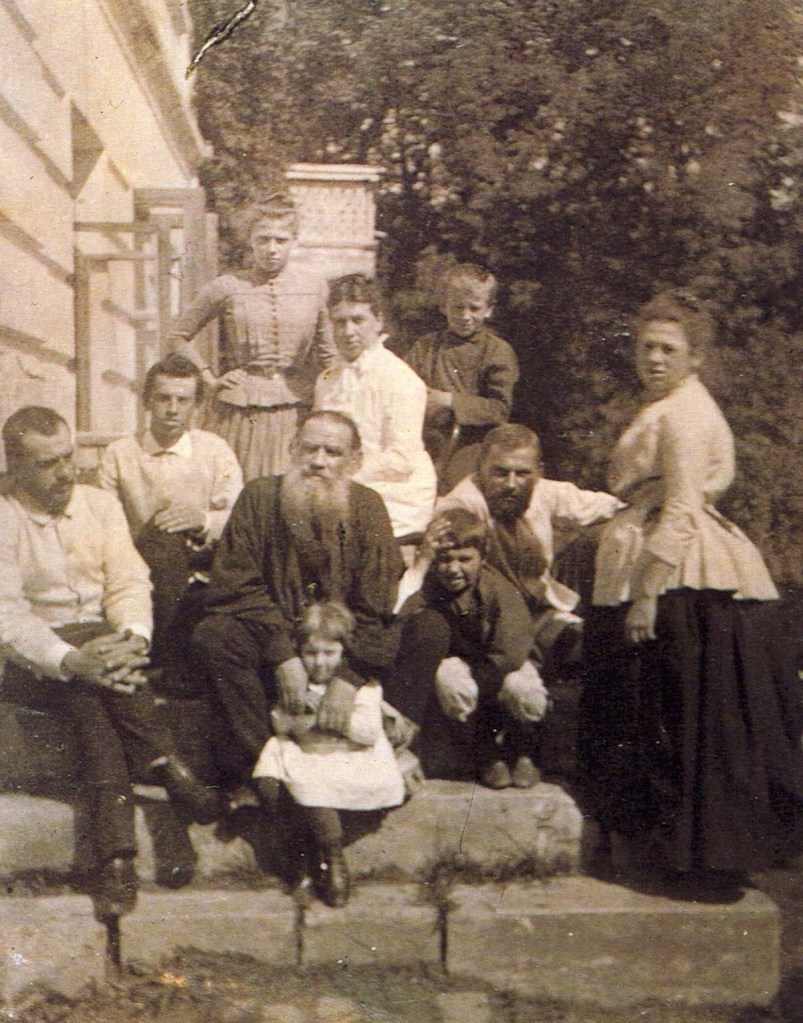
I do find the change of murder weapon interesting (and psychologically revealing): in Whose Fault?, Anna is bludgeoned by a paperweight thrown by the Prince, while, famously in KS, Pozdnyshev stabs his wife with a “Damascus”-style dagger. If I were to psychoanalyze these narrative choices through the respective authors, I would say that I don’t find it surprising that the beaten-down Sophia imagines her death within the world of these stories as a literal bludgeoning to top the metaphorical bludgeoning she endured in her marriage; while Tolstoy, implacably at war with his sexual desire, fantasizes about killing a fictionalized Sophia in what is typically considered one of the most intimate murder methods (stabbing requires you to have direct, close physical contact with your victim), using the most unavoidably phallic weapon (stabbing is one of the most emphatically “rape-adjacent” methods of murder, centering, as rape does, on perceived sexual violence and control). Also, the fact that the Kreutzer blade is an exotic, orientalized weapon is I think a last-ditch psychological effort on Tolstoy’s part to remove his own violence and blame onto an outside Other (KS has nearly as many icky things to say about Jews as it does women). Sophia doesn’t have this problem, she can call a spade a spade: the paperweight is the Prince’s and no one else’s.
Sophia’s second Kreutzer story, Song Without Words, is where things get interesting. SWW is a much serious attempt by Sophia to fictionalize her experiences. Sophia’s alter ego here is Sasha, a wife and mother lost in her grief for her own recently dead mother, who finds her emotions turned upside down by a chance meeting with a talented composer. In place of the devious Prince of WF?, Sasha’s husband, Petr, is a government clerk who loves gardening and whose biggest personality flaw is that he is sort of dumb and bland. While the love interest from WF?, Bekhmetev, is an emotionally available friend, the composer Ivan Ilych (unclear if this is a nod to Tolstoy’s own Death of Ivan Ilyich) in SWW hides his attraction to Sasha largely in a detached, ironical manner that leaves her uncertain of his feelings as much as her own. Rather than a jealous rage monster, Petr kind of sadly accepts that his wife is going through an emotional phase and that it’ll pass. You’d think that this would lead to a happier outcome for Sasha/Sophia, but instead of being murdered, Sasha is driven to psychotic despair at her inability to move on from her infatuation with Ilych and be content with her life, so she checks herself into an asylum until she can regain her equilibrium. The story ends with her in the hospital, essentially losing both Petr and Ilych. Even in her fantasy Kreutzer Sonata, Sophia can’t imagine herself happy, or even revenged. Her alter ego survives the narrative this time, but at the cost of her own sanity.
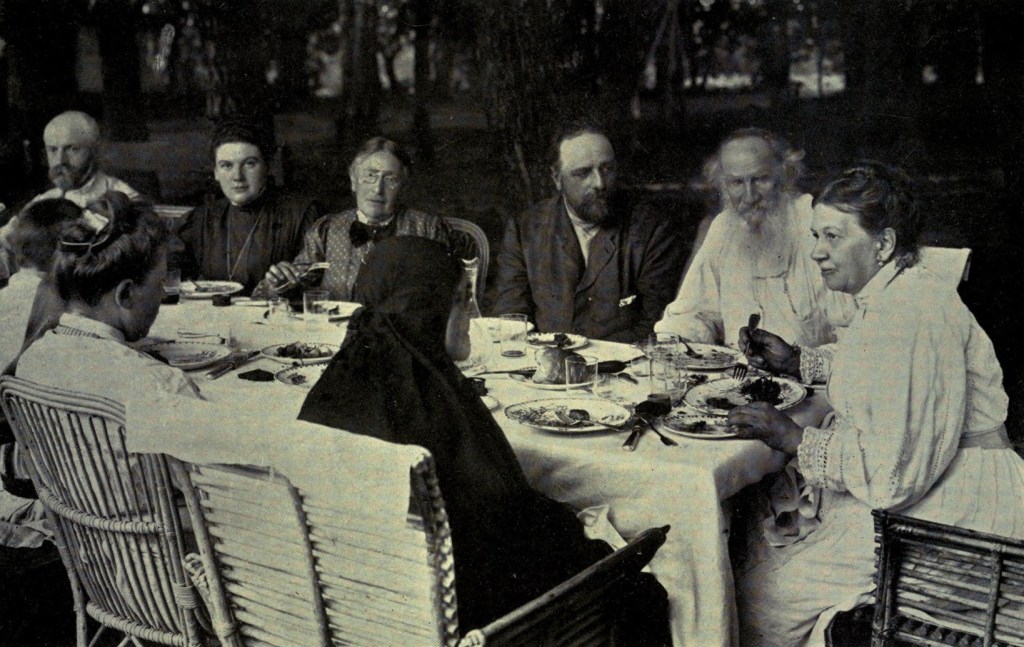
The person who advised Sophia not to publish her Kreutzer Sonatas, her favorite son, Lev, (Lvovya to the family, in part to distinguish him from his father) ostensibly did so to keep the scandal around his parents from spreading further. But he might have had a selfish motive for that, too, because Lvovya was also a writer and had his own response to KS. Excruciatingly titled Chopin’s Prelude (the bit of referencing classical music in the titles is really starting to wear thin at this point), Lvovya’s story is mainly designed as a philosophical rebuttal to the arguments his father made in KS as opposed to a piece of scintillating literature—unfortunately, it is almost as bad as KS at making and defending those points.
Tolstoy argues in KS that sexuality is inherently depraved and unreformable, and that the only truly moral choice is total celibacy. Like every person who has made a similar argument throughout history, Tolstoy doesn’t have to contend with the inevitable consequences of that position (because he knows that it would be impossible that literally every person would give up sex, he doesn’t have to have a solution for the eventual extinction of humanity that would result if people actually followed his advice). Lvovya agrees with most people that this is a batshit argument, but his solution to men not being able to control themselves is to argue that people should get married as young as possible, as a harm reduction strategy (so young men don’t debauch themselves and young women can hold on to more of their “innocence”). His protagonist, Kruyakov, hears this argument from an old friend who’s just gotten married, while Kruyakov is muddling how he, as a poor student, will be able to marry his sweetheart, a princess (referred to as Sonechka, a diminutive of the diminutive Sonya, a diminutive of Sophia—make of that what you will…). After almost being tempted into sleeping with a sexy young servant, Kruyakov sees the wisdom of his friend’s advice and runs off to marry Sonechka, obstacles be damned.
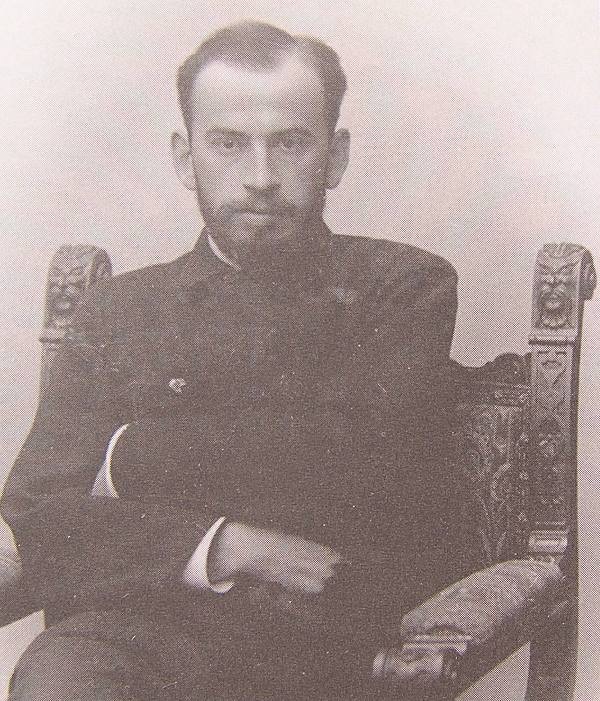
[Which is, like, barely one step up in usefulness from his dad’s advice to just not have sex ever. (Lvovya Tolstoy)]
I think the shared problem between the Levs Tolstoy is that, despite their very different philosophical stances, they share the same cultural hindrance where they don’t see women as equals, and therefore are unable to envision working toward shared sexual and emotional gender equality as a solution. Many conservatives argue that modern feminism has only succeeded in “bringing down” women to men’s level: where they have the sexual freedom that they were previously denied, but are now sharers in the “depravity” and lack of fulfillment it brings men. And if that is the case, I think that it is because we have failed to treat the bog-standard misogyny that is the actual root of the problem, not the abundance or lack of sexual freedom. In KS, Tolstoy deplores the treatment of women as mere sexual objects (mostly because it gives women perceived sexual control over the poor, weak men who need it so badly…blech), but in the same breath opines that the smartest woman is still inferior to the stupidest man. This is part of what women mean when they say a lot of men don’t see them as people—and until the genders can figure out how to see the shared humanity within the others, we will, culturally, just replay the brutality of The Kreutzer Sonata over and over again. Where the only escapes are death or madness. What if the answer to the problem the Kreutzer Sonatas are wrestling with isn’t tradition or asceticism, but something as simple as empathy? That, like Tolstoy’s sexless utopia, is probably unattainable in the aggregate, but it sure seems like a small step in the right direction🎼

 Sarah Holz
Leave a comment