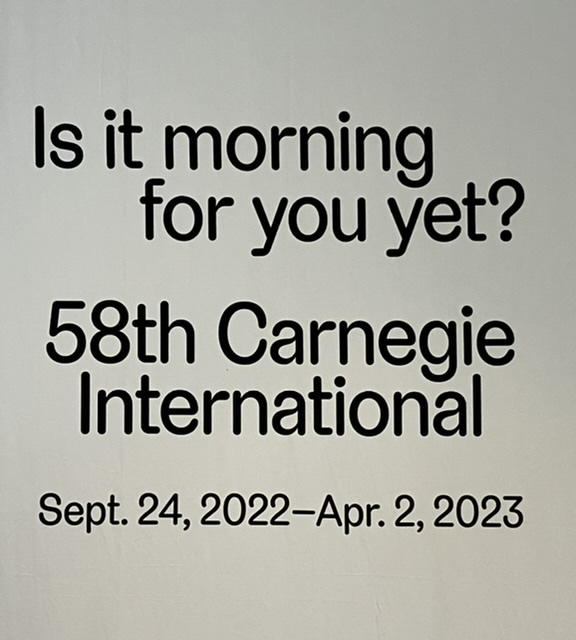
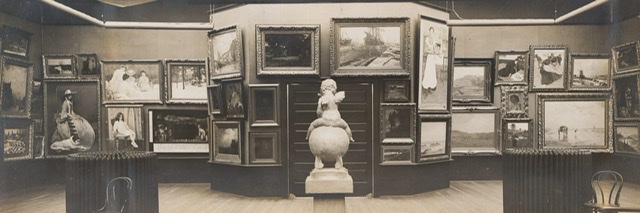
I’ve already talked about how a relatively provincial city like Pittsburgh ended up with a world class modern art museum (robber baron blood money). What you may not know is that aside from creating the Carnegie Museum of Art (CMOA) itself, Gilded Age steel magnate Andrew Carnegie (1835-1919) also championed formal exhibitions of contemporary art in the United States in a way that was at the time largely the province of Paris and the other capitals of Europe. Within a year of CMOA’s founding in 1895, the museum hosted its first international art exhibition, establishing what would become the longest-running contemporary art exhibition in North America. Although initially named the Annual Exhibition—and for the first couple of decades, it would live up to that name—the exhibition would settle into a schedule of roughly every 3-5 years, and after another couple of name changes, it would become what it’s known as today: the Carnegie International.
The International was designed with the same focus as CMOA itself, to showcase, in Carnegie’s words, the “Old Masters of tomorrow.” In addition to giving an amplifying platform to new voices in the international art community, the museum has a long tradition of purchasing exhibition pieces for its permanent collection—pieces that have often proven the truth of the idea that the new and radical art of today becomes the classic art of tomorrow. CMOA’s works by John Singer Sargent, Mary Cassatt, James Abbott McNeill Whistler, Auguste Rodin, Edward Hopper, and dozens of other now world-famous 20th century artists were acquisitions from the International.
Despite an almost-continuous residency of twenty years in the city at this point, I’d never seen an International exhibition until this year. The first exhibition I could have seen was the 2004/05 International, which was the year I spent the 2005 spring semester abroad and if my old Livejournal entries are anything to go by, the entire fall 2004 semester freaking out about the minutiae of preparing to do that. So for the first time since I arrived in Pittsburgh, the museums weren’t really on my radar. By the time the next International rolled around in 2008/09, I was on my brief sojourn to Cleveland for law school, and when we moved back, I missed the 2013 and 2018 exhibitions through timing and the loss of my free college admission pass. So this year, armed with my yearly pass and more awareness, I was excited to finally experience what the museum clearly holds as the crown jewel of its reputation.
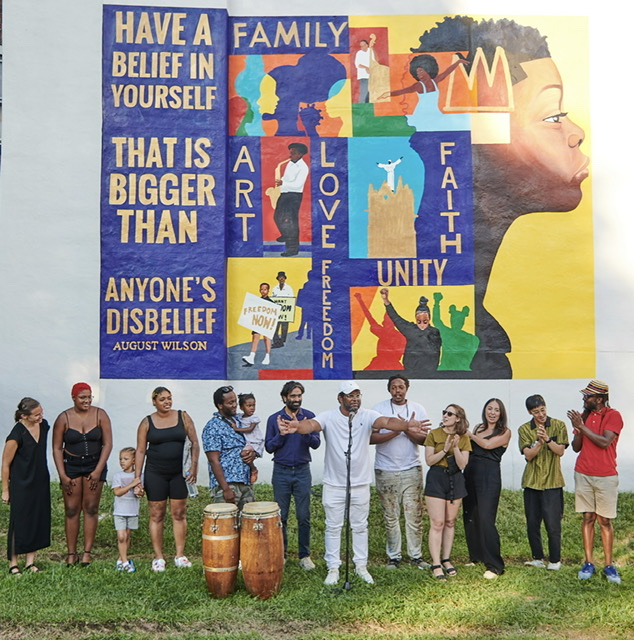
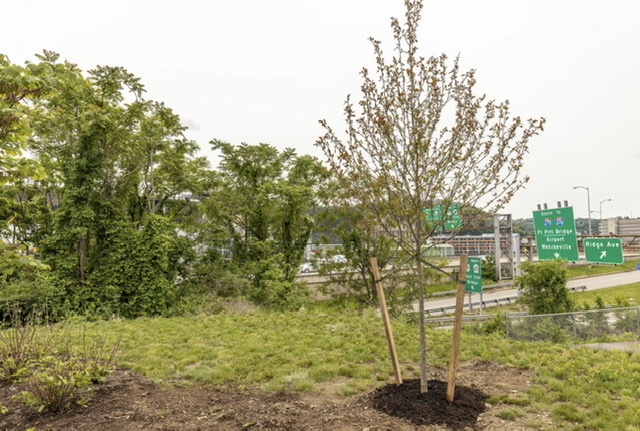
What I wasn’t prepared for was how huge the International is. Even being privy to some of the construction as I’ve visited the museum over the summer (blocked galleries, etc.), I was blown away by the sheer amount of content. The International takes over more than half of the CMOA’s total square footage—all of the rotating exhibition galleries, a whole wing of the Scaife Gallery, the Architectural Center, the Hall of Sculpture, and even the grand staircase. It would be impossible, even if I had the time and all of you had the patience/interest, to show you everything I saw. I spent the day almost exclusively walking the exhibition and still feel like I barely saw everything. Good thing the International is a six-month exhibition, because I definitely feel like I’ll need a second look at a lot of it. Not to mention there are three offsite pieces around the city that I didn’t get to (Tony Cokes’ digital billboards on Route 28, James “Yaya” Hough’s mural in the Hill District, and terra0’s autonomous tree project on CCAC Allegheny’s campus). Even with larger museum exhibitions I’ve seen, I’m used to a temporary instillation being a handful of rooms. The International literally bursts its seams and spills out over the whole museum and even the city itself—a joyous metaphor for the act of creation and art’s ability to cross borders.
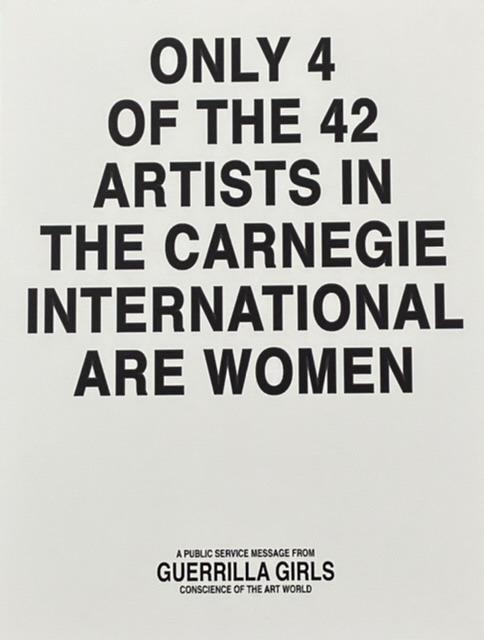
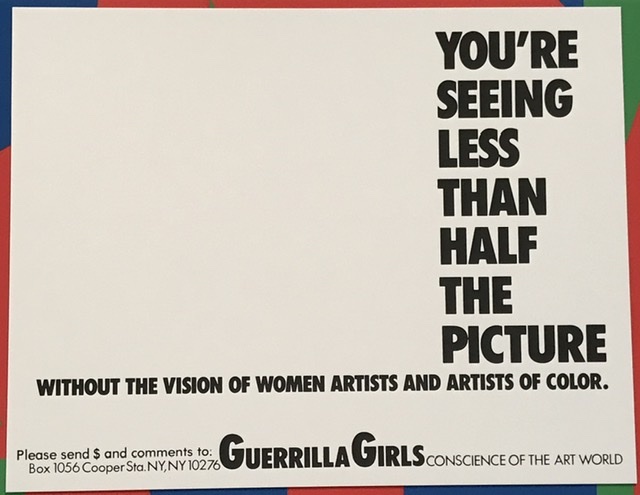
As one would expect, the International was for many years, like most of the art world, overwhelmingly white and male, as a the street art flyer from feminist art group Guerrilla Girls above points out (to CMOA’s credit, they display this flyer on a mural wall dedicated to GG’s protest art). Fortunately, this critique doesn’t apply to this year’s International, which is multiethnic, multicultural, and features many women among its over eighty artists and artistic co-ops. Indeed, most of the rest of this entry will just be me showing some of the pieces that interested me on my day-long ramble, and a lot of those were works by the women artists of the International. But regardless of gender or cultural background, as is usual for me, what I always find most interesting is the intersection of art and history—the exhibition art having a conversation amongst itself, with the cultural heritages of the artists, with the CMOA’s permanent collection, and even the museum’s physical space itself. It makes for a really thoughtful and dynamic experience.
Most of the modern Internationals have some kind of unifying theme. For this year’s exhibition, the museum’s 58th show, the theme is the contextual international and local geopolitical imprint of the United States since 1945. This is intertwined with a multinational conversation about the impact of the pandemic, climate change, and the current global political situation. All of this is tied to the exhibition title Is it morning for you yet?—a Kaqchikel (Mayan) greeting that exhibition artist Édgar Calel explains “acknowledges that human beings’ internal clocks and experiences are different.” In short, this year’s International seems to be aligning itself to the Guerrilla Girls’ older critiques: by offering a larger, diverse body of art, the exhibition isn’t stifling traditional art or artists. It’s merely trying to show more than half the picture.
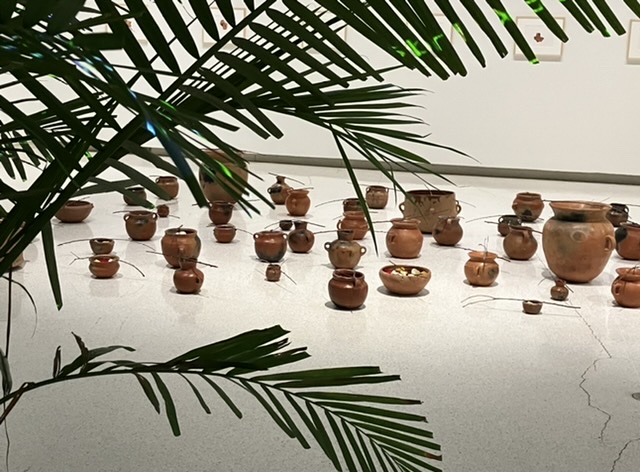
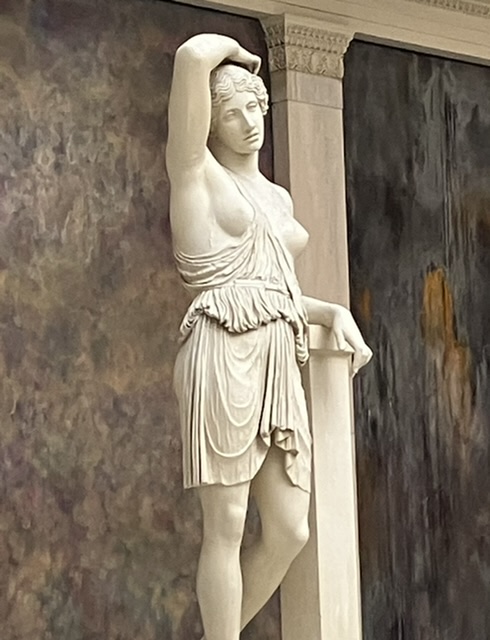
I think the dynamism and the intersectionality of the International is best encapsulated in the part of the exhibition that has been staged in the museum’s Hall of Sculpture. Much like its next door neighbor, the Hall of Architecture, the only permanent pieces in the space are the Greco-Roman plaster cast statues that ring the upper portico and the ring of casts of the Parthenon friezes near the ceiling above them. But having the only static pieces in the hall be the most traditional type of “western” art, it immediately opens up interesting juxtapositions with the many different types of modern exhibitions the museum stages in this space.
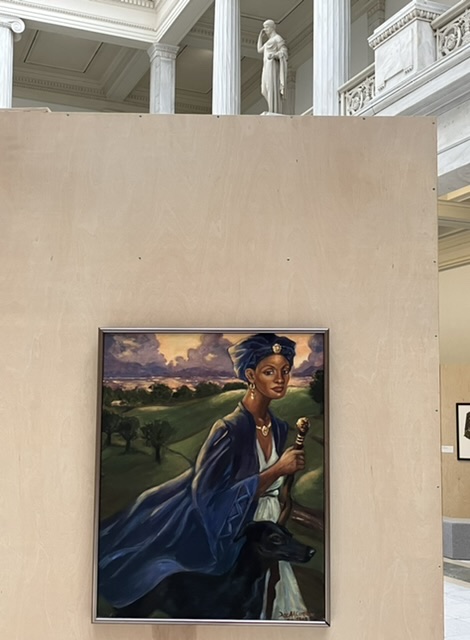
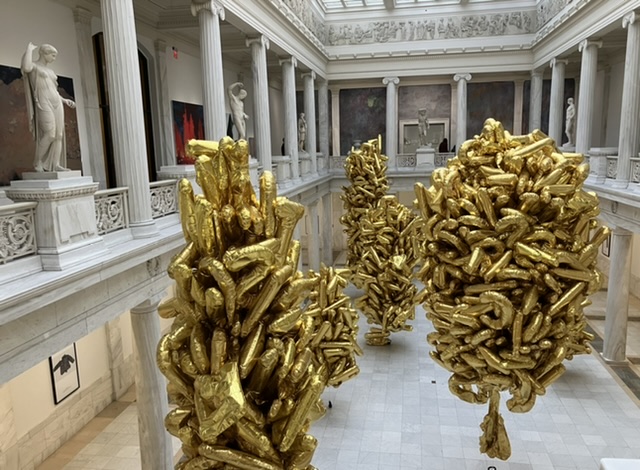
Likewise, having pieces that celebrate the highest achievements of so-called western civilization play host to a collection of pieces that draw attention to the US’s failures of humanity in Japan, Southeast Asia, and Iraq is as aesthetically interesting as it is provocative in the best sense of the word.
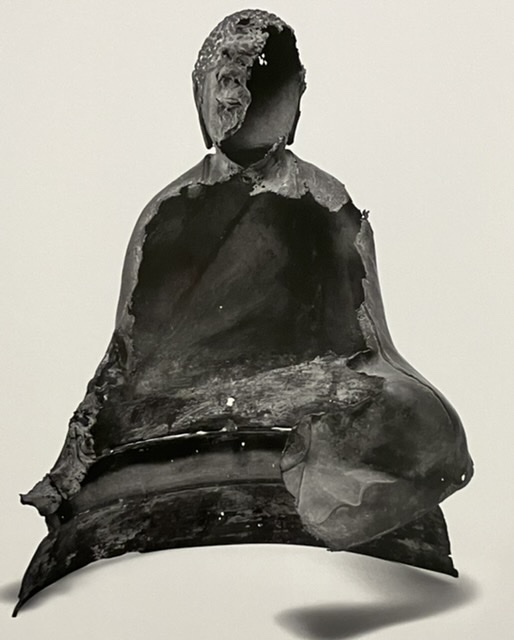
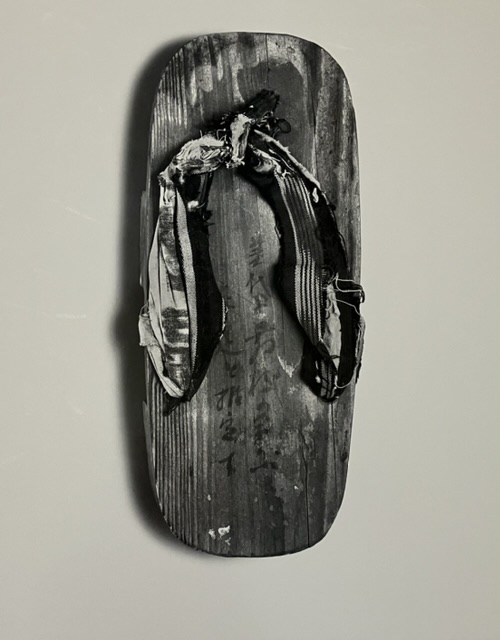
The lower portico is ringed by the photography of Hiromi Tsuchida (b. 1939), part of his Hiroshima Trilogy, a series of photographs of everyday objects recovered in the city after the US Army detonated the atomic bomb. Some are pictures of city fixtures like the below Buddha statue, but the majority of the objects belonged to people, and a devastating number of them, to the children of Hiroshima. Many of whom were vaporized by the explosion and these objects are the only part of them that were ever found.
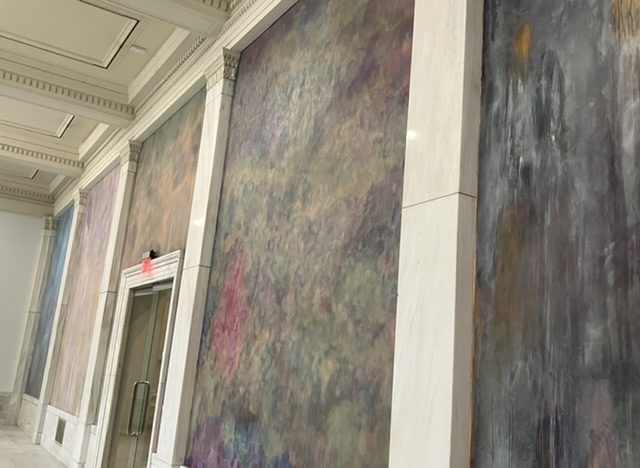
The upper portico is flanked at either end by a series of five abstract frescos by Thu Van Tran (b. 1979) commissioned by the International for the Hall of Sculpture called Shades of Grey, whose muted palette is punctuated by splashes of the colors of the so-called “Rainbow Herbicides” used by the US in the Vietnam War: Agents Pink, White, Purple, Blue, Green, and naturally, Agent Orange.
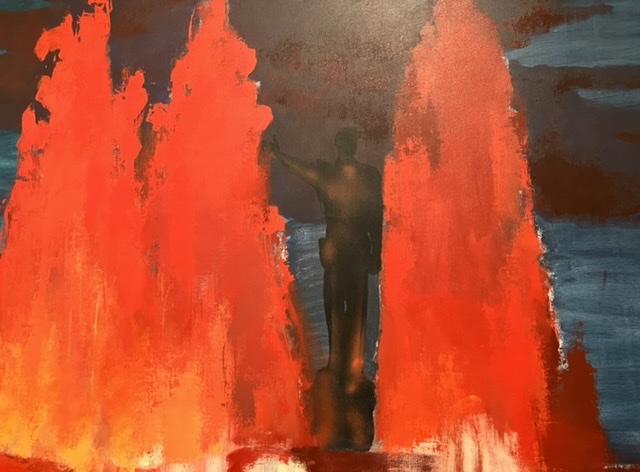
Along the flank of the hall is a series of paintings by Mohammed Sami (b. 1984) that dialogue both with Arabic traditional arts as well as the impact of the US/Iraqi wars on his native Baghdad. The one below is called The Statue.
But I’m sure you’ve all been waiting for me to address the shiny, helium-filled elephant in the room…

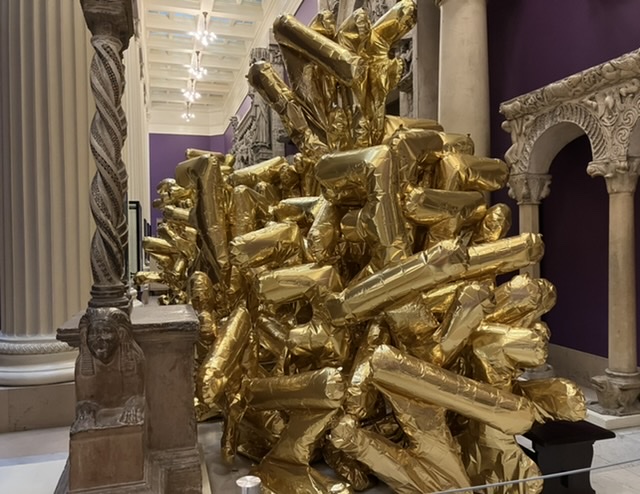
right? is a series of ten balloon sculptures by Turkish artist Banu Cennetoglu (b. 1970) which contain the letters of the first ten articles of the UN Universal Declaration of Human Rights (UDHR). The balloons are designed, like all Mylar balloons, to deflate naturally over the course of the exhibition, leaving viewers with the question of the durability of international human rights.
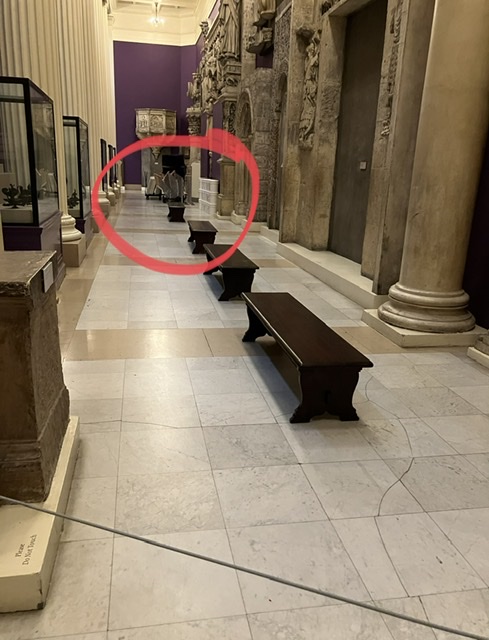
It was especially interesting for me as a regular visitor and aficionado of the more forgotten corners of CMOA to see rights? in its intended state, because the sculpture and I have been inadvertently hanging out together for nine months. And if you read my entry on the Science Center’s Pompeii exhibition SO HAVE YOU, DEAR READER!
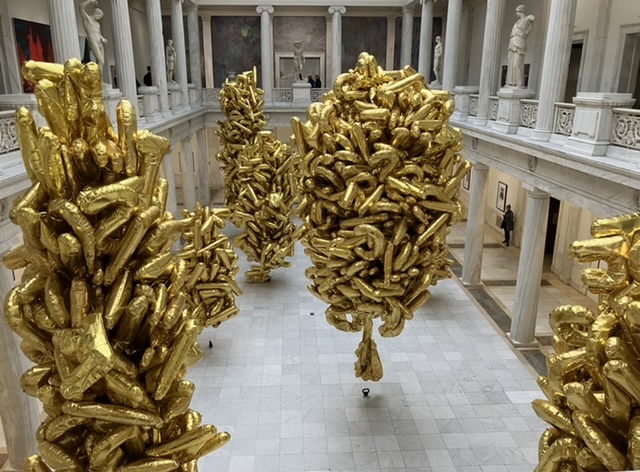
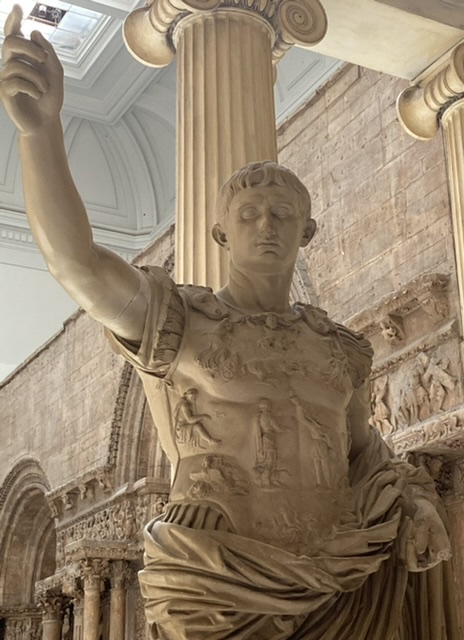
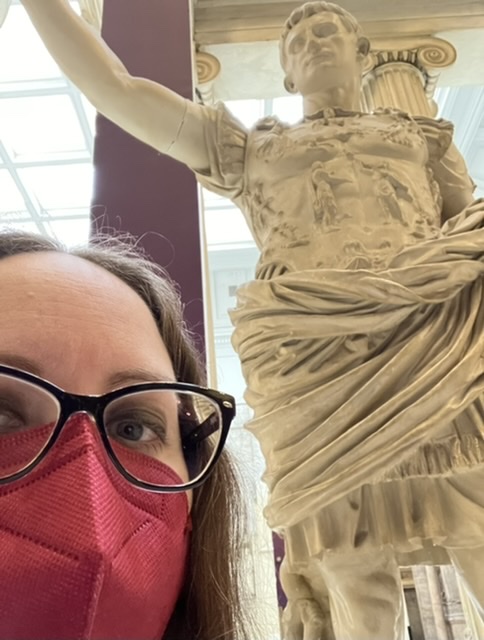
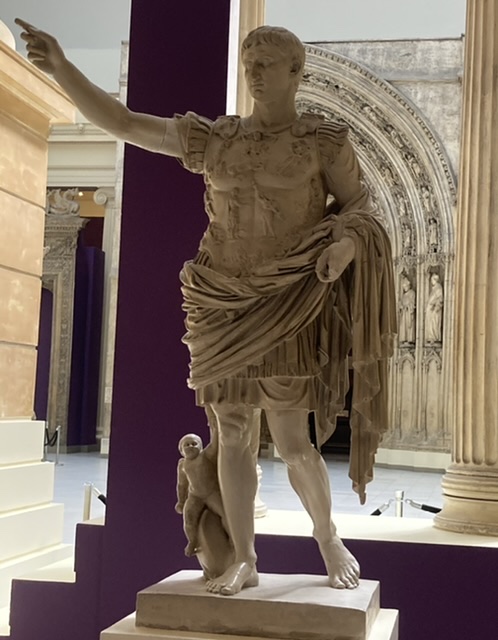
In that entry, I made a joke about the museum using the Hall of Architecture as a glorified coat room for storage (with the plaster Prima Porta Augustus as the world’s grumpiest coat-check girl). At the time, I thought that the balloons were left over from some museum event. Turns out that rights?, like many pieces for the International, arrived early and because of their unwieldy size, CMOA held them in the HoA for convenience. Under the watchful eye of noted champion of human rights, Imperator Caesar Augustus Divi Filius…
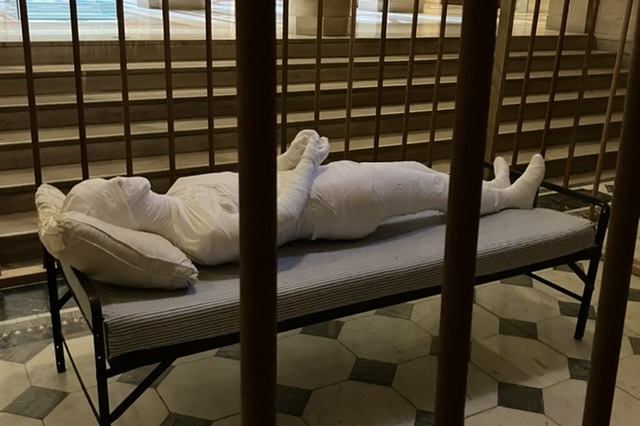
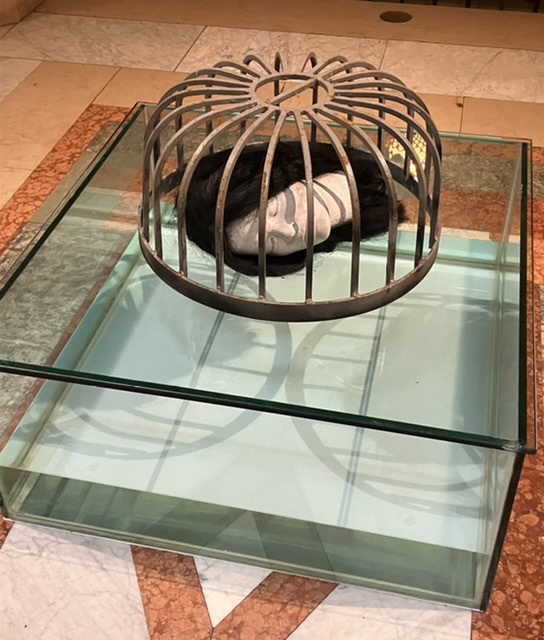
Outside of the Hall of Sculpture, the most interesting staging area for the exhibition is in the museum’s grand, 19th century-style main staircase. On the ground floor, the stairs are surrounded by the surrealist mannequin sculptures of Kate Millet (1934-2017)—yes, that Kate Millet.
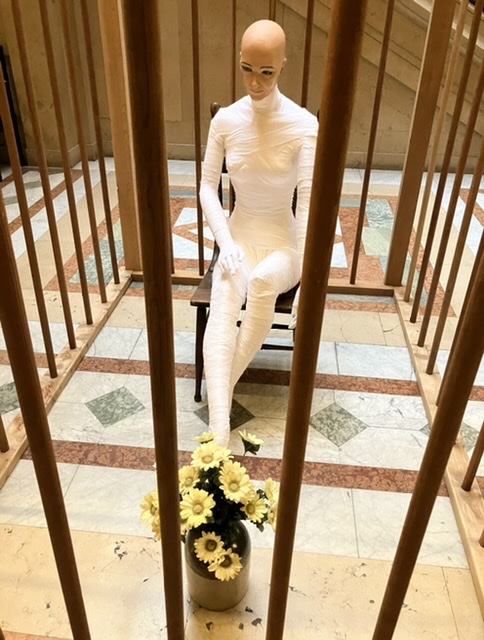
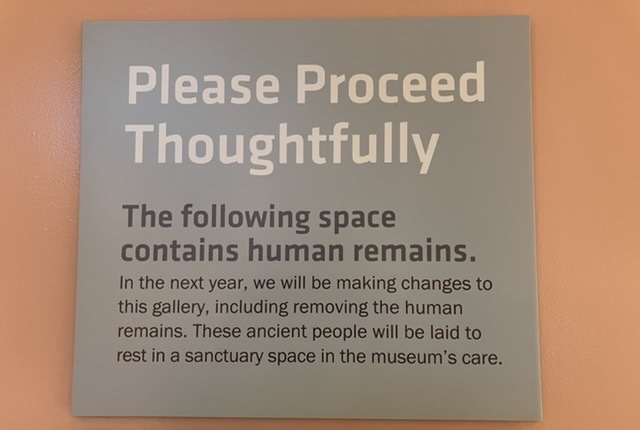
Probably better known to the general public as the author of the foundational feminist book, Sexual Politics (1970), Millet was also a prolific sculptor whose work focused on gendered violence and human rights. All of her pieces chosen for the International feature mannequins in caged environments, and I thought it was particularly interesting to see these artificial mummy figures surrounding a staircase that leads up to the adjoining Natural History Museum’s Egyptian natural mummies, and how visitor voyeurism plays into both exhibits, especially in light of the discussions the institution has had and we’ve touched on in this blog about human remains ethics.
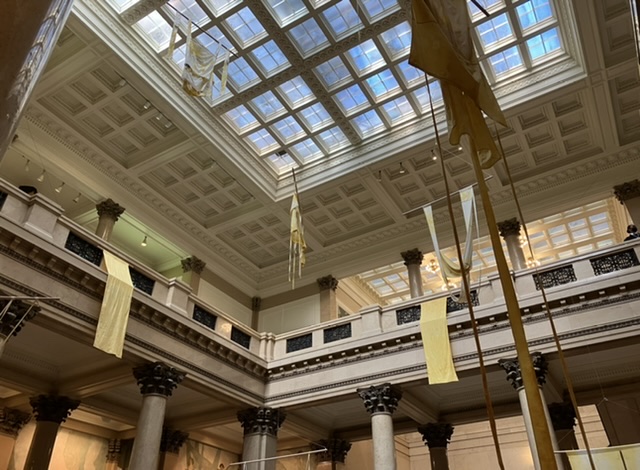
But honestly the most striking staircase art is Daniel Lie (b. 1988)’s Grieving Secret Society, a cloth and natural dye installation that hangs down from the museum skylights over all three floors of the grand staircase. The main dye Lie uses is turmeric, but the cloth sheets were also exposed to natural fermentation processes and the elements, so mud and mold are also a part of their composition. In this way, the whole piece captures both the mundanity and the drama of nature by being both something you can’t see and something you can’t not see.
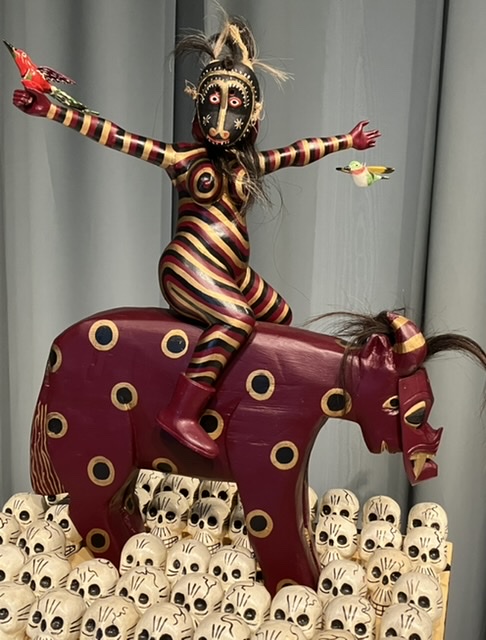
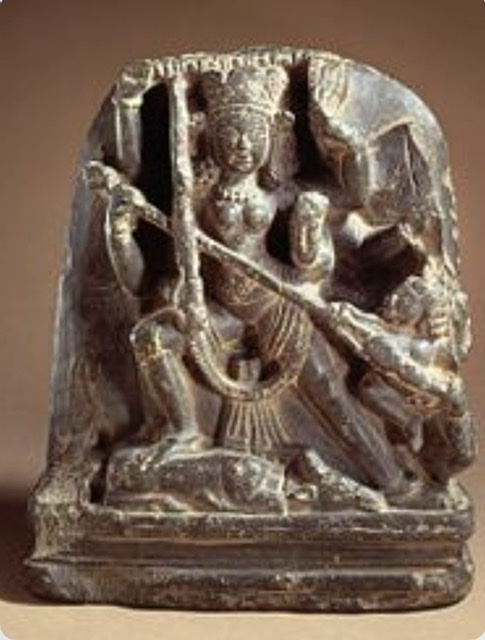
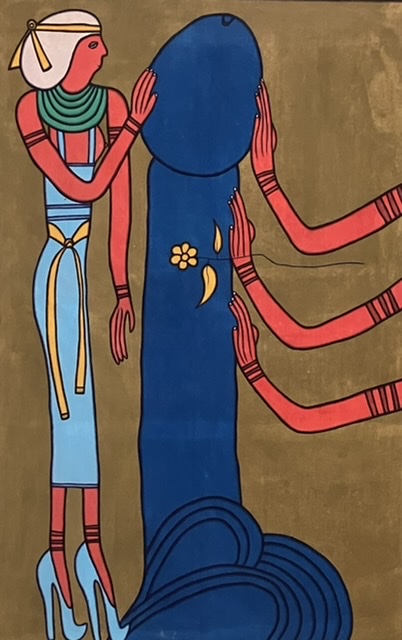
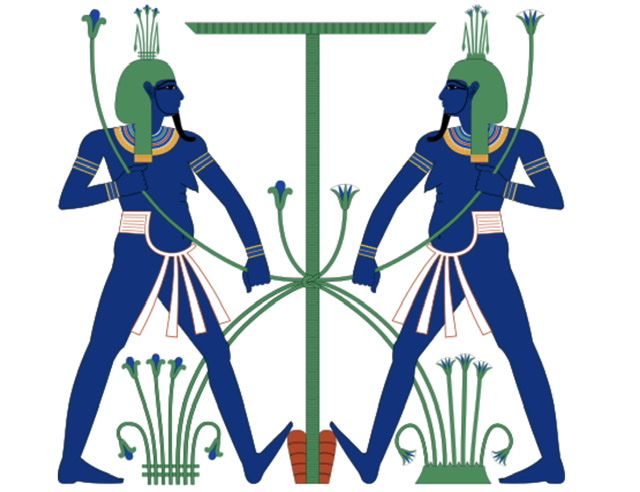
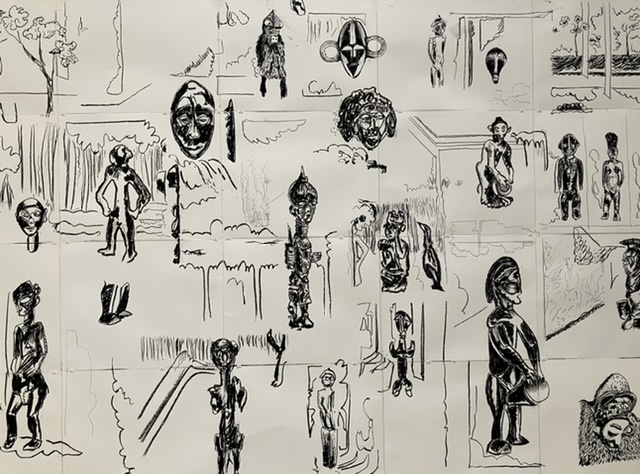
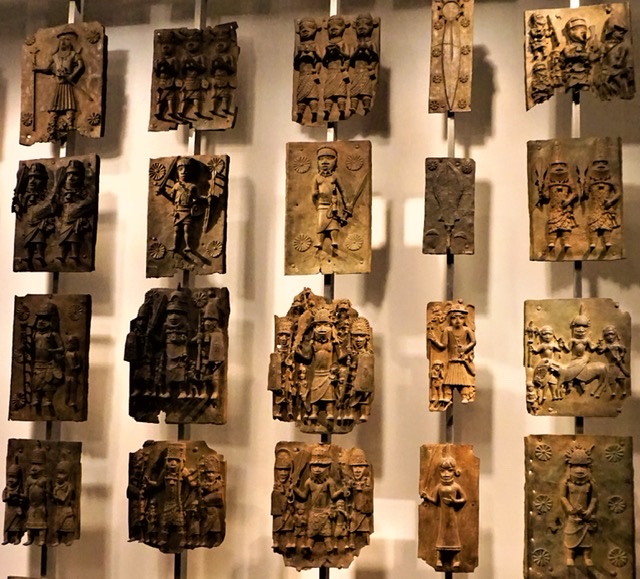
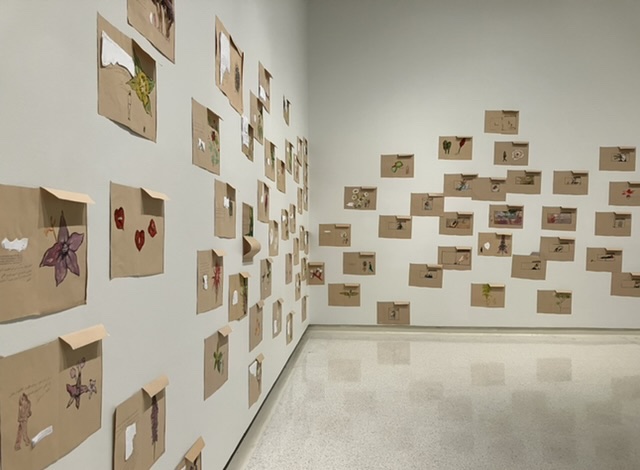
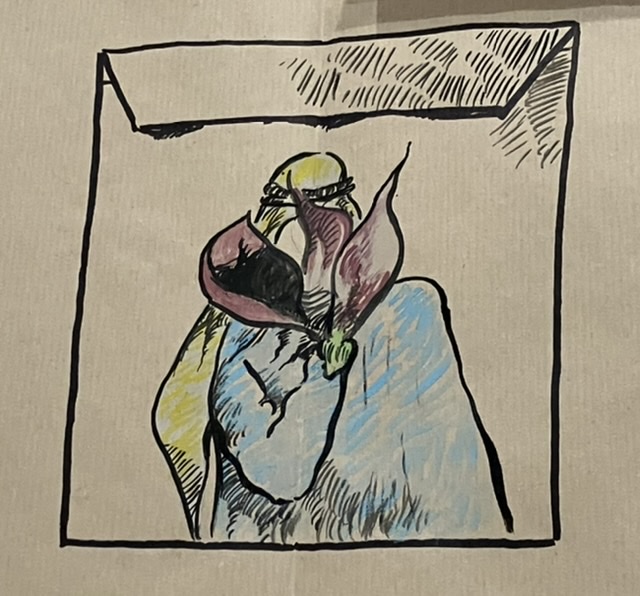
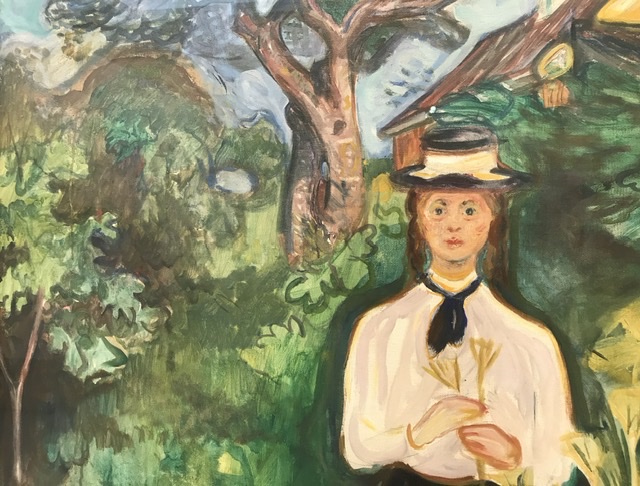
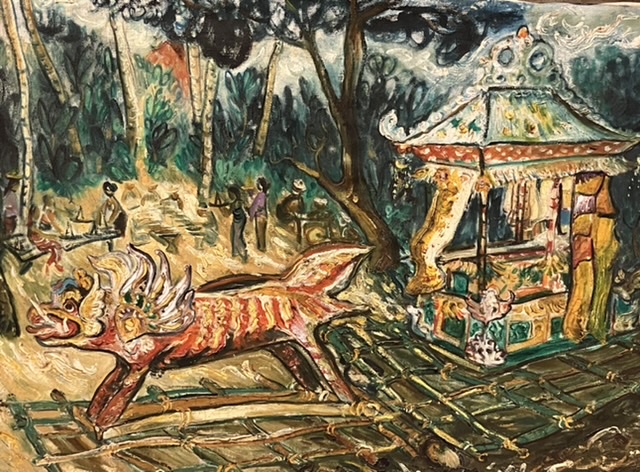
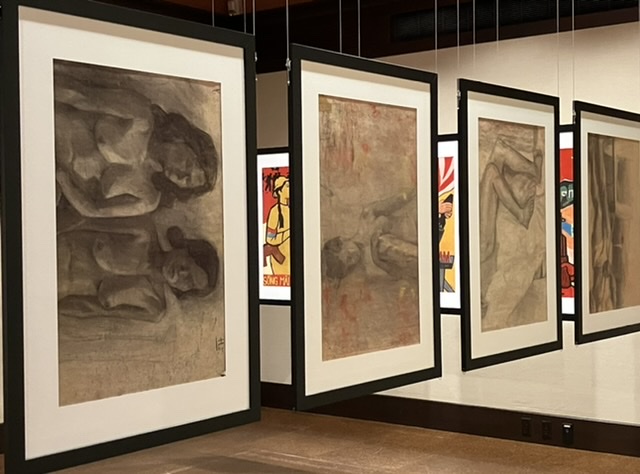
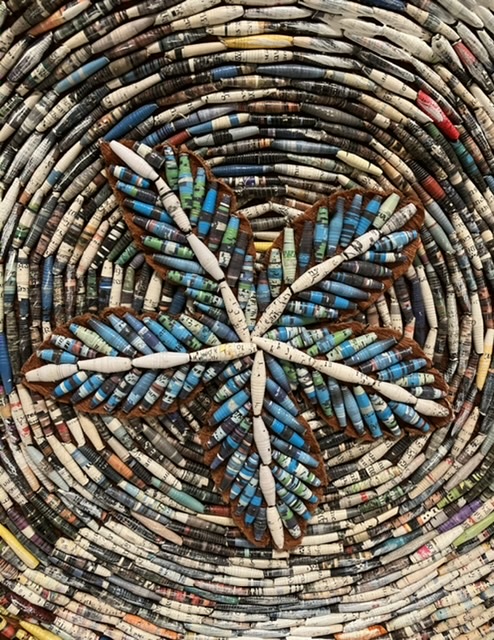
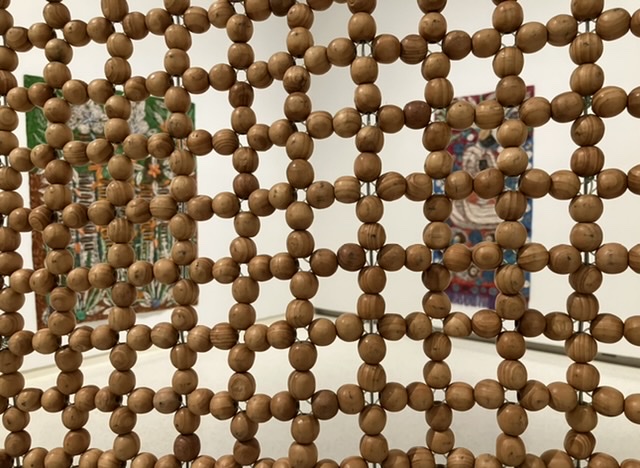
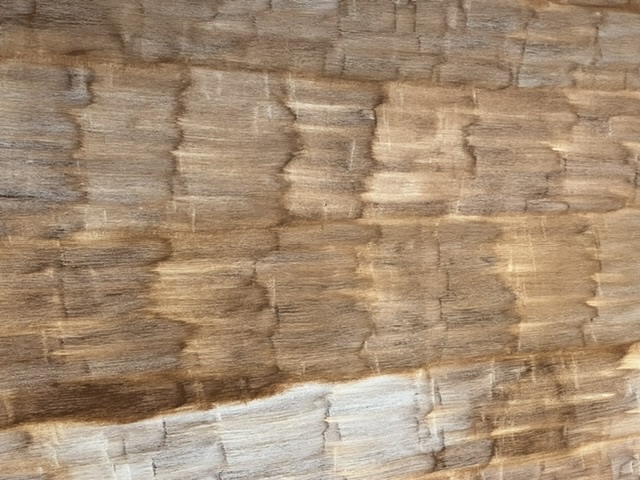
These two areas were the most holistically interesting to me in relation to the theme of the exhibition and how it engages with the museum itself, but as I said, there is so much more to see. To wrap up, I’m just going to rapid-fire some other pieces I really liked in a desperate and possibly futile attempt to give you a taste of the breath of art the exhibition has pulled together this year. And as a reminder, the International is on display until April 2, so if you happen to be in the Pittsburgh area, it is well worth the CMOA’s price of admission. I liked being able to move at my own pace solo, but there are ongoing, accessible docent-led guided tours open to the public as well if you’d prefer. Come check it out!



Leave a Reply