Like all men, he desired happiness, but he had found only glory.” – Clisson and Eugénie
“Times are bad. Children no longer obey their parents, and everyone is writing a book.” – (probably) misattributed to Cicero
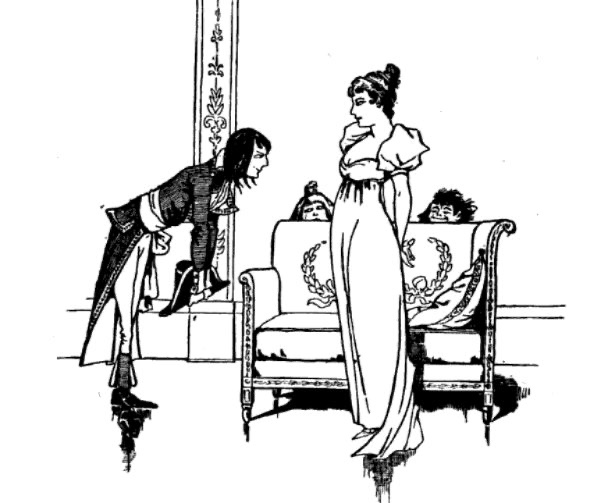
Did you know that Napoleon Bonaparte wrote a book? Well, “book” is a bit of an oversell—more of a very short novella or decent-length short story of roughly twenty pages. Like many of the so-called “great men” of history, Napoleon viewed himself as something of a polymath, and dabbling in literature was something he’d come back to off and on throughout his colorful life. Obviously he toyed with a grand memoir once he was finally confined to St. Helena at the end of his career, but his most concentrated efforts to produce fiction date from his early years—back when he was still just Napoleone di Buonaparte from Corsica.
As the popular fake Cicero quote above delineates, Napoleon wanting to write a book isn’t all that surprising, but what he ended up writing most completely—his novella-cum-short story Clisson and Eugénie—might surprise you. Because the Antichrist of the Enlightenment and the terror of Europe wrote a love story, and the hows and whys of that are far more interesting than the book itself. So this week I thought we’d explore that a bit and see what Clisson and Eugénie says about its author and the world he both inhabited and arguably changed forever.
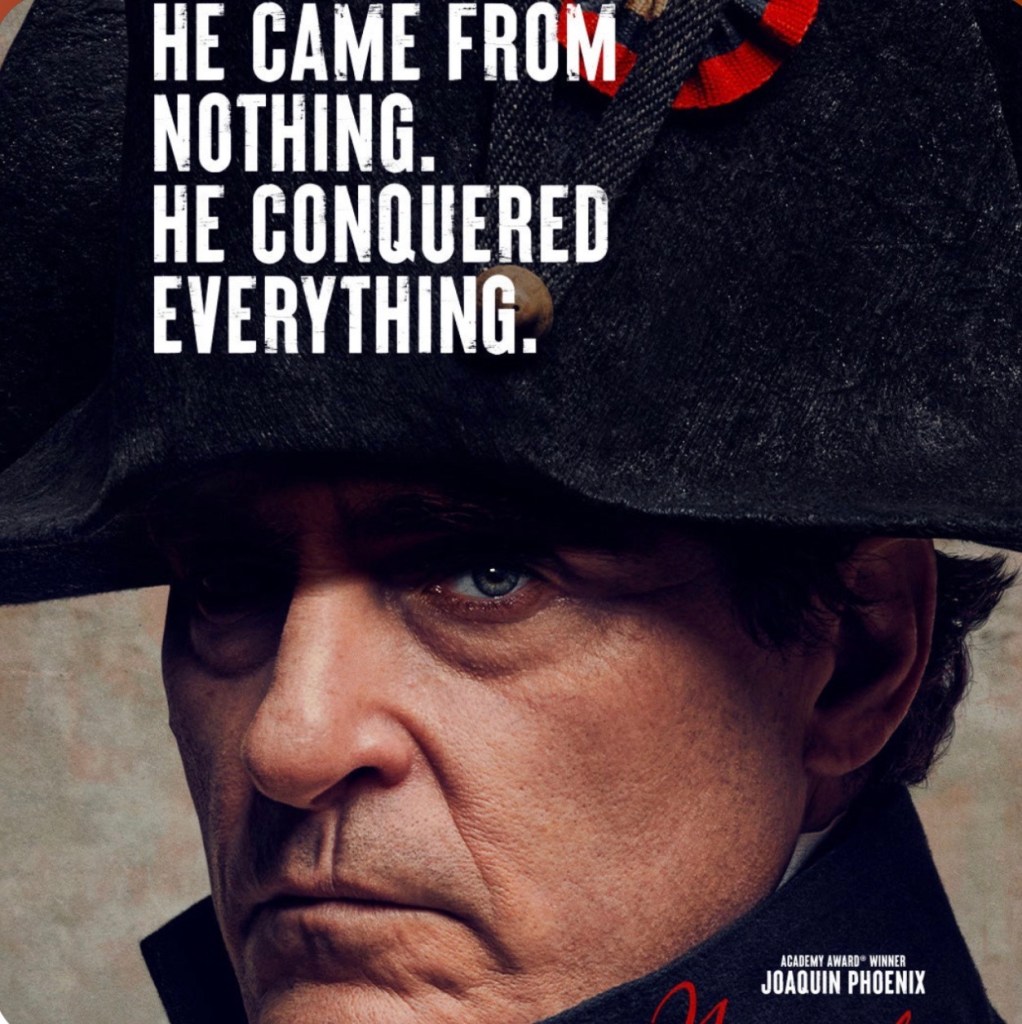
As the much-parodied tagline from Ridley Scott’s Napoleon movie proclaims above, Napoleon’s origins are famously humble compared to, say, Gilbert de Lafayette. That said, Napoleon’s background was much more genteel than that of most Italian boys growing up on the impoverished island of Corsica. Both of his parents were descended from minor Tuscan nobility that had emigrated to the island, and while in no way comfortably wealthy, their resources and rank would afford their most driven and talented son to gain just enough of a foothold in school to bring his talents to the notice of people who mattered. However, opportunities on Corsica were few, so by the time he was ten years old, Napoleon was already living away from his family in order to pursue better educational opportunities on the French mainland. After a brief stop at a religious school in Autun to improve his weak French, he transferred to the military academy in Brienne-le-Château—the army being one of the few avenues of upward mobility for the lower gentry and nobility at the time.
Napoleon was an excellent student, with an especial aptitude for geography and mathematics (which is why he got funneled into the artillery officer corps), but he struggled for years with his French, both spoken and written. This, combined with his reserved, somewhat melancholic personality, left him much on the outside of the camaraderie of his classmates, and he was often on his own between classes, when he wasn’t being outright bullied for his Corsican accent and foreignness. In a pattern that would continue when at fifteen he was promoted to study at the École militaire in Paris, he would fill this social void with books. As he would say some ten years later: “When I entered military service, I was bored in the garrison; I began to read novels, and I became fascinated by what I was reading. I tried to write some myself. This stimulated my imagination, and I began to mingle this with the “facts” I had learned throughout my life. I often amused myself by dreaming and then measuring my dreams against reality. I would form an ideal world in my mind’s eye and then try to work out how this differed from the world I found myself in.”
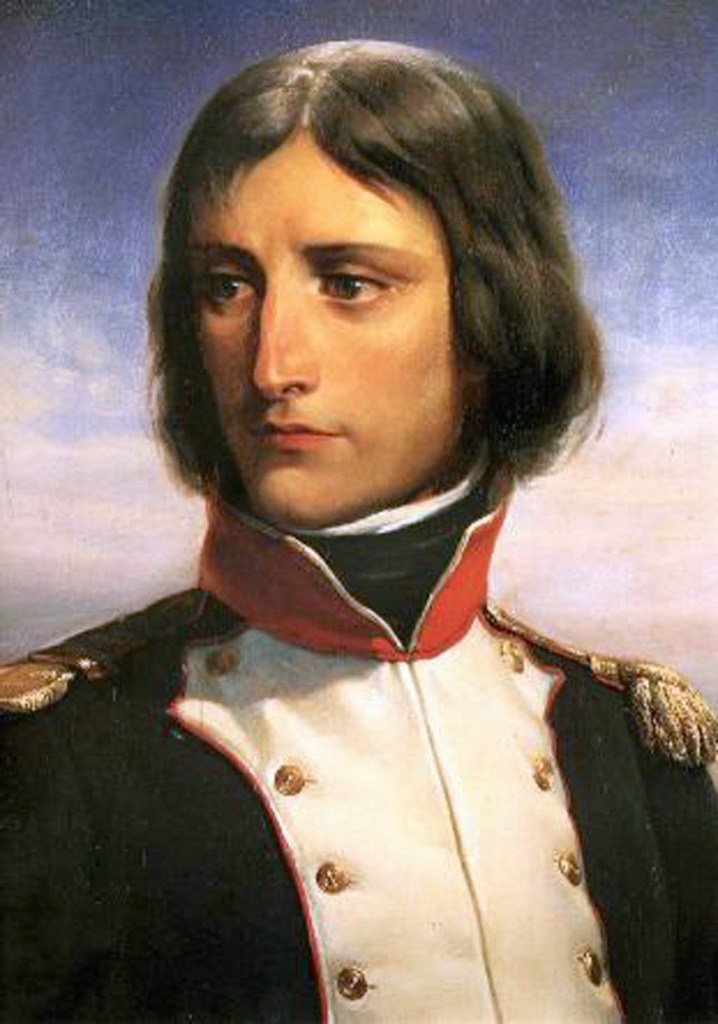
The young Napoleon actually tried to write several novels, but in one of his more relatable traits, he never got very far with most of them. But all of them, including eventually Clisson and Eugénie, show Napoleon very much in tune with the literary trends of his era—no doubt fueled, as he said, by what he was exposed to as a reader. This is hardly surprising when you take into account that the man Napoleon was most often compared to in his unexpectedly dazzling career was another part-time writer: Julius Caesar. And Caesar’s prose was intimately shaped by his own contemporary literary milieu. His use of the personal third person, the long rhetorical poses of his dialogue—these were the hallmarks of an educated Roman man of the 1st century BCE, and this is how Julius advertised his intellectual credentials as much as recorded his military achievements. It doesn’t matter that he’s not always meeting us where we live, literarily, because he’s not talking to us—he’s trying to outclass Cato and Cicero.
[The real Cicero this time]
Likewise, Napoleon’s fiction and quasi-fiction is directly engaging with the European written culture of his times. One of his WIPs (Work In Progress) is a philosophical dialogue about Corsican nationalism that echoes the writings of Rousseau and Diderot, while another is an English historical drama of the type that were always au currante even before Dumas made them runaway bestsellers. He also considered writing an exotic Arab “little-r” romance about the warrior-prophet Al-Hakam, and a Robinson Crusoe-style adventure tale again partially about Corsica and Corsican independence. (C&E, 42-5) But it’s also not surprising that Clisson and Eugénie, his most complete manuscript, written in 1795, is directly engaging with the monumental literary bestseller in Europe at that moment, the book that would dominate the conversation for decades and arguably kickstart the entire Romantic movement: Johann von Goethe’s The Sorrows of Young Werther.
Published in 1794, Werther tells the story of a sensitive artist who falls in love with a beautiful young woman, who is already engaged to another man. Werther tries to exist as the friendzoned third wheel of this relationship, but is eventually overcome by his unrequited love and grief, and kills himself. And because this is a fictionalized version of a love triangle Goethe himself was experiencing, he ends his story with the implication that Werther’s love, Charlotte, will eventually realize how dumb she was to have passed up… this… and will die herself if a broken heart.
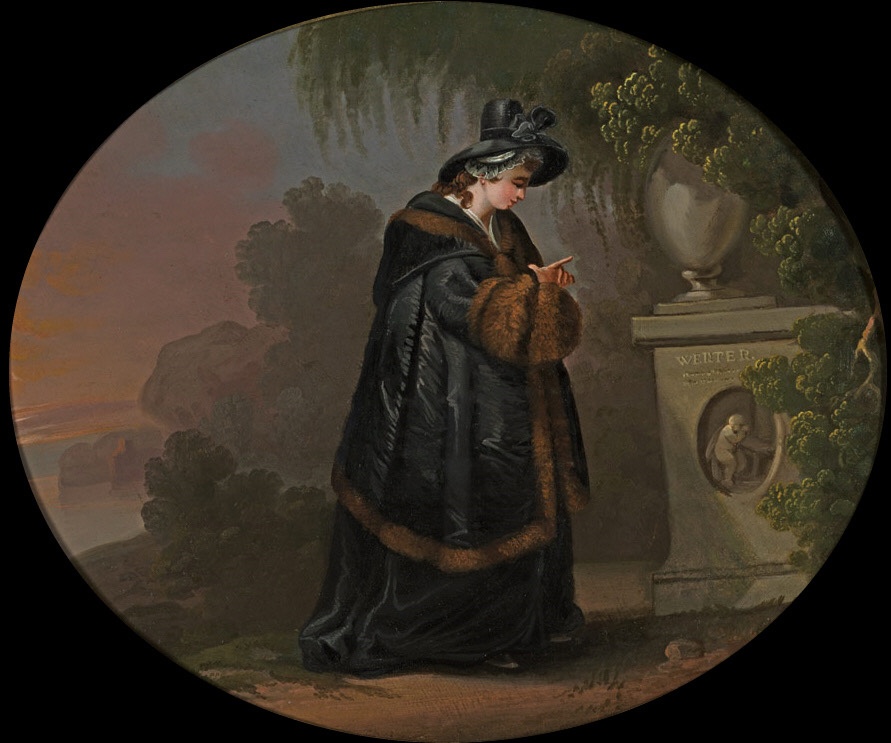
[Charlotte beside herself at the thought of her friend who could not take no for an answer]
It’s a simple enough story, but Europe lost its mind over it. Much like Samuel Richardson’s Pamela a generation before it, Werther developed a full-on fandom across the continent. There was merch; people started to wear fashions inspired by clothing descriptions in the novel; and most notoriously, “Werther Fever” supposedly led to a rash of copycat suicides as romantic young people wanted to emulate the Big Feelings of the protagonist. While technically part of the Sturm und Drang (“Storm and Stress”) movement that began in German literature as an aesthetic response to the rationalism of the Enlightenment, as I said, this would evolve into the centering of emotion, individualism, and anti-establishmentism in European Romanticism.
Napoleon would be a vocal admirer of Werther throughout his life, calling it one of the greatest works of literature, and supposedly carrying a copy of it with him during his three-year campaign in Egypt (1798-1801). But this admiration, and his attempt to write his own Werther-clone (a popular activity for many professional and amateur authors at the time), was also driven by the same verisimilitude that had fueled Werther Fever and brought Goethe to write the story in the first place: Napoleon had met a girl.
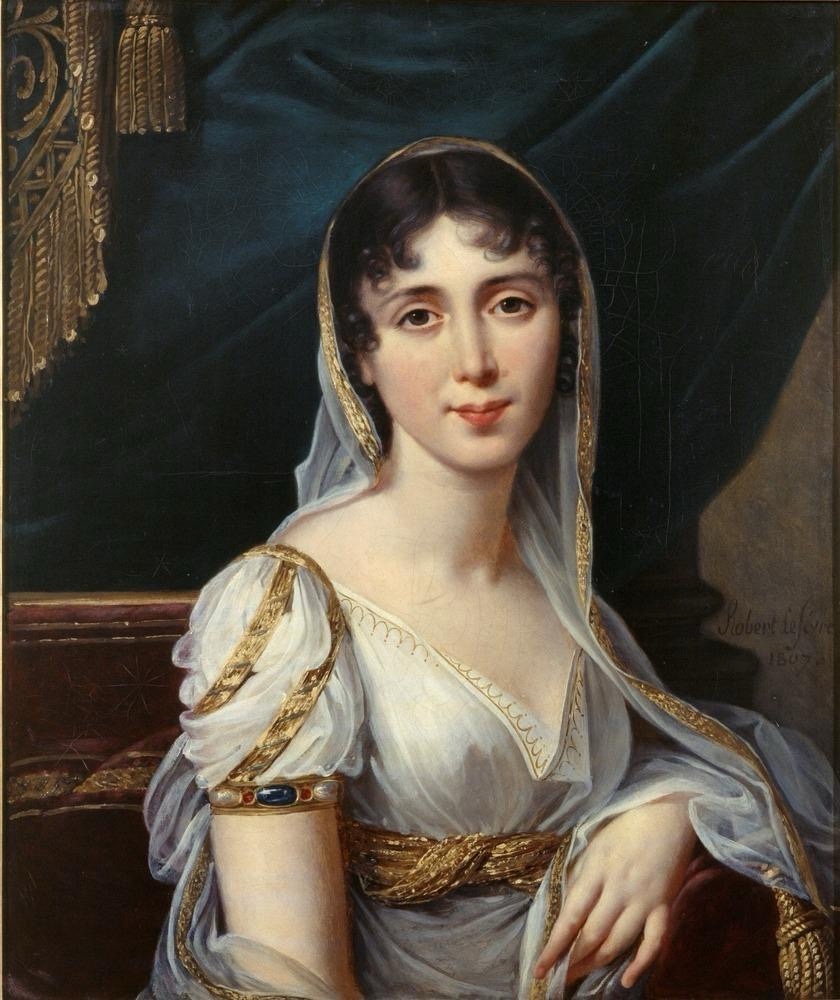
[Désirée Clary]
Désirée Clary was born the youngest child of a moderately wealthy silk merchant from Marseilles. Like Napoleon, her family was well-off enough to see her receive some education, but unlike him, the start of the French Revolution closed the convent schools that were the only respectable educational institutions for girls, so her formal schooling was extremely limited. Also, the Clarys were not even distantly noble, though before his sudden death in 1794, Désirée’s father had tried to purchase a title for his family—something that would both nearly kill his son and lead to his daughter’s crossroads with history.
Désirée’s older brother, Etienne, was arrested by the National Convention in 1794 as an anti-revolutionary when his late father’s title application was discovered, and Désirée set out to secure his release. Somehow during that process, she met Napoleon’s older brother, Joseph. While it’s unclear if Etienne was released at this time (he was eventually and survived the Revolution), we do know that Joseph Bonaparte was invited back to the Clary home, where he quickly fell in love with Désirée’s older (and favorite) sister, Julie, and the pair were married before the year was out.
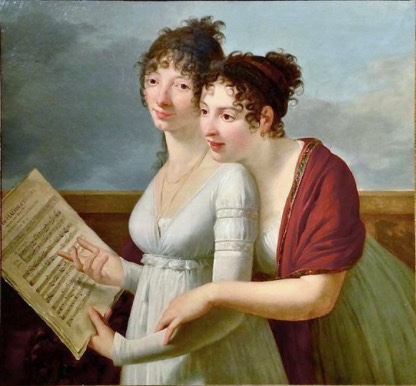
[Julie and Désirée]
This marriage between Julie and his brother is what brought Napoleon into the Clary orbit, where he seems to have fallen equally hard and fast for Désirée. If his fictional description of the sisters is anything to go on (and it clearly is), Julie was the more beautiful and vivacious of the two, but Napoleon appreciated Désirée’s quiet simplicity and shy kindness. By April of the next year (1795), they were engaged, but the ongoing continental wars kept Napoleon with the army and much of their engagement existed solely as letters back and forth between them—with, to hear him tell it, Napoleon as the more faithful correspondent. Again, in his telling, this lack of epistolatory diligence led to a gradual cooling off between the fiancés. But it wasn’t just Désirée’s absence that caused that, as by later in 1795, Napoleon had already met Joséphine, and unlike his unconsummated relationship with Désirée, he was already sleeping with the Widow Beauharnais. By 1796, the engagement was off, and Napoleon married Joséphine (another woman who would be bad at answering his letters).
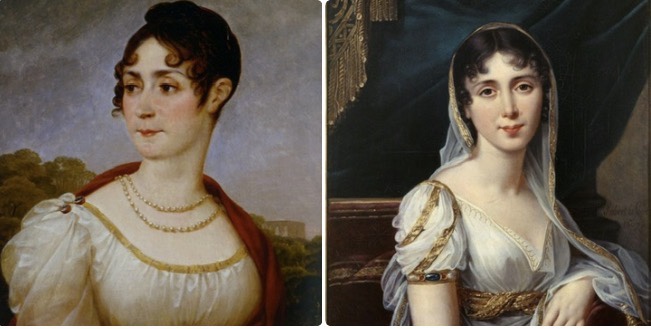
[The man had a definite type]
But presumably before he’d fully jumped ship to Joséphine, while he in the field stewing over his stalling military career and Désirée’s non-responses, Napoleon wrote his Werther sendup, Clisson and Eugénie. Like its inspiration (both literary and fiancée-y), Clisson is pretty straightforward: a sensitive, militarily-inclined young man falls for a kindly, wide-eyed girl. They get married and have a few kids together in a semi-pastoral paradise, but when Clisson is called off to fight again, Eugénie ends up developing a mutual passion with the fellow officer her husband sends to keep her informed of him. Rather than coming home and talking things out, Clisson resolves to commit suicide by bayonet charge, imagining how Eugénie will be so sad to hear of his death, even from the arms of her new love.
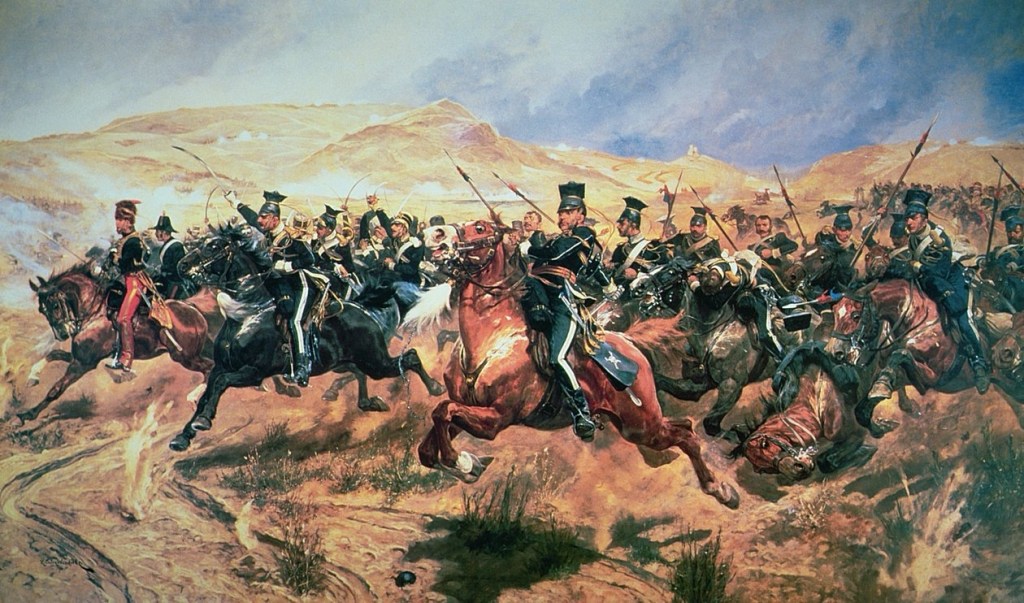
[This will show her!]
Admittedly, I read Clisson in English as opposed to French, but even in translation, you can tell that Napoleon isn’t a particularly noteworthy prose stylist. But I do think he does a reasonable job of aping Goethe’s writing mannerisms, with all the pros and cons that entails. As I said in my short review when I first read it, I think your opinion of Napoleon the Novelist will largely rest on how much love and/or tolerance you have for the sentimental style that would dominate the proto-Romantics and their Romantic and Victorian descendants. Clisson is a noble youth whose biggest weakness is that he loves too much, and Eugénie is the shadow of a Richardsonian heroine buffeted through the story by impulses and circumstances that are too strong for her poor, weak womanly will to fight. Clisson forgives his Eugénie for her betrayal, but in the most egotistical, condescending way possible. Men can be the masters of their fate, but women can do nothing except bend to the world around them. What’s ironic is that while there is no evidence that Désirée Clary ever cheated on an absent Napoleon like Eugénie, Joséphine would do so time and again throughout their tumultuous marriage. Life imitating art.
The real Clisson, of course, is the one with the roving eye, but his Eugénie doesn’t seem to have Werther-lamented her broken engagement much, either. Désirée pretty happily ensconced herself in her beloved Julie’s household, enjoying the perks of being Napoleon’s sister-in-law as much as she might have enjoyed being his wife. All the more so when Napoleon crowned himself emperor (1804) and made Joseph and Julie first the king and queen of Naples, and then Spain (in 1806 and 1808, respectively). But before any of that happened, she had already moved on from the Napoleon engagement herself and married another French military officer, Jean Baptiste Jules Bernadotte, later one of Napoleon’s marshals (though one that he saw as more of a potential rival than friend). Army life kept the Bernadottes apart most of the time—hence Désirée faffing about at the new French court and that of her sister a lot, but she did manage to give birth to the couple’s only child, Oscar, in 1799. And while seemingly not especially passionate, Désirée and Bernadotte were useful to one another, and their marriage was a fairly successful partnership, if not the Romantic Ideal. Which is good, because their lives were about to take a wild left turn.
Napoleon’s empire caused a lot of upheaval among the crown heads of Europe, but, amazingly enough, not all of their problems stemmed from the Little Corsican. Sweden, for example, was in the middle of a succession crisis because their elderly king, Charles XIII, had no legitimate living heirs, and the Riksdag, the Swedish parliament, was afraid that Napoleon would unilaterally put someone on the throne when Charles died. So Riksdag sought to outmaneuver the emperor by making the choice first, while simultaneously aiming to pick someone Napoleon wouldn’t outright reject. And they chose Jean Bernadotte.
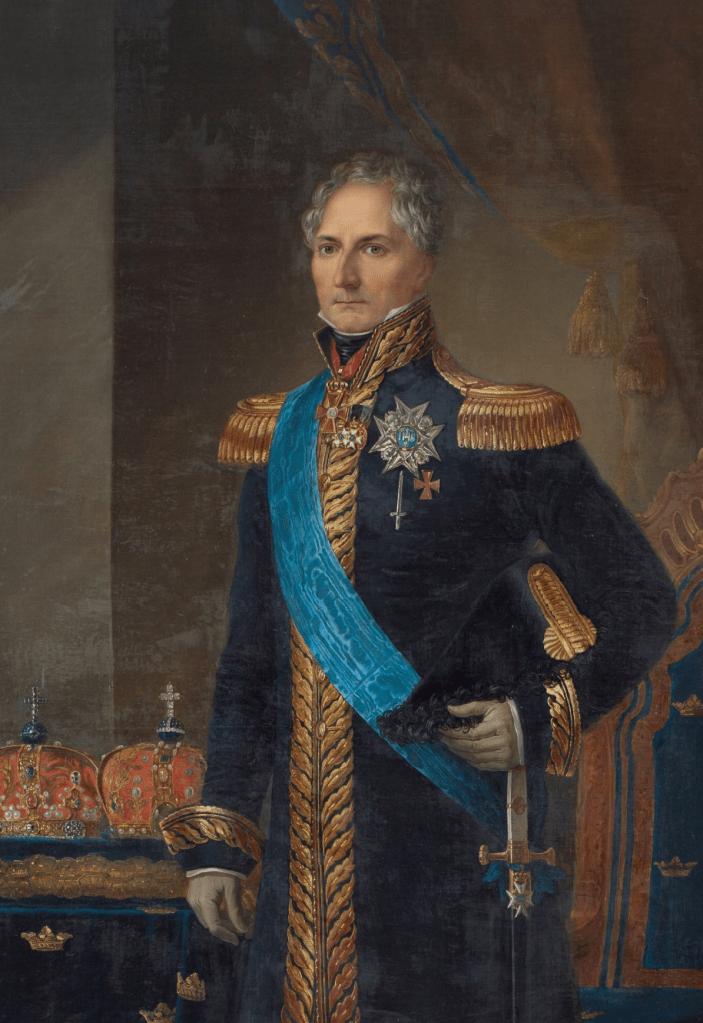
[What a twist!]
In 1810, the Riksdag elected Bernadotte as crown prince and heir presumptive of the kingdom of Sweden, and after a short, tense, standoff with Napoleon over being released from his allegiance to France, Bernadotte accepted. Eight years later, Charles XIII died and the new(ish) crown prince took the throne as Charles XIV John, ending the ruling line of the House of Holstein in Sweden and Norway, and beginning the reign of the House of Bernadotte, which would cease to rule Norway after the 1905 Dissolution of Union between the two countries, but would remain the royal house of Sweden down to the present day.
You might think that Désirée would have relished becoming a queen, but she never really warmed to the idea beyond protecting the succession rights of her son, Oscar. She would spend many years outright dodging being in Sweden entirely, seeing it as full of nothing but ice and polar bears, and disliking the formalities of the Swedish royal court so openly that most of the aristocracy thought her at best eccentric, and at worst, kind of an embarrassment. Most of her family was elevated by Napoleon (or in her case, the Riksdag) to the peerage her father had so desperately wanted, but there was a part of Désirée that never adjusted to being more than the simple Marseilles merchant’s daughter. She liked wealth and comfort, but had little use for pomp and ceremony. Her position became a bit easier when Oscar became king in 1844, and she could become the odd queen mother instead of the front-and-center queen, but one wonders if there was a kernel of truth in what Napoleon wrote about her and him in Clisson: that the pair of them were at their best as pastoral lovers rather than European royalty.
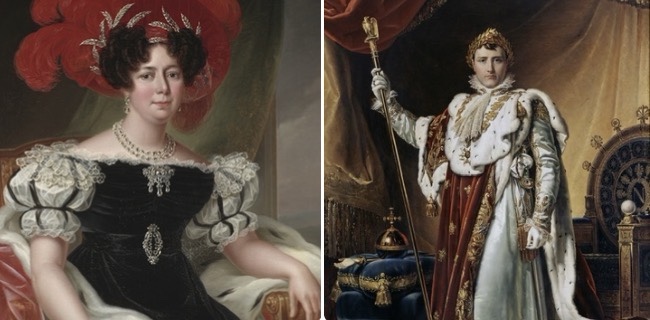
 Sarah Holz
Leave a comment