“In all of the foregoing there has been no room for that other and greater magic of Virgil’s perennially lovely verse. This phenomenon indeed surpasses all feats of mere thaumaturgy, and transports the thoughtful mind to the realms of the purest genius. This learned poet was in sober truth a mage; this ‘wielder of the stateliest measure/ ever moulded by the lips of man’ wove in his verses spells more potent than all his legendary deeds of magic.” – John Webster Spargo, Virgil the Necromancer
“It may be observed that in these Northern legends, Virgil is in most cases spoken of as a poet as well as magician, but that he is before all, benevolent and genial, a great sage invariably doing good, while always inspired with humour.” – Charles Godfrey Leland, The Unpublished Legends of Virgil

History and literature are never quite as far apart as some purists would like to imagine—perhaps that is why the Greeks made history one of the domains of the creatively-minded Muses. This is particularly true of what we here in the future adjudicate as “ancient history,” where historians and archeologists are always on the hunt for things like the king who was the “real” Agamemnon, or similarly, where was the “real” Ithaca (or Troy, for that matter). We instinctively know how easily history becomes mythology with events as far back as the Bronze Age, but we are sometimes less aware of that process the closer to our own time we get. We’ve had a good laugh (as well as more serious discussions) here about the Romans turning a couple of dead Julii dudes into gods, but apotheosis isn’t the only alchemy the fickle goddess Fama is capable of. Nor are the Roman imperial families the only target of this post-Homeric myth-making.
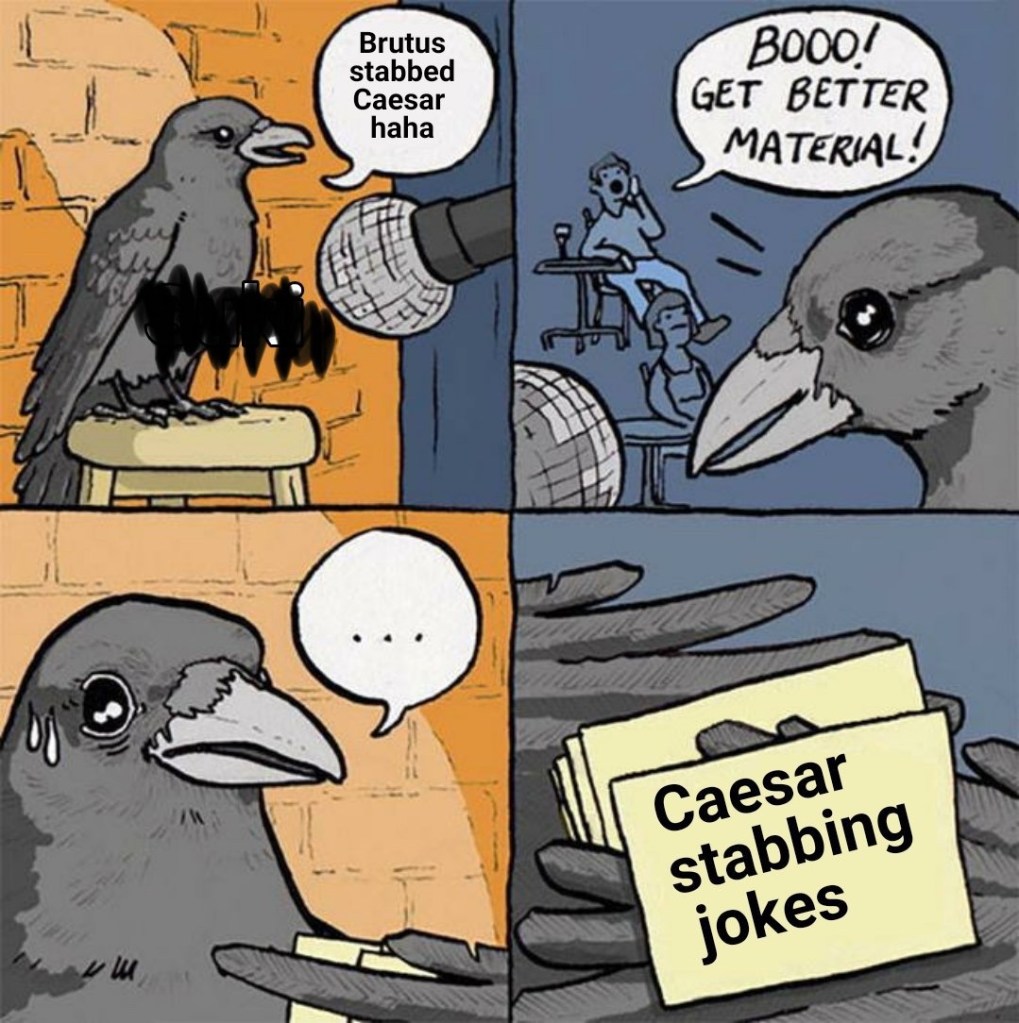
[Good news for a historically-minded novelist in the 21st century who can’t quite seem to leave the fantastic out of her books… Happy belated Ides, btw, folks 🗡️]
You all probably thought that Theodosia Burr’s afterlife as a pulp fiction pirate queen was the craziest postmortem twist for any historical character in my novels that I didn’t invent, but you’d be mistaken. Because today, ladies, gentlemen, and NBs, we are going to do a deep dive into the wild afterlife of the Roman poet Virgil: philosopher, philandering poeticist, psychopomp, and full-on wizard.
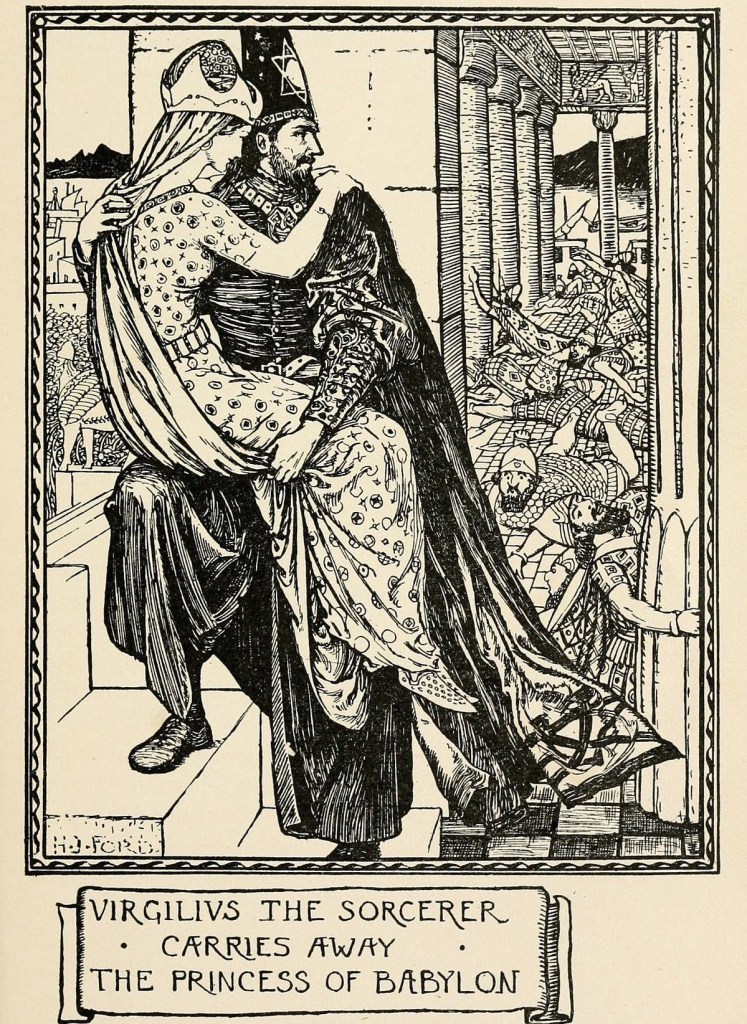
[No, really. Like, “fire burn and cauldron bubble” wizard wizard…]
It feels like quite a leap to get from the 1st century’s favorite writer/recluse to his early modern incarnation as possibly Earth’s first Sorcerer Supreme, but when you break down the various pieces of Virgil’s later mythos, you start to see the tenuous connections between each link in the literary chain. And like with so much of ancient history, what emerges is not a random group of disconnected ideas, but an extended, two thousand-year long game of Telephone with the historical man Virgil, his surviving works, and his legacy. But this is an old fashioned landline Telephone with a chaotically tangled cord, so it’s going to take us a bit to straighten it out.
First of all, we must acknowledge that much of what we “know” of the “historical Virgil” is technically a pseudohistorical literary creation as well. Unlike his contemporaries Horace and Ovid, Virgil doesn’t even pretend to speak of himself in his poetry, so we have virtually nothing directly from the horse’s mouth. As we talked about in my post about their friendship, the poet Horace gives us contemporary information about Virgil, but as Virgil’s devoted friend, he is of course not an unbiased source. Inferences about Virgil’s socioeconomic background (probably an eques, but could be of a humbler family), his client status with Maecenas, his poor health—these are all tidbits we know of the poet from Horace’s own writing.

Much of the next wave of “historical” Virgil information comes, supposedly, from the Roman historian (“historian,” some would say) Suetonius, and his Lives of the Poets. This is where we get corroboration of his hometown being (near) Mantua; the story about him giving a funeral for a fly/gnat (and his author attribution for the corresponding juvenilia poem Culex); his adult association with Naples and his nickname of Parthenias (maiden); the story of the Marcellus passage in the Aeneid causing Octavia the Younger to faint upon hearing it; and the idea that Virgil wanted the Aeneid to be burned after his death. We also get the first inklings of myth-building, as Lives is also where we get Caesar-esque stories like the poet’s pregnant mother dreaming that she gave birth to a laurel branch. But while likely drawing from the writings of Horace and the memoir of Virgil’s other poet-friend, Varius, Suetonius was also writing third-hand from more than generation after Virgil’s death. Not to mention that what we have of the Lives of the Poets is a truncated version passed down by primarily by the grammarians Donatus and Servius, who were writing from four hundred years in Suetonius’ future. So here at the start, you can already see both the volatility of Virgil’s biographical history, and the beginnings of a postmortem literary mythology, albeit one grounded in the memories of people who did know the poet.
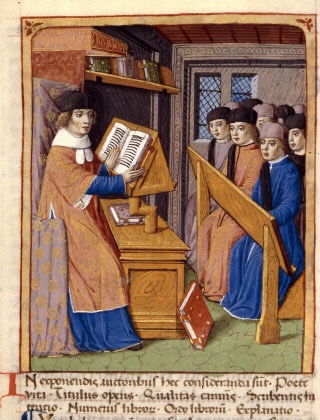
Servius, living on the border between the 4th and 5th centuries CE, is the main source of the Virgilia that is transmitted into the post-Roman period, along with the Appendix Vergiliana, a source of some of the more dubiously-attributed Virgil poems (like Culex, among others). These, plus the poet’s more established corpus (the Eclogues, the Georgics, and the Aeneid), form the basis of the early medieval knowledge base about Virgil. This is about the time, as we’ve also previously mentioned, that the newly Christian European audience for Virgil’s work is trying to, along with other ancient pagan authors, massage him into an author appropriate for good Christians to still read and admire. This is probably about the time that we get the Messianic interpretation of Eclogue 4, relevant passage below:
Now is come the last age of the Cumaean prophecy:
The great cycle of periods is born anew.
Now returns the Maid, returns the reign of Saturn:
Now from high heaven a new generation comes down.
Yet do thou at that boy's birth,
In whom the iron race shall begin to cease,
And the golden to arise over all the world,
Holy Luncina, be gracious; now thine own Apollo reigns.
Eclogue 4 (ll. 4–11), trans. John William Mackail
Undoubtedly written to herald the birth of a Roman boy (possible candidates include: the first child of Mark Antony and Octavia the Younger who will turn out to be Antonia Maior, a hoped-for son of Augustus and Livia, or a son of Eclogue patron Gaius Asinius Pollio), the astrological references are close enough to those surrounding the birth of Christ that it gave early Church scholars enough leeway to classify Virgil as a quasi-Christian poet. Rather than the mental gymnastics required to turn saucy Ovid’s works into Christian morality tales, Virgil was much more easily held as a virtuous pagan who had been granted a divine vision of the coming Savior by God. Not only did this put him a bubble of divine grace that made it more defendable to keep reading his poems, it also introduced the much-less-condoned idea that Virgil was a prophet who could see the future—an intrinsically witchy skill in the medieval world—into the wider cultural parlance.
This dual mutation of a Christianized Virgil who was both a poet and a great seer would run headlong into the High Medieval chanson de geste and romance tradition, beginning in the 12th century. In his commentary on the Culex poem, English theologian and Richard I’s foster brother Alexander Neckam (1157-1217) spoke of “Vergilius fecit Culicem,” meaning that “Virgil made Culex [the poem].” But the 20th century scholar John Webster Spargo suggests that this was generally misinterpreted as “Virgil made a fly,” because around this time a whole host of medieval stories pop into the record about Virgil making a golden or bronze fly as a talisman that chases away biological flies or gnats. And whether this literary crossed wire comes from Neckam specifically or from the Messianic Virgilian tradition more broadly, we are off to the races with the idea of Virgil as a magician (which in the medieval tradition includes skills in “true” magic, medicine, science, and alchemy)
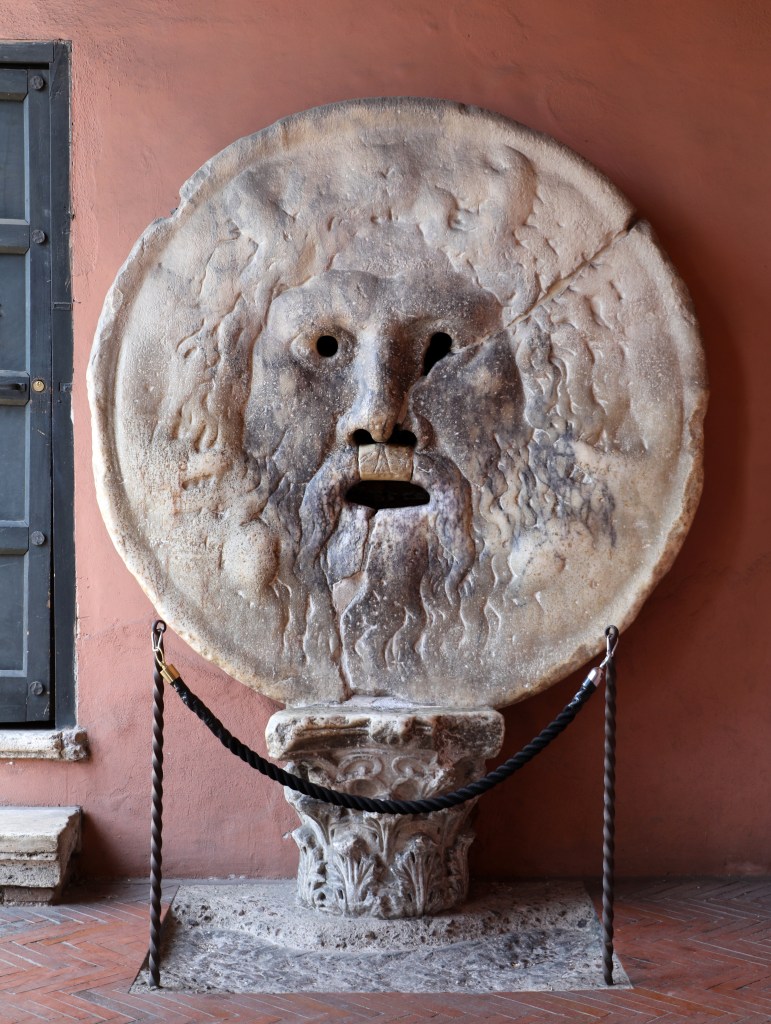
A lot of these earliest fantastical Virgil legends involve the poet fashioning various mechs and automatons, lending credence to the fly misunderstanding as a literary genesis point. Virgil makes flies that chase away the real thing; bronze horses that cure equine diseases or trample burglars and other nighttime miscreants; and, perhaps most beguilingly, divining heads whose mouths bite the hands of liars and adulterers. The famous Bocca della Verità of Santa Maria Cosmedin, a massive ancient marble mask, was discovered in the 13th century in Rome, and probably helped fuel this latter story about the poet. The other source of this association with robotics likely comes from a common medieval habit of conflating the abilities of various famous ancient intellectuals, and giving Virgil the scientific knowledge of his rough contemporary, Heron of Alexandria, the father of western pneumatics and robotics, who we first met ages ago here as the possible inventor of automatic doors and vending machines. While not as primitive as they are often portrayed, pneumatics would have been basically magic to the average medieval person, so Heron would have been classed as a magician or sorcerer, rather than a scientist, just like Virgil. Something similar happens with the medieval conception of the Greek philosopher Aristotle, who predates both Virgil and Heron, but whose voluminous knowledge comes down to the early modern period like a miracle to medieval folks, who attribute such an extensive intellect to the occult.
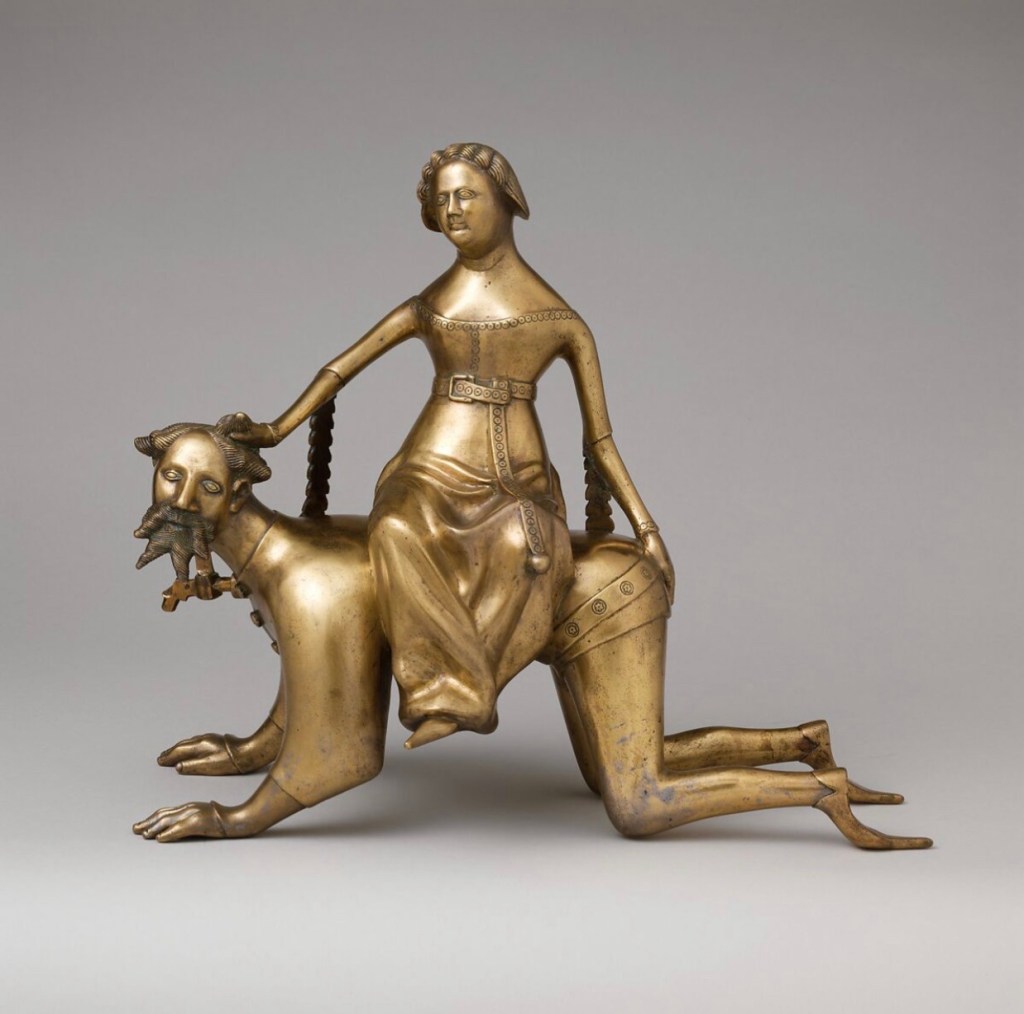
[Phyllis riding Aristotle]
Speaking of Aristotle, he and Virgil also share a weird and dubious tradition in medieval literature as the victims of feminine treachery. In a variation on the Duped King trope, these two sorcerer-sages are brought down a peg by women in stories meant to both show a powerful/smart person outwitted by a “lower” person, and to misogynistically show the evil influence women can have even over those who should be most able to resist their wiles. The Aristotle story is about the philosopher warning his pupil, Alexander the Great, not to fall for the seductive Phyllis’ charms, while falling for her himself and allowing her to ride him like a horse. Virgil’s story is less fixed, with dozens of variations, but essentially he is tricked into a basket by a woman he is attempting to meet for an assignation: he is supposed to be raised/lowered in the basket to/from her room in a tower, but the lady leaves him hanging there overnight to be a figure of ridicule to the town in the morning.
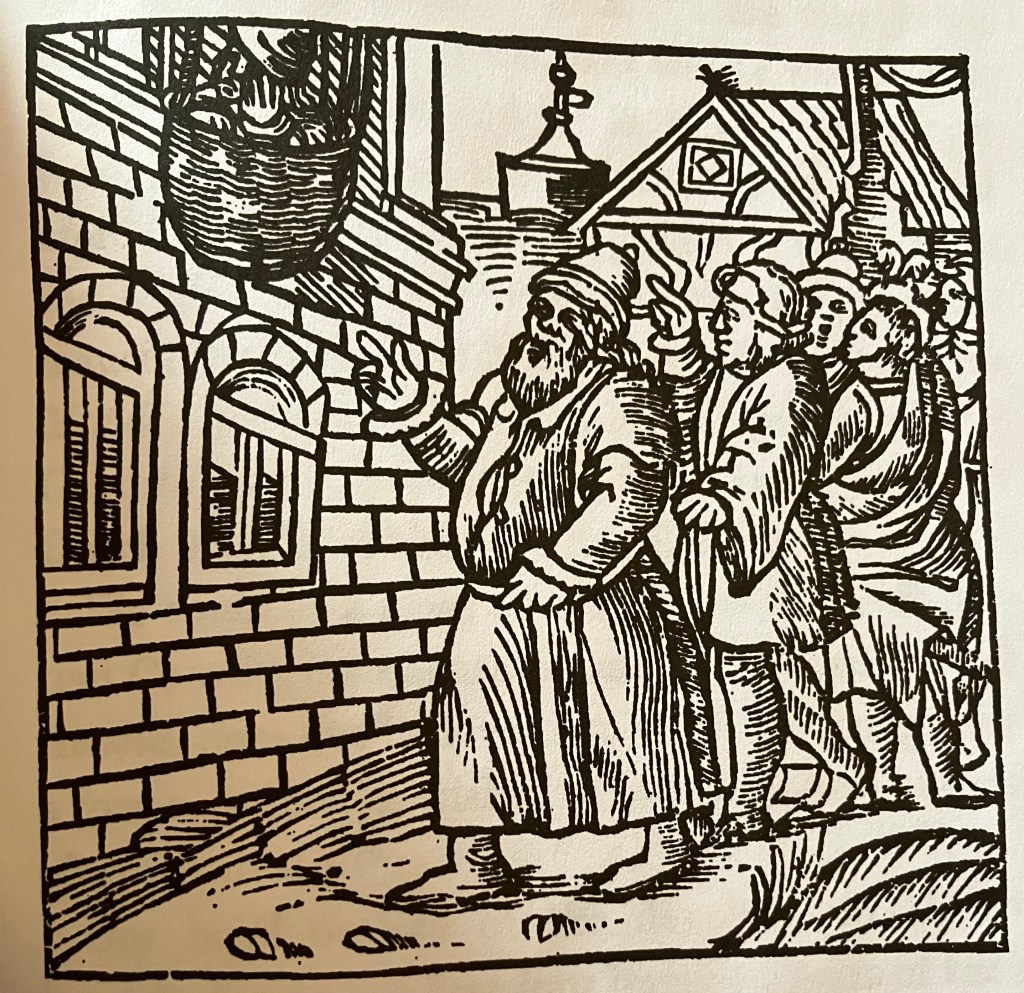
While Aristotle’s tale is probably just a way to sneak in a portrayal of fem-Dom BDSM into medieval art (it was a very popular subject—the version I used above is basically a goddamn teapot), Virgil’s story, aside from its Duped King humor, might have served a didactic purpose to its audience. Aforementioned scholar John Webster Spargo noted that the most punitive iterations of the Virgil basket story were told in places like the German principalities, were being hung in a basket (where the only escape was to cut oneself out, wherein the person would fall into a pre-established pile of muck/excrement) was a known and common misdemeanor punishment. In Virgil’s case, the basket is his punishment for his lusts, because the lady in quest is almost always an out-of-wedlock mistress, an unprotected maiden, or another man’s wife. These stories also give us our first introduction to the idea of Virgil in Hell—not for necromancy or divination—but instead, like Aristotle being ridden by Phyllis, in his basket being punished for sexual incontinence.
Virgil as a lover also suited the less moralistic medieval “little-r” romance writers, and as the popularity of works like The Romance of the Rose and the Arthurian myth cycles gained traction, Virgil gets superimposed onto these stories as well. This is where we get a more knightly Virgil—a vassal lord of a (usually unnamed) Emperor, who engages in more standard, quest-y style stories about kidnapping a sultan’s daughter (see the illustration near the top of this entry) or defending his magical castle. He’s still a magician, as you see, but he’s also wooing princesses and defending his lands and whatnot. Sometimes the princess he’s wooing is the emperor’s own daughter—in two iterations, either the daughter of Julius Caesar or Nero. True to Suetonius-y form, in the Julius version, Jules is cool with the match, and in the Nero one, Virgil’s gotta fight for the right to marrying into the family.
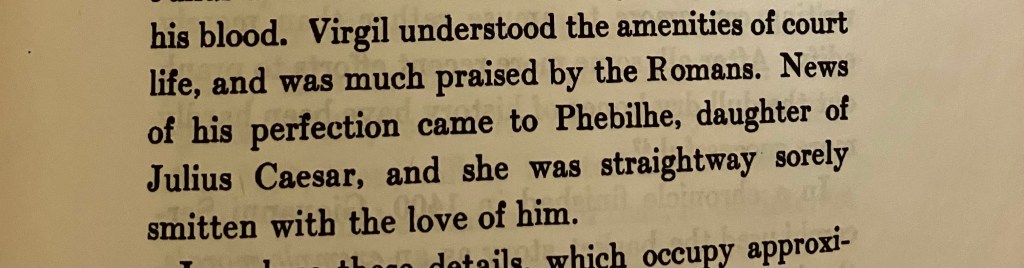
[Imagine being me and thinking that you had cooked up a really out-of-pocket idea about a daughter of Julius Caesar falling in love with Virgil, only to find out years later that you got lapped by some Belgian priest six hundred years ago…]
In some of this generation of legends, Virgil straight up has a wife, but she’s usually unnamed. She tends to come up in variations of the Bocca della Verità stories, where she is the agent of the Mouth of Truth’s destruction. Either she simply destroys the mouth at the request of the townspeople of Roman who don’t want it telling their secrets to the emperor; or, she breaks the power of the mouth by tricking it when Virgil tries to catch her adultery with it (she does so by having a “madman”—her lover—run up and kiss her in a crowd before she sticks her hand in the mouth, so that she can truthfully say that she has never kissed anyone besides her husband and that madman). In both versions, Virgil is outwitted by a woman—like in the basket tales—and he is not happy about it. Which brings us up to the 14th century and the place you probably expected us to start at…
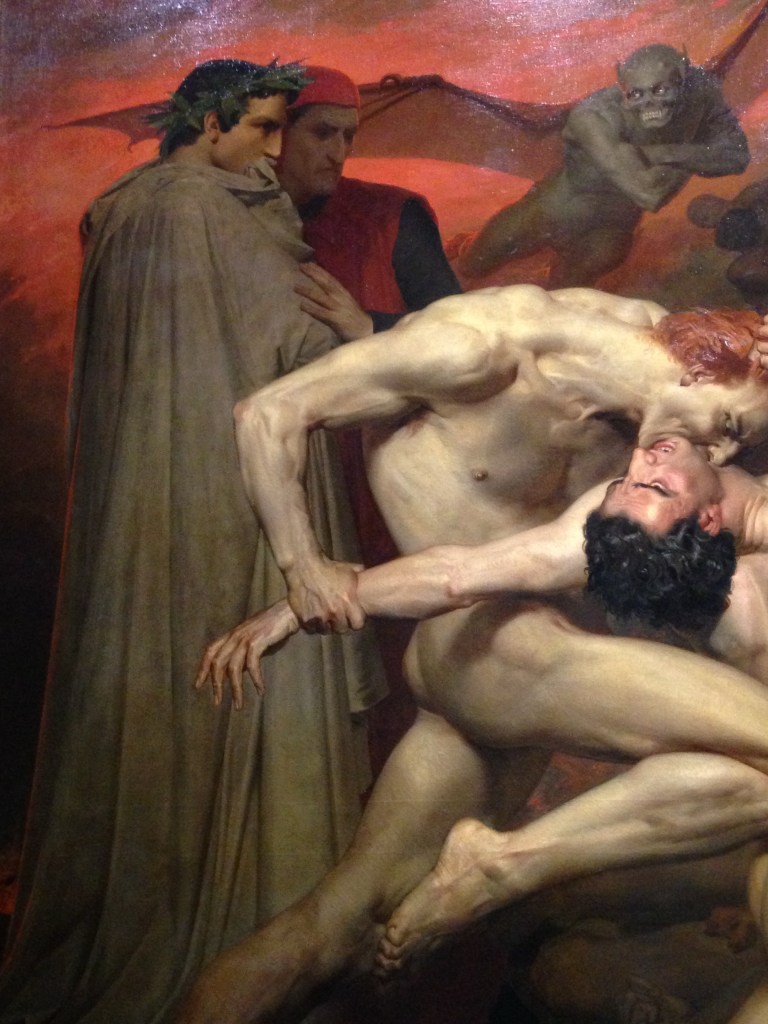
[BWHAAAAAAMMMMMM]
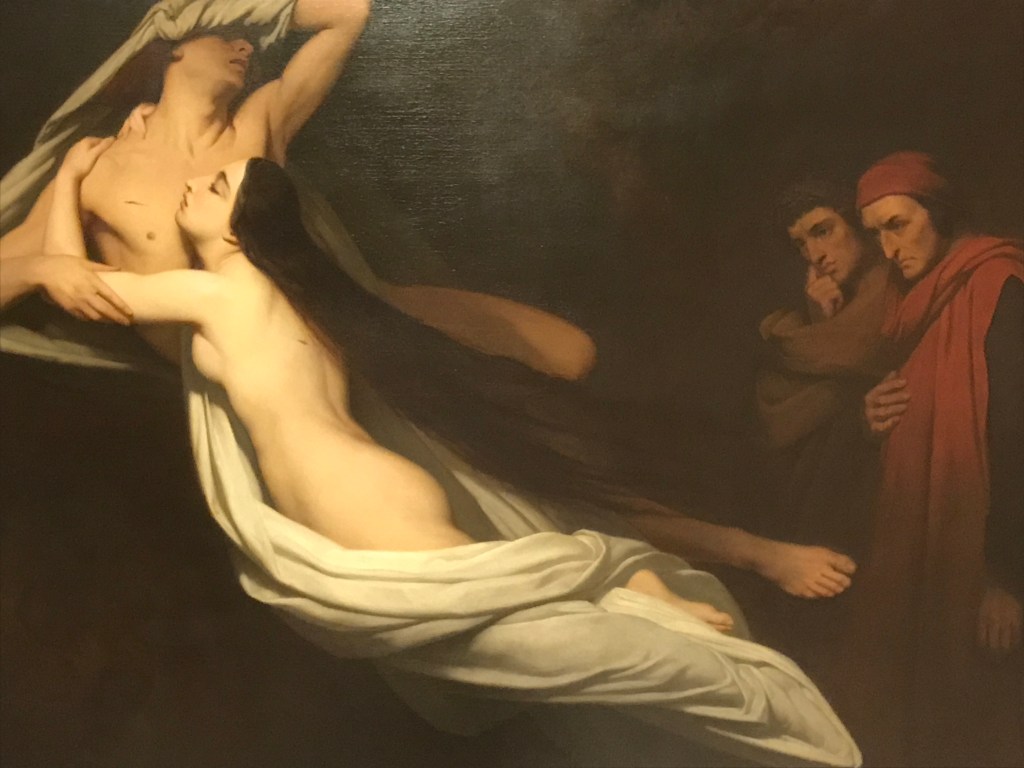
So you see it’s not just because he’s a super fan working with an out-of-pocket idea that gives Virgil to Dante as his guide through the realms of the dead. Dante’s Virgil is more of a throwback to the early Church version of the man: a poet imbued with knowledge of the underworld through Aeneas’ journey in the Aeneid, and a virtuous pagan granted special privileges by dint of his proclaiming of the coming of Jesus in Eclogue 4. But even in this less wacky iteration, the fabulous medieval Virgil shines through occasionally. Despite finding all of those Divine Comedy-as-self-insert-Dante-wish-fulfillment memes funny, I do acknowledge with the pedants that they are inaccurate. Dante is a sniveling mess in a lot of the Inferno and Purgatorio, and the only reason he makes it through is because Virgil is there: both as a correcting goad to Dante’s cowardice, and as a force endowed by God (via Beatrice) to literally beat back the darkness.
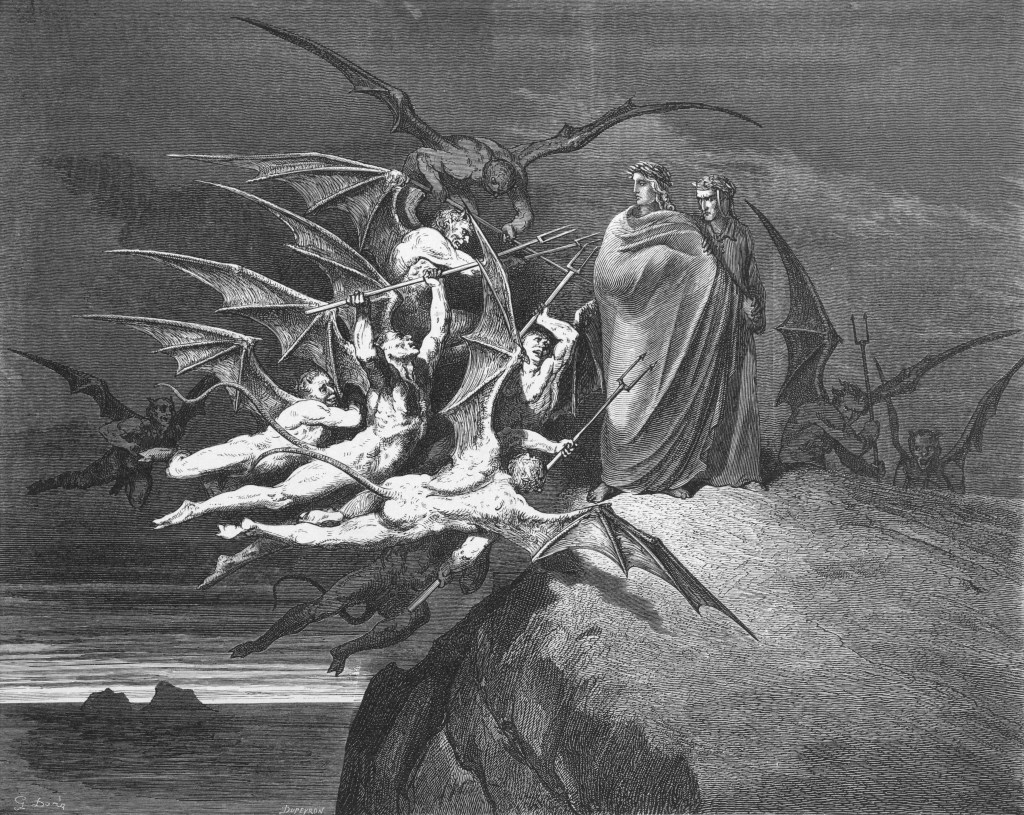
[Pictured: a definitely-not-wizard commanding demons…]
When Dante resurfaces from his dream and tells the world of what he was shown, the vivid geography of the Commedia is so powerful that it fundamentally reshapes the official Catholic conception of Hell. And if the scholars and theologians of the Church were this captivated by Dante’s version of things, just imagine what it did to the average person on the late medieval street, especially since the Commedia ushered in the new age of vernacular Italian as the language of Italy over Latin. This causes Virgil’s common legends as a sorcerer and sage to proliferate at an unchecked rate—to the point that in vernacular Italian parlance, a “Virgilio” becomes the generic term for any wizard or alchemist.
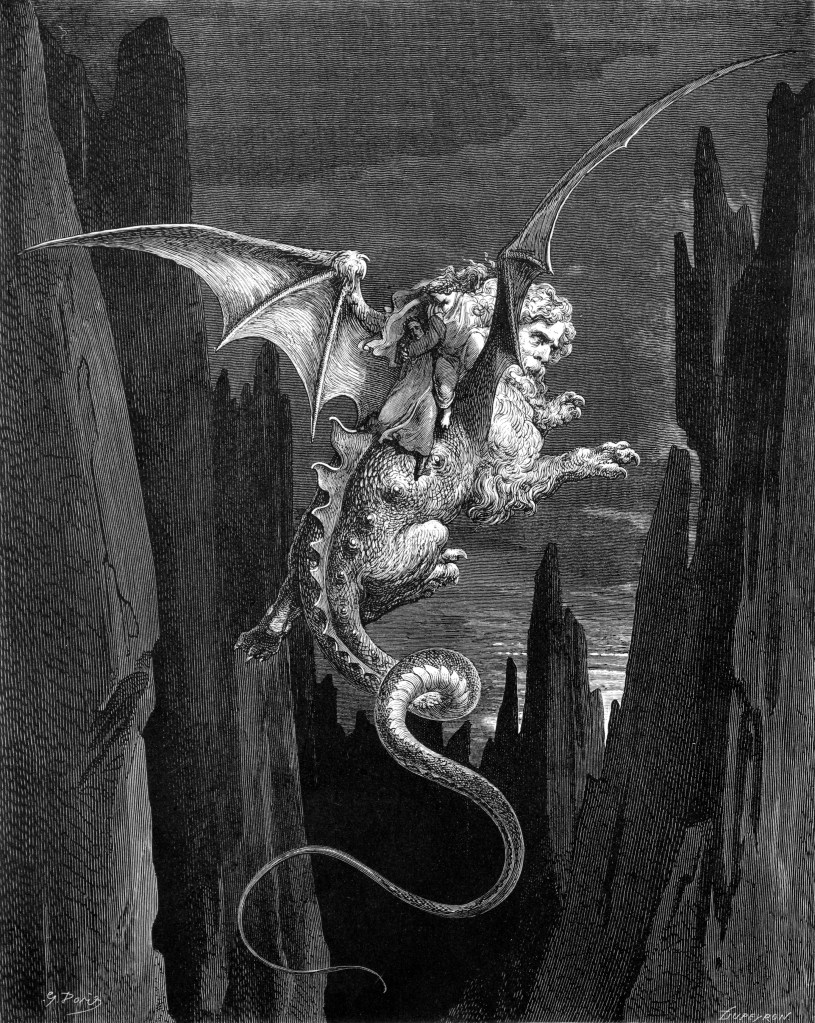
[Late medieval Italians: He said that Virgilio rode a giant wyvern with a guy’s head through Hell!!]
These later Virgil tales lose the more aristocratic focus of the medieval romances or Dante’s eschatology, and instead take on the flavor of standard pan-European folklore. Virgil stops concerning himself with Christ, the emperor, or princesses, and instead becomes what he essentially is to Dante at brass tacks: a helpful guide. The occasionally bad or silly Virgil of the romances is gone, and replaced by a kindly “white magic” wizard who is mostly depicted as aiding the poor and the good against the wicked. He saves virtuous young men from evil brides, assists wrongly disinherited orphans and widows, and is more likely to offer a gentle magical rebuke to an emperor than marry his daughter. Less prophet or psychopomp, the final Virgil is the familiar fairy godmother archetype.

[Bibbity boppity boo that!]
However, I should note that proper scholars like John Webster Spargo take a very dim view of this last crop of Virgil stories, which were often collected by freelance 19th century folklorists like Charles Godfrey Leland—true believers who dove head first into the Neapolitan countryside to dig up unrecorded Virgilian tales from little old Italian grandmothers and other enthusiasts. And I do get what Spargo is saying. If you offer up a few coins to anyone for a story about Virgil as a magician, they’re probably going to find a way to give you a story about Virgil as a magician, even if it means simply re-skinning a story about another wizard. Also, it should not be left unstated that the time that Leland and other folklorists were recording these stories across Europe was at the height of the continental nationalism movement, where countries were eager to forge unified national identities through (sometimes fabricated) cultural traditions, costumes, and yes, folklores/mythologies.
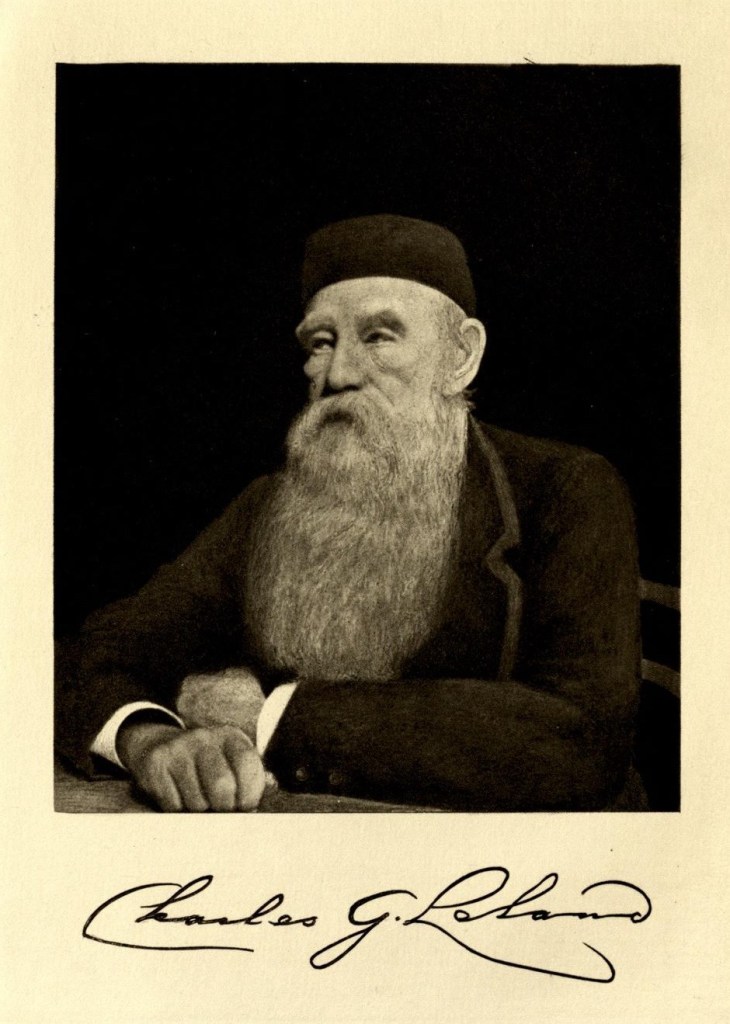
[But look at this man! Look at his wizardy beard! How can you not love this?]
But I also think that Spargo is missing the forest for the trees here. As we seen, at length, the idea of a “pure” Virgil mythos is laughable. There hasn’t been a single, canonical Virgil in two millennia, and the only reason to turn up your nose at the little old Italian nonnas’ Virgilio is a recency bias mixed with probably some patented midcentury classism and anti-Italian racism. The literary Virgil has long transcended the man Publius Vergilius Maro, and all of his fictional incarnations are in some form or another the natural continuation of the versions that came before, fitted to their individual times. Horace called his friend “that best of men”—and it’s hard to imagine that such a supposedly generous figure would begrudge the tall tales of the most marginalized of those who have attributed the best of all qualities to him. Because the nonnas see Virgil as Horace and Dante did: as not just a magical protector, but a steadfast friend✨
 Sarah Holz
Leave a comment