
Merry Christmas and happy holidays to all who celebrate! Here we are at the end of another reading year, so it must be time to drop my favorite books list again. I don’t feel like my best-ofs this year are as diverse as some in the past, but I had a couple that were similar in subject or by the same author, which is interesting in of itself. So instead of squeaking in a couple of extras in an honorable mentions section, I’m going to have a couple of doubled slots in the top ten (so it’s secretly a lucky top thirteen😉).
Also, before we get into that, I should mention that all of my books (expect for The Flight of Virtue, for reasons that escape me…) are currently 50% off on Smashwords for their annual winter sale. Pick up an ebook copy of any of the God’s Wife books, or The Gourd & the Stars, at a great price in the link above until January 1st! 🧿🦅🐝🦂🐆
Okay, enough sales pitches—let’s get into the list!
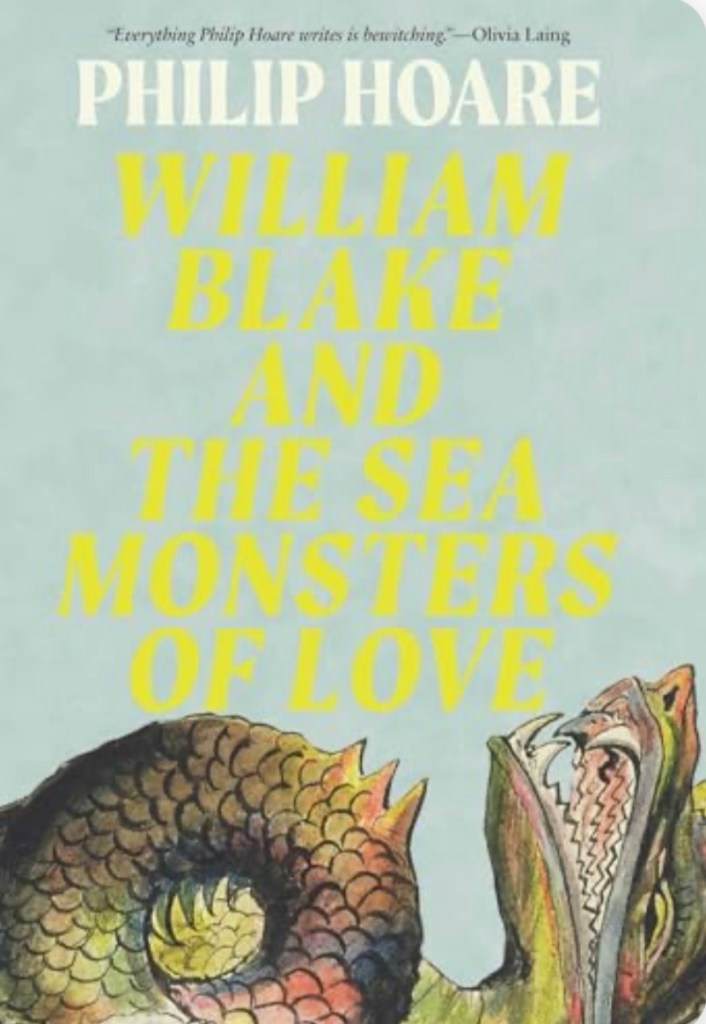
10) William Blake and the Sea Monsters of Love: Art, Poetry, and the Imagining of a New World (Philip Hoare)
I’m not usually one to rate biographies especially highly. It’s not that I don’t enjoy them, but even the best biographies aren’t particularly well written in a literary sense. Poet Philip Hoare’s biography-memoir-historical survey orbiting the life and work of fellow poet William Blake is so mold-breaking in form and content, though, that it would be hard to leave it off my best-of list for the year. This dreamy, time-hopping style wouldn’t suit many biographical subjects, but it works for a radical artist and visionary like Blake, a man out and ahead of his own time. This is a work about Blake, his 20th century champions who rescued him from obscurity, and occasionally Hoare himself, and how it all folds together sounds messy and impossible, but somehow it works. Truly a book that defies description and needs to be experienced.

9) The Diary of a Country Priest (Georges Bernanos)
This one was a rec that I picked up on book Twitter, which I still like for finding authors I’m not familiar with, especially international authors. Bernanos is another midcentury French author, but his Diary of a Country Priest starts out as a deceptively simple story of an ordinary young curate in a small French village, with all of the petty dramas and annoyances that implies, but turns that into a surprisingly deep introspection on faith and love in the face of human frailty. And a narrative that feels like it’s hurdling toward a depressing conclusion that ends up being an uplifting affirmation. Bernanos trained for the priesthood himself as a young man, and although he ultimately decided that he didn’t have a vocation, his compassion for that life is palpable in his prose.
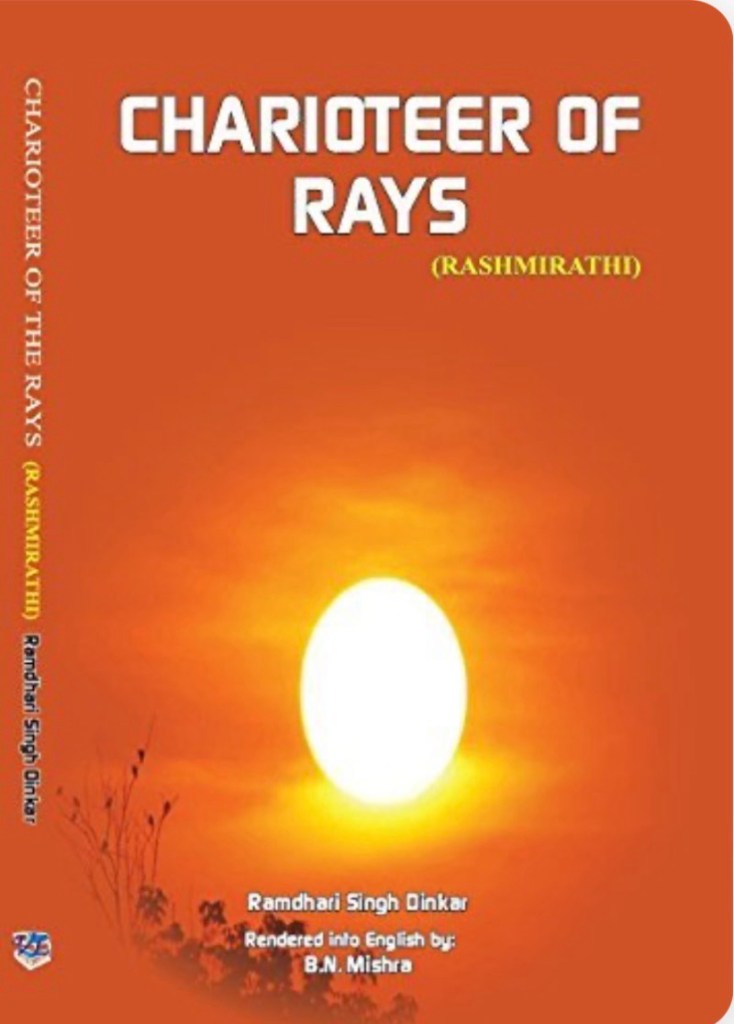
8) Rasmirathi (Charioteer of Rays) (Rashtrakavi Ramdhari Singh Dinkar)
Like as we’ve discussed before with the Ramayana, the Mahabharata is the subject of thousands of reinterpretations and reimaginings within India and without. Because of its sprawling cast of characters, many Mahabharata derivatives aim to tell the story from another character’s perspective, and arguably no one in the whole of the epic is more popular in this role than Karna, the strongest warrior opposing the heroes, the Pandavas, who—unbeknownst to all of them for most of the story—is secretly their eldest brother. As a fundamentally just man and powerful warrior denied his rightful place in the world by a cruel fate beyond his control that drives him into the arms of his own family’s enemies, Karna’s story understandably speaks to something deep in the DNA of the universal human condition. He is much like Oedipus in Greek mythology, a good person whose flaws and mistakes seal a destiny marked by choices he had no part in. The poet Dinkar’s Rasmirathi is one of several works I’ve read from Karna’s perspective, and one of the best at capturing both the beauty and tragedy of this singular yet recognizable character. Dinkar, deeply involved in the Indian independence movement, was one of the earliest major writers to recognize the importance of Karna, the great warrior who is looked down upon by most of the heroes of the Mahabharata because he is believed to be merely the son of a charioteer, as a symbol of caste abolition as well. Karna’s mistaken identity is the source of his tragic fate, and Dinkar celebrates his magnanimity to the poor while not only excusing, but celebrating, the hero’s brave if futile fight with the very order of the universe.

7) Akhnaton: A Play In Three Acts (Agatha Christie)
I did a whole post about Agatha Christie’s forgotten play featuring ancient Egypt’s most iconoclastic philosopher pharaoh, so if you want my full thoughts on this one, check that out. But I really did enjoy the Queen of Crime’s take on what has become rather well-trod historical fiction territory. Her Akhenaten is more than just an impractical dreamer, and is instead a man trying to bring a kind of world that has never been seen before into being against the arrayed forces of the complacent status quo. A potentially provocative message from arguably one of the “safest” British authors. I’m still trying to figure out if I can logistically swing it, but if you’re in the Beltway/DC metro area, the Children’s Legacy Theatre is putting on a rare production of this play in late February 2026 that you should definitely consider supporting.
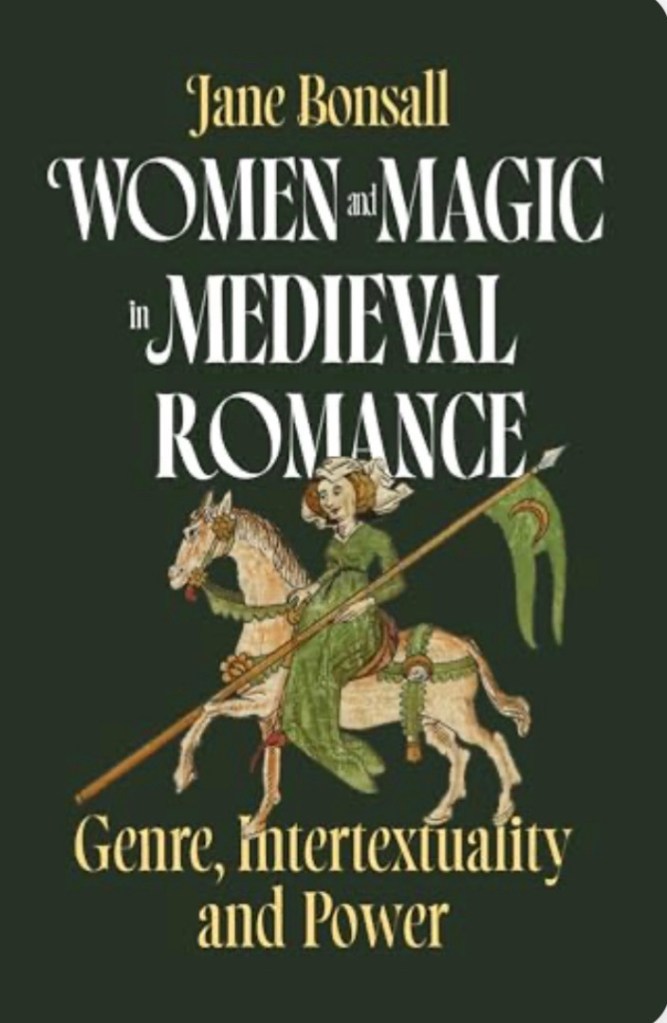
6) Women and Magic in Medieval Romance: Genre, Intertextuality and Power (Jane Bonsall)
I know that the title on this one sounds very academic, but Professor Bonsall has put together a very readable skeleton key for understanding female archetypes in medieval literature in a way that places them in their cultural context. She uses common categories like healing women, monstrous spouses, pagan/Muslim queens, and fairy mistresses to examine why these tropes were so prevalent in a culture that rarely allowed real women to command such powerful positions unchallenged. If you have any interest in medieval or Arthurian literature, and want to be able to understand them like a medieval scholar, this is a great resource to start with. Even as someone familiar with reading these texts from an academic perspective, I found tons here to expand my knowledge. A rare university monogram that manages to speak to professionals and laypeople with equal facility.
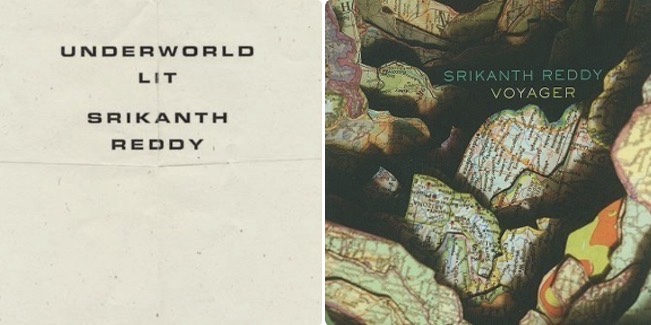
5) Underworld Lit/ Voyager (Srikanth Reddy)
You all probably thought that Rasmirathi would probably take care of the poetry quota for this year’s list, but you’d all be wrong. For not only do we have more poetry here, but also the first of my promised dueling entries with two collections by Srikanth Reddy. I was introduced to Reddy’s work through Pittsburgh’s recently-revived International Poetry Forum, which had invited him to give a reading of his newest collection, Underworld Lit—an examination of Reddy’s obsession with the various cultural underworld literary traditions (an obsession I share) as filtered through his experience with a cancer scare. I devoured this collection so that I was informed for the reading, but the reading itself exposed me to some of his other work, my other favorite of which has become Voyager. This second collection is centered around the life of former UN Secretary General Kurt Waldheim, who was widely respected during his tenure until it come to light that he had worked in the Wehrmacht intelligence services during World War II, but only after his voice had been used to record an international message of peace to be sent out on the Voyager spacecraft. An unintentionally revealing irony of the human condition, a man celebrated as a peacemaker who had remained silent in the face of his lifetime’s worst atrocities, Reddy then makes poems out of words and phrases from Waldheim’s own memoirs to meditate on this dichotomy. Both of these collections use the uncanny—the underworld and space—to atomize back toward what it means to be human, and how we can confront and live with our choices, to produce something both recognizable and unseen. New poetry is often hard to stumble on these days, and it was such a treat to read not one, but two new books that I thought were really doing interesting things with the literary form.
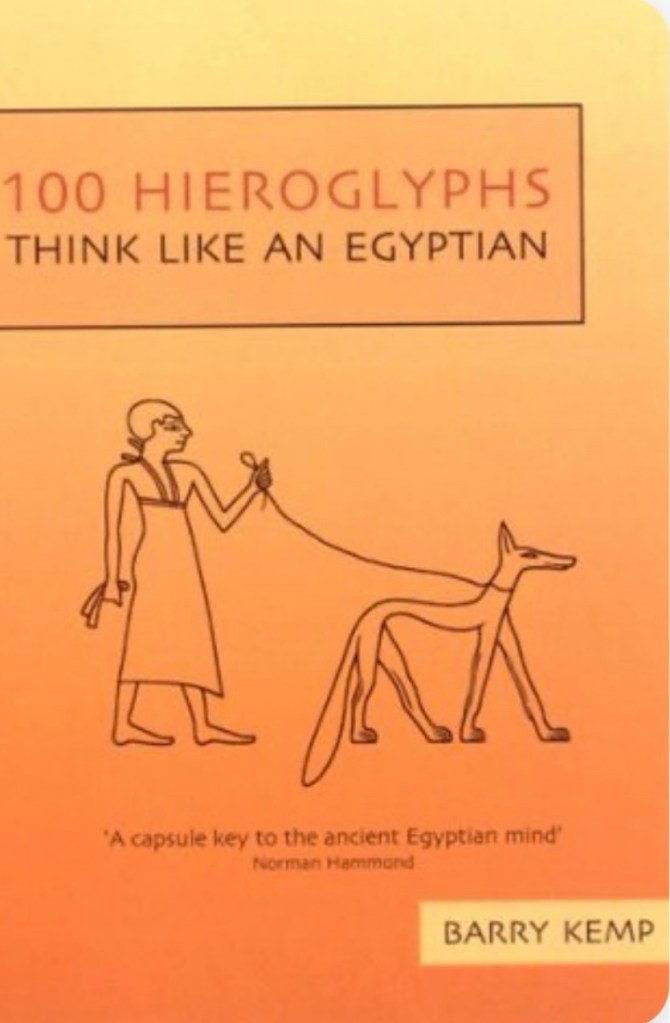
4) 100 Hieroglyphs: Think Like an Egyptian (Barry J. Kemp)
In contrast to Women and Magic in Medieval Romance, I know that this one sounds like it’s super basic, but I was surprised to find Barry Kemp’s use of hieroglyphs to elucidate various important aspects of ancient Egyptian life and culture was actually a great way to talk about these things. While no individual entry is more than a couple of pages, he manages to pack a lot of information into that space. First, by explaining what the hieroglyph is meant to represent, how it was used linguistically, and then why such a representation would have resonated with the Egyptians who used it. And aside from one glaring misprint where Isis is called Osiris’ mother (could make an argument that she’s his spiritual mother—or that she’s the mother of his rebirth since she reassembled him…), the information appears to be accurate while still being approachable to a lay audience. Plus, out of thousands of hieroglyphs, Kemp makes space for the sha in his top 100, so you know that he has my vote😊
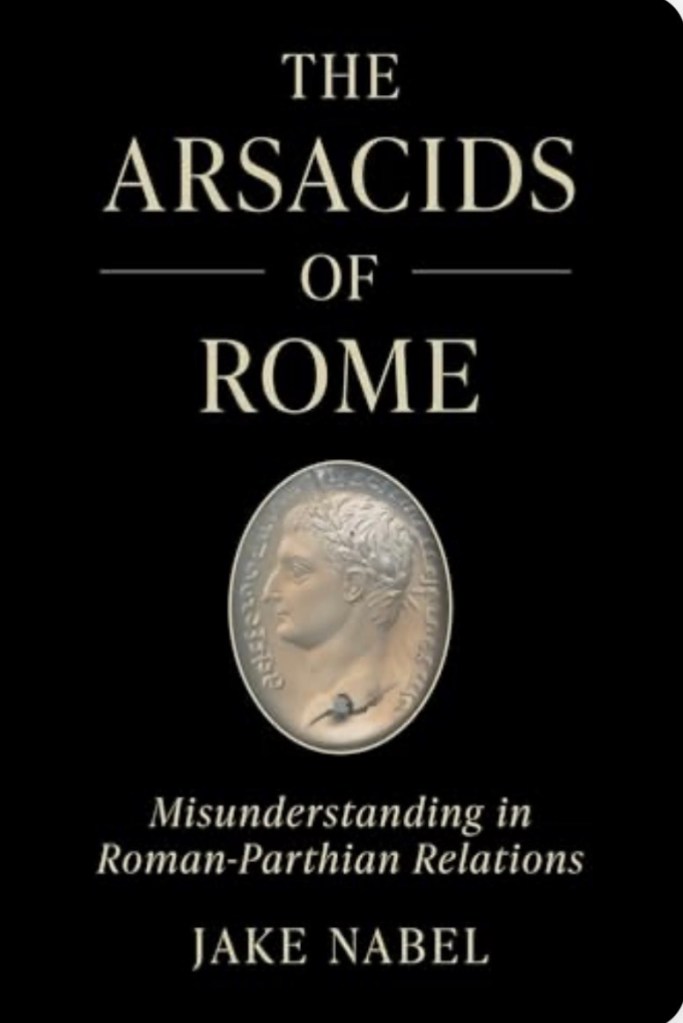
3) The Arsacids of Rome: Misunderstanding in Roman-Parthian Relations (Jake Nabel)
This was one of the last books I finished this year, but much like the monograph I read last year about di manes, this was such a new look at an aspect of Roman history and culture that I have to mention it. Jake Nabel takes a situation that is rarely commented upon in Roman history—the presence of voluntarily given Parthian princes and their families in Rome during the early years of the empire (as my Children of Actium readers might remember). In the lacuna of Parthian records, Roman historians framed these people as hostages from a subdued enemy, but Nabel uses regional documents from Persia, Armenia, and the Sasanian empire that replaced Parthia, and their related cultural norms to suggest that the Parthians likely saw this exchange as a client arrangement similar to the ones that they used with other subservient satrapies. Just viewing the Roman/Parthian relationship from the other side was extremely interesting, but Nabel also posits that as these two Mediterranean superpowers grew to know one another better, they might have exploited this cultural misunderstanding to their own local political advantage in such a way that helped maintain the relatively long-standing Roman/Parthian detente—similar to the complex interplay of cultures in medieval Palestine. If you have any interest in Roman cultural or military history from this period, I really recommend this fresh take on the material.
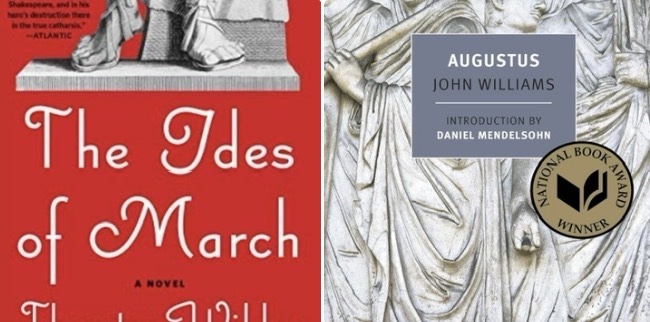
2) The Ides of March (Thornton Wilder)/ Augustus (John Williams)
In another dual slot, I have my two Roman historical novels for the year. As I did separate entries for both of them here and here, I won’t belabor things too much, but I do think both are definitely worth checking out. Wilder captures much of Julius’ fey wit, while breathing life into often one-dimensional historical figures like Clodia Pulcher; and John Williams is an excellent midcentury prose stylist whose current reputational renaissance is well deserved. Like my own books—I’d like to think, anyway—these two books capture both the interest and the ambivalence that makes this period of history so fascinating. And if you’re working up the courage to tackle my behemoths, these are both significantly shorter😉
1) Behind the Scenes With Edwin Booth (Katherine Goodale)/ Shakespeare: The Man Who Pays the Rent (Judi Dench and Brendan O’Hea)
And my god, if there’s a genre I’m usually in the bag for less than biographies, it’s memoirs. Yet this year, I read not one, but two memoirs that I loved. And since they both circle the theater and more specifically, my main man, Will, it feels fitting to place them in one last dual slot. Shakespeare: The Man Who Pays the Rent is a collection of kitchen table interviews by director Brendan O’Hea with Dame Judi Dench both about the serious work of performing and interpreting Shakespeare, as well as Dench’s often less-than-serious reminisces of a life in theater great and small. Judi Dench is the exemplar of an actor who takes her work seriously, but rarely herself, and her memories seem increasingly important as her peers/friends like Maggie Smith exit stage left and we lose that stellar generation of RSC performers. Besides, everyone should have the mental image of a young and pregnant Dench throwing up backstage dressed as a stoat for a stage adaptation of Mr. Toad of Toad Hall.
Even more than The Man Who Pays, I was completely knocked sideways by Behind the Scenes With Edwin Booth. I came across this obscure and out of print memoir as a source in a (frankly underwhelming) three-headed biography of the main Booths (Junius, Edwin, and John Wilkes), but becoming aware of Katherine Molony Goodale’s enchanting book made everything about that other one worth it. Goodale, a minor actor in her youth, recounts the 1886-7 season that she spent on a cross-country tour with Edwin Booth at the height of the actor’s career and popularity. Goodale has an incredible grasp of both her memory and narrative, and her own obvious starstruck adoration for Booth never becomes cloying or unbelievable. Just like Dench, Goodale gives us peek behind the curtain at a generational talent, but one that is both humorous and sincere. To us here in the future, post-1865 Edwin Booth is so often nothing but a tragic figure, but Goodale returns to us a whole man, and the antics of her and her fellow young actors in his company, the girls Booth affectionately calls his Chickens, deserve to be more widely known. I’m working on that myself (!), but if you want to hear it straight from Goodale’s mouth, Behind the Scenes is available for free on the Internet Archive here, and I really can’t recommend it more highly.
 Sarah Holz
Leave a comment