“For a long time I have cherished all the many excellent gifts that God bestowed upon you; prudence worthy of a philosopher; chastity; moderation; piety; an invincible strength of soul, and a marvelous contempt for all the vanities of this world. Who could keep from admiring, in a great king’s sister, such qualities as these, so rare even among the priests and monks.” – Erasmus to Marguerite de Navarre
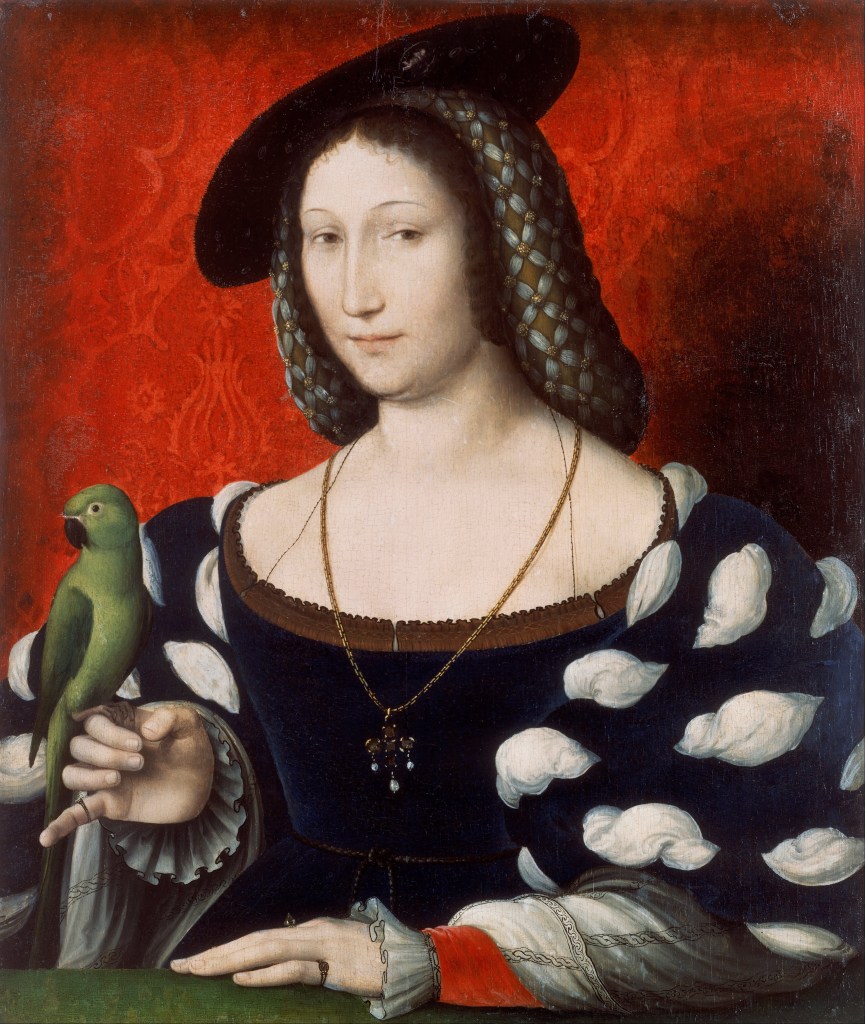
[Marguerite, Queen of Navarre (Jean Clouet, c. 1530) (notice Marguerite’s status symbol parrot from the New World?]
Happy Thanksgiving to all who celebrate in the US! We’re doing low key this year on the day proper, and since my wife is the better cook of the two of us, that leaves me free to try to get a post off on time today. I thought about cranking out the next Pliny installment (don’t worry—we’ll get to it next time), but then I figured that since it’s a friends-and-family-gathering sort of day, we’d instead take a look at the Heptameron (1558), a French Decameron clone written by a true Renaissance woman, Marguerite de Navarre (1492-1549). Or was it? As we’ll see, there’s lots of uncertainty to go around with this lesser-known collection of medieval-ish stories. So let’s dig in!
Marguerite de Navarre was born Marguerite d’Angoulême, the eldest (legitimate) child of Charles d’Orléans, comte d’Angoulême, great-grandson of one of Charles V’s (father of Charles VI Le Fou) younger sons. Therefore, in short, the counts of Angoulême were in the cadet Orléans branch of the royal family (the House of Valois at this time). But the Valois had been in trouble since Charles VI’s mental illness and the ruinous Hundred Years’ War, and the reigning monarch at Marguerite’s birth, Louis XII, had already indirectly inherited the throne from his second cousin, Charles VIII, and was himself son of the duc d’Orléans. For you Tudor heads out there, Louis XII is the gross old king of France that Henry VIII’s younger sister Mary was sent to marry.

[Hang in there, folks. I promise there’s a reason I’m laying this all out…]
Now, none of Louis XII’s sons survived much past infancy, and French Salic law stated that neither of his daughters could inherit the throne. But six months before Louis married Mary Tudor, he orchestrated a sort of Salic-skirting maneuver and married his eldest daughter, Claude, to Marguerite’s younger brother, Francis, with the understanding that the latter would become king upon Louis’ death. That didn’t take long, as Louis was dead three months after his marriage to Princess Mary, and Francis d’Angoulême became Francis I of France—famous Field of the Cloth of Gold, Henry VIII royal rival Francis.
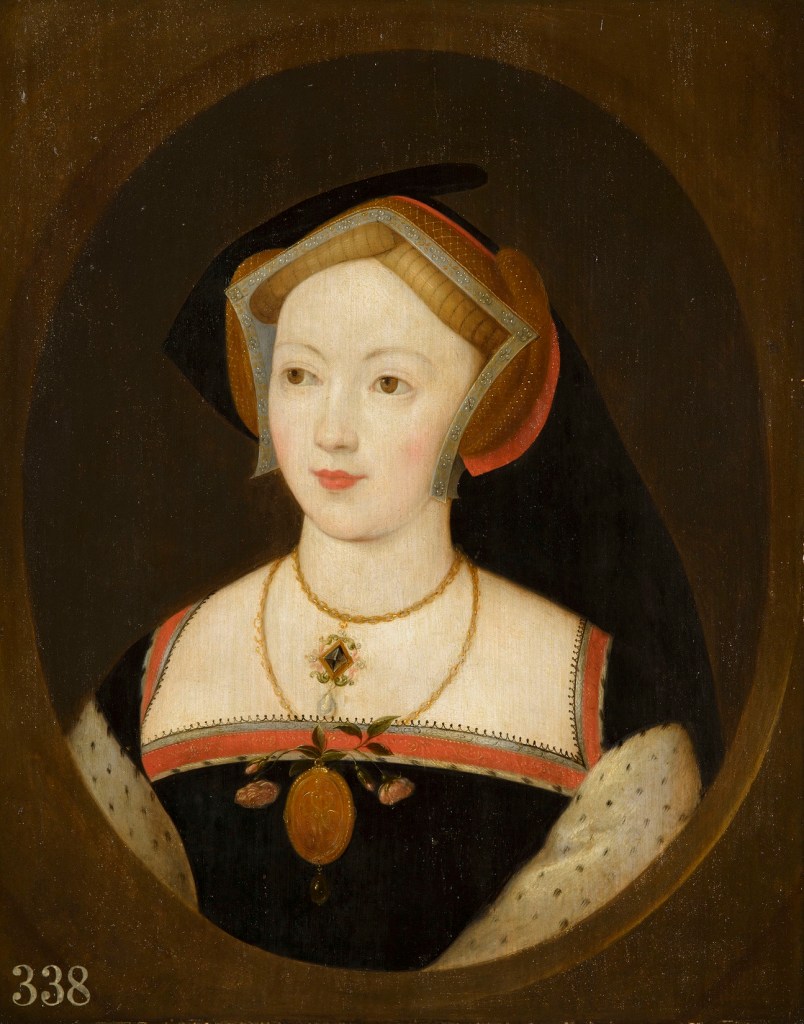
[“Favorite mare” Mary Boleyn-riding Francis I, if you want to be crude]
Francis’s somewhat unlike ascension to the throne France changed Marguerite’s life as well. She had already been married for several years to Charles, duc d’Alençon, another distant royal relative, but she and her brother were very close and she, along with their mother, Louise of Savoy, easily overshadowed the docile Claude and became the leading ladies of the new French court. Marguerite’s father had died in 1496, leaving the nineteen year old Louise to raise four year old Marguerite and two year old Francis (and two illegitimate daughters also under the age of ten). Although not apparently educated beyond the norm of her times, Louise was intellectually voracious, and she used the freedom of her widowhood to maneuver her children into the good graces of Louis XII’s court that led to their fortuitous political marriages while seeing to it that both her children (and her husband’s illegitimate daughters) received superlative classical educations. This made Marguerite one of the most educated women in Renaissance Europe, and her new exalted position as the king’s beloved sister led to her not only writing her own books and devotional materials, but becoming one of the leading artistic patrons in France alongside her brother. Indeed, she was seen as a modern Maecenas to European painters and writers, and her soon to be famous salon was called “New Parnassus,” after the home of the Greek Muses. Her position at court allowed her to find an intellectual companionship that her marriage probably didn’t, as Charles had a reputation as being kind, but rather dumb.
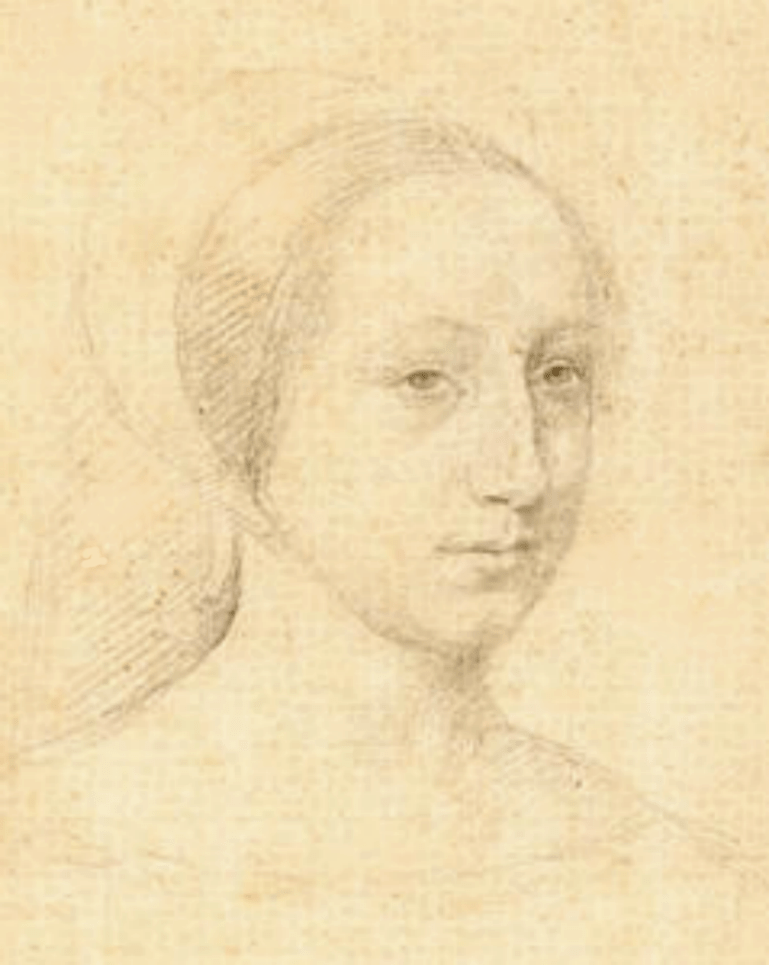
[Queen Claude herself was more interested in religion than the glittering world of art and politics that occupied Louise and Marguerite, which was probably for the best as she was also thought of as kindly and dull by most of the court, and suffered by comparison with the beautiful and brainy Marguerite in most eyes. Short of stature and suffering from scoliosis, Claude spent most of her relatively short life almost perpetually pregnant, despite Francis’ legendary number of mistresses. This combined with the fact that her husband probably gave her syphilis likely contributed to her early death at twenty-four. There is a fascinating theory, based on contemporary descriptions of her appearance and personality that Claude may have had Down’s syndrome, but obviously that is almost impossible to prove today without disinterring her from Saint Denis, which feels unnecessary and potentially inconclusive anyway.]
Charles died of illness in 1525 after the disastrous Battle of Pavia (where Francis was briefly taken captive by Spain). Also taken captive at this battle was Henry II, the king of Navarre, and once both kings are freed, Francis will marry his sister to Henry to strengthen the Franco-Navarrese alliance against Spanish/Holy Roman Empire encroachment along the Pyrenees. The couple’s only surviving daughter, Jeannne d’Albret, would inherit the throne of Navarre—the kingdom didn’t follow Salic law—and would end up being its last independent ruler, as her son, Henry III of Navarre, will ultimately inherit the throne of France (as Henry IV of France) through his marriage to Francis I’s granddaughter, Margaret of Valois (Dumas’ Queen Margot). This will subsume Navarre into the kingdom of France much in the way James I’s inheritance of Elizabeth I’s throne will unite England and Scotland.
As queen of Navarre, Marguerite would continue to be a major patroness of the arts, while also gaining political and cultural experience with the turbulent world of the small 16th century kingdom her husband ruled. Like her daughter and later her grandson, Marguerite was intellectually engaged with the Reformation, and she was sympathetic to its religious aims. Indeed, it has been postulated that Anne Boleyn might have been first exposed to reform ideas through contact with Marguerite’s New Parnassus circle while the future English queen was serving in the train of Queen Claude. Some of the evidence for this is that Anne’s daughter, Elizabeth, possessed a contemporary manuscript of Marguerite’s poem Miroir de l’âme pécheresse (The Mirror of the Synneful Soul) that she translated into English as a gift to her stepmother, Katherine Parr, another reformist. But like those other women, Marguerite likely saw herself as a Catholic who wanted reform within the established Church, rather than a Calvinist or Lutheran.
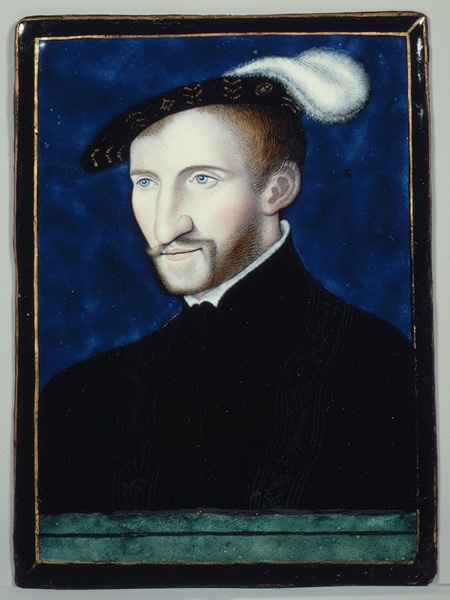
Okay, so Marguerite wrote the kinds of religious poems and tracts common among the most learned women of her time, but what about the Heptameron? The truth of the matter is, in part because it did not appear publicly until after her death in 1558, we aren’t 100% sure that Marguerite is in fact the Heptameron’s author. As in, is this Marguerite de Navarre’s Heptameron in the modern meaning that she wrote it, or is this Marguerite de Navarre’s Heptameron in the contemporary meaning that it was written for her (think of The Countess of Pembroke’s Arcadia by Sir Philip Sidney, or The Countess of Montgomery’s Urania by his niece Mary Wroth)? I had never even heard this proposed, but Peter Chilton, the translator of the Penguin edition of the text, seems to find Marguerite’s authorship extremely questionable. At this late date, none of this can be proven definitively, but I personally think it is safe to posture that Marguerite was at least a collaborative author of this work. Meaning that perhaps the Heptameron came out of stories that her Parnassus group came up with, of which she may have contributed some.
This is bolstered by the fact that, unlike Boccaccio’s Decameron stories, the Heptameron storytellers are—theoretically at least—supposed to be telling each other stories they know to be about true events or things that really happened. So think of the Heptameron as Mary Wroth’s thinly-veiled gossip stories in the format of Boccaccio’s text. Likewise, many subsequent scholars believe that the framing cast of storytellers of the Heptameron’s tales are also based on Marguerite’s inner circle. But before we get into that, let’s break down the Heptameron’s framing story to get our feet wet…

In the Decameron, Boccaccio’s ten young people are holed up in a country villa to escape the plague in Florence and tell one hundred stories among each other to pass the time. In the Heptameron, Marguerite’s ten nobles are all taking in the waters at Cauterets, a popular Renaissance spa town on the Navarre and Spain border in the Pyrenees that Marguerite herself was very fond of. But when they all go to leave, their usual route home is barred by a torrential flood of the Gave de Pau, the local river. Initially, they split up to find their way around the flooding, but quickly are confronted by series of shortly-told but highly dramatic adventures. Oisille, the oldest and wisest, decides simply to make a pilgrimage to the abbey of Notre Dame in Sarrance, where she will pray and wait out the flooding. Parlemente, Hircan, Longarine, and Longarine’s husband travel together and lodge at a peasant’s house, but they are attacked by bandits. Longarine’s husband is killed, but our three co-protagonists are saved by the timely arrival of their friends, Dagoucin and Saffredent, who help Hircan kill the bandits—which almost makes up for the fact that they were following their friends solely because they are serviteurs (courtly lovers) of Parlemente and Longarine (though which is “serving” which lady love is unclear; based on personality, I’d say Saffredent/Parlemente, Dagoucin/Longarine).

[Longarine after watching her husband be brutally murdered in front of her]
After their narrow escape from the bandits, the gang learns that two of their other lady friends, Nomerfide and Ennasuite, are at a nearby abbey after an equally narrow escape from a bear that ate all their servants. They pick up the girls, and are soon joined by Geburon, who is running from another group of bandits that they have to defeat. The guys kill the bandits, and then the gang hears that Oisille is staying at the abbey in Sarrance, and they all decide to join her.
When they get to Sarrance, they find Oisille, as well as the tenth of their friends, Simontaut (another competing serviteur of Parlemente’s), who came to the abbey after trying to ford the river on his horse (he gets his horse and all of his servants killed in the process). Here, under the guidance of Oisille, they decide to pass the time telling each other stories while local workmen attempt to rebuild a collapsed bridge that would permit them to cross the flooded Gave de Pau, or for the flood to recede, whichever happens first. The bridge building is expected to take ten days, so they plan to meet in the meadow beyond the abbey each day after mass, with each of them prepared to tell a story. As those of you who understand Latin numeral prefixes have figured out, though, Marguerite or her circle never finished their planned, full Decameron, and what we have are 72 stories from the first seven days of the plan. Hence, Heptameron.
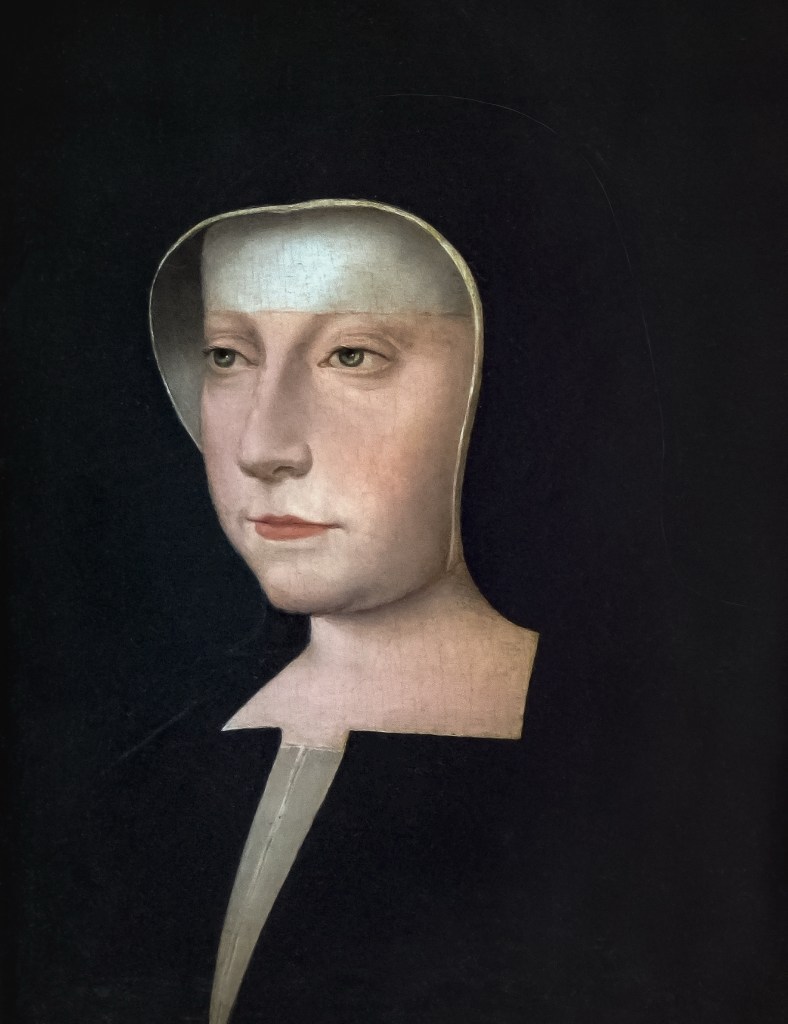
In his introduction to the Penguin edition, Peter Chilton lays out the ten frame protagonists and who they are thought to be in Marguerite’s Parnassus. These conjectures are largely based on anagrams scholars have teased out of the fictional characters’ names, some of which are more certain than others. I personally didn’t find all of the connections suggested to be particularly convincing, outside of the more obvious ones, but it is probably safe to assume that all ten characters are at least partially based on people in Marguerite’s circle.
The most obvious and probably least controversial identification is of Parlemente, the most prominent of the five ladies, and it’s also probably here where the scholars got fixated on meanings and anagrams with the names. Parlemente is likely Marguerite herself, as perle amante—“loving pearl”—would be the same in meaning to Marguerite’s own given name; and parlermenter is French for speaking or discoursing, one of the queen of Navarre’s favorite pastimes. This in turn informs the identification of the fictional Parlemente’s husband, Hircan, with Marguerite’s real life husband, Henry II of Navarre; Hircan seen as an anagrams of Hanric/Henri. It also tends to make scholars see the older, motherly Oiselle as Marguerite’s mother, Louise of Savoy, though some contend that she is supposed to be Louise de Daillon, one of Marguerite’s dames d’honneur instead (both using the alternate French spelling of Louise—Loise—as an anagram for Oisille). The other seven characters involve even more torturous anagrams of people’s titles or family fiefs to make identifications, made worse by the Renaissance era’s loosey-goosey approach to spelling that you can already see above. Most of the people that the other characters are based on are also not world-historic figures, so unlikely to make an impression on a modern reader.

The only one I have a personal opinion on is the youngest lady in the party, Ennasuite. If this group could be thought to have a cheeky, party girl, it’s her, and Chilton believes her to be Anne de Vivonne, a lady in Marguerite’s train, but I think he believes this because it bolsters two of his other identifications (Louise de Daillon—Anne’s mother—as Oisille, and François de Bourdeille—Anne’s husband—as Simontaut), and through the anagram Anne suite (“Anne of my retinue”). However, this feels like backfilling based on a loose anagram and Anne’s son stating that he knew his mother was one of the storytellers. But he never said which one, and unlike Parlemente and Hircan, Ennasuite and Simontaut are not identified as spouses (and they arrive at Sarrance separately). But I can also play with anagrams, and suite is a very flexible word. It can also mean following or sequel…which might fit Marguerite’s daughter Jeanne, who was described in youth as “frivolous and high-spirited…sarcastic,” which is exactly how I would describe Ennasuite. Jeanne was raised largely apart from her parents by her uncle Francis’ orders, but after Francis’ death, she seems to have returned to Navarre, and it isn’t crazy either way that Marguerite would’ve included her intelligent but volatile daughter in her story. Anyway, I have nothing to back this up beyond what I’ve told you, but I didn’t think it sounded any less plausible than how I was presented with the Vivonne evidence.

Honestly, the framing story and all the theories about the identities of the Big Ten are far more interesting than the actual seventy-odd tales themselves, even to invested readers and scholars. The stories are somewhat repetitive tales about sex pest clergy (especially Franciscans for some reason), men being done dirty by adulterous sluts, and virtuous ladies either being done dirty by scapegrace men or outwitting rapists. As you might imagine, who’s telling which kind of story generally divides pretty neatly along the genders, though everyone tells stories that are suited to their various personalities. Oisille never tells vulgar stories, while Ennasuite never tells serious ones. Saffredent, smoldering in his unrequited love, almost always puts women in a bad light, while beta soy boy Dagoucin always has a tale about loyal men who suffer for pure love at the ready. Parlemente’s stories are always the longest and most literary, while Ennasuite’s are usually short and designed to make everyone laugh, with everyone else kind of falling in between. And everybody agrees that most monks and priests are just the worst.
All of this probably makes it sound like the Heptameron is kind of boring and of limited literary value. But I meditated on the whole thing as I was reading, and I came to two conclusions—both of which, handily enough, also support letting Marguerite keep the authorial title modern Renaissance academia seems rather eager to strip her of. One is the more academically supportable thing: all of those sex pest clergy. Someone like Marguerite, with as deep an interest and involvement with the low simmer end of the Reformation as she had, would have been likely to write a piece of semi-fiction framed as based on real events that showed the various and long-standing abuses in the Church as it was in an effort to legitimize calls for reform. She had written serious religious literature, but would have been intellectually savvy enough to know that fiction and stories can sometimes do more than tracts and devotionals. And as I said, the only thing that the Big Ten can all agree on is that most of the clergy suck. Even in the frame story, the clergy don’t come off particularly well. The abbé of Notre Dame is shown as extremely reluctant to do the right thing and let our stranded protagonists stay at his monastery, and there is a comic bit about the monks hiding in the bushes to listen to the Big Ten’s stories rather than attending to their religious duties.
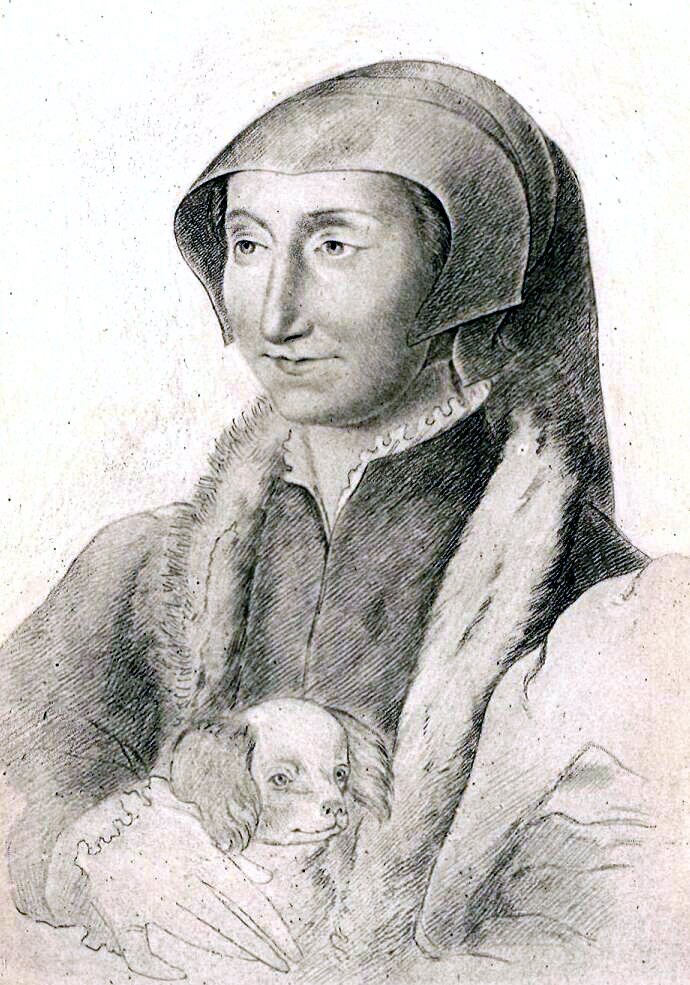
But what about all the rapes and sexual assault? Even Peter Chilton sounds bemused, if not vaguely alarmed, by the heavy focus on this in most of the stories. And I’ve thought on it and decided, if perhaps a bit unfairly to him and the rest of male academia, that this is because they can’t put themselves in the ladies’ (or Marguerite as author’s) shoes. Because as unpleasant as it was to read so many stories about women being preyed on (or narrowly avoiding being preyed on), to me, as a woman reader, it also felt like a manual. A Renaissance Woman’s Guide to Men, Sex, and Other Things Your Mother Probably Didn’t Tell You, if you will. There were a number of stories where Marguerite and her ladies seemed to be laying out how to survive in a man’s world with your virtue and honor intact. Like, how just because a priest tells you that you need to be naked for your confession doesn’t mean that people aren’t going to blame you for being stupid enough to believe him. Or, more pertinently to Parlemente and her courtly lovers, having men telling you that they’ll love you virtuously from afar doesn’t mean that they won’t turn around and pressure you for the “reward” of all their courtly servitude (you know what it is) when it suits them. This part of the Heptameron felt startlingly modern and relevant. Marguerite knows that she lives in a patriarchy, and she bets that you do, too, and she doesn’t want her audience going through it with their eyes closed. Not even the men, hence the stories about duplicitous women. Some of her male readers seem to believe that a princess and a queen couldn’t have possibly written about things like this, but I think one as smart and perceptive as Marguerite couldn’t have written anything less.
 Sarah Holz
Leave a comment