
Like with the English literature canon, I have reached a point where I’ve read a lot of the “normal” stuff in the Classical canon, and I am now left with plumbing the depths of the more esoteric stuff. Pliny the Elder’s massively influential Naturalis Historia (Natural History) may not, at first blush, seem like a candidate for that latter category, given its ostensible pride of place in the Classical canon and its general name recognition. But let’s be honest with ourselves: at thirty-seven books in ten volumes and over five thousand pages in English translation, how many people, especially outside of academia, have actually read the Natural History?
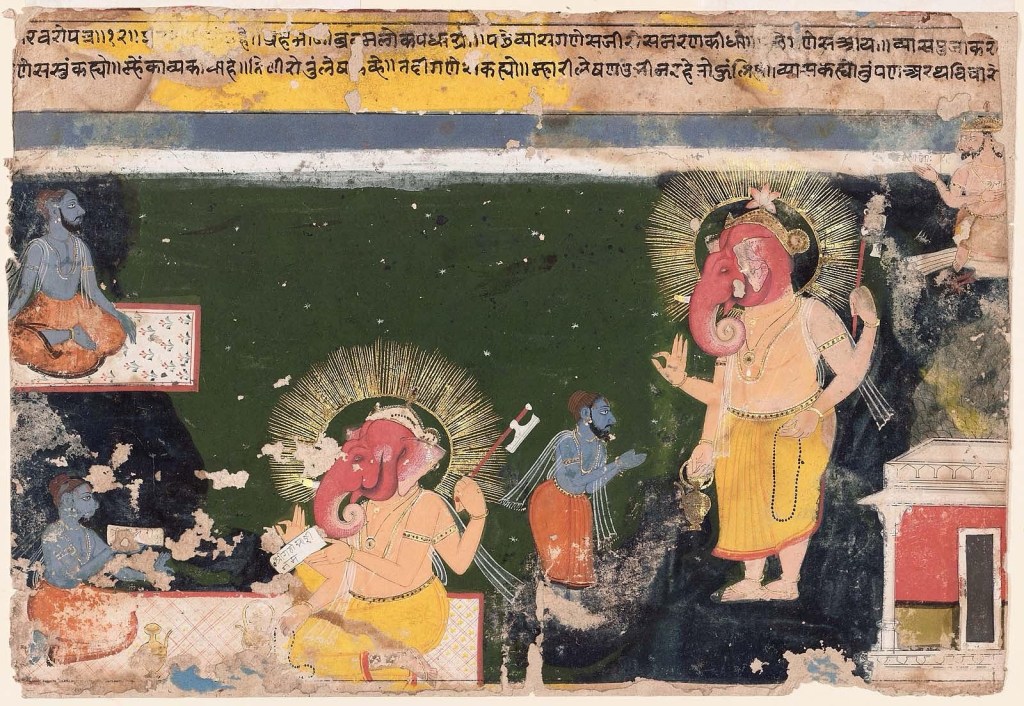
[Still not as long as the Mahabharata, though…]
Pliny’s the kind of dude who you quote a lot as an ancient source (I should know—I’ve done so frequently here), but less so a guy you read cover to cover. On some level, this makes sense, as the Natural History is essentially an encyclopedia, often credited as the first encyclopedia, though let’s maybe qualify that as the oldest surviving Western encyclopedia. But as I’m definitely a reads-the-dictionary type of person, a few years ago, I decided to attempt to read Pliny cover to cover. As noted by my “a few years ago” qualifier, it has been taking some time. But as I’m poised to start the seventh volume, and am now firmly past the halfway point, I thought it might be worth it to at least begin my long-promised Natural History review of the literature. Since, as you might imagine, there is way too much to cover for a single entry.
But as the west’s oldest surviving encyclopedia, it wouldn’t be particularly interesting to all of you to watch me plod through each book’s entire content. So I’m going to (try to) keep it fun and flirty by just highlighting some anecdotes that caught my eye as today we prance through the first three volumes, Books 1-11, of the Natural History. Why so few today when I’ve already read more than half? Well, once we hit the fifteen books on botany and agriculture that comprise volumes IV-VII, we’re going to be taking big swings to keep y’all interested through all that plant minutiae, so I suspect they’ll take up less space than today’s volumes. Some bits are funny, some are weird, some touch on people or places we’ve talked about here before—and some display the surprisingly sophisticated understanding ancient Romans had of their world, even in the first century CE. Hopefully, this will give you a taste of the whole without everyone having to read the whole thing. And who knows? Maybe some of you might discover that you’re sickos, too, and this will inspire you to read this whole beast as well.

[You might hate me for that, though, when you get to the point I’m at presently and you’re on your tenth straight book about plants, half of which were not even sure what Pliny’s referring to…😬]
But before we dive in, a little about the Natural History’s author. For someone born in a less foggy part ancient history and whose name is on every classicist’s tongue, we know surprisingly little for certain about Pliny the Elder. The only reason we even know when he was born—and have more than the first ten books of the Natural History—is due solely to the good graces of Pliny’s maternal nephew and adopted son, Pliny the Younger (61-c.113 CE). The younger Pliny, a respected ancient writer in his own right, tells us his uncle was fifty-six when he died, so we can extrapolate that Pliny the Elder was born in either 23 or 24 CE.
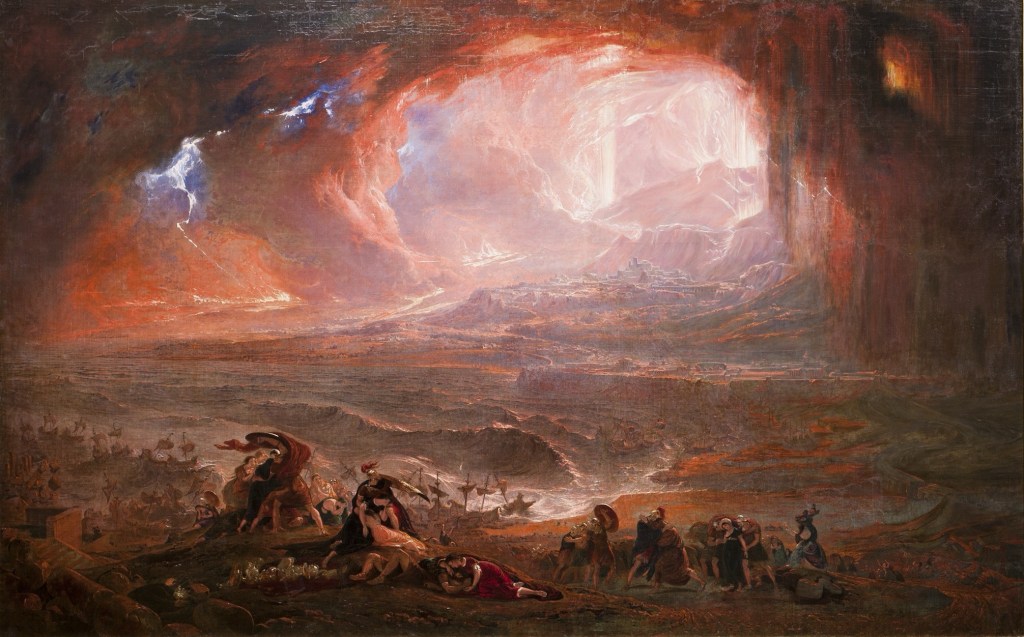
[Oh, we’ll get to Pliny’s death in a minute…]
We’re reasonably certain that the Plinys’ family were of the Roman equestrian class, but neither mentions the elder Pliny’s parents’ names. The names traditionally ascribed to them, Gaius Plinius Celer and Marcella, are from a singular inscription fragment found near Verona that put these as the parents of a “Plinius Secundus,” but some of this is educated conjecture. This led to some classicists putting forward the theory that Pliny the Elder was from Verona, but other inscriptions that place Pliny the Younger’s roots in Como are generally held as a more plausible interpretation, given that the younger Pliny’s father died when he was, er, young, so he was more likely raised by his mother and wherever her family was located, i.e., Como. The area around Como (Comum, in Roman Latin) was once part of Cisalpine Gaul in northern Italy, and as a result of their frontier location, the Plinia gens had only been full Roman citizens since 49 BCE. This is when they were granted full Roman citizenship under Julius Caesar’s Lex Roscia, which extended these rights to people in this area who had already been granted the lesser Latin Rights after the Social War forty years earlier.
The elder Pliny seems to have followed a very typical life path for an eques Roman, being trained in legal advocacy and rhetoric by education, and serving abroad as an officer in the imperial army as a young man. He seems to have mostly served on the German frontier, both in Germania Inferior (roughly modern northeastern France, northwestern Germany, Belgium, and the Netherlands along the North Sea coast) and Germania Superior (roughly modern western Switzerland, the Alsace, and southwestern Germany), and was most notably involved with major Roman campaigns against the Chauci in 47, and the Chatti in 50. Classicist Ronald Syme believes that Pliny started out as a praefectus cohortis, cohort commander, but we’re fairly sure that he later served as a military tribune under the district commander in Germania Superior, and later as a praefectus alae, a commander of a cavalry cohort. Spending his twenties serving in Germania gave Pliny an interest in the region and its history, and urged on by a visitation in a dream from the long-dead Drusus the Elder (son of Augustus’ Livia Drusilla and the brother of emperor Tiberius), he would write his first major work, the twenty-two volume Bella Germaniae.

We’re not certain exactly when Pliny left the army, but as ten years would have been the minimum length of service for him, the earliest we can plunk him down in Rome—where he’d spend most of his adult life—would be 56, two years into Nero’s reign as emperor. Like most men of his class, Pliny worked as an advocate to augment his income, and seems to have otherwise devoted his time to reading and staying out of the increasingly unstable Nero’s way. He doesn’t appear to have ever married, but he was by all accounts close to his namesake nephew, and seems to have had no shortage of friends within the constellation of Roman society. After Nero’s fall and the dust of the Year of the Four Emperors had settled, Pliny appears to have been in the good graces of the man who came out on top, the emperor Vespasian (9-79 CE), and his son and heir, Titus (39-81 CE). Under Vespasian, Pliny served as procurator of Hispania Tarraconensis (northern Spain), likely in the same position in Roman Africa, and possibly also in Gallia Narbonensis (southwestern France).
During these later years, any time not given over to his imperial duties was devoted to writing his new book, the Natural History, according to his nephew. The younger Pliny describes his uncle as an upstanding Roman man of traditional, frugal habits, who was always happiest when he was studying or working on his magnum opus. The first ten books of the Natural History were published in Rome in 77, when its author was fifty-four and enjoying the fruits of his respected position within the new Flavian imperial dynasty. At some point during this period, Vespasian appointed him praefectus classis (essentially an admiral) of the Roman fleet stationed at Misenum on the northwestern shore of the Bay of Naples. This is where both Plinys would be living on August 24, 79 CE.
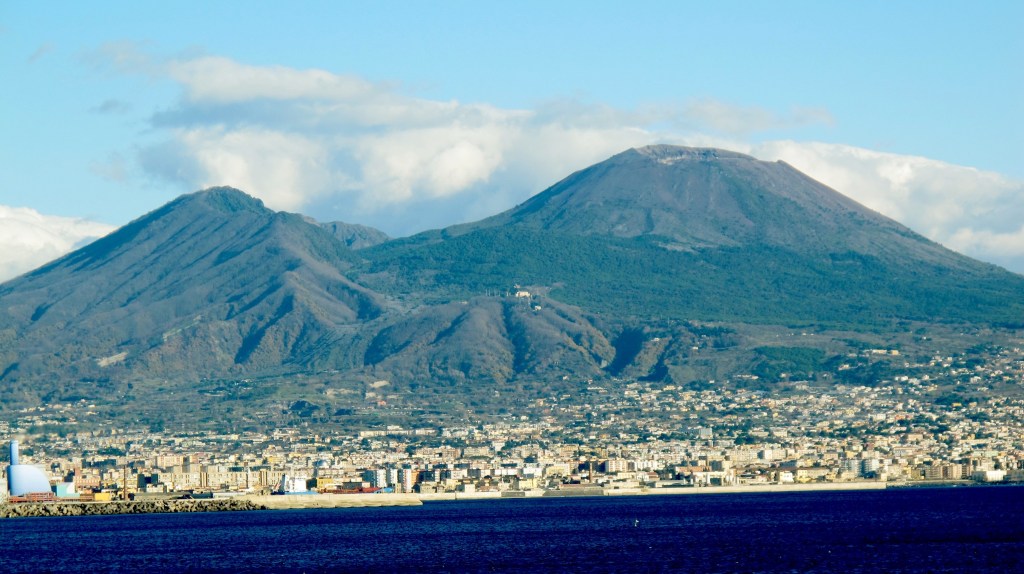
[Oh, no…]
As with his uncle’s life, Pliny the Younger is our sole surviving witness account of the eruption of Vesuvius that buried Pompeii, Herculaneum, and much of the Naples coast, although all of his testimony comes from his location at Misenum, which is roughly eighteen miles from the epicenter and mostly out of the blast radius. As those the affected areas tried, largely too late, to evacuate, one of the elder Pliny’s friends, a woman named Rectina, was able to get a message to Misenum, asking for aid from the fleet. Pliny mobilized several warships and sailed south with his men, but the ships were soon trapped in the bay by a combination of adverse winds and the low visibility created by the airborne volcanic ash. The ash, combined with the hot gases being spewed by the volcano, created a toxic atmosphere for the rescue team as well as the fleeing civilians, especially for Pliny, whom his nephew says suffered from asthma or some other respiratory disease. When additional forces were able to reach the scene three days later, they found Pliny the Elder dead as just another casualty of the great eruption. His nephew would become his literary executor as well as his legal heir, and would posthumously publish the remaining twenty-seven unedited books of the Natural History.
And honestly, good thing the younger Pliny did. Even in its unfinished state, the Natural History has become, like other compendia of its type, our sole source in quotation for dozens of lost ancient texts, including all of the works of Juba II of Mauretania and several topological commentaries written by Marcus Agrippa. Unlike modern natural histories, that confine their scope to the natural world, Pliny’s work is intended to include all branches of human knowledge related to the environment as well—another reason for its gargantuan length. In this, his range resembles the old-style of Natural History museums, such as CMNH was in its infancy, with its big-tent approach to including sculpture and anthropology in its subject matter in addition to animals, plants, and minerals. And now that we’ve set our scene a bit, let’s get into some specifics!

[For my citations, know that I’m using the ten-volume Loeb edition translated by Harris Rackman and G.P. Goold. Buckle up, Virginia…]
Book 1 of the Natural History is basically an extended introduction and table of contents, so there’s not much of interest outside of Pliny explaining his book and its aims to its dedicatee, the future emperor Titus, by saying, “My subject is a barren one – the world of nature, or in other words life; and that subject in its least elevated department, and employing either rustic terms or foreign, nay barbarian words that actually have to be introduced with an apology. Moreover, the path is not a beaten highway of authorship, nor one in which the mind is eager to range: there is not one of us who has made the same venture, nor yet one among the Greeks who has tackled single-handed all departments of the subject.” While it is in part a self-deprecating apology for boring Titus with such a lame topic as natural history, Pliny is also pointing out that there is gap in Greco-Roman literature for a work in this arena that covers all of natural history, rather than just its various subtopics, such as Varro and Cato the Elder’s works on agriculture. The empire needs a good natural encyclopedia, and Pliny has taken it upon himself to give it one.

Book 2 is where we get into the first real topic: astronomy and astrology; Pliny electing to take a zoomed-out view on the natural world as he understood it. First century Roman astronomy is interesting because it sits at a confluence of things that are true, like Pliny understanding that the earth is round (II, i.5; lxv.161-4) and that astrology is probably fake (II, v.28), but one is also treated to long, discursive sections where one realizes that Pliny is frantically trying to explain gravity without knowing what gravity is. He also posits that the revolution of the earth makes a noise, but that noise is so loud that the human ear can’t perceive it (II, i.6-7), which is an interesting thought. And that’s something to mark out here as we move deeper into the Natural History, that Pliny isn’t afraid to offer his own opinions or theories about these subjects, and this tendency is one of the fun things about his book (in part because he’s a traditional Roman scholar-curmudgeon). One of my favorites in what I’ve read so far comes here in Book 2, where Pliny declares the idea of space travel to be a waste of time: “That certain persons have studied, and have dared to publish its (space/the sky’s) dimensions, is mere madness… It is madness, downright madness, to go out of that world, and to investigate what lies outside of it…” (II, i.2-4) I also enjoy his thoughts on astronomy/space exploration as a path toward perceiving God: “…I deem it a mark of human weakness to seek the form of God. Whoever God is—provided there is a God—and in whatever region he is, he consists wholly of sense, sight, and hearing, wholly of soul, wholly of mind, wholly of himself… For mortal to aid mortal—this is god.” (lI, iv.14; v.18)

Book 3 is all about the geography and ethnography of the known Roman world, but the topic is expansive enough that it will cover the next four books. Here in Book 3, Pliny confines himself to the Iberian and Italian peninsulas, noting that much of his information about Hispania specifically comes from the aforementioned surveys done by Agrippa several generations prior. As is his modern reputation, Pliny calls Agrippa “a very painstaking man, and also a careful geographer.” (III, ii.17) It is also hard not to be like the audience at a Greek tragedy when Pliny goes on about Pompeii and Vesuvius, though. (III, v.62)😬🌋

Book 4 covers the rest of Europe, where Pliny throws some shade at Macedonia for the short-lived nature of Alexander’s empire (IV, x.39), and blames the deaths of Caesar, Caligula, and Nero on divine retribution for daring to attempt to build a workable canal through the Isthmus of Corinth, the narrowest point on the Greek peninsula (IV, iv.10). Incidentally, it would take until almost the end of the 19th century to successfully complete a man-made waterway in this spot, the modern Corinth Canal.

Book 5 moves on to Africa, where, expectedly, most of his African information comes from Juba’s many (lost) studies on Mauretania and Egypt. Pliny states that the lowest recorded Nile flood level (a dismal 7.5 ft, where the average was over 20 ft) happened in 48 BCE, and he ties this as a portent to Pompey that should have warned him about the outcome of the Battle of Pharsalus and his own assassination in Egypt afterwards (V, x.58). Though God’s Wife readers know that there were plenty of people having a bad time of it in Egypt in 48–if the poor flood was a portent, it could have been for a lot of folks. Pliny is not charmed by Egypt generally, but admits that “justice requires that praise shall be bestowed on Alexandria.” (V, xi.62)

Book 6 takes us to Asia and the Far East, with a quick fly-by of Arabia (the last of which was also a Juba specialty). Contrary to what you might imagine, the Romans were aware of the Chinese, especially in regard to their skill in making silk, calico, and muslin. Pliny describes them as being “like wild animals“, not because they were savage (he considered them mild-tempered), but because they “shun the company of the remainder of mankind, and wait for trade to come to them.” (VI, xx.54-5) A trait that the Chinese will maintain for most of the modern era. And in what will become a recurring theme in his social commentary, Pliny also complains that the cloth that the Chinese make is so fine that it permits Roman matrons to flaunt its transparency and expense in public (ibid). Obviously, India and its environs were even more well-known to Rome, as Greek outposts had existed there for centuries at this point. Here, Pliny knows of Herat (Alexandria Arii), Kandahar (Arachosii), and Kabul (Hortospanum) (VI, xxi.61-2), and he even has a rudimentary understanding of India’s caste system (VI, xxi.66). He mentions the Pandae, the Indians supposedly ruled only by queens descended from Heracles’ daughter of the same name (VI, xxiii.76), though he calls her his only daughter (ibid). Pliny also reports that Roman knowledge of Sri Lanka improved after Claudius’ reign, when the emperor received an envoy from the island; for their part, the Lankans were supposedly amazed to observe the northern constellations during their visit, having never seen Ursa Major/Minor or the Pleiades. (VI, xxiv.85-7)

Book 7 leaves geography behind and continues with anthropology. Pliny discusses some basics of human physiology, but spends more time talking about the quirks of the Julio-Claudian elite. Like how Agrippa and Nero were supposedly born breech, hence (supposedly) the former’s cognomen—aegre partus, “born with difficulty.” As breech births were considered unlucky (understandable, considering how dangerous they were before modern medicine), Pliny says that Agrippa is one of the only people to achieve success in spite of this happenstance of birth. (VIl, vi. 45-6) Conversely, Nero’s mother, Agrippina the Younger (Jupina in my books), supposedly possessed the lucky sign of two canine teeth on the right side of her jaw (VII, xvi.71), and his great-grandmother, Antonia Minor (Anni) supposedly never spat. (VII, xix.80) No, I don’t want to think about why that was noteworthy…

Book 8 is fun because it’s the beginning of our last umbrella subject for these volumes, zoology, and terrestrial animals (read: mammals) in particular. This book has a little something for everyone: from perhaps the origin of the bestiary idea that hyenas could change their sex (VIII, xliv.105-6) and that hedgehogs carry food on their spines (VIII, Ivi.133); to tales about the Indians breeding dogs with tigers (yikes!) and the Gauls with wolves (more believable). (VIII, Ixi. 148) Pliny reports from Juba that lions are open to persuasion (VIII, xix.48), elephants can fall in love with people (VIII, v.13-4), and dolphin dorsal fins were thought sharp enough to cut open a crocodile’s underbelly. (VIII, xxxviii.91-3) And then there are some great Julio-Claudian anecdotes, like how the elephants in Pompey’s triumph were so sad-looking that the crowd cursed him (another explanation for his downfall) (VIII, vii.21), or that Germanicus’ death was foretold because the sacred Apis bull in Memphis refused to eat from his hand. (VIII, Ixxi. 185) Supposedly Caesar was the first person to bring a cameleopard (giraffe) to Rome, and his infamous toed horse was given a full funeral and burial mound by Augustus (and speaking of Germanicus again, he supposedly wrote a poem about it). (VIII, Ixiii. 154-5) Whether this was before or after Augustus had to help the folks on the Balearic Islands (an archipelago off the eastern coast of Spain) fight off a crop-ruining hare infestation is less clear. (VIII, Ixxxi.218)

Book 9 concerns itself with fish and other aquatic creatures, and this is where we get Pliny’s big digression on murex, the costly ancient dye made from shellfish. He gives his best shot, given the Tyrians’ trade secrets, at how to make it, and generally bitches about how much money people are spending on it. But he is a good citizen, so he includes the shellfish wholesale rates so that people don’t get overcharged (IX, Ixiv.138-9). He also complains about people wasting their money on pearls, which didn’t come into heavy circulation in Rome until after the city gained control of Alexandria in 47 BCE. (IX, Ivili.123) On the less commercial side, he talks about Mediterranean octopi so big that they can’t get through the Strait of Gibraltar (IX, iii.8), and how Antonia Minor once had earrings made for a favorite moray in her Baiae fishpond (IX, Ixxxi.172)—no, I don’t know how you get a fish to wear earrings. He also demonstrates that Romans were aware that seals are capable of being trained, saying that they “can be taught to salute the public with their voice and at the same time with bowing,” but also acknowledging that “no animal sleeps more heavily.” (XI,xv.41-2)

Book 10 is the bird book, starting with the most fantastical of birds, the legendary phoenix, though Pliny acknowledges that phoenixes may not be real. (X, ii.3) He also describes another, different firebird that is supposed to be an omen of doom, but admits he doesn’t know much about it (X, xvii.36)—which is not super helpful if you’re trying to avoid it, honestly. And although he thinks that ravens mate with their beaks and that if a pregnant woman eats a ravens’ egg she will therefore give birth orally (X, xv.32-3), Pliny does understand that flocks of birds fly in a V formation to increase their speed and aerodynamics. (X, xxxii.63) He also knows that all vivaparous animals dream, but like modern scientists, he’s unsure about oviparous animals. (X, xcviii.212)
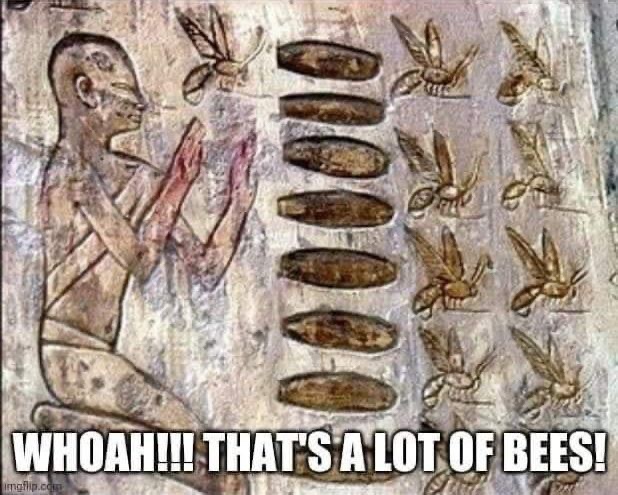
And lastly, for this outing anyway, we have Book 11: the bug book (though we go off script into snakes and some other miscellaneous stuff as well). As you might imagine, a ton of space is devoted to useful bees, and Pliny describes an ex-consul who had the hives of his suburban estate made out of lantern horn, so that they were transparent enough to observe bee activity through. (XI, xvi.49) He says that the Parthians ate locust and grasshoppers (XI, xxxv.106), which is interesting if only because we know so little about Parthian culture and even less about things like their cuisine. We also get a potential Nehebkau sighting, as Pliny describes “snakes with the feet of geese.“(XI, cvii.257) And while he gets off-topic with anecdotes about how Tiberius had weirdly good night vision; and that Augustus’ (he says gray, not my pale blue) eyes had sclera that were larger (or irises smaller?) than usual, which is the real reason he didn’t like people looking in his eyes too much; and that Nero was short-sighted; and that his wife Poppaea took five hundred donkeys with her everywhere for her ass milk baths (XI, liv.143-4; xcvi.238), I wanted to to leave you all with part of Pliny’s introduction to this particular book where he marvels at a world that can create something as infinitesimally small yet perfect as an insect. Because when he’s not going off the rails with wild conjecture or misogynistic rants about the price of things that women like, he can be a wonderful prose stylist:
“[A] craftsmanship on the part of Nature that is more remarkable than in any other case: inasmuch as in large bodies or at all events the larger ones the process of manufacture was facilitated by the yielding nature of the material, whereas in these minute nothings, what method, what power, what labyrinthine perfection is displayed! Where did Nature find a place in a flea for all the senses?” (XI, i.1-2)


 Sarah Holz
Leave a comment