
This week I want to take another look at some ancient cuisine, and specifically garum,—a fermented fish sauce that is particularly associated with the Romans, but was actually extremely popular throughout the Mediterranean. We’ll talk a bit about its composition and manufacture, its use and reputation, and then we’ll wrap things up with the triumphant return of my semi-interactive entries—where I’ll taste test a modern Italian iteration and give you my thoughts.
As I said garum is often considered especially Roman, but its name and origins are likely Greek. Garum in Latin is probably a loan word based on γάρος (gáros), though whether the Greek word is also referring to a fish sauce and/or the fish such a sauce is derived from, we’re not entirely sure. The earliest Greek sources for the word gáros come from the 3rd/4th century BCE, but the Roman scholar Pliny the Elder (23/4-79 CE) is our largest source for information about this, and he seems to think that gáros is a fish (Natural History, XXXI.xliii.93), but he isn’t always completely accurate, particularly when tracing information on non-Roman topics, so we can only take his word for it with a grain of salt. As a result of the etymology, though, the Latin word seems to exclusively refer to the sauce.
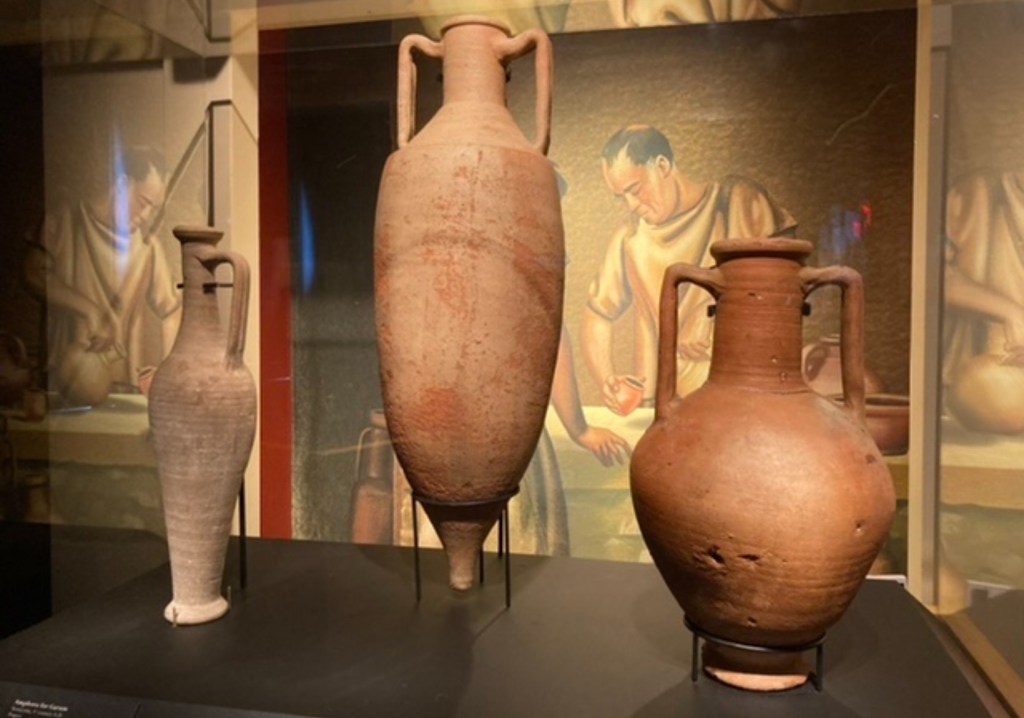
In a world where fish were a major protein source but which lacked reliable access to refrigeration, preservation was a key problem for ancient people. Drying and salting were popular options, but so was fermentation. While modernly, at least in the western world, we tend to think of fermentation as solely the process of converting carbohydrates and sugars into alcohol (like in beer, wine, and cider), fermentation is also how we produce the organic acids in food like yogurt, cheese, and sauerkraut. As evidenced by the foods I’m listing, fermentation was a safe and effective method to stretch the lifespan of otherwise extremely perishable foods like fruits, vegetables, meat, and dairy without striping them of all nutritive value.
We believe garum was generally derived from marine scrap meat and smaller whole fish like bogues, mackerel, and anchovies. The ancient world was often much better at utilizing all parts of their food sources, especially when it came to meats, which were too nutritionally valuable to waste as we in the global north tend to do. Taking what even they considered the “refuse” of fish (Pliny, ibid)—its organs, head, fins, and even scales—salting it, and leaving it to ferment (essentially putrefy) in vessels or in the sun, and draining/straining the resulting liquid, they were able to produce from waste something that was not only edible, but desirable.

[Bogues are also called boops, and they have the silliest taxonomical name I’ve ever seen. What are we even doing here, zoologists?]
As you might expect from the size and sophistication of their fisheries that we discussed in my entry about murex a few years ago, garum was a major export product of the kingdom (later province) of Roman Mauretania. Like with their murex operations, the vast majority of Mauretanian garum was fished and produced on the far western wing of the kingdom, what is modern day Morocco, and around the so-called Purple Islands off its coast. This also makes sense because the other serious, possibly most important, source of ancient Roman garum came from just north of Morocco across the sea in Carthago Spartaria, modern day Cartagena, Spain. Cartagena has been continuously inhabited for at least two thousand years, and when it was still in the Roman province of Hispania, Pliny tells us that its garum, made from the refuse of the “scomber” (we think the local Spanish mackerel), was the most popular version of the sauce in Rome (Pliny, XXXI.xliii.94). He calls it “the garum of the allies,” and claims that six pints of this varietal goes for about 1,000 sesterces in the 1st century CE (ibid). Translating ancient costs into modern reckoning is a tricky business, but here we can extrapolate (beyond notions like, “well, a thousand of anything is probably a lot…”) from Pliny that this is significantly expensive, as he compares it to the cost of “unguents” (ibid) and perfumes, two notoriously pricey items in the ancient world.

More locally in Italy, Pliny also speaks highly of the garum produced in Pompeii, which coincides with the archeological record left in the city after the 79 CE eruption of Vesuvius (the disaster that will kill him, incidentally). We haven’t found the remains of the production factories yet, but many garum amphorae have been uncovered in preserved houses and businesses. These have revealed that the local Pompeiian garum was seasonally made from the aforementioned bogues/boops, and certain samples have been utilized by archeologists to confirm the dating of the eruption to its historical August date through bogue migration patterns through the coastal region. But as evidenced by the prevalence of fish salting and fermenting in basically all pescatarian ancient societies, most of the places Rome had provinces possessed some variant on a garum sauce. If Rome’s colonial presence had any impact on this, it might have been little except perhaps a homogenization of flavor profiles that comes with basic cultural assimilation, but even this might have been limited by factors such as the species of fish available in more remote regions such as Roman Britain and the Getic coast, and local tastes.
But as with any food, as generally popular as garum was in the Roman world, it could still be divisive. As we said above, Pliny hates the extravagance of it, and despite originally being from prime garum country in Hispania, Seneca the Younger also seems to dislike it, saying in Epistle 95: “Do you not realize that garum sociorum, that expensive bloody mass of decayed fish, consumes the stomach with its salted putrefaction?” Though Seneca always seems to be distancing himself from his foreign Spanish roots, and maybe garum just smelled too much like home. The poet Martial, another transplanted Spaniard, however, loves the stuff (In XIII.83 of his epigrams, on oysters: “A shellfish, I have just arrived, drunk with Baian Lucrine./Now in my extravagance I thirst for noble garum.”), as long as it’s him enjoying it. Famously in XI.27, he laughs at his friend Flaccus, whose mistress loves garum (as much as half a pint at a go!) and other fishy foods, assuming their amorous trysts must be extremely fragrant, and Flaccus in turn extremely committed to this girl to get past her smell. In the same poem, Martial exaggeratedly prays that his mistress might only want (equally expensive, but pleasant/odorless) gifts like foliatum (a perfume compound of nard and myrrh) sardonyxes (onyx gemstones with red mineral bands), silks “from Tuscan Street,” or cold hard cash (a hundred gold pieces). Garum even comes up in the dream interpretations of Artemidorus of Daldis’ Oneirokritikon, where he says, “To drink fish-sauce signifies decay. For fish-sauce is nothing more than putrefaction.” (I.66)

It also shouldn’t be left unsaid that fermented sauces (or liquors, as Pliny terms them, using the broader meaning of the word) also performed the same function as sauces today do: making other foods tast(ier). Our ancestors didn’t like bland or uninteresting meals any more than most of us do, and in a world where many people were confined to diets with only a handful of repeating dishes, sauces not only added extra flavor, they added palate variety. The classic flavor wheel involves five basic types: sweet, salty, sour, bitter, and what is generally termed umami (roughly what you’d term “savory”). Introduced from the Japanese (うま味) in the early 20th century, we haven’t come up with a satisfactory English equivalent for umami, and it took until the 1980s for it even to be widely accepted as a taste type. What “umami” is trying to describe is the taste of glutamates, which occur as glutamic acid (C5H9NO4) and its component salts interact chemically. Unlike the other tastes, which are more intuitive, umami is usually best understood by listing foods that can be described by its flavor profile. Some of these are understandably distinctive in Asian cuisine, where researchers first worked to delineate the taste, like soy sauce, miso, and green tea; but many of the other classic umami foods are cross-cultural, like shellfish, spinach, tomatoes, cured meats, mushrooms, and many cheeses.
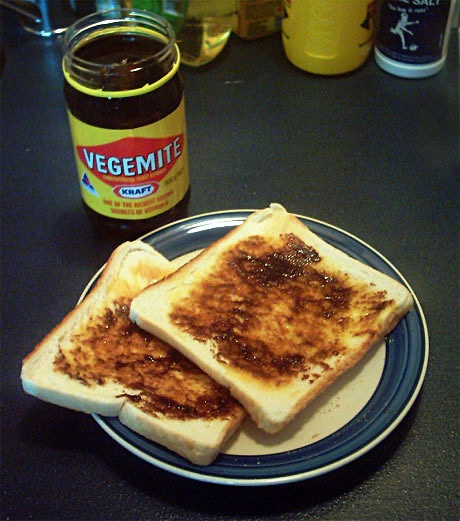
[And for the obscenely Anglo-Australian, Vegemite/Marmite are also considered umami foods]
Much like modern folks all over the world use soy sauce (fermented soybeans) to enhance the present flavors in meats and vegetables, the Romans used garum to intensify the existing umami of dishes like mussels, veal, and lamb/mutton. Additionally, much like the Asian use of miso (fermented bean paste) in sweet dishes as well as savory, garum was often used in Roman desserts as well to add flavor complexity and dimension. While Romans had limited access to cane sugar, most of their “sweet” diet came from honey and fruits, both of which can play off of umami’s versatility in interesting ways if mixed in the proper proportions.
Okay, that gives us a little background on garum, so now let’s do some culinary experimentation…
Garum as it existed in the ancient world is mostly lost to us. Even with Pliny’s descriptions, and later additions by writers like Isidore of Seville commenting on similar Byzantine fish sauces, we don’t know precisely how it was made. Some of this is because, like murex, there may have been proprietary recipes or manufacturing processes involved that we don’t have, and since garum is eventually perishable, unlike, say, honey, there is only so much researchers can reverse engineer from archaeological evidence. That said, fish sauces never entirely died out in Mediterranean cooking, and to do a little taste testing, we can use an equivalent.

I decided to go with a modern Italian fish sauce, colatura di alici, which is a fermented anchovy sauce from the coastal town of Centera in the Campania region considered a direct culinary descendant of garum, and may have even been a contemporary flavor agent to it. Like so much of our knowledge of Rome, colatura di alici’s recipe is believed to have been recovered by medieval monks in the region from some unspecified ancient source. Originally filtered through wooden barrels, Campanians would eventually perfect a filtering process by using sheets of local wool. Although modern Italians tend to use colatura di alici in cooked dishes like spaghetti and lamb dishes, I wanted kind of an unvarnished taste of it, so I opted for some uncooked foods at least adjacently common to Romans to try it with.

[Behold!]
Now, the savvy among you will have noticed that I included one glaring imposter in my “Roman” garum spread: the tomatoes. Tomatoes are, of course, a New World fruit indigenous to the Western Hemisphere that wouldn’t hit the shores of Italy until the end of the 15th century. But as tomatoes are the western umami fru-getable par excellence, I wanted to give the colatura di alici a chance to pop against something with a similar flavor profile. But everything else is at least close to foods that were staples of a (relatively well-off) Roman person’s daily diet. Going clockwise in my picture starting at the 1 o’clock position, we have a dish of olive oil with basil and olives; on our large dish, I went with a wheat pita-style bread (which is a little spiritually closer to ancient Roman bread than our standard loaves), some Genoa-style salami as a cured meat, our interloping tomatoes, and of course, our star, a bowl of colatura di alici; and on the other small dish, we have honey, fig spread, and some goat cheese. And to top us off, I chose a glass of Falanghina wine; it is also native to coastal Campania, and is often considered a modern descendant of the famous Falernian wine of ancient Rome.

[Which, uncut and possibly further distilled, Pliny claims could be lit on fire. My falanghina, unfortunately, only has about 14-15% ABV (as opposed to the necessary ~40%ABV), so I couldn’t do a pyrotechnic show for you all…]
So after all this buildup, what does our garum-cum-colatura di alici taste like? Well, folks, you’re never going to believe this… but it’s very fishy. You can smell it from pretty far away, and it’s a basic preserved anchovy smell. It has a full mouth-feel, with a lot of the promised umami, plus a salty finish. But it’s kind of tricky in that I feel like the savoriness of the umami is the dominant flavor on the tongue, and the intense fishiness only hits you at the back of your palate (figuratively) and once it’s on its way down your throat. Hence why most instructions tell you to add it slowly to dishes, presumably. I bet it’s very easy to overshoot the desired umami straight into Fish City.
As an accompaniment, I had what I consider mixed results. It’s fine as a dipping sauce for bread, but it doesn’t hold a candle to the unbeatable millennia-tested combo of bread + olive oil. It added an interesting flavor dimension to the goat cheese and particularly the tomatoes (I can see why it’s a popular additive to red sauces in Italy), but the salami and olives had too much of their own flavors for the fish sauce to harmonize with (it felt like they were competing in my mouth). I’m rather picky with combining other flavor profiles with sweet ones, so I didn’t like mixing honey with the fish sauce, but with this particular combination, I’m willing to concede that me not liking it might be more personal preference than anything else. If you’re into unusual flavor combinations, this might be a sleeper hit with you. As for the fig spread, that one is more like the problem I had with the salami and the olives, in that it’s just a bit too much, in my opinion, in addition to the sweet-mixing issue.
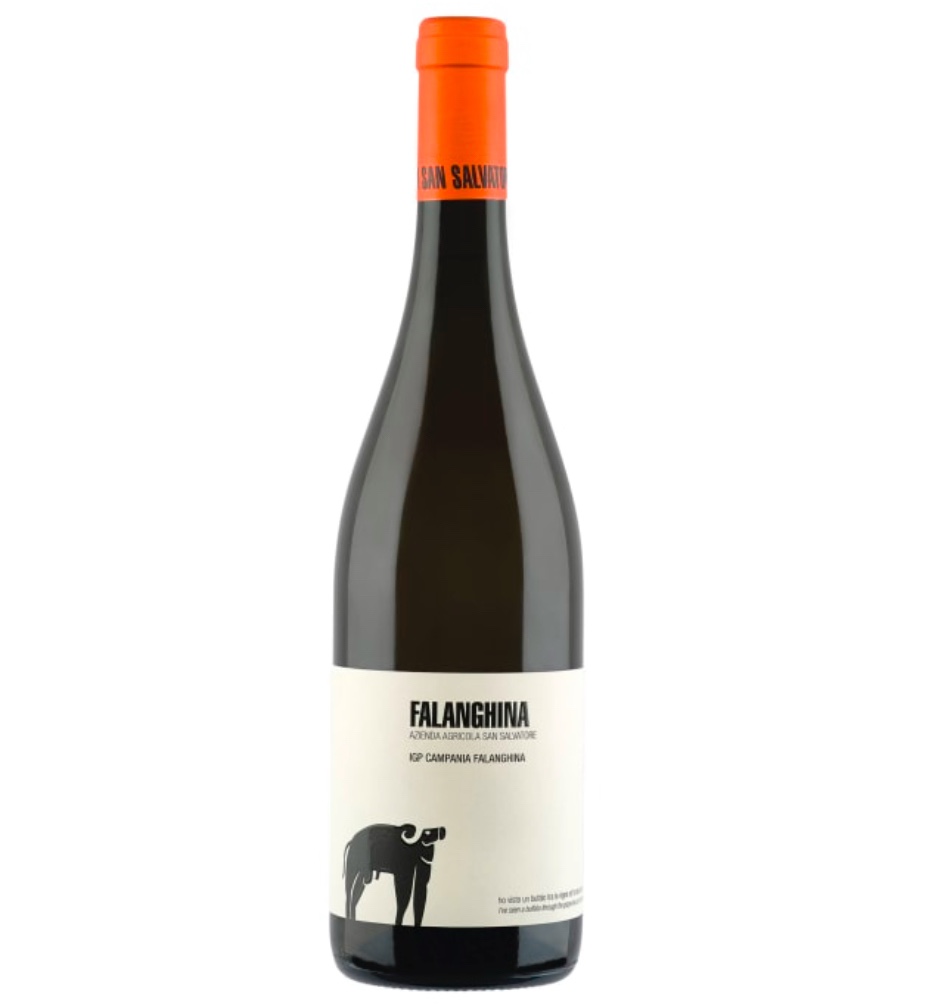
[The wine, on the other hand, I can wholeheartedly recommend. My all-time favorite falanghina is the Janare falanghina del sannio (that one is so good my mom and I almost missed a production of Othello over it…), but I also really like the one I had here, which is a San Salvatore falanghina. I’ve bought it a couple of times and it is a reliable table white. Probably too dry for those sweet-wine Romans, but not unbearably sweet for me.]
In the end, like fish sauces around the world, your mileage with colatura di alici probably depends on how much you enjoy fish as a flavor. If you’re the sort of person who prefers milder-tasting (shell)fish, this is going to add the very flavor you’re avoiding. If you like stronger, fishier fish, the pop of salt and umami in it might bring a little pizazz to a seafood dish. I consider myself a middle-of-road person on the issue; most of my favorite seafood dishes are of the milder variety, but I’m not adverse to eating stronger ones. And I think that informed my overall experience here: I found the colatura di alici-garum flavor to be interesting, and at times, rather enjoyable, but I doubt it will catapult into regular rotation in my diet. But it was a lot of fun (because I’m a nerd) to hole up on a Friday night and experience a little taste of history. If any of you end up trying this yourselves, make sure to let me know how it goes for you—I’d love to hear about it!🐟


Leave a Reply