Here we are, at the end of another year already! I hope that your literary year, whether as a reader, a writer, or just a person questing for knowledge in all its forms, was fruitful. Because of a small effort to take some time off from writing (or at least, feel less guilty for not going pell-mell all the time), I managed to get through around a dozen+ more books than has been my general habit recently. But don’t you worry—“taking time off” for me merely means that I’m still working on an almost-done manuscript while editing the next release, rather than already having it completed.

[I’ll do a full preview on the one in post-edits in the new year, but buckle up, Virginia—as I’ve hinted at, we’re going back to the God’s Wife gang in 2025😁]
This week, in the meantime, I figured I’d do what we’ve been doing the past couple of years and give you all my favorite reads of the past year. No plays or graphic novels made the final cut this year (Albert Camus’ Caligula, and Go Nagao’s manga adaptation of The Divine Comedy were contenders, though), but I’m still hoping to showcase an interesting spread of topics and genres. I feel like you can tell that I read a bit more this year because it seemed especially difficult to keep this to a top 10 list with a couple of honorable mentions thrown in. As in the past, these are books that I read this year, not necessarily ones that were published this year (though books published this year I’ve mark with an asterisk). Let’s see what we got!
Honorable Mentions

Whale (Myeong-kwan Cheon)
As I said, keeping honorable mentions, books just outside the top, brief this year was tough. As much as I was intrigued by Vaishnavi Patel’s Mahabharata adaptation Goddess of the River, or Simon Carter’s Ancient Egyptian Statues: Their Many Lives and Deaths, I rated Myeong-kwan Cheon’s surrealist quasi-Bildungsroman novel, Whale, higher than both of those, so it seemed silly to pass by it. Set in rural postwar South Korea, Whale has a large cast of eccentric characters that flit in and out of the lives of its dual protagonists, the mute Chunhui, who can speak to elephants, and her indomitable mother, Geumbok, who is determined to live her life by her own terms. By turns violent and tender, this novel reminded me a lot of Gunter Grass’ The Tin Drum with its odd characters and hints of the magical in the mundane. The plot is meandering and sometimes too brutal for me to want to pick it up again, but Cheon, like the best postwar satirists, would balance this brutality with enough humor and love to bring me around again. Not an easy read, but I think an ultimately compelling one.

Longstreet: The Confederate General Who Defied the South (Elizabeth Varon)
With all the American Civil War biographies flooding the market to entertain the nation’s dads, it’s unexpected to find one breaking anything remotely close to new ground, but Elizabeth Varon’s look at James Longstreet, one of the period’s most intriguing and controversial figures, feels woefully overdue. Those of us living in a post-Killer Angels world would be hardly surprised by a more sympathetic portrait of the man reviled by his Southern peers for his support of his friend, Ulysses Grant, and Reconstruction after the war, but Varon takes us a step further. She manages the delicate balancing act of both highlighting Longstreet’s admirable accomplishments, while being frank about his shortcomings. What emerges is the story of a man who was in many ways deeply of his time (white, Southern, supremacist), but who was able to learn and grow as a person enough to change his mind about the culture in which he was raised in order to uplift Black Republicans and fight against the poisonous influence of the Lost Cause mythology among his fellow whites. In neither of these pursuits, and a host of others, was he in any way a perfect ally, but his willingness to examine himself and his society feels like a much more useful blueprint for deradicalizing people than expecting folks to completely change overnight. As a result, his journey feels useful and urgent in a way 19th century biographies rarely do.
Top 10

10) Villette (Charlotte Brontë)
This one is a little bit of a cheat, as in this is a second read through for me on Charlotte Brontë’s final novel. But I so radically shifted my position on it this time around that it feels worthy of inclusion in my top ten. The first time, almost fifteen years ago, I was really apathetic to the meandering story of an isolated, somewhat off-putting young Englishwoman who falls into a teaching position in a small European school. I wanted Jane Eyre—or at least Shirley Keeldar—and prickly, lonely Lucy Snowe has neither of those two’s dynamism. However, as I dug into more Brontë lit crit over the last decade+, and everyone was so admiring of Villette, I decided since I love Charlotte as a writer so much, I should take another crack at it and try to meet Villette on its own terms as a more psychological novel compared to its predecessors. And, oh my god, I completely mea culpa on this one, folks. Villette is astonishing. Charlotte Brontë is always a semi autobiographical author, and while I still love Jane Eyre—Charlotte in her heroic form—there is something deeply compelling (and touching) to read in Lucy Snowe a Charlotte that is probably much closer to reality: haughty but desperately lonely, passionate but too frightened to act on her emotions. An odd, insular person who longs for connection while certain she’ll never find it. And it’s this vulnerability that softens her acidic caricatures of the people she knew while she was studying in Belgium, because the most damning portrait in the story might be her own. Jane Eyre is an incredible first novel, but Villette feels like the work of a mature artist, and if you’re willing to be patient with it, it will reward you with a really rich experience.

9) Enter the Body (Joy McCullough)
All of you know that I appreciate authors willing to try new things with the form of the novel, and Joy McCullough does this by using stage structure and Shakespearean verse for a novel about four of Shakespeare’s tragic heroines: Juliet, Ophelia, Cordelia, and Lavinia. Falling beneath an unseen stage after their constantly retold demises, each girl retells their story from their own perspective—even Lavinia, who by virtue of her story, has no physical voice. McCullough also does a good job of using these four heroines to demonstrate multiple versions of “girlhood” without making judgment calls on them. Serious Cordelia and bubbly Juliet have little in common, but by becoming part of each other’s stories, they can learn and grow through each other’s experiences. All of this might seem like a rather facile idea, but in the year of Our Lord 2024/5, where there is a lot of internet chatter vis à vis “the point” of still teaching young people Shakespeare in school, this book, aimed at a YA audience, feels very timely in presenting a fresh look at these girls and showing them to have many of the concerns teenagers today have about family, relationships, and their own autonomy. And although it is aimed at YA, I think it is innovative enough to be interesting to an adult audience, too.
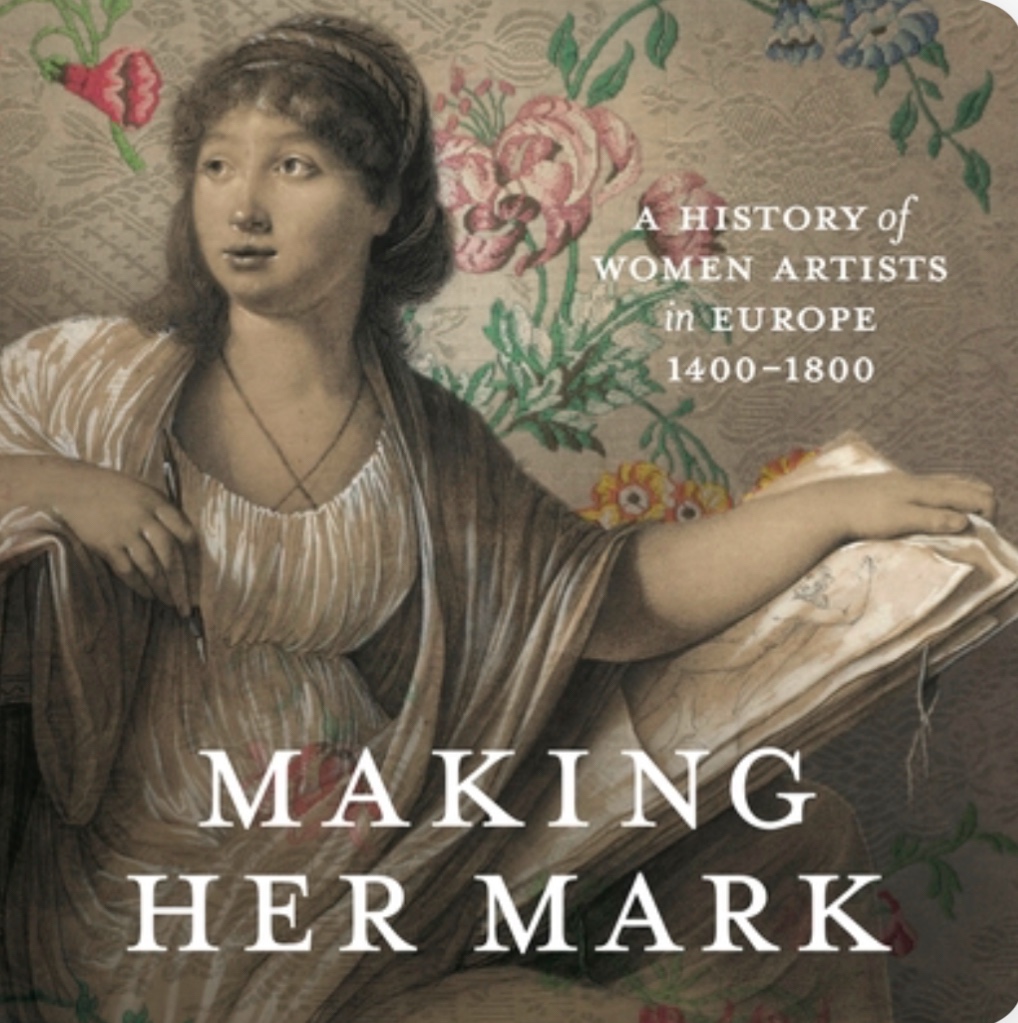
8) Making Her Mark: A History of Women Artists in Europe, 1400-1800 (Theresa Kutasz Christensen et al)
To move back to nonfiction, Making Her Mark was a companion volume published in conjunction with an exhibition put on last year by the Baltimore Museum of Art showcasing women-produced art prior to the 19th century. What made this exhibition unique was the curators’ desire to expand the definition of “art” in these four centuries beyond the traditional, male-centric “real” arts of painting and sculpture to include the craftwork that was more available to women in this period, such as textile production, ceramic-ware, and even furniture design. Certainly painters such as Angelica Kauffman and Élisabeth Vigée Le Brun are represented as well, but the majority of the pieces are by unknown artists producing in family workshops or “amateurs” making crafts for household use. This companion book does a fantastic job interrogating our preconceptions about what counts as museum-worthy art, while still acknowledging the glaring lacunae in our knowledge about artists of color contemporary with the predominantly white women artists of this exhibition and how much further museum culture still has to go when it comes to true institutional inclusivity. But this beautifully-designed book is an excellent first step.

7) The Lantern and the Night Moths: Five Modern and Contemporary Chinese Poets in Translation (Yilin Wang)*
Unfortunately for her, I learned about Chinese Canadian poet-translator Yilin Wang’s latest translation collection because the British Museum was using her work without compensation in a recent exhibition, and she’s had to spend most of this year defending her copyright. But The Lantern and the Night Moths was worth fighting for, because Wang does a marvelous job of bringing five lesser-known Chinese poets (Fei Ming, Qiu Jin, Zhang Qiaohui, Xiao Xi, and Dai Wangshu) to a wider western audience whose knowledge of Chinese poetry tends to end with the classical Tang poets. Each poet has beautiful poems in this collection, but the real standout is the poetry of the revolutionary feminist Qiu Jin (1875-1907), whose evocative style, fluidly rendered into English by Wang, reminded me a lot of near-contemporary Anna Akhmatova. No wonder the British Museum wanted to use them.
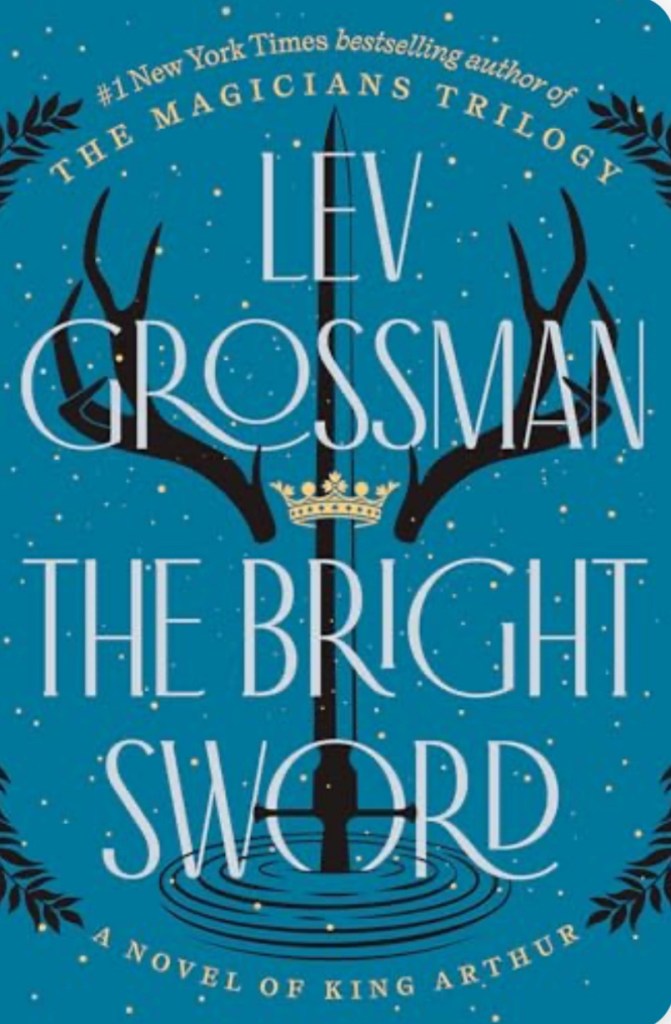
6) The Bright Sword (Lev Grossman)*
Here is this year’s Song of Achilles novel for me, in that I was half-dreading cracking it open. Because, despite my general indifference to the Arthurian mythos, the synopsis sounded interesting… but you also have to understand that I am one of the four people on the planet who really didn’t like The Magicians. So by itself, the idea of Lev Grossman’s Once and Future King wasn’t exactly a done deal for me. But his angle, a young outsider and a handful of the lesser-known Round Table knights trying to figure out what to do after King Arthur is killed and the brighter lights of Camelot are gone, was an intriguing one. So I decided to not put it off for a decade like TSoA and bite the bullet, and I’m so glad that I did. This 700-page door stopper was perfect for someone like me who has a lot of knowledge of Arthurian mythology, but isn’t concerned about being precious with it. Grossman plays and bends with the stories you know, but never in a way that feels unnatural. Even a few of the plot elements some might imagine were added for “woke” points, like ethnic diversity and gender fluidity in Camelot, are actually deeply embedded in the traditional narratives, and Grossman uses them expertly while not betraying the surreal, out-of-time setting of Arthur’s Britain by getting unnecessarily bogged down in impossible historical accuracy. And Collum, the young point of view protagonist, never drags down the action; he’s sympathetic without being cloying or hyper-competent, like many fantasy leads. As you might guess by the length, the pace is leisurely, but I was never bored by the journey. This novel probably won’t have the mass appeal of the snarky, sexy Magicians, but this is much more my speed.

5) Light in Gaza: Writings Born of Fire (Jehad Abusalim et al)
I have been trying to better educate myself about the fraught history of the Israeli-Palestinian conflict for many years before last autumn, but the current intensification of Israeli repression in Gaza and the West Bank has created a sense of urgency to the endeavor. I don’t pretend to have all the answers, but after a year of seeing a seemingly endless parade of dead Palestinians, the current course is simply unsustainable. Yet at the same time, immersing myself in Palestinian art and writing has shown the incredible resilience of a people who have been under constant surveillance and assault for seventy years, and have not given up hope. Light in Gaza is a collection of essays from both leading Palestinian thinkers and ordinary people, and I feel it is an excellent introduction for those new to the Palestinian perspective as well as others who are already familiar. No one living in the Middle East deserves to lose their lives for what are more often than not the narcissistic priorities of foreign actors like the United States, and as long as we (especially Americans) enable Israelis to treat Palestinians like second-class citizens in their shared land, we further squeeze the hope out of a hopeful people. And that can only lead to more suffering for everyone.

4) The Age of Phillis (Honorée Fanonne Jeffers)
In Enter the Body we had a novel in verse, but in The Age of Phillis, Honorée Fanonne Jeffers gives us an innovative biography in verse of poet Phillis Wheatley, the first published Black poet in America. Tracing her enslavement as a child in Gambia through her years of bondage with the Wheatleys, her poetry, and her mysterious marriage near the end of her life, Jeffers uses Wheatley’s own poetry to find the voice of her history beneath the verses written as much to gratify the white people in her life as herself. By exploring the diverse relationships around Wheatley, Jeffers also gives you a surprisingly detailed portrait of late 18th century America in all of its complexity. For a poet writing in the somewhat stilted style of the period, Phillis Wheatley in her poems can feel rather distant and clinical, but by putting her life in modern verse, her importance and her universality shine out of Jeffer’s text.

3) Knife (Salman Rushdie)*
I did a whole entry earlier this year on Knife (which you can read here), so I won’t beat a dead horse too much. I’ll only reiterate that what Rushdie’s unintended second memoir might lack in high literary style, it more than makes up for in its searing vulnerability. Coming on the heels of Rushdie’s near-fatal stabbing in 2022, Knife is as much a record of love as it is of a horrific trauma, as Rushdie opens himself up about the things and relationships that keep him fighting for artistic freedom and yes, his very life. Readers might come for the lurid details of the knife attack at Chautauqua and its aftermath, but it’s Rushdie’s ordinary courage and tenacious capacity for life that will keep you with him until the last page. It’s criminal that this lost out on Memoir of the Year on Goodreads.
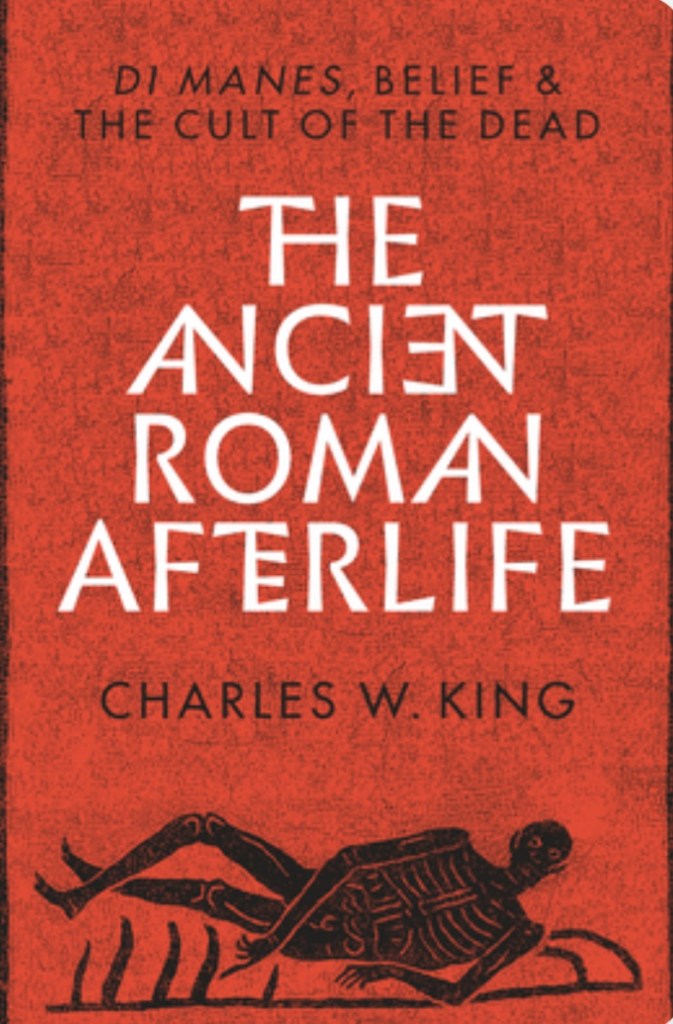
2) The Ancient Roman Afterlife: Di Manes, Belief, and the Cult of the Dead (Charles W. King)
I’ve read so much nonfiction about ancient Rome at this point that I’m really hard to impress, but Charles King’s study on the Roman cult of the deified dead (di manes) was revelatory for me. So often overlooked by general scholars as unimportant or incoherent, King puts together an engaging narrative that demonstrates that the manes cults were both important and systematic, and by doing so, is the first scholar I’ve come across who is then able to show how the imperial cult, which often feels like it comes out of nowhere in Roman religious thought, was actually a natural extension of private family cults of the dead. Roman religion gets pretty short shrift usually, treated as ancillary and derivative, but by bringing the manes into their proper context, it suddenly becomes vibrant and deeply meaningful to those who practiced it. If you have any interest in Roman cultural studies, you can’t miss this one—it felt like someone turning on a light for me in this aspect of Roman life.
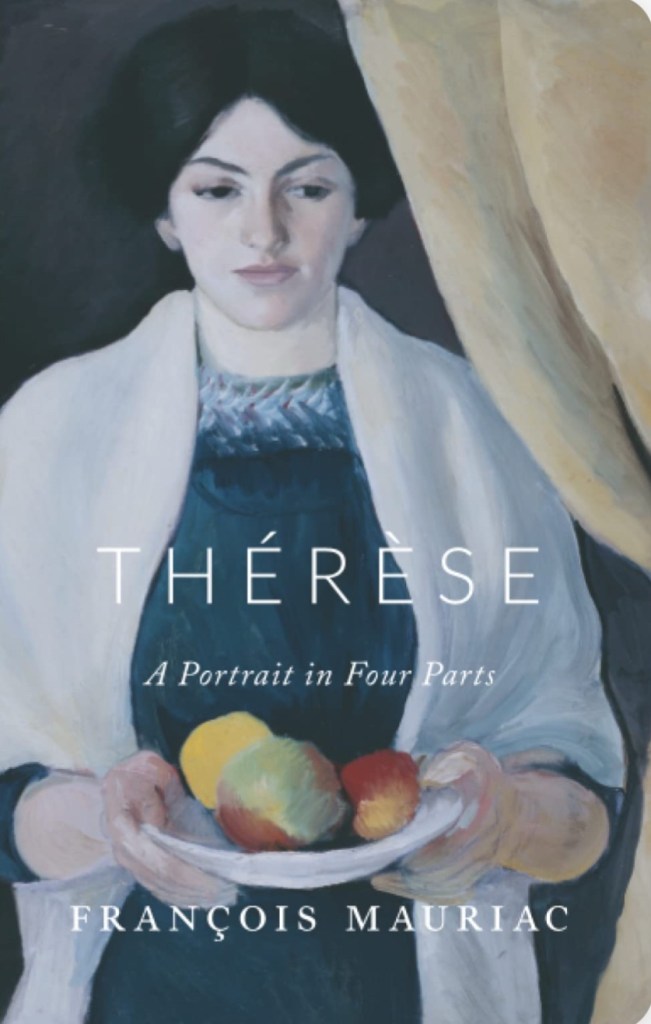
1) Thérèse: A Portrait in Four Parts (François Mauriac)
We started with a classic in Villette, and we’re wrapping up with another oldie in François Mauriac’s tetralogy of novellas (Thérèse Desqueyroux, Thérèse and the Doctor, Thérèse at the Hotel, and The End of the Night) featuring his fascinating antiheroine, Thérèse Desqueyroux. Written over nearly a decade between 1927 and 1935, Mauriac explores the interior life of the seemingly ordinary Thérèse, who has just been (wrongly) acquitted of attempting to poison her husband. All four novellas are concerned with the various fallouts of that explosive verdict, but it’s the figure of Thérèse herself who is just mesmerizing, especially in the first book, which traces her life through to her decision to kill her husband. Neither a saint nor a monster, she is a perfect encapsulation of the banality of evil and how “normal” people do horrible things. And as self-involved as Thérèse is, she’s weirdly sympathetic in her absorption; you find yourself rooting for her against her kind of boorish husband and family, and the consequences of her own selfish choices, even though you know she’s wrong. Combine this charismatic protagonist with Mauriac’s lovely prose, and I was simply entranced through all four of these novellas.

 Sarah Holz
Leave a comment