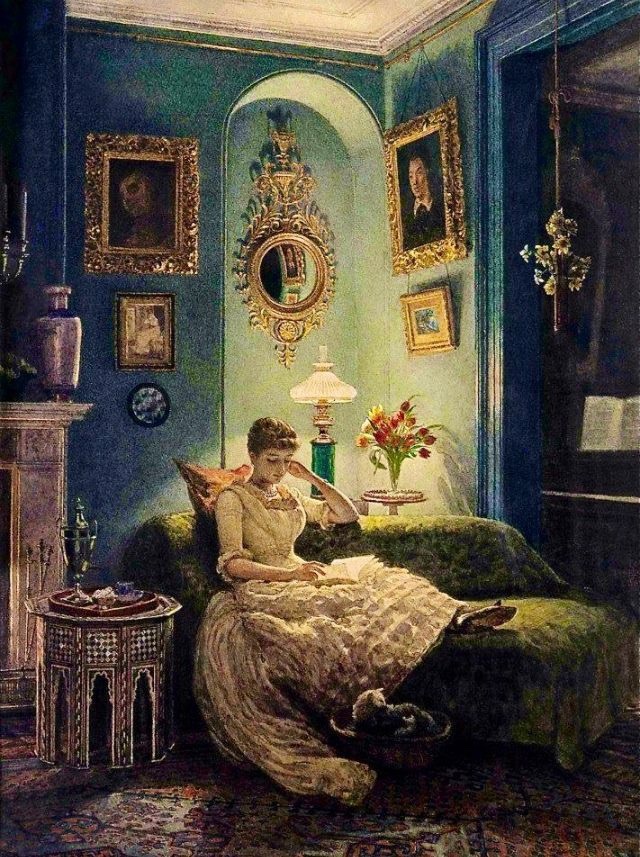
Here we are, folks, at the end of another year, and I thought we’d keep a new tradition going by doing a round up of my favorite books I read this year. Like last year, this list will be my favorite books that I read this year, not necessarily ones published this year (though I got four of those, too).
And while we’re talking publishing, I am pleased as punch to announce that The Gourd and the Stars is all set to be released January 12, 2024, so mark your calendars! It is currently available for preorder on many platforms, including Barnes & Noble/Nook, iBooks, Borrowbox, and Everand (formerly Scribd). As usual, the larger platforms like Amazon, Overdrive, and Hoopla are exercising the prerogative of market share and not hurrying to green light for preorders, but both paperback and ebook editions will be available there if nothing else on release day. I’m so excited to be able to share a new story with all of you in the new year!
But without further ado, let’s get into the books I enjoyed this past year before we get too lost looking forward to the next (in no particular order):
Honorable Mention
The Second Part of the Countess of Montgomery’s Urania (Mary Wroth)
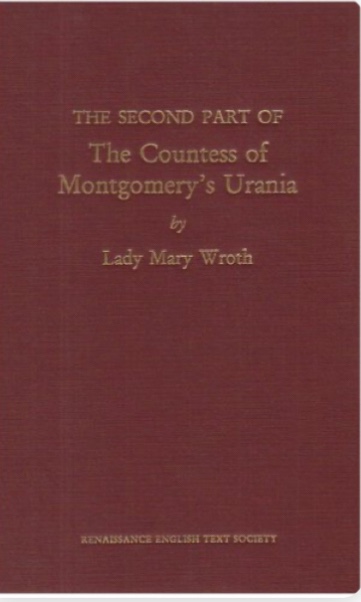
The second part of Mary Wroth’s sprawling Jacobean epic is probably the kind of honorable mention only I could love, but as challenging as Wroth’s text can be, I remain genuinely interested in her ideas and how she used fiction to process her own life and the lives of those around her. It’s unwieldy, messy, and ultimately rather sad, but I continue to believe that Urania is an important part of the European novel’s history, and I wish it was more widely available so it could gain the audience I think it deserves. If you missed my entries on part one and this one, check them out here and here for more.
10) The Ghost Writer (Philip Roth)

If you had told me at the start of the year that any Philip Roth book would make it onto a best-of list for me, I wouldn’t have believed you, but I haven’t stopped thinking about The Ghost Writer since I read it back in February. What starts as a simple story about a young writer meeting his literary idol morphs into a dark postwar fable that audaciously suggests the almost unsuggestable while offering no answers in return. It still has a lot of the mid-century American male navel gazing that I don’t have much patience with, but in this deceptively thin little book, Roth asks some truly startling questions about art, community, and ethics that lingered with me long after I closed the back cover. If you want to read more of my thoughts on it and its legacy, check out my entry here.
9) Work-Life Balance: Malevolent Managers and Folkloric Freelancers (Benjamin Chee and Walter Rée)

Shifting away from books I’ve already mentioned on the blog, Work-Life Balance is a delightful graphic novel about a supernatural Singapore where a vast collection of Southeast Asian folkloric creatures must navigate the modern world either by surviving on the fringes of society, or by joining a shadowy foreign corporation whose intentions may spell disaster for mortal and immortal Singaporeans alike. Combining traditional folklore and a contemporary office-culture story, Rée’s writing and Chee’s expressive artwork combine for a distinctive take on both that was just a ton of fun. Not to mention the wonderful, colorful cast of unique Asian creatures who populate every page—learning about the ones I wasn’t familiar with was just as cool as spotting rakshasas and a fish-out-of-water Mephistopheles.
8) This Is How You Lose the Time War (Amal El-Mohtar and Max Gladstone)

TIHYLtTW has been on my to-read list ever since it came out in 2019, but as a sci-fi novel—not usually my jam—I kept putting it off. But since it catapulted back into the zeitgeist in May thanks to a viral tweet by acolyte and Trigun enthusiast bigolas dickolas wolfwood, I decided I might as well check it out on its second wind. And I’m sorry I put it off so long because TIHYLtTW is very charming. An epistolary sci-fi romance written between two rival agents waging the titular Time War (authors Mohtar and Gladstone each writing an agent), it manages to do something fresh with both the well-worn sci-fi trope of time travel and the well-worn romance trope of enemies to lovers while maintaining its own voice. And while I know some people don’t care for them, I’m also personally a sucker for a good epistolary novel. Surprisingly lyrical and tender at times, particularly for the sometimes over-analytical sci-fi genre, I think it lives up to the viral hype.
7) Eleanor of Aquitaine As It Was Said (Karen Sullivan)
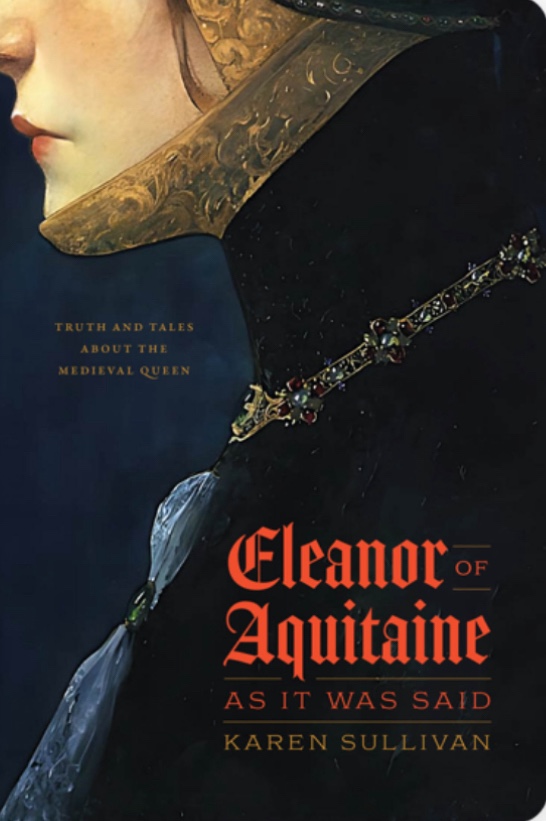
I read a bunch of really great medieval nonfiction this year as I wrapped up my research for The Gourd and the Stars (there is a real glut of truly excellent scholarship being done in medieval studies right now), but Karen Sullivan’s analysis of Eleanor of Aquitaine was one of the standouts, and I’ve been excited to see it pop up on some medievalists’ year-end lists as well. Scholarly, but very readable, Sullivan—unlike a lot of previous work on the queen—starts with the (correct) premise that virtually everything we know about this famous woman is little more than hearsay from songs and legends of her time. Understanding this, Sullivan analyzes these fictional and quasi-fictional sources to tease out what their various narratives say about Eleanor and women like her in the 12th century. It was a fresh approach, and I appreciated how it forced me to pay attention to how I was interacting with my medieval source materials as I did my own writing.
6) Anne-thology: Poems Re-Presenting Anne Shakespeare (eds. Edmondson, Kent, Laoutaris, and Schell)
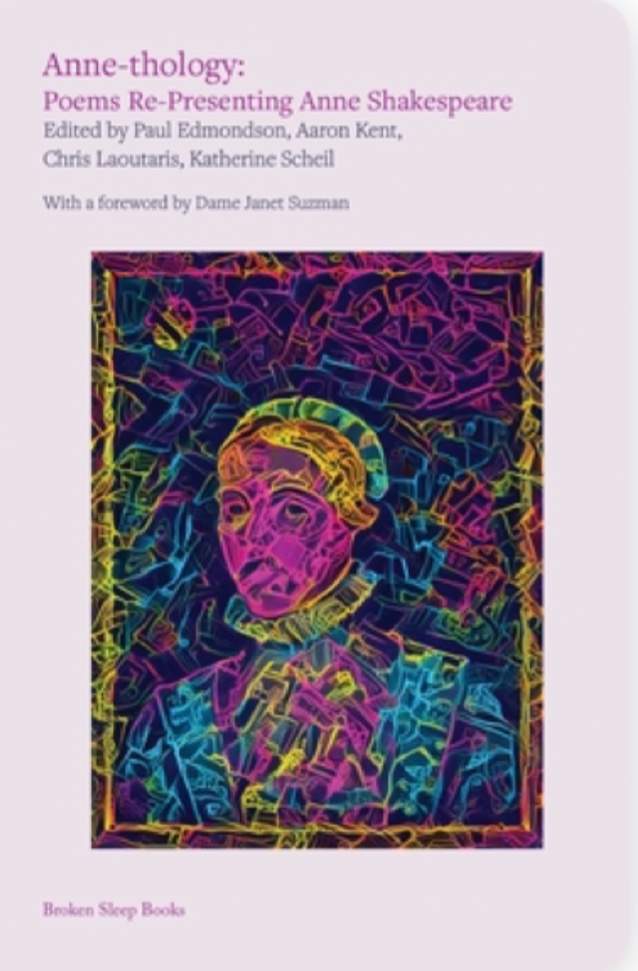
Like medieval studies, Shakespeare and Renaissance studies are also blossoming at the moment—in part because these older disciplines are benefitting from expanding perspectives. This collection of sixty-seven poems takes Anne Hathaway Shakespeare from the shadow of her immortal husband and explores her life, from the infamous “second-best bed” to reimagining her in modern context. The poets themselves represent just as broad a cross section, from a few Romantic poets who wrote about Anne to school children submitting an assignment with surprising insights, and every type of artist in between. The result is an unexpectedly cohesive love letter to an elusive woman who, as the old joke goes, still “hath-a-way” about her.
5) Gods and Men in Egypt: 3000 BCE to 395 CE (Françoise Dunand and Christiane Zivie-Coche; trans. David Lorton)
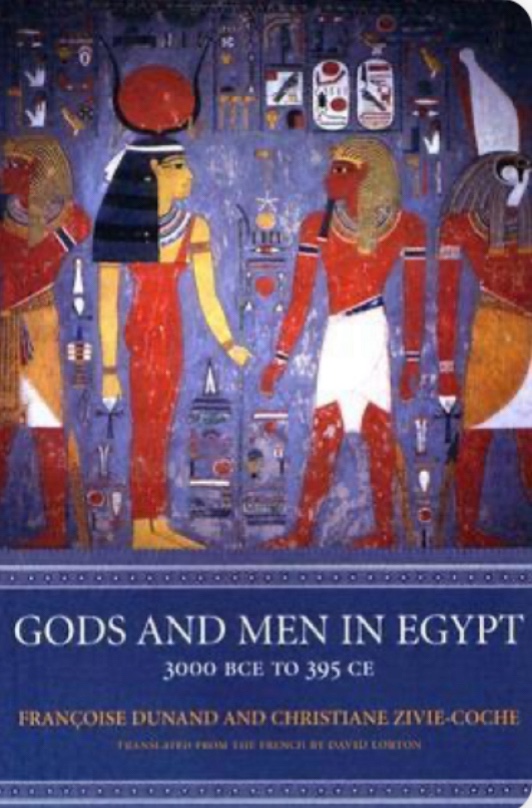
However, unlike some disciplines, it’s often difficult to find anything new under the sun in Egyptology. And although it’s now almost thirty years old, Gods and Men in Egypt feels fresher than a lot of newer books in the field. What could have been another boring retread of ancient Egyptian myth and ritual takes on new life as Dunand and Zivie-Coche do something almost all of their colleagues past and present fail to do—which is take Egyptian religion on its own terms. There’s no veiled contemporary editorializing about “weird” traditions or beliefs; Dunand and Zivie-Coche treat Egyptian cosmology with the same seriousness and gravitas western scholars usually reserve for “legitimate” religions like Christianity or Islam. You wouldn’t think it would make that much of difference, but the reading experience was significantly more rewarding in an intangible way. This is twice as remarkable considering that I was reading their writing in translation; David Lorton’s work is incredible for preserving this level of readability. A must-read for anyone interested in Egyptian mythology and the mechanics of Egyptian religious thought.
4) Susanna Hall, Her Book (Jennifer Falkner)

Another Bardology offering, Susanna Hall, Her Book is a novella centered on a historical meeting between Queen Henrietta Maria (wife of Charles I) and Shakespeare’s daughter, Susanna, which Jennifer Falkner then spins out into a mediation on the English Civil War, memory, and loyalty. Despite the tension of Susanna hiding an injured rebel in her house under the nose of her royal guest, this is a quiet story with a fully immersive sense of place, and Falkner never lets Will’s hovering ghost upstage his daughter as the protagonist. Aside from just being a story I enjoyed, I’m happy to be able to promote a work from an indie author and publisher (Fish Gotta Swim Editions) to a wider audience.
3) Alexander, The Servant, and the Water of Life (Book 1: The Hero’s Journey) (Reimena Yee)
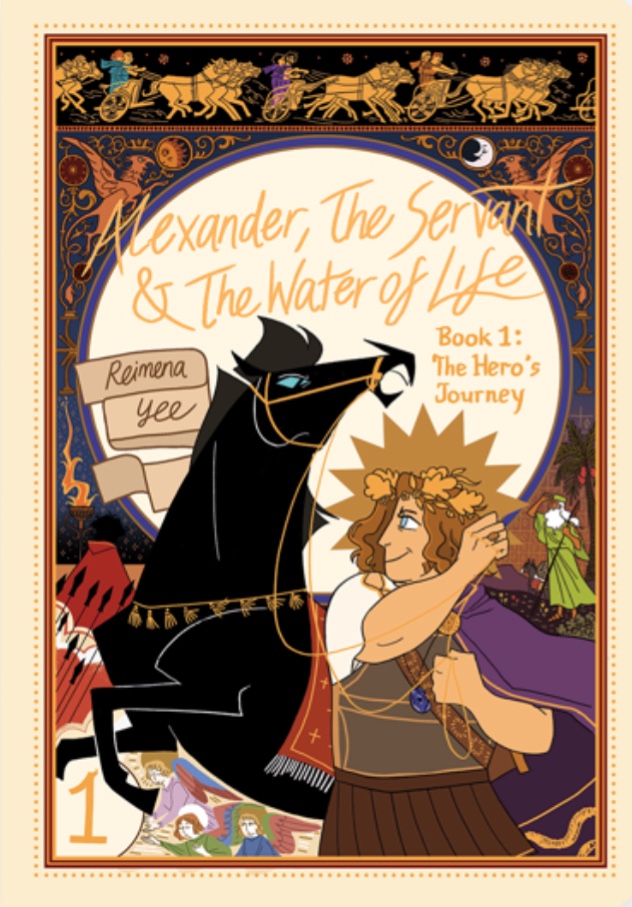
Speaking of indie authors, I’ve been following Malaysian author-artist Reimena Yee for a few years now through her graphic novels, but I’d really been looking forward to the physical publication of her Alexander web comic because I’ve been mesmerized by its art style since I first saw her Greek-inspired rendering of Bucephalus (you can see him on the cover above—he’s the horse). Book 1 was finally released this past summer, and I was stunned by how beautiful it is. Yee’s story plays with the many different cultural retellings of Alexander the Great’s story, and she has mastered the art styles of each to illustrate how Alexander wanders between them in search of the titular Water of Life. Moving from classical Attic red/black pottery to pre-Islamic Persian calligraphy to high medieval European manuscript, I can’t decide which I loved more. Yee has always had a beautiful style in both her art and storytelling, but with Alexander it feels like she’s found the next higher gear in her own journey as a creator. I cannot wait until the next volume comes out.
2) The Mahabharata (Vyāsa, trans. Bibek Debroy)
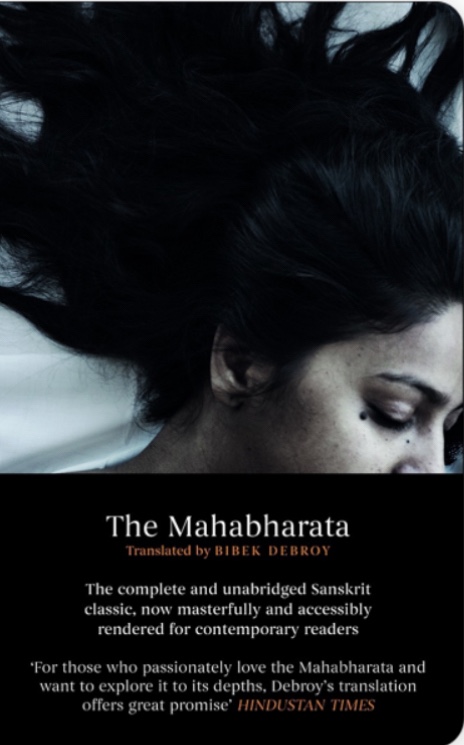
I’ve read several abridged translations of the basic Mahabharata story over the years, but having finally found at a reasonable price Bibek Debroy’s massive ten-volume unabridged prose English translation of perhaps the only book that can challenge the Bible for the title of “the greatest story ever told,” I set the goal of working through the whole thing at the beginning of the year. At nearly six thousand pages, it took me nine months, but I did it; and although there are parts that reveal the deeply oral roots of the narrative in their repetitiveness, for the most part I really enjoyed the experience of reading the stories I knew in their natural habitat, so to speak. The philosophy of ancient Hindu thought is largely what gets cut in abridgment, but the long digressions into ethics and morality are what explain why characters make the choices they do—even though the story is defined by the difficulty of making the right choices in a world where mortal austerity can burn the very gods and divine justice can be ambiguous. Like all the great world epics, a basic narrative of familial conflict and revenge is elevated into something sublimely universal in that magical way literature can achieve once in a while. And against all odds, there were times I literally laughed out loud at how funny the narrative can be. Truly a story with a little bit of everything.
1) Half-Life of a Stolen Sister (Rachel Cantor)
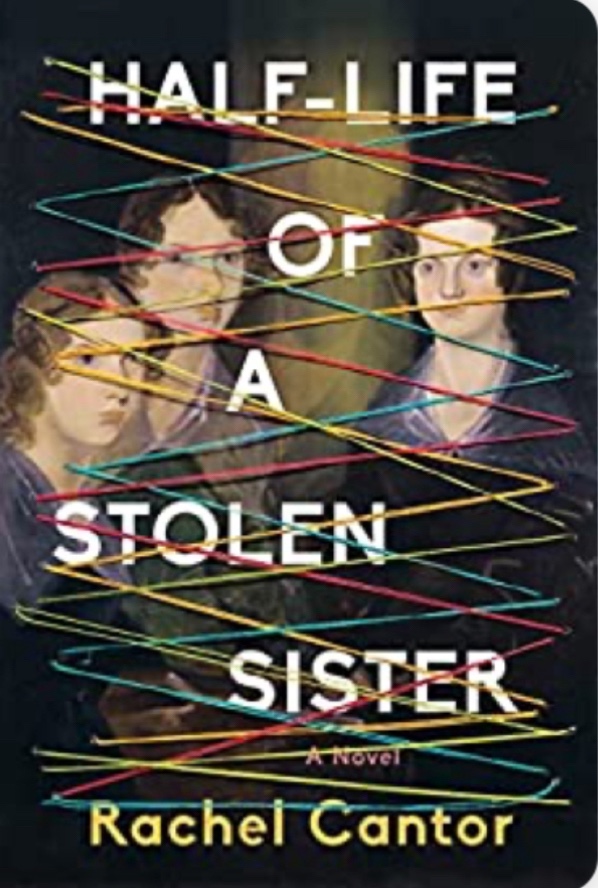
I read a couple of books this year where I was an outlier on the general audience consensus, and this was one of them. At brass tacks, HLoaSS is simply another retread of the collective lives of the Brontë siblings, but Rachel Cantor uses the license of fiction and a willingness to jump across genres to bend and refract that oft-repeated narrative into something unique and unexpected. She literally un-moors the siblings from Yorkshire into a rent-controlled apartment in what may be New York City, almost in an exercise to see if playing with their circumstances has the power to change their tragic fates. Some chapters are written in stage direction, or other atypical novel structures; and they hop between the siblings’ perspectives, without sanitizing the truly odd and often unlovable Brontës, but while never letting you settle on one truth for too long. The result appears to have been incredibly divisive among readers, with many disliking what they felt amounted to tonal whiplash, but I found this willingness to breathe life into a tired genre (Brontë non/fiction) by taking narrative and structural risks to be fascinating—and probably more successful than it had any right to be. And I think the true marker of that success was that Cantor was able to produce genuine emotional reactions in me to events I’ve heard a hundred times before, while tricking me into believing that maybe things would end differently this time. Great novels have been built of much less.
 Sarah Holz
Leave a comment