
I wanted to get back this week into some more Flight of Virtue entries, in part because I’m happy to announce that my editor is going to start work next week on my next book: a story that started out as a medieval Crusades romance about the fall of the Latin Kingdom of Jerusalem and ended up being just as much about pre-modern medicine, anti-ableism, and bees. So stayed tuned for more about that as we move into the summer…
Back with the matter at hand, I had originally thought to do a biographical post for the various historical ladies in FoV, or talk more about the marquis de Lafayette’s post-American Revolution career and imprisonment—both of which I’m sure I’ll end up doing in the future. But then the photo widget on my iPad kept giving me Bertrand Barère, so I took that as a sign that I should delve first into the arch-antagonists of my girls in the middle part of the novel: the Revolutionary Committee of Public Safety (Comité de salut public).

As its name suggests, the Committee of Public Safety (hereafter, “the CPS”) started out as a subcommittee of the French Revolutionary legislature, the National Convention. Operating for roughly two and a half years from April 1793 until it was disbanded in October 1795 during the Thermidorian Reaction, the CPS was essentially a nominally bipartisan war cabinet for the Convention. But as the French Revolution existed in a perpetual state of military conflict with several foreign European powers and a number of local regions, such as the Vendée in western France, the CPS quickly evolved into a provisional executive branch of government that became virtually a law unto itself.
Controlled by a succession of the most personally powerful members of the Convention, the CPS would largely dictate the direction of the Revolution and would ultimately be responsible for ushering it into its most violent phase—the so-called Reign of Terror (September 1793-July 1794), where at least 35,000 people were executed by France’s Revolutionary Tribunal (the judiciary arm of the Convention). The Reign of Terror would also coincide with, perhaps expectedly, the rule of the longest-serving iteration of the CPS, the Third Committee, the coalition that would serve from September 5, 1793 through July 31, 1794, though as we’ll see, only eight of the twelve members would make it to the latter date. There was no fixed number of committee members, with the largest committee comprised of twenty-five men and the smallest of only four, with the bulk of them falling somewhere in the middle with nine to twelve members. But perhaps my widget was on to something, because Bertrand Barère is a good guide to the history of the CPS, as one of the longest-serving members.
The CPS itself grew out of an earlier Convention committee Barère served on, the Committee of General Defence (CGD), which had been formed at the end of March 1793 to deal with the two-pronged assault on the Convention posed by the foreign armies of the other European monarchies and counterrevolutionary forces within France. The CGD was a kind of proto-CPS, and while it isn’t numbered among the twelve CPS committees, it is usually listed with them (as you’d find on Wikipedia) because the first CPS was formed out of its original members. The CGD was also the largest version of either committee, with its twenty-five members. This is a reflection of there being more factions in the Convention at the time of its formation, namely the three main political parties present in the spring of 1793: the Mountain, the Plain, and the Girondists.
The Mountain (La Montagne) and the Plain (La Plaine) were named for the positions where their representatives sat within the National Convention—with the Mountain members sitting in the higher seats and the Plain members sitting closer to the debating floor. Conversely, the Girondists (Les Girondins) were named for the Gironde, the French départment where many of their political allies hailed from. But even calling the Girondists a “party” like the Mountain and the Plain is a bit of misnomer, as they merely represented a loose coalition of representatives who were more politically moderate and less anti-establishment than the other two parties. This put them on the opposite end of the spectrum from the ultra-revolutionary Jacobin coalition, the Mountain, with the Plain deputies sitting somewhere in between these two position. In the spring of 1793, the Girondists became increasingly concerned about the growing revolutionary violence, and the Mountain increasingly thought of the Girondists as potential traitors to the “pure” Revolution. But it should be pointed out that the Mountain despised anyone not in their faction—they famously nicknamed the Plain “The Swamp” (Le Marais) because they thought those deputies were nearly as ideologically corrupt as the Girondists. Proving “draining the swamp” is hardly a new concept.

Despite their growing antagonism, the first CPS was the result of a coalition of all three parties. The defection of one of France’s few remaining competent generals, Charles-François du Périer Dumouriez, to the Austrian army in early April 1793 led to a mass panic that Austria would invade and the Convention would be overthrown. This was combined with a continued paranoia within the Convention about internal traitors and foreign spies. In light of all of this, Girondist Maximin Isnard suggested the creation of a subcommittee that could streamline a response to these threats so that the Revolutionary Tribunal could merely focus its energy on prosecutions. The leader of the Mountain, Georges Danton, seconded this idea, and it would be attached to a similar proposal Plainard Barère had presented to the Convention floor earlier in March. While the CPS had been largely Isnard’s brainchild, the early history of the committee was dominated by the charismatic Danton, to the point where in its infancy it was simply referred to as the “Danton Committee.” This combined with the Girondists’ exclusion from any seats on the original nine-person CPS (no doubt meant by Isnard to give each party three seats), should have raised alarm bells to the moderates.
Perhaps lulled into a false sense of security in their position as the technical majority in the Convention, the Girondists were unprepared for the growing popular influence in Paris of the more extreme Mountain and unable to contain an increasingly hostile counterrevolution in the Vendée. Barely two months after the first CPS was formed and following a violent three-day insurrection by the Paris Commune, the Mountain was able to expel the Girondists from the National Convention, with most of those deputies being arrested and executed within the next two years. The Mountain would form the second CPS in July 1793 after these events, and the famous Third Committee the following September, and while the Plain always occupied a few of the seats, they were always in a significantly lower proportion to the now ascendant Mountain.
The formation of the second CPS (July 1793-September 1793) also saw the arrival of Maximilien Robespierre on the committee, which in turn would signal the eventual eclipse and downfall of Danton. Although remembered as the revolutionary extremist par excellence by posterity, Robespierre was in many ways one of the more moderate Montagnards, among whom were some real maniacs. What arguably earned Robespierre his reputation (and ultimate end) was his dispassionate attitude toward purging members of his own party as well as those the Mountain saw as “enemies.” It would only be when some of the ultra-Jacobins in Robespierre’s Mountain were afraid that he would come for them next that they would form a coalition with the weaker Plainards that was big enough to both take him down and paint him as the fall guy for all of the Reign of Terror’s excesses (many of which were exactly what Robespierre was trying to stop them for doing). But we’ll get to all of that in a minute.
The CPS ostensibly worked in tandem during this period with another committee, the Committee of General Security (CGS), and to a lesser extent, the General Police Bureau. Those two other committees were tasked with much of the hands-on execution of the Terror—information gathering, arrests, detention, etc., with the CPS as the authority they reported to. Danton, and later, Robespierre worked to increase the committee’s reach by aggressively centralizing the nebulous power it exercised over these other committees, the Tribunal, the mobile “representatives on mission” who served as the Convention’s eyes and ears outside of Paris, and ultimately, the Convention itself. Arguably, the CPS would demonstrate the apex of its authority in April 1974, when it condemned and guillotined its creator, the popular Danton, and his allies, leaving Robespierre as the single most powerful politician in the Convention.

The Third CPS, because of its almost yearlong tenure and its role at the head of the Terror, is usually seen as the CPS when talking about the history of the committee, although the institution would survive for another year after the Third’s dramatic fall. When it was formed in September 1793, the Third CPS would be expanded from nine to twelve seats, although all additional members would be Montagnards, leaving the Mountain/Plain split at a whopping nine to three. Robespierre had probably intended this to further consolidate Montagnard power in the committee, but if this is so, the move backfired on him as he was forced to concede sets to not only slightly more moderate Montagnards who might be persuaded to work with the Plainard members against him, but also the more radical Montagnards who thought he was a danger to them.
Friction was practically inevitable, and by the time the twelfth member Marie-Jean Hérault de Séchelles (Montagnard) was expelled from the CPS and executed with Danton, most of the committee couldn’t stand to be in the same room with one another. The committee’s office had to be moved in order to make their shouting matches less audible to the rest of the government, and not long after Séchelles’ exit, any member not in Robespierre’s circle—which was most of them—was either hedging or actively working toward his downfall. When Robespierre hinted at his intention to go after the two most powerful members of the CGS, Jean-Lambert Tallien and Marc-Guillaume Vadier, as well as the president of the Paris Jacobin Club and one of the most notoriously uncontrollable representatives on mission, Joseph Fouché, the latter rallied his allies in the CPS and the Convention to flip Barère and some other key Plainards against Robespierre.
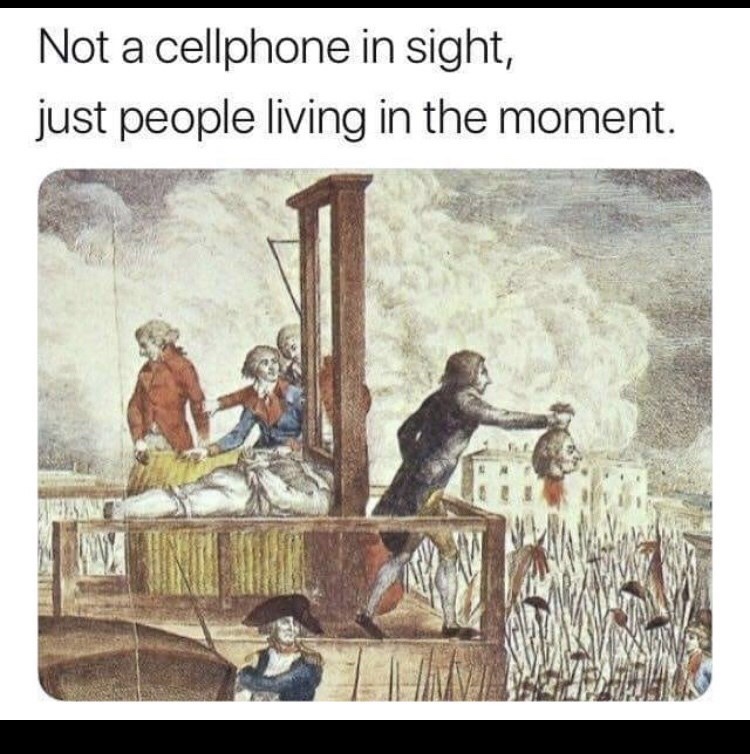
On July 27, 1794, instead of successfully denouncing Fouché and the others, Robespierre and his allies were instead denounced by a vote on the Convention floor, arrested, and guillotined in the coup that became known colloquially by its date in the Revolutionary calendar, 9th Thermidor. This in turn led to a yearlong governmental reorganization called the Thermidorian Reaction that continued until the Constitution of Year III established the Paris Directory as the new executive government of France in the fall of 1795. The Constitution would permanently dissolve the CPS, which had been operating in a much more limited capacity in the interim, bringing its largely ignoble history to an end.
To wrap up, even though already this is threatening to be another too-long post, I want to talk some more about the Third CPS’s members (sans Séchelles), because their different backgrounds and loyalties will help pull together what I described above about the committee and how it could bring down even a man as powerful as Robespierre. As one of the resident creatives of the committee, Barère even came up with some helpful categories in his memoirs to help break everyone down into, so we’ll use those to guide us. And since we’ve already been talking about him off and on throughout this entry, we’ll start with the triad who formed the group he put himself in, which perhaps predictably he called…
The True Revolutionaries
1) Bertrand Barère de Vieuzac (Plain)
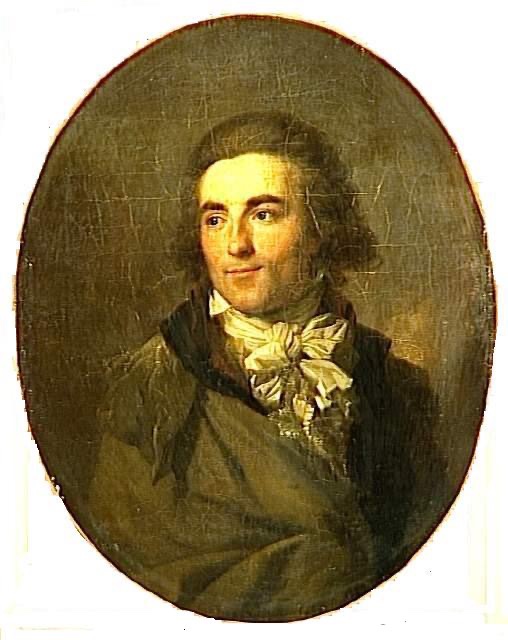
As his long-form aristocratic name might suggest, Barère came from a relatively affluent family; his father was an attorney, and his mother was from the old nobility, which probably accounts for Barère’s comparatively moderate stance in the Revolution. Also trained as a lawyer, Barère rose to fame as a Revolutionary essayist and during the Reign of Terror served as one of the CPS’s most effective communicators to the Convention, earning him the sobriquet of the “Anacreon [a famous Greek poet] of the Guillotine” after the downfall of the Girondists. Despite this, as a Plainard, he was seen by most Montagnards as inconstant in revolutionary purity, but as one of the most influential members of his party, he was also an excellent weathervane for the mood of the Convention as a whole. Once the Thermidorian faction knew Barère would speak against Robespierre, they could be reasonably confident the rest of the Convention would follow his lead, which it did.
Despite this, like several other remaining members of the CPS, after 9th Thermidor Barère was arrested as a traitor and a terrorist, even though Lazare Carnot would speak in his defense to the new Convention. This began a period of several years were Barère was imprisoned, released, imprisoned again, escaped from prison, and lived in hiding while several successive governments tried to decide what to do with him. Finally exonerated under Napoleon’s general amnesty of 1799, he spent most of the Empire period writing, though he did briefly serve in Napoleon’s government during the emperor’s Hundred Days. Proscribed by Bourbons as a regicide in 1815, he lived in exile until Louis Philippe allowed him to return to France in 1830. He served in the July Monarchy until 1841, when he died as the last surviving member of the Third CPS.
2) Jacques-Nicolas Billaud-Varenne (Mountain)
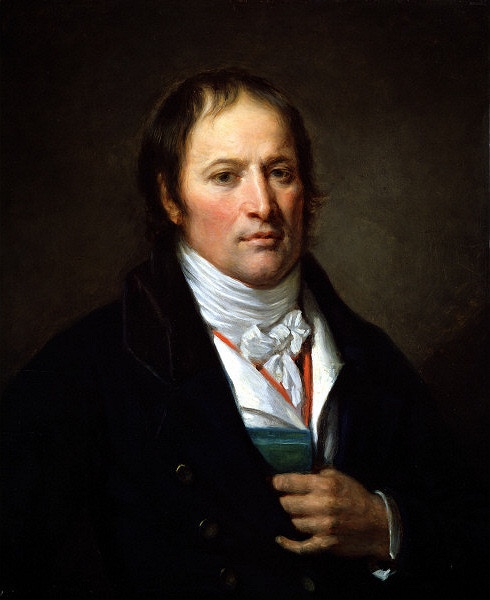
Billaud-Varenne is often given the dubious credit of being one the chief architects of the Reign of Terror, and was probably Robespierre’s chief antagonist on the CPS. Nicknamed “The Righteous Patriot,” little that happened during the French Revolution was too extreme for his tastes and most of the more draconian policies of the Terror were his proposals (the mass arrests, the denial of defense rights, etc). Another lawyer, he was instrumental in drafting many of the Terror’s laws, like those of 14 Frimaire and 22 Prairial, the latter of which reduced a defendant’s rights in the Revolutionary Tribunal to simply the right to appear before it. A virulent atheist, part of his beef with Robespierre was the latter’s adherence to a basic revolutionary theism. But because Robespierre thought Billaud-Varenne was a serious threat to him and his government, that made Billaud-Varenne Joseph Fouché’s principal ally in the CPS, because he understood that the only way he could keep his own head was to take Robespierre’s first. Like Barère, Billaud-Varenne was instrumental in the events of 9th Thermidor, but he too was almost immediately arrested after Robespierre’s execution. Unlike Barère, no one thought it was a good idea to speak up in his defense and he was exiled to French Guiana. He refused Napoleon’s 1799 pardon, and died in Haiti in 1819.
3) Jean-Marie Collot d’Herbois (Mountain)

Collot, as a former actor and playwright, is one of the more colorful characters in the CPS, but also arguably one of the most terrible. He rose to revolutionary fame on the back of a successful pamphlet, and revolutionary infamy on the back of his actions as a representative on mission for the Convention. Along with Fouché, Collot would raze the city of Lyon and its people to the ground in 1793, and his conduct was so outrageous that the second CPS nearly arrested him before allowing him to join the third committee. Like Billaud-Varenne, he had little choice but to join the coalition against Robespierre if he didn’t want his own head in a basket, and also like Varenne, the Thermidorian Convention bundled him off to South America tout suite in the aftermath, where he died of yellow fever in 1796.
The Experts
4) Lazare Nicolas Marguerite Carnot (Plain)

Barère’s second CPS clique he called the Experts—the men in charge of practical day to day operations, particularly in regards to the French army, and as a result were generally less caught up in the political backbiting of the committee. Although a newcomer to the CPS in the third committee, as a trained soldier and a gifted physicist and engineer, Lazare Carnot was this group’s unofficial leader. He would be one of the key figures who turned the pre-Napoleonic revolutionary army into an effective military force. Although willing to support Jacobin decisions like the execution of Louis XVI, Carnot was more conservative than most of the CPS, and he hated Robespierre. Because of this, he was more than happy to align with the radical Montagnards in bringing him down, but unlike the True Revolutionaries, he was too moderate and far too important from a national security perspective to suffer any consequences for his time as a passive colluder in the Reign of Terror. By the time someone tried to have him arrested, he was already ensconced in the new Directory government and perfectly safe. He would eventually spend time serving in Napoleon’s government, though he would resign when the general made himself emperor. Convinced to serve as Napoleon’s minister of the interior during the Hundred Days, that combined with his revolutionary past would earn him exile when the Bourbon dynasty was restored, and he would die in Prussia in 1823.
5) Jean-Baptiste Robert Lindet (Plain)
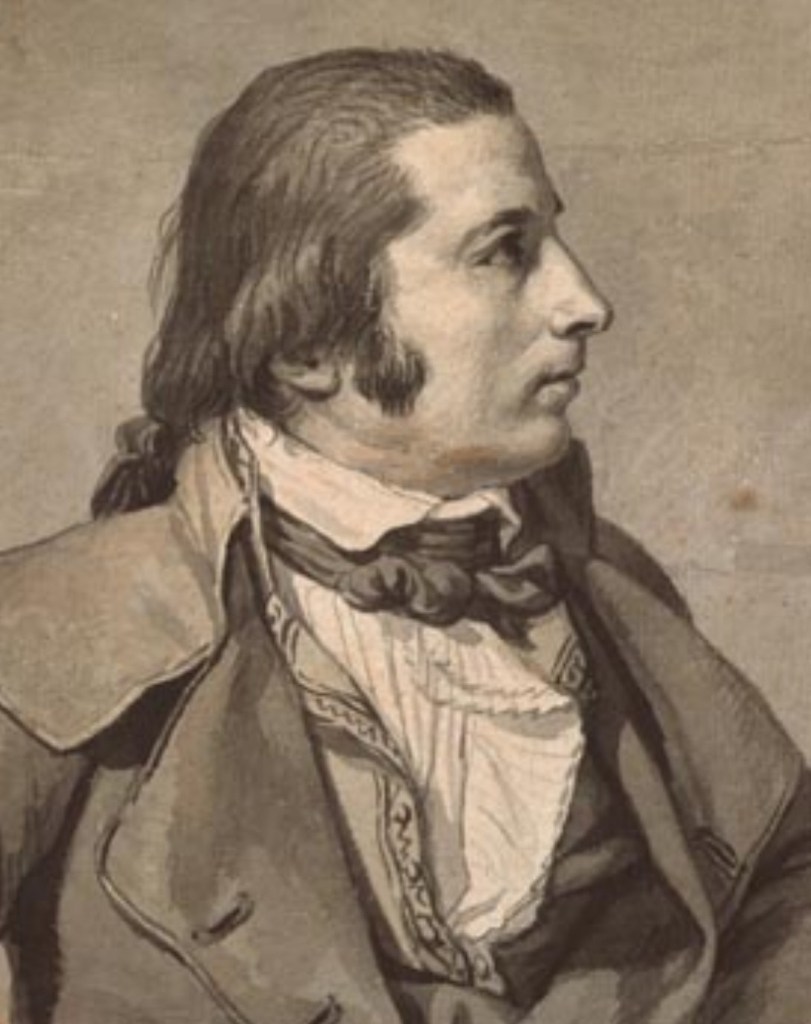
Robert Lindet had also served on in the second CPS and was one of the older members of any of the committees at forty-six (most of the members were in their thirties). Like so many of the members, he was trained as a lawyer, but once on the CPS, he found a calling as the committee’s ersatz quartermaster general and overseer of the National Food Commission in charge of France’s agricultural sector, the war effort, and trade. While an enthusiastic supporter of the king’s death sentence, Lindet had been a close friend of Danton, and he refused to sign the CPS’s death warrant for him, which obviously made him no friend of Robespierre or his aims. When Saint-Just tried to pressure him into signing, he merely snapped, “I am here to protect citizens, and not to murder patriots.” He survived 9th Thermidor much as Carnot did (he also defended Barère), and was acquitted of his involvement in the CPS in the general amnesty of 1795. He refused to serve in the Directory or Napoleon’s government, but was still exiled as a regicide during the Bourbon Restoration in 1816. He would eventually return to France, though, sometime before his death in 1825.
6) Pierre Louis Prieur (Mountain)

As my readers know, the third CPS had two Prieurs on it, so they were often referred to by their districts to differentiate the two. As a result, Pierre was usually called “Prieur de la Marne.” He was, along with Barère, probably the longest-serving CPS member, serving in the proto-committee, the CGD, but also in CPSs 2-9, spanning from July 1793 to March 1795. Despite this, he was more well-known for his violent histrionics on the Convention floor (where he earned the nickname “Crieur [Shouter] de la Marne”) than he was for any specific activity on the committee, aside from personally running Brittany’s version of the Reign of Terror. He was worried enough during Thermidor to go into hiding, where he remained until the 1795 amnesty was declared. Though he took no part in the subsequent French governments, he was banished by the Bourbon restoration and died in Brussels in 1827.
[My readers also know that I classed Prieur de la Marne as more of a True Revolutionary than an Expert, because of the Brittany episode, but that’s just my reading on the situation. It’s also possible that Wikipedia (where I was fact-checking this) is mixing up the Prieurs, but I can’t find definitive proof of that in my copious FoV research notes.]
The High Hands
7) Maximilien François Marie Isidore de Robespierre (Mountain)

As evidence of Barère’s distaste for Robespierre, he named “The Incorrptible”’s own faction “the High Hands” for their inflexibility and their perceived disdain for everyone else. We’ve already talked about Robespierre’s trajectory earlier, so we don’t have to rehash it here, but for those of you keeping score at home, know that he’s the CPS’s fifth attorney. (Leave your best lawyer jokes in the comments)

8) Georges Auguste Couthon (Mountain)

Couthon trained as a notary, but meningitis left him increasingly paralyzed and by the time of the Revolution, he was confined to a wheelchair. This didn’t stop him from being a forceful anti-Girondist speaker on the Convention floor and working closely with Robespierre to achieve the latter’s goals. Some historians try to defend Couthon as less monstrous than some of the other members of the committee because he was the original person sent to teach Lyon a lesson but he couldn’t stomach the task at hand, and Collot and Fouché were sent in his place. But at best I think this illustrates the idea that allowing evil to happen is just as bad as committing evil. Couthon was more than aware what Collot and Fouché would do—he just chose to wash his hands of it. Even if Lyon speaks in his favor, Couthon was instrumental in helping Billaud-Varenne draft the 22 Prairial laws, which would lead to over 1,500 executions between June and July 1794 alone. As a close confederate of Robespierre, Couthon was arrested on 9th Thermidor and executed the next day.
9) Louis Antoine Léon de Saint-Just (Mountain)
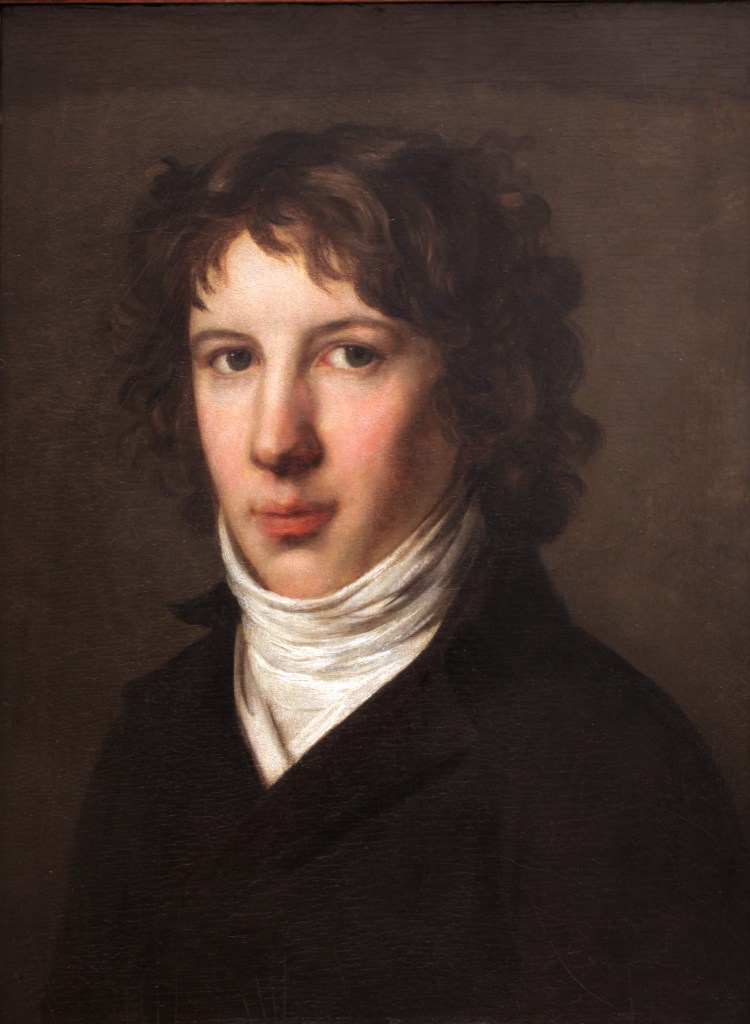
Working hard to earn his title as the modern Anacreon, Barère once angrily described the High Hands clique, if you’ll pardon the derogatory slur in Couthon’s case, as “the scoundrel (Robespierre), the cripple (Couthon), and the child (Saint-Just).” Although only twenty-six at his death, Saint-Just might have been the most feared member of the CPS. As both Robespierre’s right hand and protégé, Saint-Just was often his public face and reckoning when it came to implementing the Terror. Considered transgressive and handsome, his nickname became the “Archangel of the Terror,” and while I found some historians willing to defend him as perhaps the Revolution’s truest disciple, considering the results of his vision, I think the view of him as a dangerous fanatic is closer to the mark. A dissolute teenaged poet, the Revolution gave him a focus for his talents, and unfortunately for the rest of France, that largely meant turning the country into a bloodbath of denouncement and death. Just as Couthon’s disability sometimes earns him excessive latitude or blame depending on the tastes of the era, Saint-Just’s looks and age sometimes wins him partisans. Obviously when Robespierre was condemned, Saint-Just went down with him and was executed on 10th Thermidor, though true to form, while many of the condemned Jacobins attempted suicide in a bid to save themselves, Saint-Just went calmly to the guillotine with the unshakable strength of his own convictions.
The Outliers
10) Claude Antoine Prieur-Duvernois (Plain)

There were two more CPS members that Barère doesn’t attach to any of his cliques, one of whom was the other Prieur, Claude, who was usually referred to as Prieur de la Côte d’Or. Another military engineer, Prieur-Duvernois largely aligned himself with Carnot and followed his political lead. As a result, he was safe from the Thermidorian reprisals and served in the Directory until Napoleon’s coup in 1799. He served in the imperial army, obtaining the equivalent rank of colonel and was created a count in 1808. He was one of the founders of the Ècole Polytechnique and he died in 1832, never having been proscribed as many of the other surviving committee members.
11) Jeanbon Saint-André (Mountain)
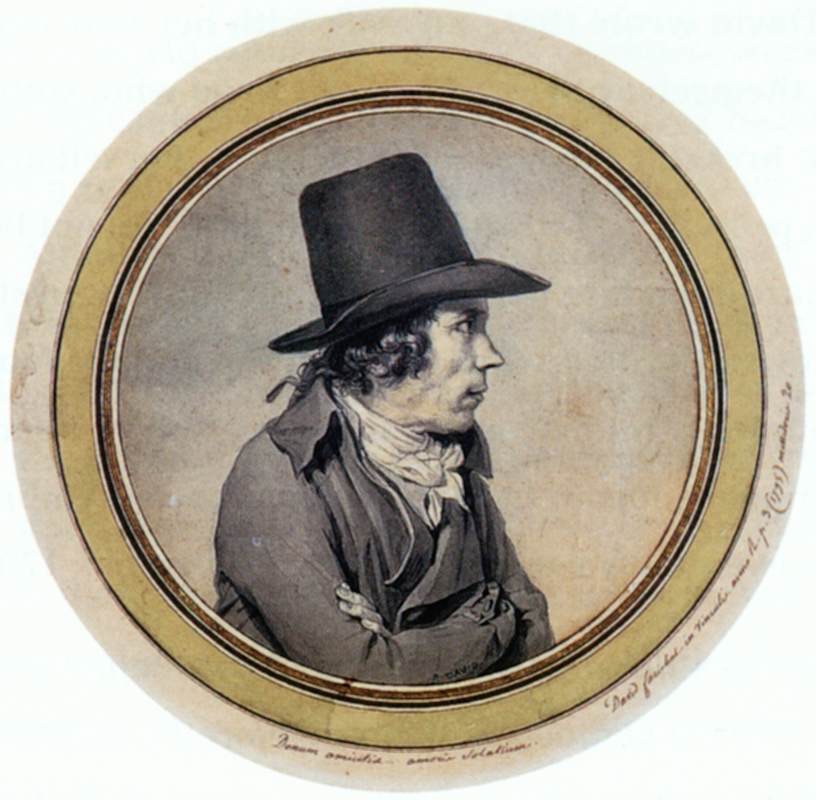
Saint-André also served on the second CPS in addition to the third, but as the member given charge of the French navy, he spent virtually all of his tenure on the committee away from Paris and the others overseeing the overhaul and restructuring of the French fleet. Born the son of a Protestant fuller, he had hoped to become a lawyer too, but Louis XV had issued a prohibition against Protestants standing for the bar, so instead as a teenager he joined the merchant marines—hence his nautical knowledge. While the CPS was at each other’s throats, he was busy instituting the vertical-stripe tricouleur as the national flag of France and making policy changes that allowed non-aristocrats to work their way up the officer corps. After Thermidor, he was exonerated for any part in the CPS’s excesses (because he was basically never there), and continued to serve the Convention, the Directory, and Napoleon in various military and diplomatic roles, dying a baron and member of the Légion d’honneur in 1813. But I think his fate and that of Claude Prieur shows there might have been something to be said for not getting too deep in French factional revolutionary politics during this time.


 Sarah Holz
Leave a reply to The Anarchist Aristocrat: The Chimerical Career of Joseph Fouché – Sarah Holz Cancel reply