Since it’s been nearly ten months since my last writing craft-focused entry, I thought we’d do another little dive into that arena—specifically looking at how to write deep, fully-formed characters that your readers can connect with. I know I tend to focus a lot on character when I talk about writing, but I find, in fiction, that although the fastest way to get your creative claws into an audience is through a killer premise, the surest way to keep them is by giving them interesting characters to invest in. While there are obviously many roads to Tipperary on this, I want to go beyond standard, one-size-fits-all suggestions like character sheets (something I’ve never found particularly helpful, personally), and walk you all through a couple of specifics I’ve used in my books to both write characters who can stand on their own two feet, so to speak, and that mesh in their own world while still reaching ours. One is more of a surface-level trick, and the other is a little more involved, but that’s to give you some breadth of out-of-the-box ideas for how to shape your narratives that’ll hopefully make this more useful to a wider set of you.
My experience is with historical fiction specifically, but I aim to show how some of the things I’ve made work for me could be used no matter the genre you’re writing in. With that in mind, I’m also going to try to talk about working with both historical characters and with original characters (OCs), though for an in-depth discussion of creating a well-rounded historical character through research, check out this entry I did on Baldwin IV.
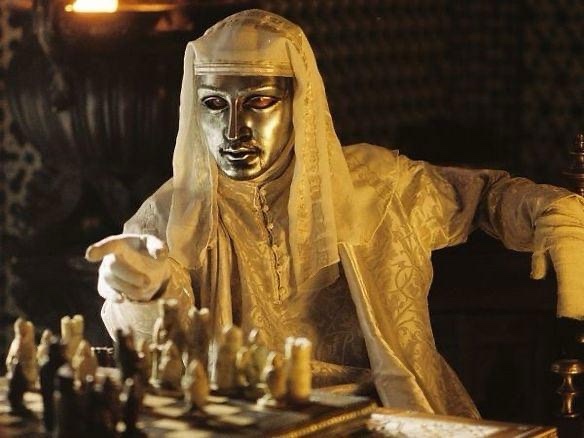
[Today, we’re going to focus more on things outside of primary/secondary nonfiction source work]
Even though I just disparaged them above, I do want to quickly talk about character sheets/dossiers for those who might not know about them, because some of you might find them useful. These are writing exercises that do exactly what they say on the tin: they’re sheets you draw up for your characters with all the information you, the author, know about them to keep as references as you go along. This can be everything from what color their eyes are, to their family, to likes and dislikes, and almost anything else you can think of. This may be information that explicitly comes up in your manuscript, or it can be background information you simply use to shape the character as they move through your story. For example, you, the author, might know that your character got scratched by a cat as a baby, and therefore they don’t like cats—but that might not be a relevant enough piece of information to specifically bring up in your story.
I think the reason that I don’t care for this sort of thing is multifaceted. One is simply practical: I write books with way too many characters to do sheets for even most of them, and then you’re doing sheets rather than just working on your story. Two, I don’t like the implied rigidity of mapping out everything you know about your characters; in part, because as we talked about before with letting your characters evolve away from your original designs, if you’re doing sheets as a pre-writing exercise, at best the sheets are what you think you know about your characters. Like so many standard writing tricks, I feel like, despite its good intentions, this is one that locks you into trying to replicate a formula and therefore only leads to frustration when you don’t feel like you’re doing it “right.” Let your characters move through your story and let them grow as they interact with each other and the plot—you’ll figure out whether they like corn flakes or not as you go. That said, if you’re really at a total loss for a character, this kind of rote approach may help you break through to them. Like most of my writing advice, it’s about finding things that work for you. I’m just here to offer suggestions and give you my semi-pro permission to discard techniques that don’t fit your creative process.
Part of the reason so many writers give the advice to just get words down on paper and worry about quality later is that I think the process of writing itself is the best way to uncover the small, often virtually invisible characterizations that really flesh out your characters in ways beyond trying to list out all of their favorite things. One that I suspect is generally overlooked in my first God’s Wife book is using language for characterization.
[You think that I mean one thing with that, but I actually mean another…🤫]
There are obviously a ton of ways to use characters’ language to tell the reader about them. In my God’s Wife series, the overt way I do this is having my Egyptian-based characters use Egyptian (and Greek) words to convey their differences from my Roman characters, who almost exclusively use Latin words. Or, think of how Emily Brontë uses phonetical Yorkshire to signal class and regional alliances among her characters in Wuthering Heights. But you don’t have to full-on language burlesques like that to convey difference—you can be simpler and subtler.
In The God’s Wife, I made it so most of the older Alexandrian courtiers, as well as Arsinoë and Cleopatra, never speak in contractions. As in, any time they need to say “I’m” they will always say “I am” instead; “cannot” instead of “can’t”; “should have” instead of “should’ve,” etc, etc. This is a great way to add a certain level of gravitas to a character’s speech pattern without resorting to trying to replicate Shakespearean English or something more pronounced (and therefore more likely to just be a distraction to your reader). I used this small linguistic change to delineate these characters’ social standing in their world as nobility/royalty, but more importantly as a way to mark them as different from the globalized Roman world around them, who I don’t use this prohibition with. When Arsinoë and Caesar talk to one another, for example, it changes the cadence between them and implies the differences, both linguistic and cultural, between them.
But it’s also why I don’t put this restriction on Ptolemy or Ptah, or Aetia and the rest of the younger set that follow in the later novels: everyone’s language consolidating illustrates the politico-cultural changes that shape the series. When Arsinoë exits stage left, the only remaining characters who talk like her are the Egyptian gods, because they are still tethered to that vanished past. Also, I just personally feel that gods in ancient settings should talk in some sort of elevated way to mark their status. Unless it fits your setting, having your gods using slang just feels wrong to me.
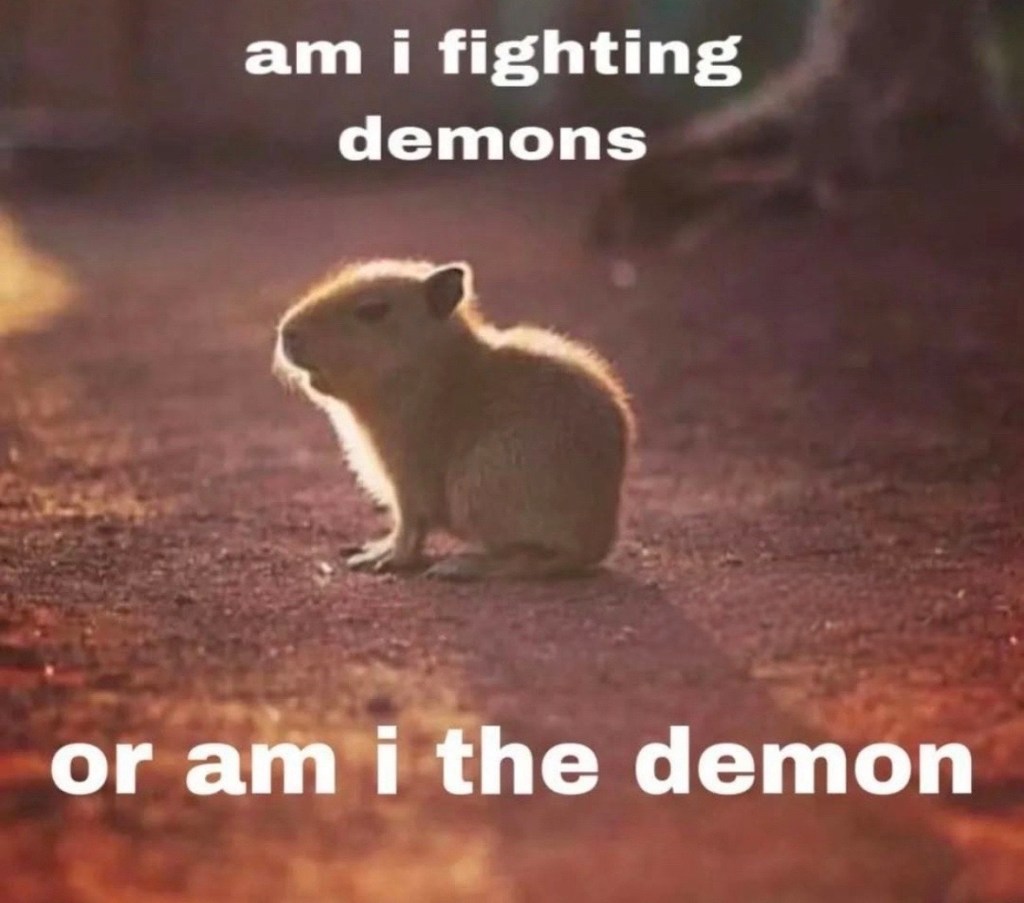
[Some of you are asking, “But what about Girah?” And I would say that Girah’s use of contractions is a marker to subconsciously remind the reader that he is not a god. Demons can be as slangy as they want👹]
A more overt example of using language to mark difference in my books is how I have Zénaïde’s father, Jehan d’Auterives, speak in archaic thee/thou English in The Gourd and the Stars. This serves a practical purpose in my text—it’s meant to convey Jehan’s native Occitan French as compared to the northern French of the other people around him—but it’s also an inflection that just felt right for the character of a monk whose thoughts and ideas were always a little apart from the mainstream. The only other character who attempts this speech pattern is Jehan’s abbé, Roger, who vacillates between this pattern and “regular” English, which I’m using to convey a part of Roger’s personality: that he might be trying to show off his command of Occitan to his erudite subordinate, or acting as though Jehan doesn’t understand northern French perfectly well. Allowing proud and exacting Roger to (imperfectly) use this more demanding style (for the reader to parse) also comes off as an intimidation tactic on Zénaïde in their one scene together, whereas (I hope) the impression of this same speech pattern in Jehan’s gentle hands conveys his place as his daughter’s loving teacher. This shows that you can use the same linguistic patterns to convey very different impressions on the reader, too. To circle back to The God’s Wife, Cleopatra’s contraction-less speech comes off as her marker as queen and her intention to dominate Rome, not assimilate into it; whereas Arsinoë’s similar pattern could also be a sign of her resistance to Rome, but it’s more importantly a symbolic link to the gods of Egypt and the empire’s independent existence.
The other big non-standard trick I use to both flesh out characters and help them fit into their historical settings is to use subtle and not so subtle nods to my characters’ contemporary literature/literary tropes. Not with the express purpose of writing twists on those fiction traditions, but adding a layer of extra depth to my own characters that would render them recognizable to their historical peers. This likely started as my love of inserting contemporary writers themselves into my stories (like Virgil, Ovid, Horace, Propertius, Mary Wollstonecraft, Chrétien de Troyes, and a few others), but I’ve also found that reading as much contemporaneous fiction as I can alongside my nonfiction research sources tends to have the mostly unintentional knock-on effect of grounding my fiction in the literary tropes of the period.

I know of all my characters, historical and OC, my Aetia is the one that strays the most dangerously into potential Mary Sue territory (for those of you that weren’t raised online: a “Mary Sue” is term originating in the fan fiction community for an original character—typically an obvious author-insert—who shows up in a story as the most beautiful, powerful, special little girl who all of the canon characters want to be friends with/date/have sex with). Aside from the fact that Aetia is definitely not an author-insert—few of my characters are less like me than her—I did have an angle with making her the way that she is beyond simply wanting her to be a weird love rhombus with two major Roman poets and goddamn Caesar Augustus. And that is that, as Virgil’s Aeneid shows, Roman literature of the BCE/CE turn is still looking back at the Greek Age of Heroes, and Aetia is built as a Greek Hero planted a millennium later in a more “modern” age, which is why she sometimes struggles to live in “civilization” as it is in her own time. Time is moving out of ancient history into the modern age, but she is the secret daughter of a man-made god and a princess, with a magical companion, sick fighting skills, and a personal charisma of +20. She’s a gorgeous, stone cold badass because that’s how she would have been written by the Greeks, and arguably how she is adapted by her Roman poets, who see all of the Greek past in her. She has to be big enough to encompass a literary tradition where she is the strong foreign princess Dido, and the peerless warrior Camilla, and the seductive beauty Corinna… all while being perhaps the real avatar of Aeneas, the child of a god.
But as a latecoming Greek Hero, Aetia shares a lot of their faults—pride, a quick temper, and an undercurrent of thinking that she knows better than most people. And these are the traits that she shares with her double, Augustus, perhaps the only other person in these books whose life sometimes more resembles a Greek myth than Roman history. Their heroic qualities help them operate on a larger than life scale, but their negative ones separate them emotionally and narratively from everyone else.

But clearly such a style would be more noxious in a more realistic book like The Flight of Virtue. FoV is my least fantastical novel because the fantastical elements of the God’s Wife books and even The Gourd & the Stars are simply less at home in the world of the European Enlightenment. The mythic belief of the God’s Wife is long gone, as is the blurred fantasy of G&S’s medieval world, but that’s doesn’t mean the unexplained is entirely absent. Rather than these starker elements, FoV’s story is in tension with its own literary tradition: the rationality of the Enlightenment philosophy against the remnants of the world as it was before, represented by folktales (specifically those of Charles Perrault) and folk belief (specifically Pan African conjure and syncretic religion).
As much as Theo and many of the other characters attempt to move through the changing world around them with only scientific rationality, the old world is constantly present, haunting the borders of the plot. Theo and Burr frame their intergenerational partnership as a modern idea and a path to a new society, but neither of them can either see or escape their ultimately emotionally dangerous relationship that is so old that it is a folkloric trope. Theo is a liberated woman for a new age, but she is also Donkeyskin, and that contradiction creates the tragic fault lines that will destroy her dreams. Sally’s problem is the reverse of Theo’s: she is a Perrault heroine destroyed by the real world; a natural aristocrat trapped in servitude like Cinderella, but since she doesn’t have the supernatural aid of a fairytale, she can’t escape her bondage. Her affinity for conjure can lighten the sentence, but it can’t change her fate, because conjure can influence the world around us, but isn’t straight up fairytale magic.
The Gourd & the Stars is probably the culmination of this type of integration, though, because it was the most unconscious on my part, and shows how if you just make a habit of thinking about your stories this way, they can kind of take care of themselves. Without really setting out to do so, much of the novel is pretty deeply aligned with genre tropes of early modern literature, so the result is a story that is both about medieval literature and is arguably a piece of medieval literature. My heroine, Zénaïde, is herself a genre trope of medieval literature, the Healing Maiden: a noble young woman who possesses unusual medical/natural knowledge that can border on the miraculous (the most familiar of this archetype is Isolde from the Tristan cycles). She even conforms with the trope shift that casts more suspicion on sexually mature women in the same role (like Isolde’s mother, Queen Isolde of Ireland, or Morgan Le Fey), who are more likely to be purveyors of poisons and deceitful medicine than the virginal maidens. Zénaïde’s abilities are condoned, even honored, up until her chastity becomes suspect, then her position becomes much more precarious and eventually implodes beneath her.
As we’ve talked about before with Baudouin being the possible inspiration for the Arthurian Fisher King, our hero also conforms to the genre trope of the Cursed Knight/ King, who is under a spell that can only be lifted by the tale’s hero. Obviously in G&S, I play with the trope by gender swapping the knight errant and replacing him with a Healing Maiden, but like the Parsifal that she’s replacing, Zénaïde will return to genre form and prove unable to save the Fisher King and the Grail (the continuity of the Latin kingdom of Jerusalem) will remain out of reach.
Even Nesrîn, whom I added to the story merely for historically-approved fun, is a medieval lit trope: the Animal Aid. Like the lioness in the Octavian romance and other similar medieval Animal Aids, Nesrîn is anthropomorphic insofar as she understands and anticipates Zénaïde in a humanish way, but she isn’t magical and she cannot do truly un-animal things like speak. In my story, not having these attributes was mostly to keep my setting reasonably grounded in historical reality, but in the medieval stories, I think this was mostly to put the Animal Aids in the same category as, say, angels in a given tale. Like angels, Animal Aids were meant to be less supernatural assistance than a sign of divine grace and favor from God (because only God could command a wildcat to abandon its predatory nature and nurture/save the hero(ine), just as he commands the angels). But on some level, Nesrîn, the excellent judge of character, fulfills this role within my narrative, providing grace and sanction to Zénaïde’s interfaith friendship with Salah al-Din, who is practically a trope unto himself. And much like many quasi-positive Muslim genres characters, an ultimately ambivalent trope who demonstrates how even medieval writers loved to play with these archetypes.

So there you go, a couple of ideas to bring out depth in your characters’ characterizations outside of knowing their golf handicap. Even if your readers don’t overtly notice these kinds of techniques within your story, they’ll feel that depth legwork in how your characters inhabit their world, and it can help their immersion and enjoyment of that world you’ve spent so much time creating. Happy writing, and please comment with any character-building techniques you’ve found worthwhile. For the same reason I justify my manic reading/book buying addiction, I’m always learning🤓

 Sarah Holz
Leave a comment