“Sejanus was feared, loathed, despised, and loved…at times disarming and amiable, always efficient and reliable, but arrogant and cruel when they occasion demanded.” – Sejanus: Regent of Rome (John S. McHugh), p. 16
“He’s a Caesar with no mercy and a Sulla with no restraint.” – Daughter of Scorpions, Chapter 29
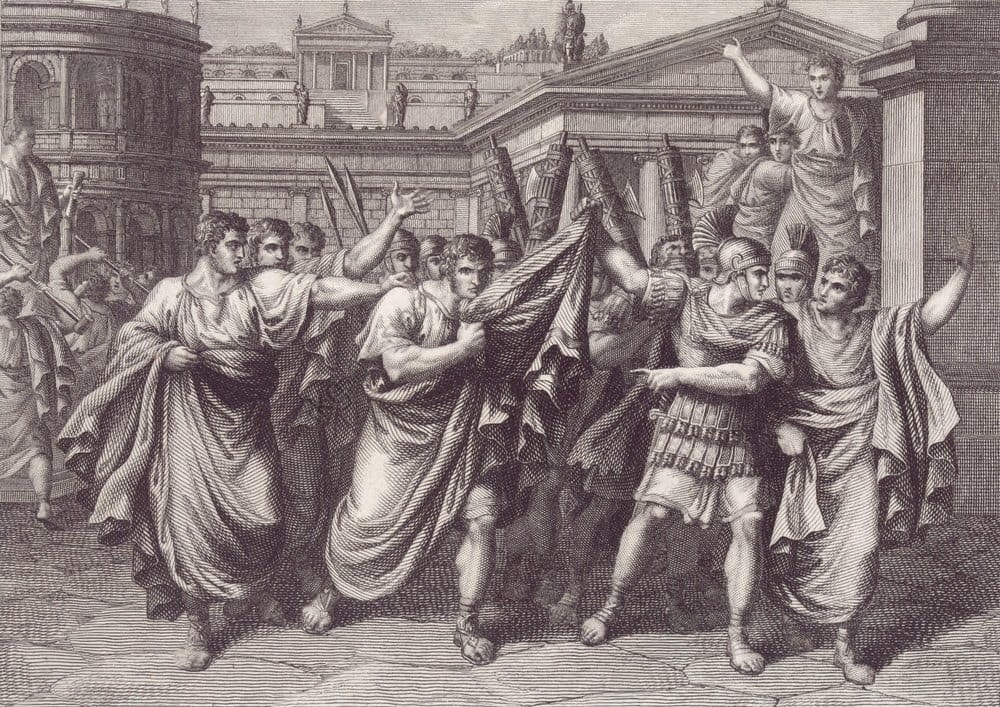
Okay, two weeks ago I promised some Daughter of Scorpions-adjacent content, and I’ve been threatening a Sejanus entry for years, but the day has finally arrived! We’re going to talk about one of the most interesting people in the early Roman Imperial era—interesting in that, unlike most of the other contemporary historical figures around him, Sejanus is somebody with pretty much universally bad press. Painted by his peers and historians alike as a true villain since his demise, it is only in the last fifty years or so that anyone has really attempted a balanced approach to the historical record in order to actually analyze his life and work beyond his meteoric rise and spectacular downfall.
And the portrait that has emerged from that scholarship doesn’t rehabilitate him, exactly, but is at least gives a two-dimensional monster some three-dimensional perspective. He was a guy who did a lot of shady things, but many of those things were ostensibly done as a servant of the emperor, so it’s often a matter of whether you think he or Tiberius is the real mover in any scenario. Which is appropriate as Sejanus moves in my God’s Wife series from smirking mini-boss in Children of Actium to main antagonist in Daughter of Scorpions—since my aim with the Big Bads in the series is always to have nuanced opponents to my lead girls. So let’s see what we can dig up about the first in a very long line of treacherous Imperial Roman lackeys!
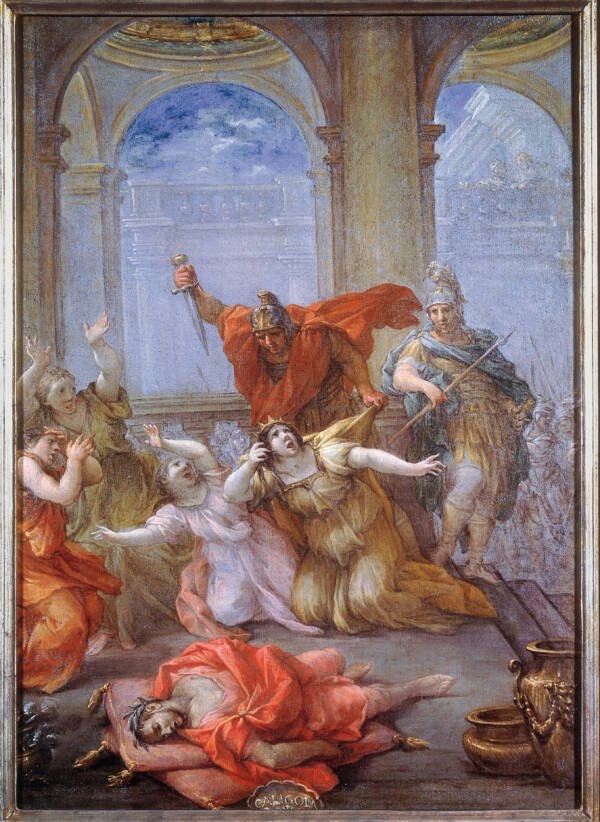
[The very first Captain of the Praetorian Guard to turn(?) traitor too!]
Lucius Aelius Sejanus is generally thought to have been born around 20 BCE in Volsinii, a town in Etruria, the ancient territory of the Etruscans (modern day Bolsena, Italy). As his cognomen attests, Sejanus was a member of the Seii gens, a plebeian family that risen to equestrian (eques) rank by the time of the late Republic, where the gens suddenly bursts onto the scene and is seemingly everywhere. A Marcus Seius is a friend of Cicero, and a Quintus Seius Postumus was thought to have been poisoned by our old friend and ne’er do well, Clodius Pulcher, because he wouldn’t sell Pulcher his house. Another Marcus Seius was a friend of Caesar assassination Decimus Brutus, and yet another was harangued as a corrupt partisan of Mark Antony’s in Cicero’s Philippics. And—my absolute favorite—2nd century grammarian Aulus Gellius reports in his Noctes Atticae that a Gnaeus Seius owned an infamously wonderful, cursed horse, the equus Seianus (Horse of Seianus), that was like a equine Hope Diamond that brought doom to whoever owned it:
“Gavius Bassus in his Commentaries, and Julius Modestus in the second book of his Miscellaneous Questions, tell the history of the horse of Seius, a tale wonderful and worthy of record. They say that there was a clerk called Gnaeus Seius, and that he had a horse foaled at Argos, in the land of Greece, about which there was a persistent tradition that it was sprung from the breed of horses that had belonged to the Thracian Diomedes, those which Hercules, after slaying Diomedes, had taken from Thrace to Argos. They say that this horse was of extraordinary size, with a lofty neck, bay in colour, with a thick, glossy mane, and that it was far superior to all horses in other points of excellence; but that same horse, they go on to say, was of such a fate or fortune, that whoever owned and possessed it came to utter ruin, as well as his whole house, his family and all his possessions. Thus, to begin with, that Gnaeus Seius who owned him was condemned and suffered a cruel death at the hands of Marcus Antonius, afterwards one of the triumvirs for setting the State in order. At that same time Cornelius Dolabella, the consul, on his way to Syria, attracted by the renown of this horse, turned aside to Argos, was fired with a desire to own the animal, and bought it for a hundred thousand sesterces; but Dolabella in his turn was besieged in Syria during the civil war, and slain. And soon afterwards Gaius Cassius, who had besieged Dolabella, carried off this same horse, which had been Dolabella’s. It is notorious too that this Cassius, after his party had been vanquished and his army routed, met a wretched end. Then later, after the death of Cassius, Antonius, who had defeated him, sought for this famous horse of Cassius, and after getting possession of it was himself afterwards defeated and deserted in his turn, and died an ignominious death. Hence the proverb, applied to unfortunate men, arose and is current: ‘That man has the horse of Seius.’” (Noctes Atticae, III.ix)

[Just for clarification to those who might not know: the letters I and J weren’t as distinct in ancient Latin as they would become after later influences from other languages like Middle High German and French. While later historians, working in these later language iterations would make distinctions between the IPA sounds of /i/, /iː/, and /j/, the Romans didn’t, really. So, our Julius Caesar was more likely to be “Iulius” to his contemporaries; and likewise, our Sejanus was “Seianus” to the Rome he ruled. The upshot of all of this is that it is somewhat arbitrary and based in scholarly tradition as to whether a historical person’s name is spelled with an I or a J. Much like the tradition of calling Marcus Antonius “Mark Antony.” Because most of the people familiar with Sejanus know him by that iteration, I’m using the J.]
But cursed horses aside, the real beginning of the Seii’s rise is with Sejanus’ father, Lucius Seius Strabo (46 BCE—after 16 CE). Strabo’s own father, Marcus (unclear if he’s any of the preceding Marcuses), had set him up for success by marrying a Terentia; the Terentii being a patrician senatorial family in the social strata above the equite Seii (probably hinting that the Seii had money at this point, to mitigate Terentia “marrying down”). But Strabo’s mother wasn’t just any Terentia—she was the sister of respected senator and nominated consul (he died before taking office) Aulus Terentius Varro Murena, and the sister of the Terentia who was married to Augustus’ trusted advisor, Maecenas (and who was the princeps’ mistress). This means that she was also the sister of failed Augustan coup leader, Lucius Licinius Varro Murena, but she could at least point out that he was only an adopted brother.

[All my God’s Wife readers having a Daughter of Eagles ptsd flashback…]
Strabo himself would contract his first marriage to a daughter of Quintus Aelius Tubero, forming a connection to the equally patrician Aelii. Despite what you might think from his nomen, Sejanus was not the son of this wife, likely being either the son of Strabo’s second or third wife, Cosconia Gallita or Junia Blaesa. Sejanus would get his Aelius later when he was adopted by an eques cousin of his late stepmother’s family, thought to be Aelius Gallus, the second praefect of Roman Egypt.

[His praefecture did not go well. But at least he didn’t have to commit an honor suicide like his predecessor, Gaius Cornelius Gallus…]
Having secured some upwardly-mobile marital alliances, the next stepping stone for Strabo was to make himself useful to the nascent imperial government, which he did through nearly twenty years of reliable service to Augustus. The princeps would appoint him as praefect of his elite personal soldiers, the Praetorian Guard when the division was created in 2 BCE. While possibly not the Praetorian’s first praefect of record, Strabo would be the first to serve a term of any established longevity, almost seventeen years. And he likely would have continued in the position past this point, had not Augustus’ successor, Tiberius, appointed him to the highest-ranking post available to an equite, praefect of Egypt, in 15 CE. This was probably in part a reward for nearly two decades of loyalty to the principate, but also because Tiberius already had an ally ready to take Strabo’s place as Praetorian praefect: his son, Sejanus.
Considering how deeply entwined the partnership between Sejanus and Tiberius would become, we don’t really know how Sejanus first fell into the future emperor’s orbit. Sejanus’ childhood and early adolescence are lost to us, but Tacitus says that he was in Gaius Caesar’s entourage when Augustus’ grandson was on his eastern military tour in 1 BCE (Annals, IV.1). As Gaius and Sejanus would have been about the same age (20 or so), this seems like it would have been an ideal first assignment for the son of the Praetorian praefect. Presuming Tacitus is correct—and he’s generally one of the more reliable Roman historians on basic facts—it seems probable that if they weren’t previously acquainted, Sejanus and Tiberius might have met when Gaius’ party stopped in Rhodes to call on (read: argue with) Tiberius during his self-imposed exile on the island. Gaius and Tiberius might have been at each other’s throats, but that’s doesn’t necessarily mean that Sejanus, a man whose career would balance on his political astuteness, wouldn’t have taken the opportunity to make quiet inroads with the princeps’ ostracized stepson. Just in case.

[My readers know that I position Sejanus as Tiberius’ spy in Gaius’ circle before this, but that’s me writing in service of my story, not necessarily the historical record.]
If this is a backup plan Sejanus made, it worked out wonderfully for him. Because within three years, Gaius was dead, and Tiberius was the heir of last resort for Augustus. It would make sense if Sejanus, like fellow Tiberian partisan Velleius Paterculus, was simply transferred from the entourage of the last heir to the next, and was with Tiberius as he spent the next several years putting down revolts in Pannonia and Germania. We do know that by the time Augustus died in 14 CE, Sejanus was being positioned to assume his father Strabo’s place as Praetorian praefect and was serving as a sort of co-praefect when Strabo was nominated for his praefecture in Egypt. And whatever relationship Tiberius had with Strabo ended up not mattering, as Strabo was dead within a year of going to Egypt, leaving his son in possession of the most elite soldiers in the empire and the ear of the emperor they intimately attended.
Tiberius’ own legacy is deeply tarnished by the historical verdict rendered particularly on the later years of his reign, but aside from that, he tends to strike one in sources as a quiet, lonely person whose tendencies in this regard were only exacerbated by the events of his life. Never managing to be personally close to Augustus as the nephew (Marcus Marcellus) or grandson (Gaius Caesar) who came before him, disastrously mismatched in his unwanted marriage to Augustus’ daughter, Julia, and with his only consistent political ally being his mother, Tiberius always comes off as a man short on real friends, even before the supposed depravities of his sunset years. And I can’t help but feel that this is what Sejanus might have brought to the table for the emperor. Unlike other of Tiberius’ few friends of record, say, our dear patrician Lucius Calpurnius Piso, Sejanus was not only a friend, but his position as both Praetorian praefect and an eques could reassure the jumpy, class-conscious Tiberius that Sejanus couldn’t usurp him and could therefore be trusted implicitly. I also think this assumption is the key to both Sejanus’ subsequent actions and the reason Tiberius will eventually turn on him.
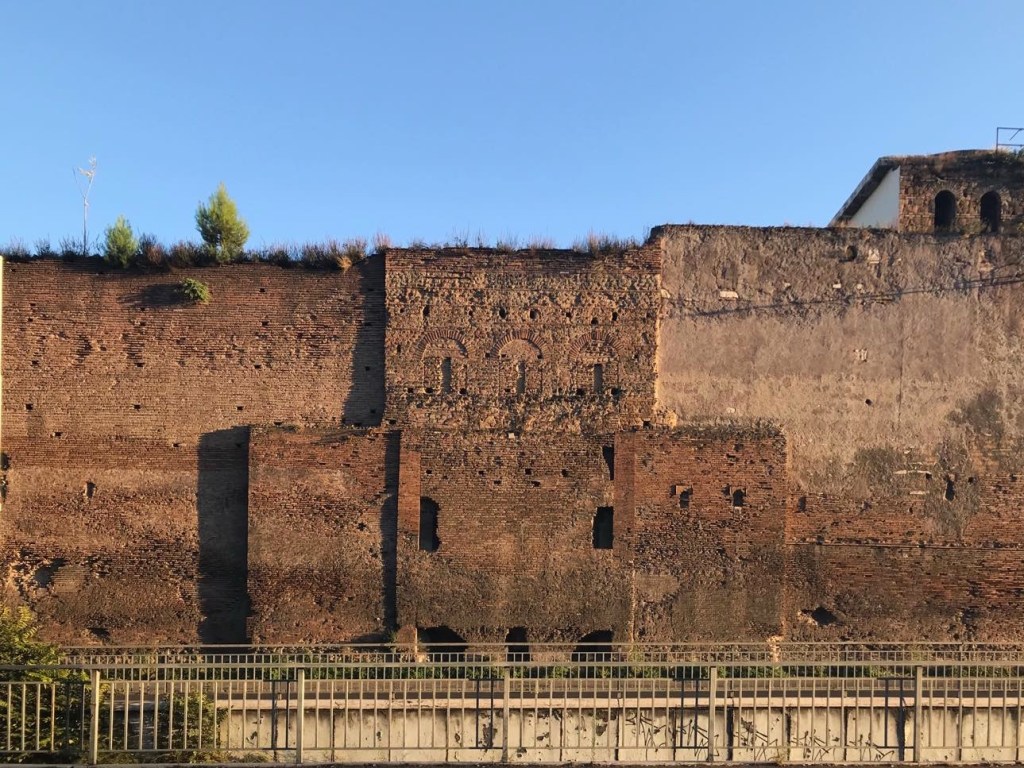
With the support of Tiberius, Sejanus began his term as Praetorian praefect with a reorganization of the Guard and consolidating their position within the city of Rome. The number of cohorts was raised from nine to twelve, with a cohort always present at the imperial palace (in this era, the Domus Tiberi on the Palatine Hill). Having continual contact with everything happening in Tiberius’ house gave both the Guard and Sejanus himself enormous influence both with the emperor and with all of the people attempting to wield power in the second principate, as his soldiers literally controlled access to Tiberius. In 23 CE, Sejanus also received permission to build a new barracks for the Guard, the Castra Praetoria, to house his expanded units. While technically outside the boundaries of the city, as required by earlier Roman law, the Castra Praetoria hugs the outer northeast wall of the Servian Wall on the Viminal Hill, and indeed, by the time the emperor Aurelian built the expanded walls of the city in the 3rd century CE, the Castra Praetoria would be close enough to growing city boundaries to taken inside the new wall.
While probably not built strong enough to resist an invading army in a long term siege, the Castra Praetoria was noticeably constructed to probably be able to withstand any threat from the civilian population of the city, and signaled the Praetorians’ growing power both within the army and the imperial hierarchy. The Castra was also built large enough to not only house the Guard, but also the cohorts urbanae—essentially, Rome’s city watch and proto-police force. Designed by Augustus to be a counterbalance force to the Praetorians within the city, by placing them physically in the same location as the Praetorians, Tiberius basically gave Sejanus power over both groups and upset that balance. The urbanae’s praefect at this time was Lucius Calpurnius, so it wasn’t as if Tiberius was trying to take power away from a political enemy, but it is a good indication of Sejanus’ rising status within the emperor’s government that Tiberius was willing to potentially snub a lifelong friend to give more control to Sejanus.

Now that he was all but building his own personal army, Sejanus had to contend with all of the other people around Tiberius who might object to an upstart eques becoming the emperor’s right-hand man. This is where the evidence starts to get murky as to how much Sejanus might have done to actively consolidate his position and how much he was perhaps the beneficiary of lucky timing. In this, he shares a historical place with people like Livia Drusilla and Agrippina the Younger—where every convenient death is seen as proof of treachery. While he seems to have been able to neutralize the affable Lucius Calpurnius with little problem, Sejanus’ real competition for power under Tiberius were the younger members of the imperial family. First and foremost being Tiberius’ only biological son, Drusus the Younger (Drusius in my books), who seems to have had nebulous beef with Sejanus going back to when they were both trying to quell the Illyrian revolt in 15 CE. Sejanus was helped along a bit in any plan to oust Drusus by the fact that the only person possibly less popular in Rome than the dour Tiberius was his drunken rage-monster son. Things reached a pitch in 23 CE when Drusus punched Sejanus in public, and according to Tacitus, this is what sealed Drusus’ fate with the Praetorian praefect (Annals, IV.3). Again, according to what was later recorded, Sejanus teamed up with Drusus’ wife and cousin, Livilla (ironically Gaius Caesar’s widow), and the pair of them launched on a Bonnie and Clyde love affair that would result in several murders and their own demises, but for a start, they allegedly poisoned Drusus before the year was out.
Modern scholarship has called into question Livilla’s culpability in Sejanus’ supposed crimes, mostly by pointing out that the evidence of her involvement comes from a revenge-motivated, alleged accusation by Gavia Apicata, the wife Sejanus threw over for a shot at marrying Livilla after Drusus’ death, and asserting that it made no sense for Livilla to trade a surefire heir in Drusus for the much-less-certain star of Sejanus. But I think this potentially falls into the trap of assuming everyone in history is a rational actor. It also assumes that Livilla was loyal to her husband and the rest of her family, which is a pretty big assumption in a family as fractious as the Julio-Claudians. Drusus, by all accounts, sounds like he was a crappy husband, and Sejanus’ acknowledged charm suggests that maybe she just liked Sejanus better. In my books, I paint Livilla as intensely ambitious, and perhaps that shared trait made them a good fit for one another. Considering that Tacitus and other historians will accuse her of not only poisoning her husband, but assisting Sejanus in seducing her daughter to do the same to her husband, if true, seems to show a woman who cared most about her personal power than any blood tie. As Drusus’ empress, she would be on equal footing with him—but as Sejanus’ empress, she, as the grand-niece of Augustus, would potentially be his golden ticket and the agent of his legitimacy. Imperial women will have killed for a lot less in her world. And at the end of the day, when Tiberius ordered her mother, Antonia Minor (my Anni), to starve her to death for her crimes, Antonia didn’t kick up a fuss. That’s pretty damn cold if Anni thought the evidence was anything but conclusive.
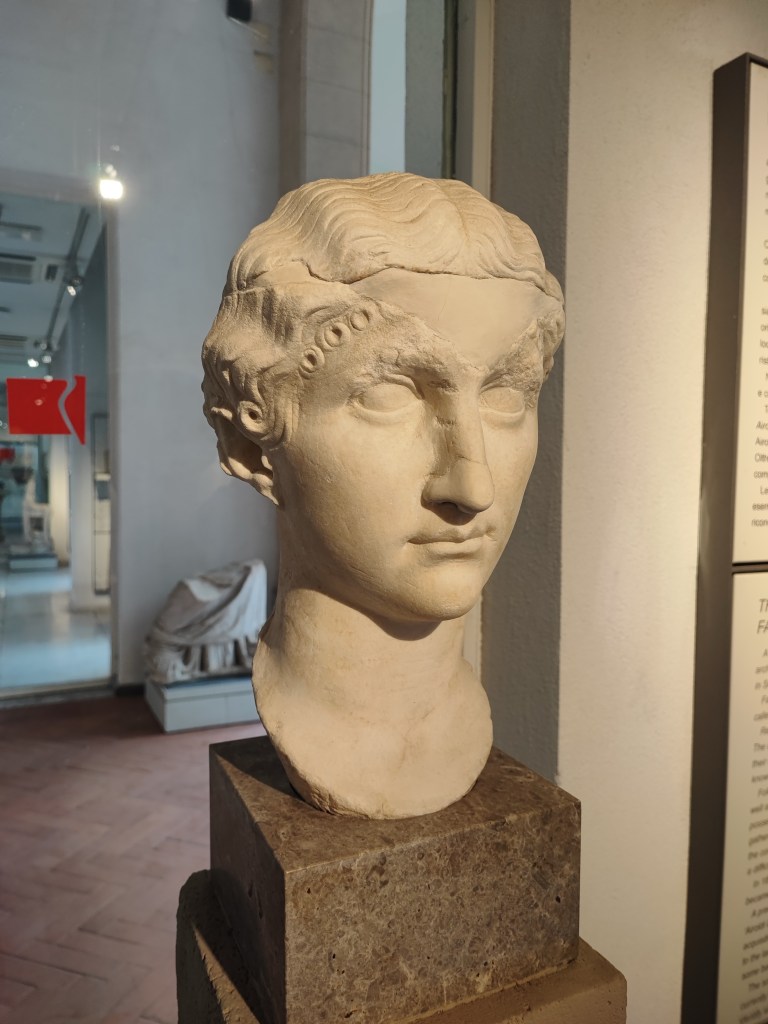
Once Drusus was out of the way, Sejanus tried his luck by asking the bereaved Tiberius for Livilla’s hand in 25 CE. But this seems to have tripped a rare early alarm in Tiberius’ head about how much power Sejanus was accumulating, and the emperor denied the request. Sejanus was not a man to stay down, though, and he quickly pivoted to the next obstacle in his way: the family of Tiberius’ nephew and adopted son, Germanicus. The insanely popular Germanicus had been dead under equally murky circumstances since 19 CE, and Tiberius himself had been accused by the empire of involvement with that. Though if that was true, it’s hard to imagine Sejanus wouldn’t have also been involved; he had at least been stoking Tiberius’ paranoia about Germanicus trying to usurp the principate prior to his death. At any rate, a dead Germanicus was still a problem for Sejanus, because Germanicus’ widow was his equally popular cousin Agrippina the Elder (Gaius Caesar’s sister) and her three sons who all stood in line to Tiberius’ throne. The youngest, the future Caligula, wasn’t a “now” problem, but the two elder boys, Nero (not that one) and (another) Drusus had to be disinherited if Sejanus had any hope of unseating them from their place next to Tiberius. This he apparently did through a long gossip campaign to Tiberius against Agrippina and them, convincing the increasingly isolated Tiberius that they, too, wanted to depose him.
This was likely a successful tactic because it wasn’t entirely untrue: Agrippina, like her cousin, Livilla, was intensely proud of her lineage and knew that she had a direct blood connection from Augustus that Tiberius didn’t have. She also had the quick temper of her exiled older sister Julilla, and her mother, Julia Augusti, and was not afraid to confront Tiberius to his face—something that the emperor, who abhorred outspoken women, loathed about her. So it was easy for Sejanus to concoct situations where the haughty Agrippina rubbed Tiberius the wrong way and seemingly confirmed the things Sejanus said about her.

[Sejanus was also indirectly helped by the fact that the real outspoken woman in Tiberius’ life, his mother Livia Drusilla (who, yes, was still alive!) didn’t really like Agrippina, either, and did little to intervene on her behalf beyond probably making Sejanus wary of killing off her biological grandsons too quickly. (Joint marble portraits of Livia and Tiberius)]
While Agrippina worked to hang herself in the emperor’s eyes, Sejanus appears to have taken a divide-and-conquer approach to Nero and Drusus. He convinced each brother that the other was scheming against him, and as a result both appeared to be actively challenging the position of Tiberius. This was amplified by the fact that by 26 CE, Sejanus had maneuvered the paranoid emperor out of the city, and all reports of what was supposedly said and done against him came from the mouth of Sejanus or his spy network, the feared speculatores. Tiberius would hole up on the island of Capri, off the Neapolitan coast, where just as many depraved rumors about what he was doing there with his time would be swapped in Rome as Sejanus would spin the other way. And with Tiberius effectively MIA, Agrippina and her older sons were put in separate house arrests, and Sejanus took control of his master’s city.
For five years, Sejanus was the ostensible emperor as far as the city of Rome was concerned. While generally careful to present himself as still serving under the absent Tiberius, that was really a matter of semantics as the man who controlled the military resources of the city rooted out supposed traitors to the emperor in the courts and consolidated his personal network of political clients. Like Tiberius, his birthday was a public holiday and multiple statues of in his likeness dotted Rome. And when Tiberius’ mother Livia finally died in 29 CE, there wasn’t anyone with even a shadow of authority to stop him for Tiberius. In 31 he would be elected consul, the most powerful joint position under the emperor, but as the other consul was Tiberius, he was effectively the only consul. Because of this honor, approved by the emperor, and the rumor that Sejanus would be given tribunician authority in the city—the last bit of political power he didn’t already have—many thought that Tiberius was going to reverse his decision about the Sejanus/Livilla match and possibly adopt his protégé as his heir. Even if Sejanus wasn’t arrogant enough to think that the adoption was a lock, he was likely positioning himself to be appointed to a regent position over Livilla’s remaining son, Gemellus, as Tiberius’ heir, or worst case scenario, over Gemellus and Caligula as underage co-emperors to divide their authority.
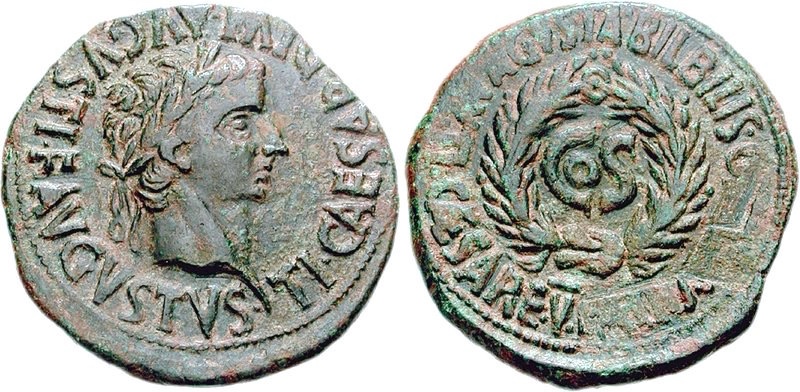
But none of this happened, and on October 18, 31 CE, during the Senate session that was expected to announce Sejanus’ tribunician authority, a letter from the emperor was read off instead denouncing Sejanus as a traitor and demanding his arrest. The Senate promptly complied and by the end of the day, Sejanus had been arrested, executed by strangulation, and his body thrown down the ignominious Scalae Gemoniae, the Gemonian Stairs, by his own Praetorian Guard—the sign of a traitor’s death. In the blood-soaked aftermath, Tiberius would authorize a purge of Sejanus’ perceived allies and family, including his ex-wife Apicata and their three children, most horrifically his preteen daughter Junilla, who couldn’t be executed under Roman law as a virgin, so allegedly she was raped first, then killed. And as mentioned, when she was supposedly implicated in Sejanus’ abuses, Livilla was turned over to her mother’s custody to be starved to death.
We don’t know what finally turned Tiberius against his most trusted friend and ally, but if nothing else, the emperor—who was not a stupid man—probably at last saw how much he had lost to his ambitious protégé. It’s likely that Agrippina’s pride irked Tiberius so much in part because it was definitely a mirror of his own, and the proud son of the aristocratic Claudii realized he’d effectively given up his honored place to a pleb eques. But the most tragic thing about Sejanus’ betrayal of Tiberius was that not even his death could undo the wheels he’d set in motion. Stabbed in the back by his most trusted advisor, Tiberius would never trust anyone again, and the last six years of his reign would be a fear-fueled bloodbath of executions and punishments that would change his legacy into that of tyrannical ogre whose own death would be greeted as a liberation. Agrippina and her sons would never be released from their imprisonment, with Nero and his mother being assassinated in exile, and Drusus starved to death in the city. Caligula would barely escape, and if the later historians are right that the young future emperor murdered the ill Tiberius with the help of his own Praetorian praefect, Naevius Macro, it might have been to avoid being executed by the half-mad Tiberius himself.

In his reexamination of the emperor’s reign, Tiberius and His Age, the classicist Edward Champlain’s chapter on Sejanus titles the praefect “Seianus Augustus” (see, I told you it’s a personal preference thing with i/j in the names), acknowledging the power that he wielded as crypto-emperor of Rome. While some may find that grandiose, it does ultimately feel appropriate. Just as Sejanus marks the boundary between the relatively measured rule of Tiberius’ early principate and mad king of his later reign, he also seems to be the turn that will cumulate in the excesses of both the boy who barely escaped him, Caligula, and the one yet to be born, Nero. Much of the monstrosities of Nero have been pinned on his ruthless mother, Agrippina the Younger, daughter to the elder Agrippina. But if the scars of Sejanus’ quasi-principate mark her brother Caligula, they mark the younger Agrippina, too—who learned at a very young age that the only safety was in power and the knives of treachery can come from anywhere. I don’t think it’s too much of an exaggeration to say that, whether he intended to or not, that Sejanus became the die of which the future of the remaining Julio-Claudian emperors was cast in. Sejanus Augustus, indeed.


 Sarah Holz
Leave a comment