
A little over a month ago, one of the classicists I semi-follow on the internet’s premier hellscape made the following observation in response to someone else’s tweet about creating magical systems in fantasy literature:

Certainly, as a general fantasy non-enthusiast, I was inclined to agree. I don’t really care if a fantasy story’s magical system makes logical sense—I’m willing to suspend disbelief and just go with it. And usually the more a story tries to fashion ironclad rules about a fantasy element, the more it tends to draw attention to the magical elements, making suspension of disbelief harder to do, in my opinion.
But I also recognize I’m coming from the outside. As I said, I don’t really see myself as a fan of orthodox fantasy literature. Loving books like The Lord of the Rings is more an exception than the rule for me, and even that I have an internally logical reason for, in that, what draws me into LotR is its similarities to Norse sagas and European folklore as opposed to its strict fantasy elements. And that’s really the rub of the matter: I’m usually bored by D&D wizard and dragon books, but contemporary literature refuses to have a separate category for folklore/mythology stories, which are typically umbrella-ed under “fantasy,” even though they and modern fantasy don’t often have much in common thematically. And that’s how a non-fantasy reader ends up writing what is commercially held as fantasy.

[Embarrassing!]
I remember how taken aback I was the first time my editor referred to my God’s Wife books as “historical fantasy” rather than simply historical fiction. Not because she was wrong, but because the thought that I was essentially a fantasy writer was such an alien idea to me.
[Almost as alien as becoming a writer of primarily Roman history…]
But in some ways this might be a secret strength. Because I’m not an invested fantasy reader, I’ve never concerned myself with following the rules or trends in contemporary fantasy that the tweet above posits might be strangling the genre. I have, in fact, as Bret suggests, created a magical system in my books that is, I believe, both consistent and more importantly, thematically relevant instead; and I thought that today I’d spend a little time breaking it down for you all. Hopefully so you can see just as a reader the nuts and bolts of an aspect of the God’s Wife books that makes them interesting and unique, but if you’re working on writing as a craft, also how you can add non-conventional elements to a work without pulling a reader out of your story. In short, going beyond a simple “what if X Historical Period had dragons?” and instead investigating how you can still add such an ungrounded element in an otherwise grounded historical story while not entirely destroying the grounded parts in the process.
Firstly, let me highlight the “fantasy” elements of the God’s Wife books so those of you who are unfamiliar understand what we’re dealing with. My books are strictly historical fiction novels about the fall of Ptolemaic Egypt and the rise of the Augustan Roman Empire, except that 1) the Egyptian gods are real and can (limitedly) interact with our world, 2) the Romans deifying dead mortals isn’t just a political pose and has actual consequences, 3) the dead aren’t completely separated from the living and like the gods can influence and intervene in the “real world,” 4) Ancient Egyptian concepts of magic are real, and 5) non-Egyptian gods and immortal creatures may also exist and impact people outside of their “home” culture (specifically subcontinental Indian folklore).

All of the above is accepted to varying degrees by the human protagonists, something that changes and evolves as the books go along. Part of the reason I didn’t feel like this was “fantasy” as the author was because almost all of this wouldn’t have been seen as fantasy by my historical characters. What modern literature deems fantastical elements would have been treated as much more mundane, or at least of this world, in the period I’m writing about. By the turn of the first millennium, the nature of the ancient gods and how much they could and did intervene in human affairs was seriously debated, but it would not have been a wacky opinion to hold a positive position on the matter. The gods are real in my books in part because my characters would believe they were real—not because the reader may or not believe they are real.
This a position rarely afforded ancient people even by modern scholarship (though the tide is finally starting to turn on that), that ancient people might have sincerely held their various religious beliefs. A lot of this comes from the (especially Christian) narrative that Christianity, and to a lesser extent, Islam, triumphed because they offered their adherents something more substantial than the “empty,” “dead” ancient religions. There may be truth to this, but to suggest that it was the only factor is disingenuous, particularly considering that it would take a thousand more years to effectively wipe out paganism in the European/Mediterranean west, and that was just as often achieved by simply killing pagans as it was by converting them.
So, my Egyptian characters believe that the Egyptian gods are real, though most of my Roman characters do not—again a historically consistent stance. But while I, as they would themselves, often portray the Romans as less mystical than the Egyptians, their rationality should not be confused with our postmodern rationality, no matter what all of those “traditional western values” folks with the Marcus Aurelius profile pics on social media would have you believe. Because if you’re using modern logic, the idea of the Roman imperial cult makes absolutely no sense. Only pure political cynicism and what would appear to be a huge cultural leap could then explain Romans claiming that Julius Caesar, Augustus, etc, etc had become divine beings. The imperial cult only makes sense if you also acknowledge that, for all their supposed “modern” rationality, the Romans had a large and vibrant cult of the dead on par with many, many other traditional cultures, including the Egyptians.
Di manes were the private, semi-deified ancestral dead and were in fact worshiped by Roman families alongside their household lares, who were, generally speaking, more of low-level immortal spirits (though the line between the two is not a hard and fast one). The manes were taken care of and memorialized by their descendants, and in return, they could be called upon to protect the family, both in intangible ways and straight up creating curses, influencing court cases, shielding crops, you name it. The imperial cult makes a hell of a lot more cultural sense when you see it as simply the opening up of the private Julii family manes to the access of the whole of Rome rather than a grand religious departure. Cicero was a loud critic of the deification of Julius Caesar, not because he didn’t believe that the dead Caesar had powers in the afterlife or couldn’t be deified, but because he didn’t think it was appropriate to place a family god alongside the state gods. It’s a semantics argument, not a doctrinal one.
Beyond the Egyptian gods and the defied Caesars, my books tacitly acknowledge the existence of other pantheons, but they do not have active roles in my stories. My Egyptian gods accept the existence of other gods, but as they are so old, they are generally dismissive of them as less powerful/consequential, especially when dealing with the Roman imperial cult. Girah speaks of some of the Hindu gods, acknowledging that, as a rakshasa, he is subordinate to them in terms of power and status, but they do not otherwise enter into the action, in part because they don’t have much contact with the ancient Mediterranean. Girah himself is only pulled into that orbit by a curse that operates wholly within the logic of Hindu folklore, a logic I only use in its native setting and not in Egypt or Rome, which would have their own mythological rules.

[One could argue I’m going to bend that idea a bit in the next book, but that would be okay within my story mechanics for reasons we’ll get into in a minute…]
There’s also heka (h_k3), the concept of magic in Egyptian thought that I fully incorporate as a factual thing within these books. I did a whole entry on heka several years ago, but in brief, this can be straight up using spells and concoctions as one would generally imagine, but heka also can mean unlocking one’s full self to influence the world around you, or using the ka power of the gods to do the same. Again, this is a supernatural element, but one that would have been seen as commonplace by ancient people.
Lastly, aside from the concept that the ancient dead have an active and communicable afterlife, another supernatural element in these books that I pull directly from ancient belief is how the gods and the dead can communicate with the world of the living (generally) only in dreams. This was typically how both Egyptians and Romans would have expected these encounters to happen, so that is how they go down in my books. Theoretically dream communication is open to anyone, though prophetic dreams would have been more typically facilitated by a priest(ess) at a temple. Arguably I skirt around this requirement, such as it is, by making dream communication the purview of my protagonists who are recognized as god’s wives, and are therefore technically priestesses under the Egyptian understanding of the title. And all this together produces a “fantastic” setting that doesn’t feel like it’s fighting with your non-fantastical elements, because they have organic roots in the culture(s) you’re writing about.
Okay, so we’ve constructed what I think we can safely describe as a thematically relevant system of “magic,” or fantastical elements in our otherwise grounded historical fiction story. Professor Devereaux believes consistency is the other most important factor in a fantasy magical system, and I would agree—with a minor caveat. I think by grounding my fantasy magical system within systemic ancient belief, that gives me the needed consistency, but, more interestingly for a story worth the attention to read, a starting place to begin to bend the rules. Which is really the fun part of writing, after all.

The way I’d describe the fantasy in the God’s Wife books is that the elements are consistent, but the aperture of their scope opens a little more with each book. In the second book, Daughter of Eagles, Arsinoë (the protagonist of The God’s Wife, the first book) tells her daughter Aetia that the events of the first story have fundamentally altered the world and there may be no way to go back to the way things were before, even if they wanted to. This obviously applies to the grounded political realities of the characters vis à vis the fall of the Ptolemies in Egypt and the rise of Rome in their place, but also the nature of how the immortal world interacts with the mortal one.
In The God’s Wife, we meet an Egypt that has been under culturally Greek Ptolemaic rule for three hundred years, where the old Egyptian gods and ways are present, but have much less direct power than they had at the height of native Egyptian civilization. All forms of heka are possible, but only a few can wield them: Cleopatra uses self heka, where through rituals and potions she can manipulate others through her personal powers, and her younger sister Arsinoë uses god heka to call on the power of the Egyptian pantheon. Though less powerful than they once were, the gods can still appear within dreams, but they cannot cross over the boundary between their realm and ours (with the implication that they might have had the ability to do this long ago). Incidentally, this serves both a thematic purpose—the passage of the ages away from Egyptian dominance—and a structural purpose, in that it limits the ability of a group of ostensibly omnipotent deities to deus ex machina every problem in the plot. You still need conflict in a story, after all.
All of this goes doubly for the story’s main god character, Set, whose influence has greatly diminished in a world that only remembers him as the murderer of his brother Osiris. But he is a war god, and the coming of both the Ptolemaic civil war and the conquest by Rome touch on his purview. Set tries to save Egypt (and arguably himself) by coming into the dreams of Arsinoë, who is reachable both as a half-Egyptian and as a younger Ptolemaic princess who needs protection from her fratricidal family. In this book, the magical/mythological is basically confined within Arsinoë’s dreams, and this in turn gives them a nebulous rationality. Are the gods and the things she experiences in the Dream World “real”? Or are they a figment of her imagination, a trace of the fabled Ptolemy madness? In The God’s Wife, it doesn’t matter because Arsinoë treats those experiences as real and makes real world decisions based on them. However, Set is also the god of chaos, and his salvation through Arsinoë, if you can call it that, pierces the veil between the realms of gods and men, and the consequences of that are the increasing inseparability of the two as the books progress. The bigger the rip in the veil becomes, the less you can chalk up events to one Ptolemy girl’s overactive imagination.
In Daughter of Eagles, we have the return of the gods within the Dream World, this time through Aetia, but we introduce the presence of the dead into that world, who will be her primary contacts in that space, as the gods were Arsinoë’s. We also have the looming presence of Julius Caesar as not the mortal man he was in GW, but as at least potentially a new manes god fashioned by the Romans—a bridge between the gods (Arsinoë) and the dead (Aetia). On top of all this, Aetia is a traveler and spends time in Greek-settled India, where she has contact with an entirely different set of cultural traditions, which are bound to her through divine rishi magic in the form of Girah, a thoroughly Indian creature: the ogre-demon rakshasa.
As a different cultural entity, Girah’s magical rules operate differently than anything that rules the Egyptian gods. Unlike them, he not only exists in the real world, but like a good monster, through the bond that ties him and Aetia together, his consciousness can enter hers in the Dream World. He is also a shapeshifter, but again the key is to give him believable limitations to keep him from fixing every plot problem, too. For example, he can turn into creatures that fly, but he doesn’t have supernatural speed; he can only fly as fast as a normal bird. He is an almost perfect vocal mimic, but his grasp of languages is not as good—his shoddy Latin is a running gag. He is extremely powerful, but Aetia can control his actions; disobeying her causes him physical pain, and she isn’t always right in telling him to stand down. Additionally, as a rakshasa, he is hierarchically lower than not only the Hindu gods, but also the Egyptian gods, who in spite of his powers, generally treat him contemptuously.
Then in Children of Actium, Aetia’s ties to the dead transcend the Dream World into voices she can hear while awake, and the eternal question is how much is her using them and how much is them using her. As Arsinoë’s time ends, her more personal connection with the Egyptian gods fades out of the real world too, with only Aetia’s much less sure connection with them to replace it, but she is divided by her Roman loyalties to the divine Julius Caesar, who is really only as powerful as his high priestess (Aetia) and his adopted son (Augustus) can make him. The powers of the new Julian gods being in flux. The tear between worlds allows Aetia to use the more manual heka Cleopatra utilized to share her dreams with her cousin Drusilla to try to find a balance in the accelerated cross-cultural chaos of the early Roman Empire, and Dru is the lynchpin between the broken Ptolemy legacy and the equally fracturing present of the Julii in Rome. The hope is that she can be what neither gods nor men have managed to fix, but the outcomes are uncertain, because it is hard to go back.
And as a preview of where we’re going, in what will be the unintended, but hopefully final book coming out next year, Daughter of Scorpions, anything that Dru has fixed has only opened up different holes in the fantastical fabric as a new Julii god (Augustus)’s old sins follow him into his unexpected divine afterlife. With the help of both the dream-bound Egyptian gods and the realm-walking Girah, he’ll return into the living world to try to right at least a couple of those wrongs alongside the granddaughter he tried to kill, Zosime, whose forgiveness he’ll have to earn if he’s ever going to come into his own as a god.

So, there you have it, the way I’ve tried to breathe some unique ideas into a very old, rather over-tread genre like ancient Egyptian/Roman historical fiction and made it my own. This all started because I just wanted some Egyptian mythology in my story about a forgotten Egyptian princess and it’s turned into *gestures wildly* all of this. You can, of course, just steampunk a time period or decide to add dragons wherever you want, but I think the most successful historical fantasies play into their settings as much as they can and use that as a staging for the ungrounded stuff. One of my absolute favorite historical fantasies (and an extremely popular book overall) is Susanna Clarke’s Jonathan Strange & Mr. Norrell, and I think a lot of its success as a narrative derives from these principles. Clarke doesn’t just add a generic magic to Napoleonic Britain, she crafts a form of magic deeply rooted in Old English folklore and interrogates how such a magic could and would coexist in Jane Austen’s world. The result is something that feels more lived in, and less like a gimmick (like, say, Pride and Prejudice and Zombies).
Unexpected elements like gods and magic are also just a great way to open up your story to an audience who thinks historical fiction is boring/not for them, without necessarily losing the stuff that makes the genre meaningful. Especially if you’re trying to connect your readers to people living so far in the past that their lives feel untouchable. Gods and ways of thinking might change, but historical fantasy can conversely use the supernatural to highlight the mundane similarities in us all.
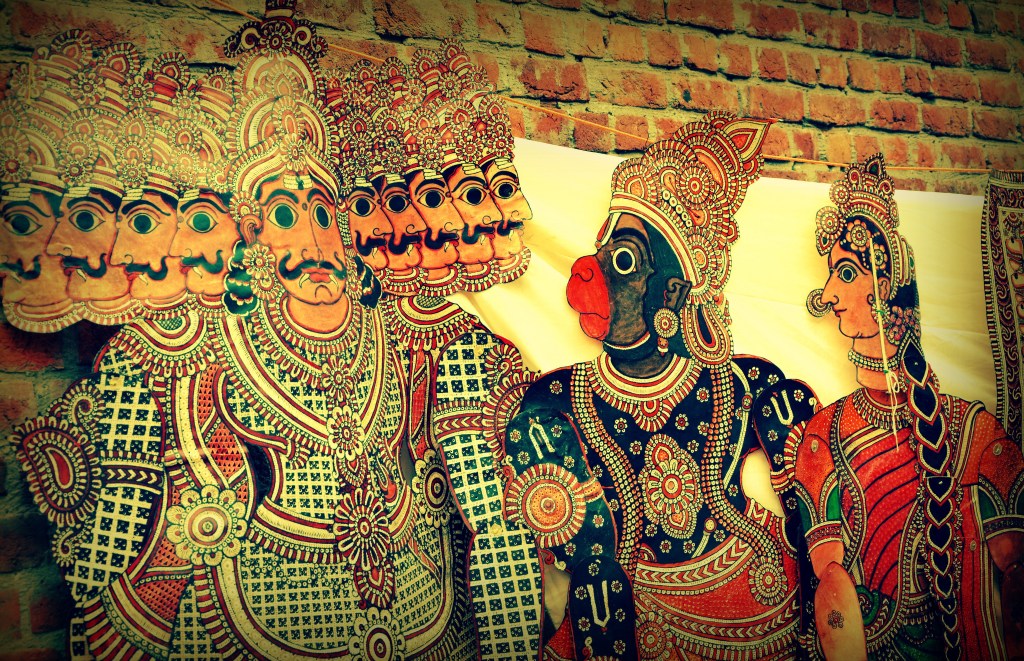
[Your mileage on shapeshifting rakshasas may vary…]


 Sarah Holz
Leave a comment