“The king’s light manner vanished, and an unheard-of look of fear came into his scarred face. ‘I can’t. I—’ He suppressed a small shudder and whispered, ‘I’m afraid that if I ever enter the Lazarus Postern, they’ll never let me out.’” – The Gourd and the Stars, chapter 16

After a few months off, I thought we’d get back into some Gourd and the Stars-adjacent content and talk about one of the most interesting institutions to come out of the High Middle Ages, the Order of Saint Lazarus. Despite being the smallest and least understood of the major medieval Catholic military orders, the little we know about their founding and function gives us a fascinating sociological glimpse into the world of medieval Latin Palestine and how the Crusading east in turn influenced the European world “back home.”
To begin with some background, the medieval religious military orders grew out of a combination of the European cultural climate of the Crusading period and the practical realities of governing the Latin Crusader States following the successful capture of Jerusalem by the First Crusade in 1099 CE. The religio-cultural reaction to the calling of the First Crusade in Europe was profound at all levels of medieval society, but there was a tension within the Catholic Church about allowing members of the monastic community to physically participate either as pilgrims or fighters, since doing so would break both their vows of cloistering and non-violence. The initial position of the Vatican was to forbid monks (and especially nuns) from leaving their communities to join the crusade, but hundreds of monastics did so anyway and were subsequently kicked out of their various orders. But this left Church leadership in the awkward position of denouncing some of their most religious members and denying them the spiritual rewards of crusading that they were passing out to everyone else.

At the same time, once a stable, central government was established in the Holy Land following the conquest, it became rapidly apparent to the first kings of Jerusalem that much of their energy would need to be devoted to defending their new territory from a whole kaleidoscope of factions on their slim borders, including the Abbasid caliphate in Baghdad, the Fatimid caliphate in Cairo, and the Seljuk Turks, among others (for a little more about the Muslim caliphates of this period see this post I did on Salah al-Din). This problem was compounded by the relatively small number of crusaders who stayed behind in Palestine after 1099, particularly among the aristocratic class, by and large the only people who possessed systematic military training.
The early kings of Jerusalem dealt with this problem first by permitting several of their ostensibly vassal lords to establish semi-autonomous principalities within the kingdom to give those barons more leverage in recruiting their own vassal knights and local decision-making in exchange for more responsibility for defending their parts of the kingdom’s borders. This is borne out by the geographical position of Jerusalem’s major principalities: the northern Principality of Antioch (responsible for keeping the Seljuks and Roman Constantinople happy), the County of Tripoli (responsible for the northern coastline against the same), the Principality of Galilee (responsible for the kingdom’s eastern border with the Abbasids), and the king of Jerusalem himself responsible for the southern coastline (as count of Jaffa and Ascalon) and border with the Egyptian Fatimids.

This division of labor with the higher-ranking lords who stayed behind after the First Crusade did ease some of the pressure on the central monarchy, but it didn’t entirely solve the kingdom’s severe lack of manpower. This also didn’t do much to address the problem of general lawlessness and banditry within the kingdom’s borders, the perennial problem of any medieval society during this period. However, unlike most other kingdoms of the time, Jerusalem’s concerns about unsafe internal roads and cities were complicated by the fact that the kingdom’s main source of revenue was, most modernly, the tourist industry. Non-militant pilgrimage to the Christian holy sites in and around Jerusalem was a major income stream for the king, but no one was going to travel dead-ass across the Mediterranean if they were going to be murdered or robbed once they got there. As a result, the kingdom of Jerusalem would spend most of its hundred-year history begging for temporary volunteers from the Continental kingdoms either as individual military escorts for pilgrims or as part of organized crusades to combat these two issues. And it’s likely this external pressure from Outremer, as the kingdom was often called in the west, that helped turn the opinion of authorities in Europe on the suitability of militant religion.
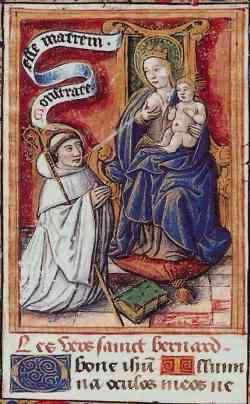
It certainly helped that the kingdom managed to win over the leading theological scholar of the day to advocate for a shift in the official Church position on clerics fighting for Christ. Saint Bernard of Clairvoux (1090-1153 CE) was, as you can perhaps guess by his sainthood, one of the major doctors of the Church of his time; an incisive and respected theologian who shaped much of late 12th century Catholic doctrine. He was the founder of the Cistercian Order and the main impetus (unfortunately for him) behind the Second Crusade. But more importantly for our current discussion, he was the author of the highly influential Liber ad milites templi de laude novae militiae, or Book to the Knights of the Temple, in praise of the new knighthood. This tract was written in support of a fledging idea Bernard had been advocating for during the tumultuous 1110s: a religious order of monks who were also trained military combatants to serve as a permanent army of Christ in the Holy Land, sworn to guard the internal pilgrim roads and fight the infidel on the borders of God’s most righteous kingdom. His vision saw “a new kind of knighthood,” one devoted to God over the vainglories of blood, booty (and booty) in secular knighthood, and he made an argument that bloodshed in defense of the Church wasn’t incompatible with religious vows. As you can see from the title, this was specifically intended as boosting for the Knights Templar, the military order Bernard co-founded in 1119/20.
Once they were established in the Temple of Solomon (al-Aqsa Mosque) in the eastern quarter of Jerusalem (hence their nom de guerre), the Templars, with their attention to military discipline and enthusiastic donor wealth, would rapidly become the premier fighting force of the kingdom and the dominant religious military order—but they weren’t the first one. That honor belongs to the Order of Knights of the Hospital of Saint John of Jerusalem, more popularly known as the Hospitallers, founded under auspices of the powerful Benedictine abbey of Cluny in France with Amalfi merchant backing in 1113 CE. The Hospitallers’ mission grew out of concern for the pilgrim traffic of the kingdom as well, but their original charter focused on the large number of sick pilgrims seeking respite and cures in the Holy Land. Their hospital in the western side of the city adjacent to the Church of the Holy Sepulchre and the palace of the Latin Patriarch of Jerusalem was where pilgrims, sick or well, could stay as a hotel, free of charge, and sick pilgrims received free care from the order’s brothers. Once the Templars arrived in 1120, the Hospitallers militarized and maintained a standing force of warrior monks as well (likely in order to keep up with the Templars, with whom they were in constant competition for resources and political power), but the palliative aspect of their rule continued to be their primary focus.

Perhaps as a response to their increased military activity, in the decade that followed, the Hospitallers appear to have found themselves somewhat overwhelmed by their myriad demands. We believe that as a result they sought, and received, a royal charter from then-king of Jerusalem, Fulk of Anjou, in 1142 CE to establish a separate military order charged with the care of patients with leprosy, which became the Order of Saint Lazarus of Jerusalem, who would more colloquially come to be called the Lazars. Although sequestration of leprosy patients was not absolute in the 12th century, the necessary specialization of their care often led to placing them in separate establishments regardless of community attitudes toward those infected, which were typically ambivalent at best. This, and the relatively high number of people in medieval Palestine with the disease that required long-term treatment only increased this potential need for separate facilities. All of these factors led to the Lazars’ order house being constructed outside of the northwestern walls of Jerusalem between the Gate of St. Stephen and the Jaffa Gate. The order house did have one open connection to the city, the Postern of St. Lazarus, but how much through traffic was permitted to go through the postern is unclear.
Indeed, much of the Lazars’ early history is obscure. Some of this is due to the relative small size and isolation of the order within the political structure of the kingdom and the other military orders, but it is also because many of the order’s founding documents were lost when Jerusalem was reconquered by Salah al-Din’s forces in 1187 CE. This loss was exacerbated by the decimation of the order’s physical membership during the fall of Acre, the location of their only other major house in Palestine, in 1291. As a result, the most complete modern histories of the order are usually in relation to satellite houses of the order that continued in various forms in Europe, most famously with the English Burton Lazars in the later medieval period, and technically through to the modern day under the auspices of the royal house of Savoy in exile (though the modern Lazars are not recognized as an official military order by the Italian government).

For example, we’re not certain which monastic rule they followed until nearly a century after their founding, when Pope Alexander IV recognized them under an Augustinian charter in 1255 CE, but it seems likely that if they began as an offshoot of the Hospitallers, that they would have been Benedictines at some point. We think that they were operating as early as the 1130s, but Fulk’s grant only comes from a decade later. I think the 1130 date comes from that being when it appears, according to the much more complete Hospitaller records, that their leprosarium leadership fully divested from the general mastership of the Hospitallers, even if they didn’t have a separate charter yet.
Even their name was a little confused. The “Saint Lazarus” meant by the founding Hospitallers was almost certainly the beggar named Lazarus from a parable Jesus tells in the Book of Luke (16: 19-31), who was “full of sores,” and therefore canonized by the Church as one of several patron saints of leprosy (Saint George was another, for example). In the parable, the miserable lot of Lazarus is contrasted with that of an unnamed rich man, who is eventually sent to Hell, while Lazarus rests in the patriarch Abraham’s arms in Heaven. Abraham explains to the suffering rich man “that in your lifetime you received your good things, and likewise Lazarus evil things; but now he is comforted and you are tormented,” which aligned with some of the medieval theological positions on leprosy, where it was sometimes viewed as experiencing some of the torments of Purgatory on earth, which would hopefully allow those with the disease to bypass that time in the afterlife and thereby reach Heaven faster.

But by the 12th century, this Saint Lazarus had already been well conflated in popular religion with the Church’s other, more famous Saint Lazarus, the brother of Mary and Martha, whom Jesus raised from the dead, so the latter is often the saint depicted in order materials (much in the way his sister Mary was often conflated with Mary Magdalene in the medieval world). In fact, Mary/Mary Magdalene’s popularity as a major saint in Jerusalem only served to reinforce the mistake, as it behooved the Lazars to associate with Mary’s famous brother (especially on his home turf) over a relatively minor New Testament character.

We also don’t know if the Lazars were truly a military order from the beginning, or only became one later. The earliest (remotely) credible sources detail Lazar knights fighting in the Battle of La Forbie in 1244 CE, but there are some claims that military members may have participated in the earlier siege of Acre in 1191 and in 1192 at the Battle of Jaffa during the Third Crusade. This is certainly possible, given the dire circumstances of the kingdom at the end of the 12th century, when Salah al-Din had them on the ropes and they would have desperate for any manpower.
Given the severity of leprosy as a disease, it might seem incredible that the Lazars had a military wing at all, but this is explained by several factors. One of these is that through all of the different stages of their existence, a leprosy diagnosis was not a prerequisite for membership in the order. The early Hospitaller masters and rectors who served as the first Lazar masters did not have the disease as far as we know, and while there is some evidence in the 13th century that later masters may have been chosen by the order community from the infected members, this is far from certain, given the state of the records. And obviously once the Lazars became merely one of dozens of aristocratic charitable orders of chivalry during the Renaissance and beyond, any infection requirement, even if it had existed earlier, fell by the wayside. Suffice to say that, just as uninfected monks (and later, nuns) were potentially attracted to the order out of interest in their mission alone, it is not unreasonable to assume that the Lazars could attract healthy men to fill their military ranks for the same reasons religious and layman joined the Templars or the Hospitallers. Indeed, some Lazars may have belonged to those orders first, as the Templars specifically (and the Hospitallers by inference) had order rules that required their members who became infected with leprosy to leave their order and join the Lazars.

Another factor towards individual Lazars’ abilities to serve in a military capacity is the nature of leprosy itself and the medieval world’s ability to diagnose it. Leprosy is caused by a single bacterium, Mycobacterium leprae, but the disease exists on a spectrum of severity and symptoms which is why it remained so difficult to treat well into the modern era. What a typical person thinks of as “leprosy”—open sores, major disfigurement, loss of appendages—is a specific form of the disease called lepromatous leprosy, which is caused by the body’s antibodies attacking the bacteria, but since the bacteria is inside the body’s cells, the antibodies destroy the cells, which causes the telltale plaques and necrosis. The other major type of leprosy is tuberculoid, where the bacteria is instead primarily attacked by the body’s white blood cells. This leads to localized cell destruction which can cause numbness that may lead to external injuries, or ulcers if the patient’s skin looses the ability to sweat and consequently becomes too dry.
But these are just the basics. In between these two types, a person could experience a whole array of symptoms and disabilities. Leprosy is technically infectious, but infection occurs on the scale of years rather than hours. Part of the reason it was thought to be hereditary (it’s not) for so long is because only family members were often around each other enough to infect one another. And even then, some people will never be infected or display symptoms. Some people, like Baldwin IV of Jerusalem we believe, develop one type of the disease that morphs into the other and we still don’t understand why. Like other autoimmune-triggering diseases, puberty can accelerate leprosy, but again, not in everyone. And despite the physical damage it can cause, no type of leprosy on its own is fatal; death comes from secondary infections from open sores, or neglect through social abandonment, which is why palliative care makes all the difference in a person with leprosy’s life. So once you understand all of this, it becomes clearer how a Lazar order house would have people at all stages of health and ability, and that only members experiencing late-stage lepromatous leprosy would potentially be too disabled to perform the tasks required of a medieval knight.

And all of these considerations are assuming a person committed to the order’s care even had leprosy. While not quite as benighted as it is often portrayed, medieval medicine was laboring in a world without germ theory, immunology, or in some areas, basic physiology. This combined with leprosy’s broad range of presenting symptoms left a medieval medical practitioner’s ability to differentiate between genuine leprosy and, say severe eczema, or (the as-of-then unknown) syphilis, at potentially nonexistent, and it is certainly probable that at least some of the people living in 12th century leprosariums did not in fact have leprosy. Medical archeologists have sometimes used the lack of evidential bone damage (something genuine leprosy usually causes) on exhumed leprosarium skeletons to further point to medieval misdiagnosis, but, as we said just a minute ago, you can only go so far as to say leprosy usually causes bone damage, which means even with bones in hand, we can only speculate. Baldwin’s described symptoms are so classic of the disease that he’s one of the very few historical patients scholars are confident of positively diagnosing—almost everyone else is up for debate. And this is not to imply that medieval practitioners were diagnosing people with leprosy willy-nilly. In spite of their comparative ignorance, doctors understood that not ever ulcer was leprosy, and because of its potential to completely upend a person’s life—not to mention the possibility of a leprosy diagnosis being misused as a form of social revenge, particularly as attitudes toward the disease calcified negatively in the later Middle Ages—if anything, records show doctors were slow to definitively diagnose a patient with leprosy.

Given all of this uncertainty and conjecture, you might imagine that it was hard to incorporate this vital piece of the history—the military order dedicated to serving those with leprosy in medieval Jerusalem—into my story largely about the kingdom’s only king with the disease. But luckily for me, there was just enough information to tease out of the sparse record to hang my hat on, so to speak. One of the few post-Hospitaller masters of the order we know absolutely anything about was the one serving for the bulk of my story, the Auvergne-born Gérard de Montclar, and by that I mean just knowing his birthplace and a surname-equivalent is a huge leg up over almost anyone else until the 1220s. Because his name doesn’t come up in the various schemes of the other concurrently-serving military masters, Templar master Gérard de Ridefort and Hospitaller master Roger de Moulins, I felt like it was safe to assume that he was less politically ambitious and more of a steady background player in that tumultuous period. This is in contrast to his successor, Bernard(i), whom we know nothing of except his name and I had to make up entirely. I admit that I might have played him a little dirty, but considering he lasted as master barely a year and then the order’s records go completely dark for nearly thirty-five years, I wasn’t inspired with confidence to make more of him.
Additionally, the Lazars’ relatively strong presence in Louis VII’s France proved fortuitous for my French-born Zénaïde. The historical record for the order’s satellite establishment in Boigny (near Orléans) is not as well documented as the Lazar’s house in Leicestershire, England, but it enjoyed continued royal patronage after its initial land donation by Louis in 1154 CE and it would serve as the order’s headquarters after the last eastern house fell in the 1291 siege of Acre. Having Boigny gave my story a way to introduce the order and the disease it fought before Zénaïde arrived in Palestine.

And on a last note, speaking of patronage, one of things we do know (from more intact secular documentation) is that while it might not have been the most prestigious of the Outremer military orders, the Lazars enjoyed wide and lavish patronage from the nobility in the kingdom of Jerusalem. In the 12th century, charity to those with leprosy was viewed as especially meritorious, and this is reflected in the generous roles of major nobles like Raymond III of Tripoli and the royal house of Jerusalem… with one perhaps surprising exception. All of the kings of Jerusalem were major donors to the Lazars, except for Baldwin IV, who gave them practically nothing during his eleven-year reign. At first I found this very strange, if not a little hypocritical. But the more I thought about it, the more it jived with the picture of Baldwin I’d created in my head through my research. The young man desperate to maintain his authority and autonomy might feel it would draw too much attention to his illness if he was associated too closely with the Lazars, even simply through charity. The quote from Gourd that I used above came from this realization—as fearless as I saw Baldwin, I could imagine his instinctual fear of the Lazarus Postern and everything it represented. As I’ve shown, there was a path to knighthood through that doorway, but it wasn’t the one he wanted to be forced to choose.

 Sarah Holz
Leave a comment