One of the required classes for my English Literature BA at the University of Pittsburgh was one called “World Literature in English,” presumably an attempt by the program to make sure its graduates were exposed to at least a handful of writers who weren’t white at the end of four years of reading. Rather than world literature translated into English, the focus of the course was books written in English by (generally) non Anglo-American authors. I’d be interested to know what books the professor at Pitt assigned the semester I took the class (spring 2005), but I wasn’t there. Rather, I was abroad on the semi-famous Semester at Sea study program, which at the time was hosted by Pitt, which afforded me the opportunity to take World Literature in English even though I was away from the university.

Anyway, my professor on the boat assigned three books for the semester, no doubt limiting himself to world literature in English from countries we would be visiting. One was Ngugi wa Thiong’o’s The River Between (Kenya), and the other two books were from India: E.M. Forster’s A Passage to India (oops—really hard to avoid those white guys…), and Arundhati Roy’s Booker Prize-winning The God of Small Things. TGoST is almost as divisive as the incendiary Roy is herself—like many Booker winners, you either love or hate the novel. I am firmly in the former camp; I think Roy’s use of language and place is transcendent. Perhaps more importantly for the goals of this particular class, the novel also directly discourses with the pervasiveness of English cultural colonialism in India, even in areas like Kerala, which is sometimes considered less “foreign” due to its large and influential indigenous Christian community.
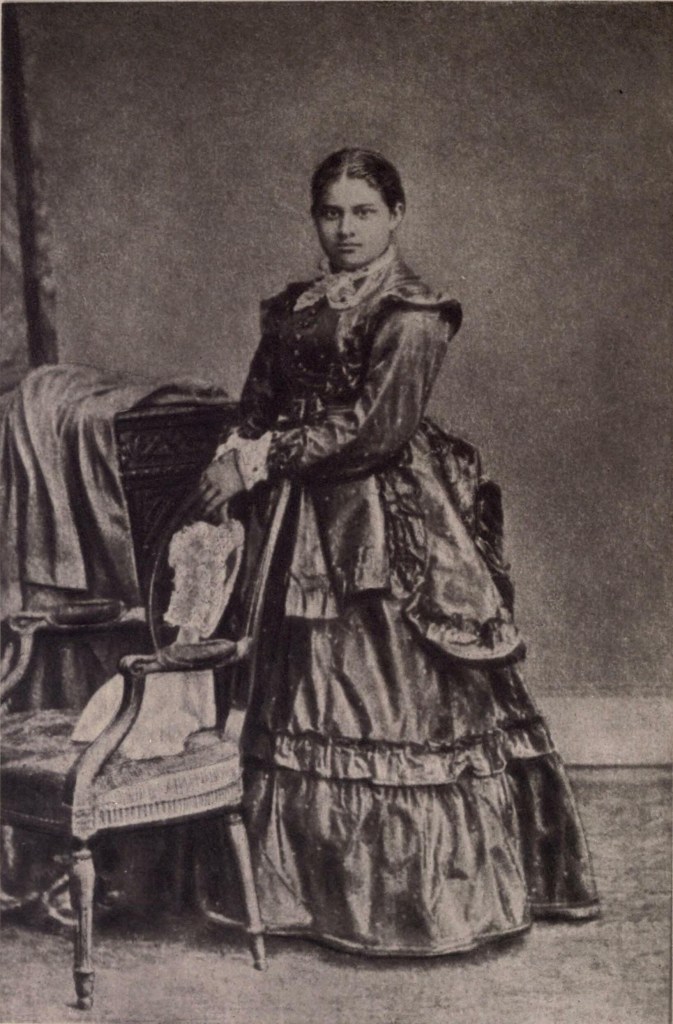
But what made me think of my semester abroad and Roy was doing some reading about Toru Dutt (তরু দত্ত )(1856-1877), considered among the first Indian writers in English and the first woman writer, and therefore a literary ancestor of Roy and the many popular contemporary Indian writers working primarily in English. While the briefness of her life and the slenderness of her surviving output has cast Dutt into the shadows of many late Victorian authors, her place in the history of modern Indian letters is worth preserving and restoring. So I thought this week we’d take a look at Dutt and her writing, both of which have been largely forgotten outside of India.
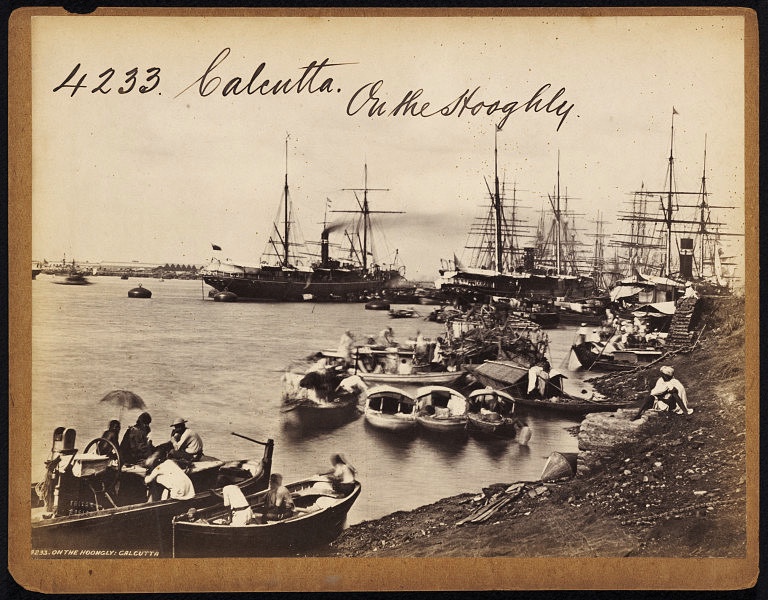
Toru Dutt was born in Kolkata (then Calcutta) in 1856 to a prominent Bengali family of civil servants. Several of Dutt’s male relatives held high positions within the English colonial government, which in part explains the family’s affinity for the ruling Anglo culture and European culture more broadly (much like the family in TGoST). The Dutts were among the first Kolkata families to convert to Christianity, and several of Toru’s other relatives were pioneering Indian writers in English in a variety of disciplines. But coming from the rich literary traditions of Bengal, all of them, including Toru, saw themselves primarily as poets.
Toru was raised in this cross-cultural environment alongside her older brother, Abju, and her older sister, Aru. Taught by another Indian Christian as a tutor and their father, the Dutt children were given schooling comparable with an upper class European education of the 1860s: music, dancing, and languages. Toru’s father appears to have not hesitated to educate his daughters as much as his son, with the girls even becoming proficient horsewomen as well as scholars, activities that would have been less open to traditional Bengali women at the time. Although the youngest, Toru showed an early precocity for translation, the reigning passion of her family. Quickly fluent in English and French, by her early teens she would be translating poetry from both languages into her native Bengali at a high enough level for publication in Kolkata literary journals and newspapers. While French would become her most beloved language, even describing herself as a Frenchwoman in her letters, she was equally at home in English, supposedly being able to recite Paradise Lost in its entirety from memory.

Tragedy would strike the Dutts in 1865 when her brother would die of tuberculosis in his early teens (one of my sources says he was eleven, another says fourteen). Scholar E.J. Thompson has compared Toru Dutt to Emily Brontë, and while not to dint Dutt’s literary achievements, once you know that (spoilers) all the Dutt children died young of TB, one gets the impression that statement is more about their ends than their writing. Either way, their father, Govin, perhaps understanding that tuberculosis often spread quickly through families, decided to relocate them to Europe in 1869; perhaps hoping the change of air would protect his daughters, who were already starting to show signs of the delicate health that had taken Abju. Again, it is a testament to the Dutts’ economic and social position that such a course was even available to them.
While not undertaken exactly in the spirit of the typical European Continental tour, that is what it would ultimately become for Toru and Aru, who, along with their mother, not only became some of the earliest Bengali women to travel to Europe, but afforded the sisters the opportunity to become some of the earliest women of any ethnicity to be permitted a truly scholastic tour on par with the young men of the era. Over the next four years, the Dutts would live first in France, then England, while taking the usual trips to see Italy and Germany. During the year the family resided in France, they divided their time between Nice and Paris while Toru and Aru studied French in a traditional girls’ boarding school. Although the family would spend less time overall in France as compared to England, this year clearly had a deep influence on Toru. She became deeply interested in the turbulent (aren’t they always?) politics in France at the time, as well as a passionate lover of French literature, particularly of Victor Hugo. Although already a literary celebrity in his own time, Toru presciently recognized Hugo’s destiny to be ranked among what she denoted as “the Valhalla of poets” (A Sheaf Gleaned in a French Field, n. xxxii) alongside Shakespeare, Milton, Byron, and Goethe—a place contemporary critics would have no trouble placing him.
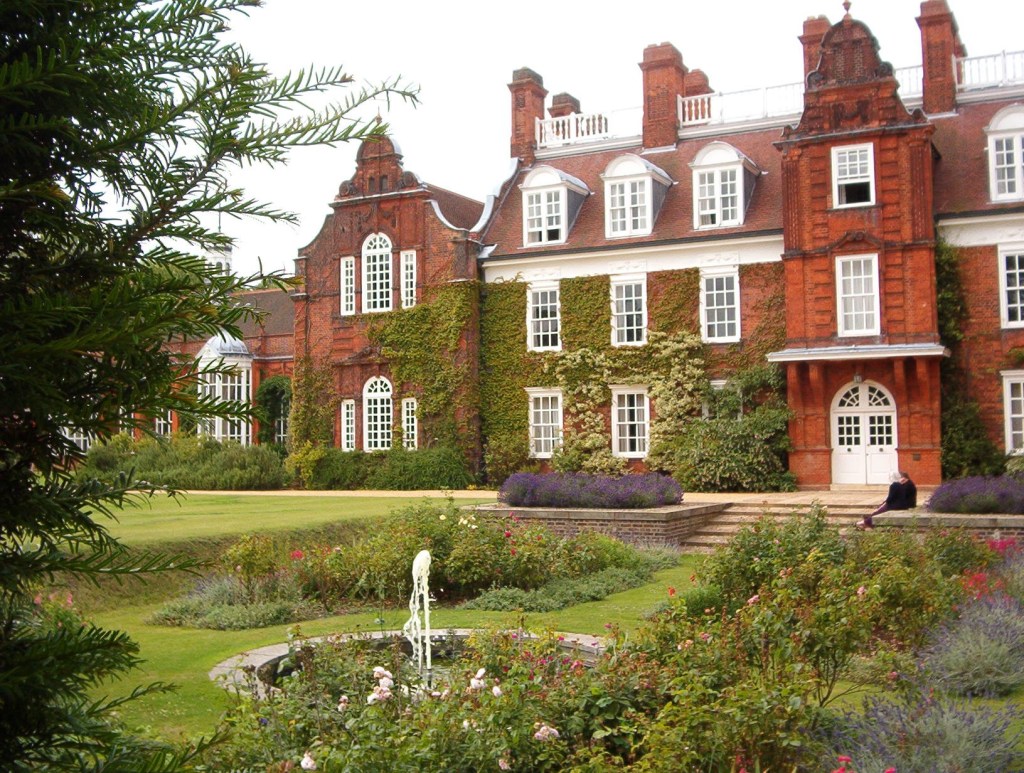
The final three years of their stay in Europe would be in England, where the family would first live in London for a year, before finally settling in Cambridge so the girls could attend lectures at the university. Cambridge did not offer degrees to women in the 1870s, but the university hosted a variety of lecture series aimed at a female audience that would evolve into Newnham College, a constituent institution within the university for women, during the years the Dutts were attending. Neither sister matriculated under the college’s aegis, but the lecture curriculum gave them access to a broader selection of academic subjects than even their relatively unusual home schooling had provided them. Nor does the family’s ethnicity seem to have seriously affected their experiences in either France or England. I’m not suggesting that they experienced some kind of colorblind utopia—this was, at best, the age of high Victorian racial paternalism—but the Dutts’ relative wealth and europhilia probably smoothed their way through a lot of overt racism they might have otherwise encountered. However generally positive the family found these four years, by 1873, it became clear that Aru’s health was only growing worse, and the family decided to return to India. They made it home to Kolkata together, but within a year, Aru was also dead of tuberculosis.
Left bereft by her sister’s death and reinserted into a city she hadn’t seen in four years, the now seventeen year old Toru had some difficulty readjusting to life in Kolkata. Even with comparatively permissive parents, she found the Bengali cultural expectations for a young woman of her class to be stifling after the relative freedom she’d enjoyed in Europe. Letters to friends she had made in the west complain about how little she was allowed to go out and elder relatives’ obsession with her marriage prospects. Some of this was likely true cultural differences between traditional upper class Bengali societal expectations and what passed for conservatism in France and England, but I also suspect that Toru’s parents might have begun to restrict her general previous freedoms as well. Both as a result of her maturing age (what is allowed a preteen is usually different than what is allowed a young woman of marriageable status), and perhaps out of fear of losing her like her siblings if she was out and about in crowded company.
But this is not to say that Toru was completely miserable upon her return to Kolkata. She began to seriously study Sanskrit with her father and quickly became an expert in this difficult ancient language, whose study was usually reserved for men (proving her father hadn’t completely changed his mind about her upbringing). In a letter to the French author Clarisse Bader after Toru’s death, Govin Dutt would describe how he and his daughter would sometimes make bets between themselves while debating the meaning of a word in translation, and even in Sanskrit, Toru was usually proven right eight out of ten times (introduction to the 1878 edition of Mlle. D’Arvers). She also read voraciously in all her languages, adding German to the mix, and, secretly, had begun writing her own compositions while working more openly on translation projects. In March 1876, she published A Sheaf Gleaned in French Fields, a volume of poetry translated from French into English, many of them by Hugo and Alphonse de Lamartine (1790-1869), with a single original poem written by her (“A Mon Père”). Sheaf was in some ways a posthumous tribute to Aru, whose own translations of eight poems were included by her sister.
Despite a limited release by a local Bengali press, Sheaf managed to gather a few minor accolades in French and English newspapers, but by then Toru’s health was already in serious decline. While hopeful to continue expanding her original writing, as she expressed to Clarisse Bader in a correspondence the two had begun after Sheaf’s appearance in France, she was probably aware this was not likely to happen. She died, like her siblings, of tuberculosis in August of 1877. She was twenty-one years old.
After Toru’s death, her father discovered her unpublished original work, consisting of two novellas and one poetry collection. Only one of the novellas, The Diary of Mademoiselle D’Arvers, was completed, while the other, Bianca, or the Spanish Maiden, and the poetry collection, Ancient Ballads and Legends of Hindustan, were left in various states of execution. Displaying her linguistic virtuosity, D’Arvers was written in French, while Ballads and Bianca were written in English, the latter widely held to be the first novel written in English by an Indian woman. While their incompleteness explains why Toru had not spoken of Bianca or the poems, no one knows why she never mention D’Arvers. G.J.V. Prasad speculates in his introduction to the 2005 Penguin English edition of the novel that perhaps its European culture and moral setting made Toru hesitant to publish it in her more conservative Bengali milieu (introduction, xvi-xvii). That is certainly possible, but because we don’t know exactly when any of her unpublished works were written, it could simply be that she was still toying with the manuscript.
Because D’Arvers and Bianca are both novels with European settings in European languages, Prasad again suggests it is a result of Toru unable to envision a European-style novel about heroines experiencing love in the western cultural context set in the India of her times (xvi), where that kind of freedom would be alien to most Indian girls. While Bader and the English literary critic Edmund Gosse often slip into a tedious cultural paternalism in their attempts to praise Toru in their respective introductions to D’Arvers and Ballads (“Oh, look at this exceptional Hindu girl! What a light to her race!”, etc), one thing they both are correct about is while Toru’s command of her novel’s subjects and settings is very good, there are also many subtle, interesting tells in her writing that reveal her as an Indian writing about European characters. Both note—and I spotted it, too—that Toru talks especially about her male characters in a particularly Indian way: handsome men are revealed by their pale complexions (not favored in the west for men, but denoting high caste in India); dark, liquid eyes; and black hair (and often) mustaches. It’s not something you might notice by itself, but I happen to be working my way through the unabridged Mahabharata and the way the epic and Dutt describe men is almost identical. In fact, the lack of non-“dark” eyes (aka blue) as a sign of beauty across the board is noteworthy for a 19th century European novel. In D’Arvers, there’s only one blonde girl, and while she seems generally nice in a high-spirited fin de siècle French way, I haven’t seen an author telegraph her dislike for a blonde this hard since E.L. James. Another thing I noticed was that Mlle. D’Arvers’s great aunt gives her elaborate, expensive gold bracelets as a wedding gift; that wouldn’t be crazy for a European bride, though a necklace feels more likely for the time, but it would be exactly the gift I’d expect for a Bengali bride. None of these examples are huge, immersion-destroying details—I just found them interesting when I was clued in to watch for them. And I’m not faulting Toru for this, by the way. All authors carry their cultural perspective into their writing, and I’m sure there are dozens of tells in my novels that reveal very specifically that I’m an American, whatever my intentions to the contrary.

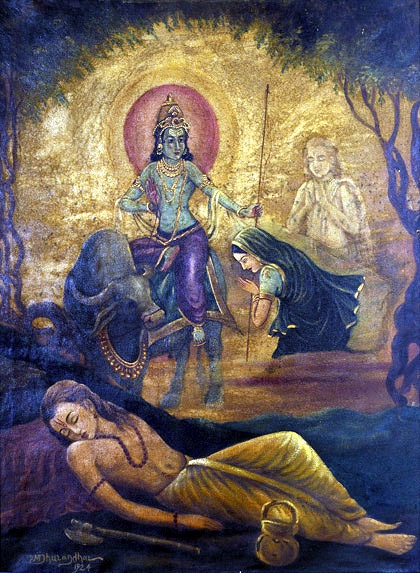
Both D’Arvers and Bianca (even in its unfinished form) are interesting from a historical perspective, though neither is especially groundbreaking in terms of plot or characterization (like many of the contemporary European novels they’re imitating, to be frank). Bianca shows some grappling with the complex relationship between fathers and daughters, and D’Arvers grows some teeth if you view it through the lens of a commentary on how little concrete agency even European women had during this period; though particularly with the latter, I’m not sure that was the authorial intent. What I found most intriguing about Toru’s posthumous writing was her return to her own cultural roots in Ballads. Not because Hindu legends are more “appropriate” or “authentic” for Dutt, but because tapping into those stories takes the focus off her relationship with her academic father and shines a light on her often neglected mother, Kshetramoni. Perhaps contrary to expectations where women are seen as the arbiters of religiosity in the house, Kshetramoni Dutt was not the driving force behind her family’s conversion to Christianity around 1862 (when Toru was six). While she would ultimately convert just the same as the others, Toru’s mother is depicted as being the most reluctant to abandon her old faith, and it is through her that Toru and her siblings would learn these older stories from their native land. In Ballads, her poem ‘Sîta’ is just as much about the Dutt children watching the Ramayana heroine from between the leaves of their mother’s bedtime story weaving as it is about Sîta herself.
And while a manuscript chronology is merely conjecture, I think at least parts of Ballads represent her latest work because some of the verse contains her most evocative writing and points to a rapidly maturing artist whose best would have truly been yet to come in another timeline. There were multiple times in Ballads, particularly in her long-form poem ‘Savitri’ where her phrasing stopped me dead in my tracks. Telling me “peace is but a wandering fire”? Describing Savitri as having “a skeleton in her heart”? I mean, shut the front door. One of the few authors who can regularly spin phrases that enchant me on sight like that is Toru’s idol and mine, Victor Hugo. I can’t think of higher praise to give her than to say she managed more than once to pull the same magic carpet out from underneath my feet that he can.

 Sarah Holz
Leave a comment