Continuity, Change, and Collaboration: Post-Meiji Art and Printmaking in Japan
[Bunraku (F) (1961), Saito Kiyoshi (bunraku is a form of traditional Japanese puppet theatre]
I love Japanese art and culture, but I usually don’t spend a lot of time saying so in public because that statement generally elicits presupposed knowledge about anime or J-Pop, of which I am a dilettante (the former) or almost completely ignorant (the latter). No, most of you who have been playing the home game on this blog will have probably figured out that it wouldn’t be like me to have “normal” Japanese cultural interests. A lot of my interests are, predictably, literary: the Heian era women diarists and poets; mid-century male writers like Osamu Dazai and Tanizaki Jun’ichiro; and some of the contemporary female authors like Kawakami Hiromi. But I also love Japanese visual art of almost any era, especially, again, from the Heian period (8th-12th century CE) or the golden age of ukiyo-e (浮世絵) woodblock printing (17th-19th century CE).
Ukiyo-e (“pictures of the floating world”) is generally what one, particularly in the West, thinks of when someone says “Japanese art.” Colored woodblock prints either of nature (fukeiga) or beautiful women (bijin-ga), along with several other standard themes, made in a collaborative system between artists, carvers, printers, and publishers known as hanmoto. We outside of Japan tend to only focus on the artists, like Utagawa Hiroshige (1797-1858) or Katsushika Hokusai (1760-1849), but in the hanmoto system, master woodblock carvers and printers where seen as just as important, with their skills passed down through their families for generations. The opening up of Japan to trade and global culture during the Meiji period (1868-1912 CE) would see ukiyo-e exported to the West, and it would have a profound effect on fin de siècle Western art, especially among the Impressionists, post-Impressionists, and the school of Art Noveau.
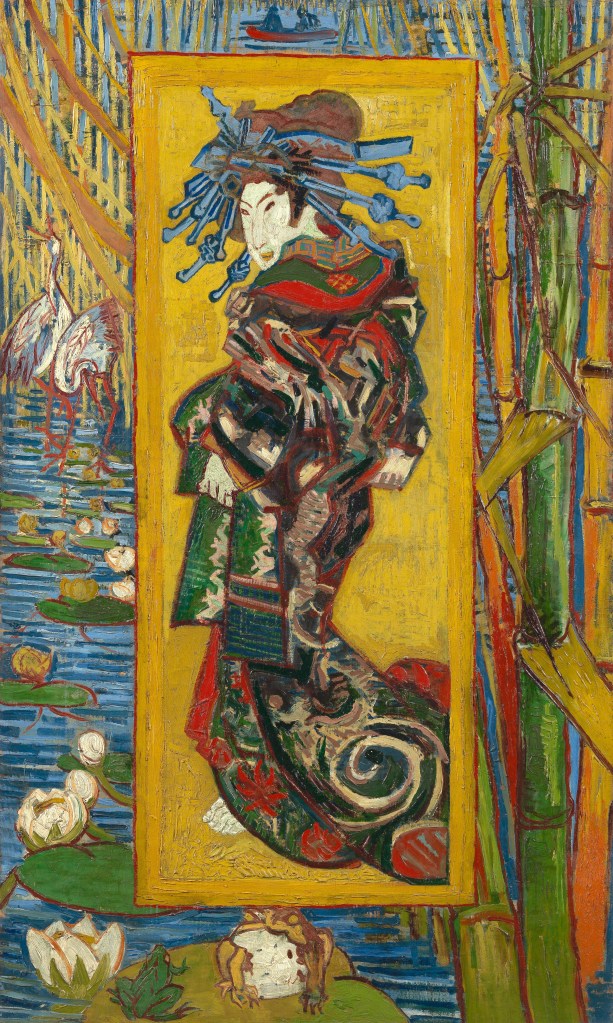
[Vincent Van Gogh loved working in the resulting school of Japonisme, especially early in his career (this is his painting Courtesan from 1887). Other artists like Henri de Toulouse-Lautrec were influenced more by ukiyo-e’s use of color and depictions of city nightlife.]
However fruitful this art exchange might have been for the West, contact with Europe and the United States would ultimately lead to the decline of traditional ways like the hanmoto system in favor of western industrialism in Japan. Emperor Meiji and those in his inner circle pushed for what was perceived as modernization for the country, and this led to many adopting western dress and mechanization. Traditional arts like ukiyo-e were seen as outmoded and it became more difficult for artists to continue using these more labor-intensive techniques without broader cultural support. The shuttering and reorientation of many of the big print publishers during this time was compounded by the deaths of most of the golden age artists, which also led to a general decline in artistic quality that did nothing to bolster ukiyo-e’s popularity.
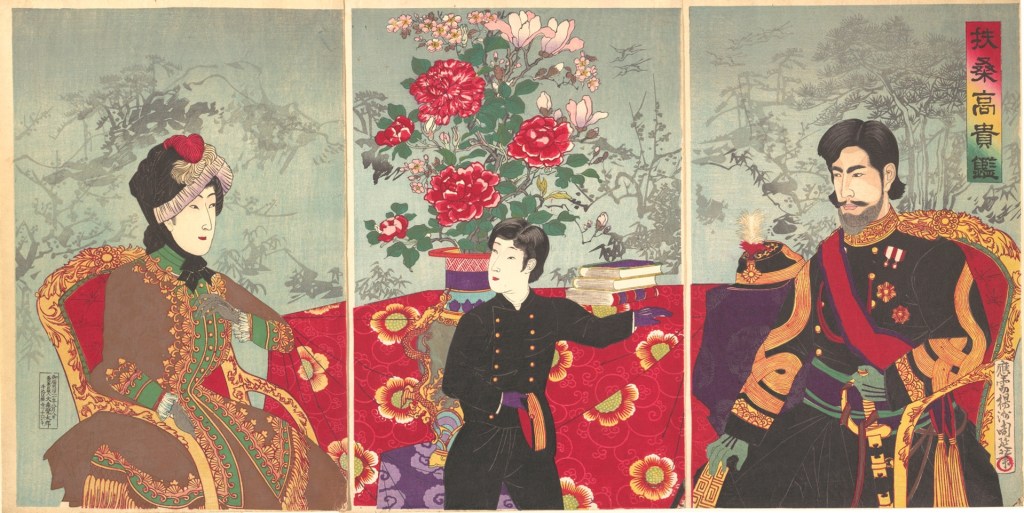
[But this situation also means you get some neat late ukiyo-e prints of “westernized” Japanese, like here in Toyohara Chikanobu’s Mirror of the Japanese Nobility (1887)]
Left with fewer masters in the crafts to train the younger generations, Japanese artists and artisans were left to design a new place for themselves in a rapidly changing world. With ukiyo-e largely pushed out in Japan in favor of Western-style art (particularly yōga, oil paintings) at the start of the 20th century, there still remained a hungry market for Japanese art outside of the empire. This led to the creation of two parallel movements within the Japanese art scene to fill that commercial space: shin-hanga (新版画), or “new prints,” and sōsaku-hanga (創作版画), or “creative prints.” Shin-hanga was a revival of ukiyo-e and the hanmoto system, relying on the traditional techniques and labor divisions of the old woodblock prints, although with some artistic influences from the West, often fostered within artistic families. Conversely, sōsaku-hanga was basically western Japonisme in reverse—individual Japanese artists creating works using both western and eastern techniques and subjects, with the focus on personal self-expression.
With its emphasis on catering to Western audiences’ interests in “Old World” Japan, it was perhaps inevitable that shin-hanga would largely be eclipsed by sōsaku-hanga after World War II. It remains a niche school with a handful of dedicated artistic co-ops today, as well as a lively presence on the contemporary international art scene, but much of post-war Japanese art falls into sōsaku-hanga, which only gained in popularity during the Allied occupation and as Japan re-emerged as a major player on the global economic stage.
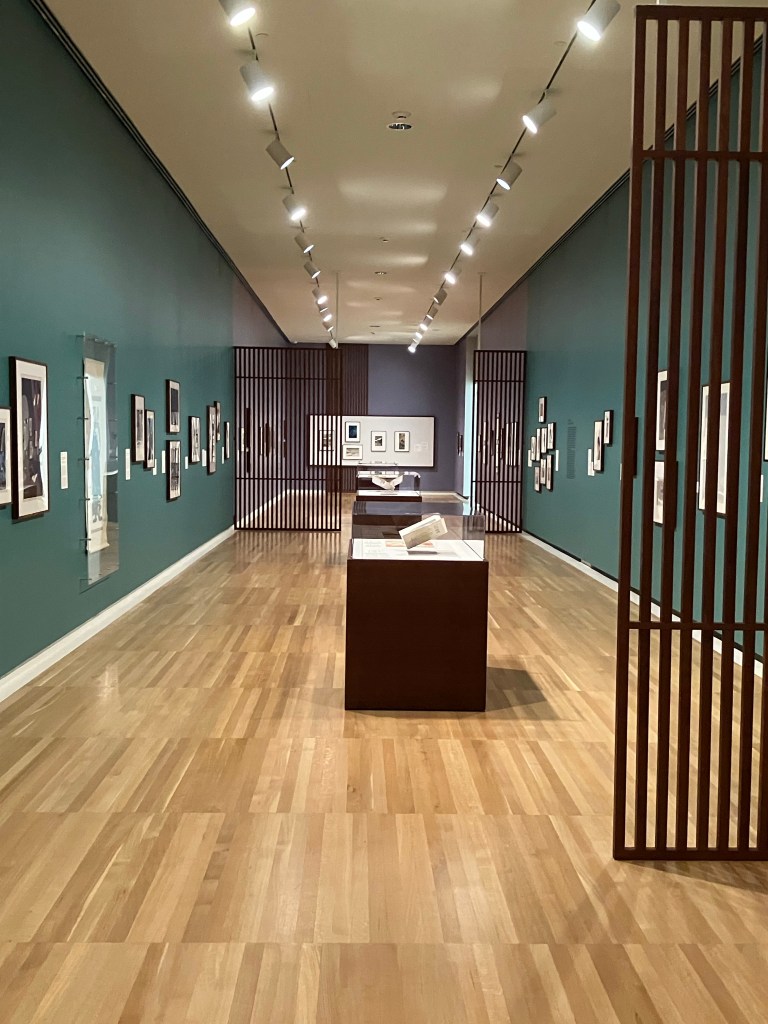
Anyway, what led me to talking and thinking about this is a current exhibition running at the CMOA from the museum’s collection of shin-hanga and sōsaku-hanga art. CMOA has, as I understand it, a mammoth collection of Japanese prints—the culmination of large bequests from several wealthy donors, but these are mostly stored in the museum’s archives and not on permanent display. However, every few years, the staff pulls some of them out of mothballs for our enjoyment. The previous most recent exhibition I can remember was from a few years ago centered on Hiroshige (which was, of course, amazing), but this was the first time I’d seen CMOA focusing on later Japanese art in any systematic way, so that is very exciting. The collection is large enough that the museum is actually doing the exhibition in a rotation, with the first grouping (the current one) on display in the Scaife Gallery One exhibition hall until October 14th of this year, with a second display going up then until early February of next year, after which the third display will be up until mid-May 2024. This room of the Scaife Gallery isn’t the largest exhibition gallery in the museum, but it is still enough space for each rotation to show off a large number of pieces and even when I went on a random Thursday morning, there were a lot of museum goers excitedly engaged with the material.
[CMOA’s Imprinting in Their Time: Japanese Printmakers, 1912–2022 (summer edition)]
So for the rest of the post, I just want to highlight some of the pieces that caught my eye in the summer rotation as I walked through (yes, this is going to devolve into another picture entry). I’ll talk a little about the pieces themselves, and try to show how they fit into both Japanese and non-Japanese art history. But most importantly, like as in my post about Egyptian art, maybe challenge you a little on what Japanese art is and what it looks like. Allons-y!
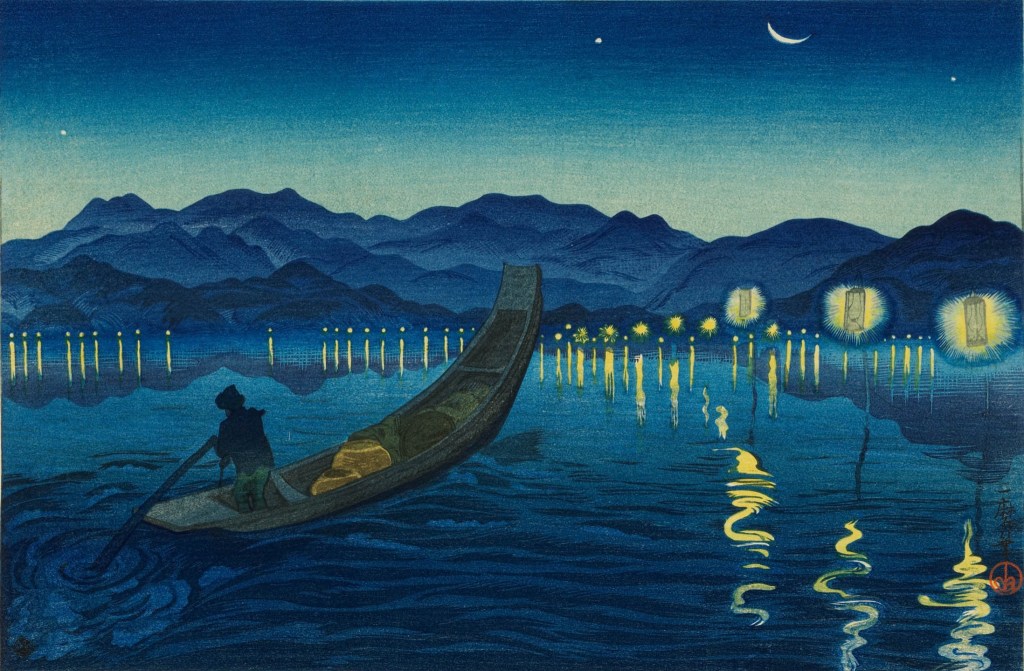
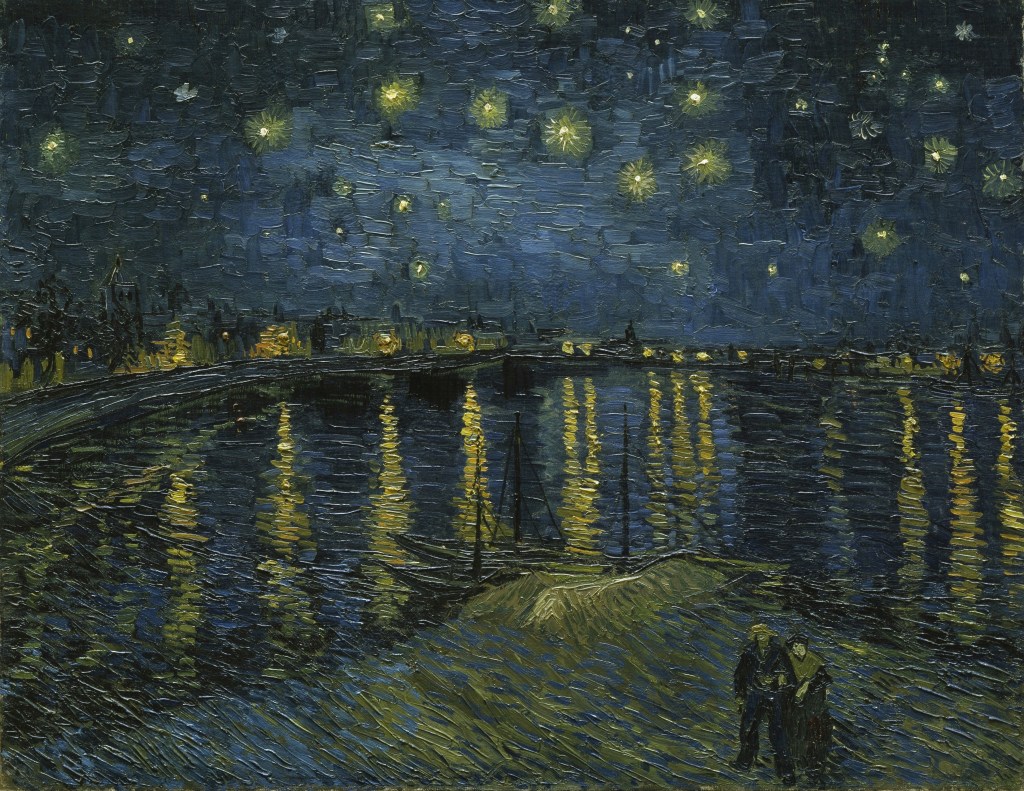
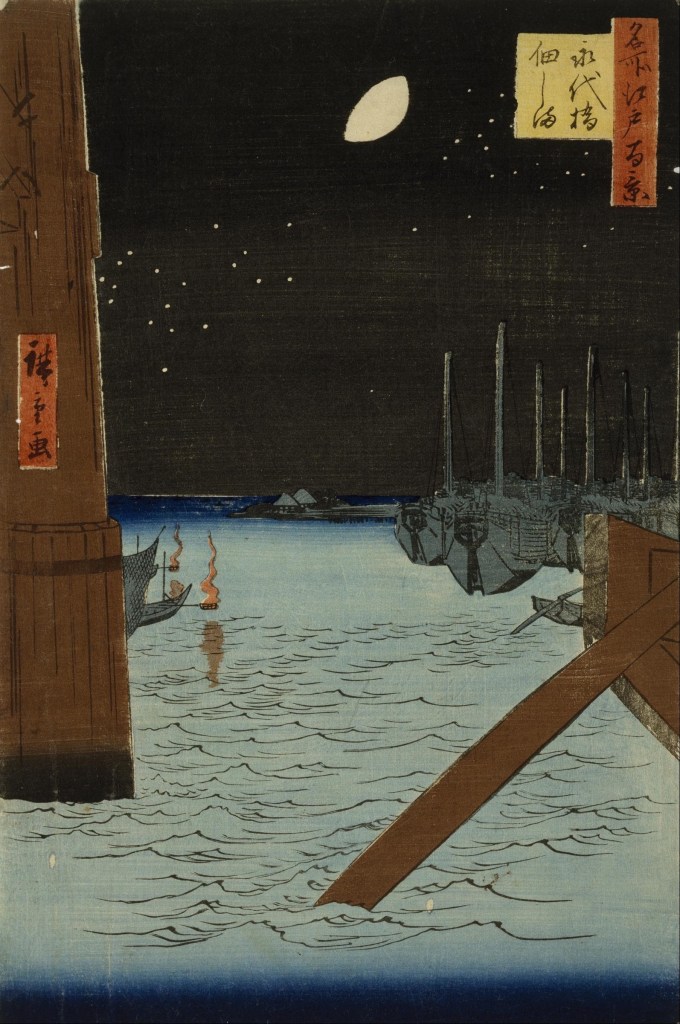
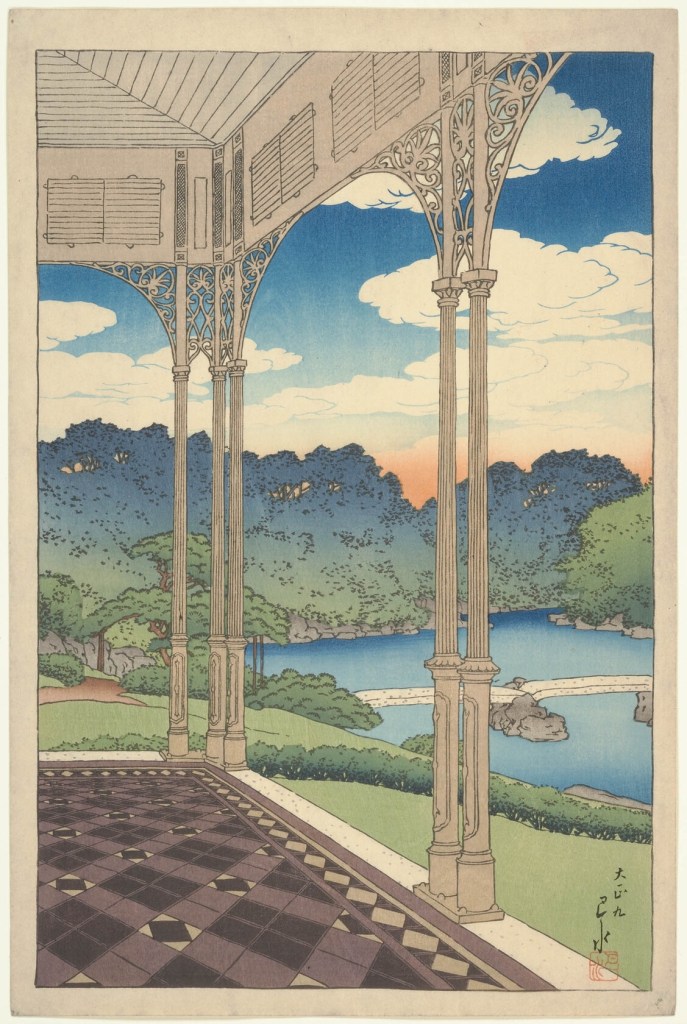
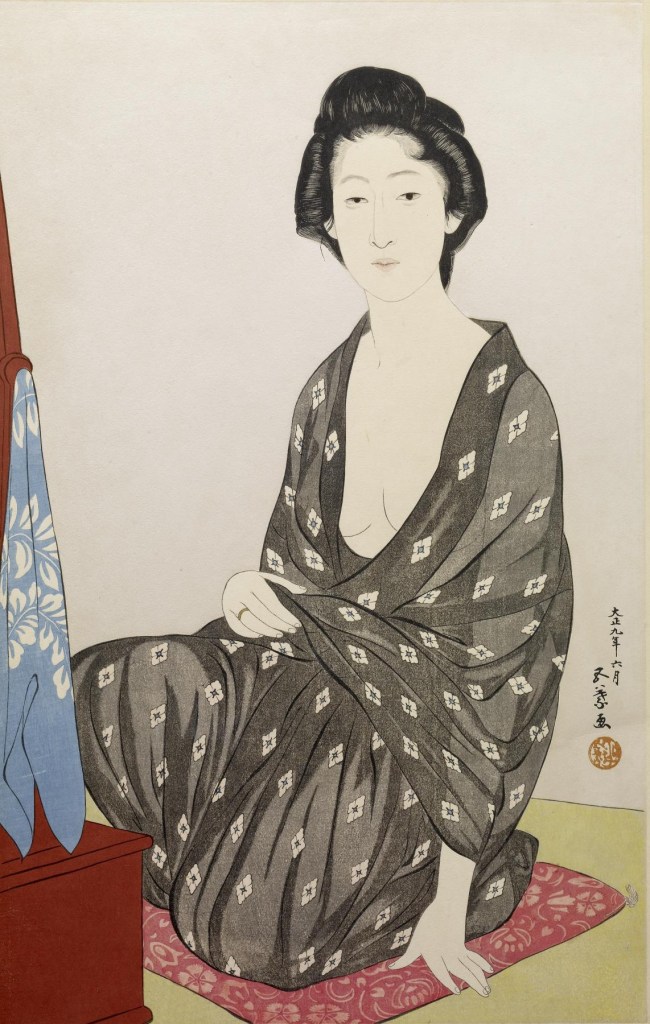
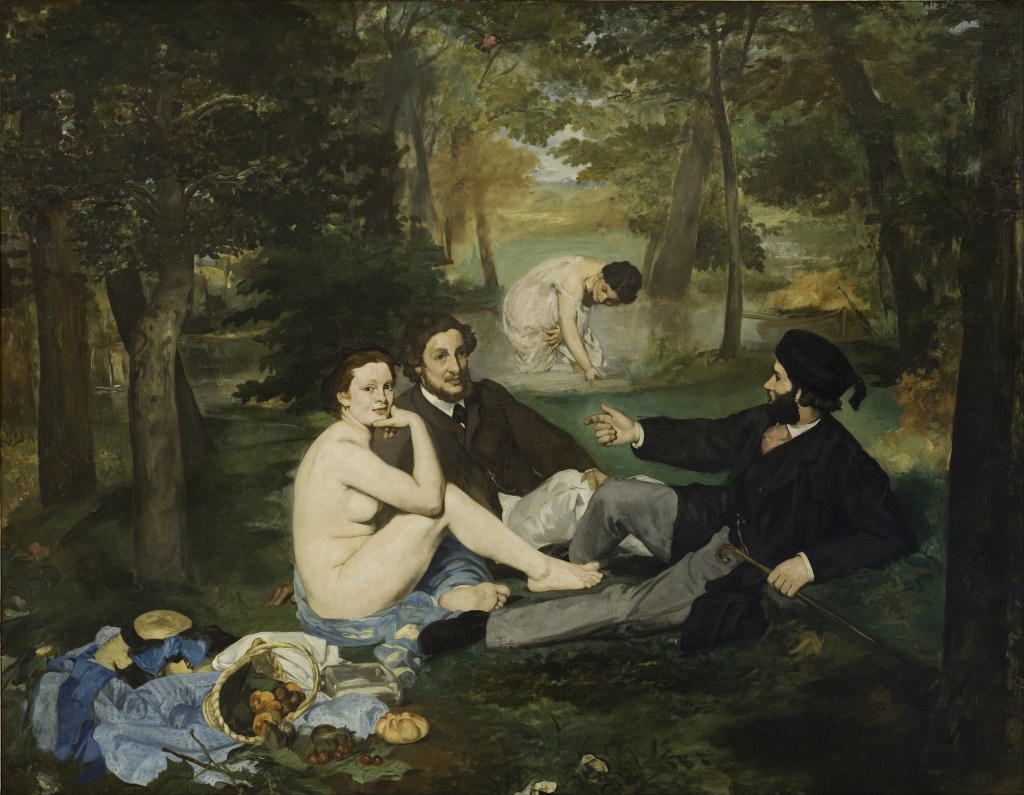
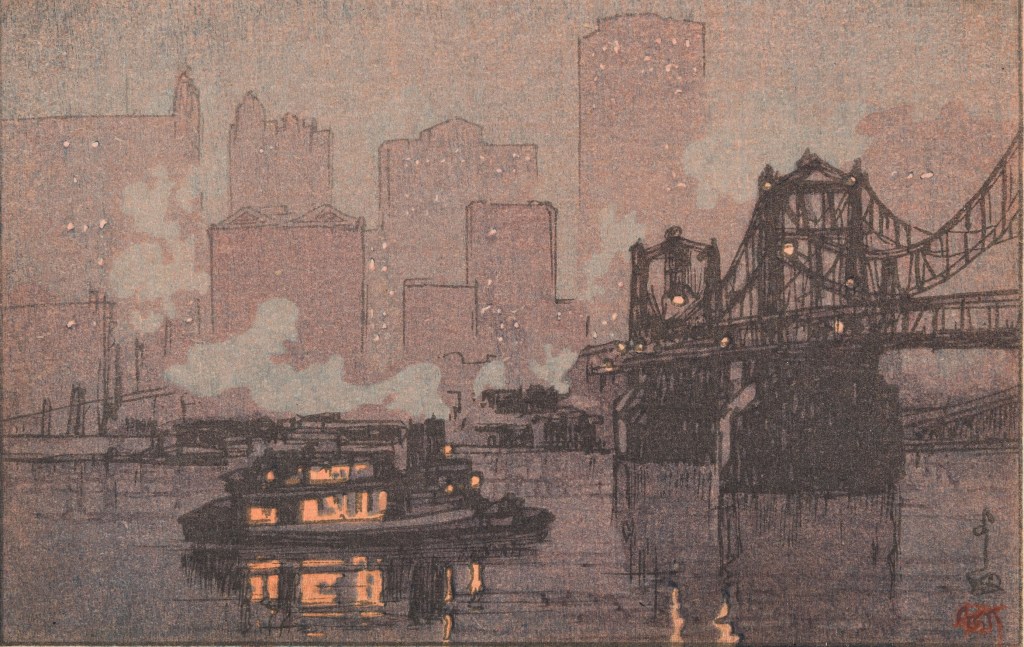
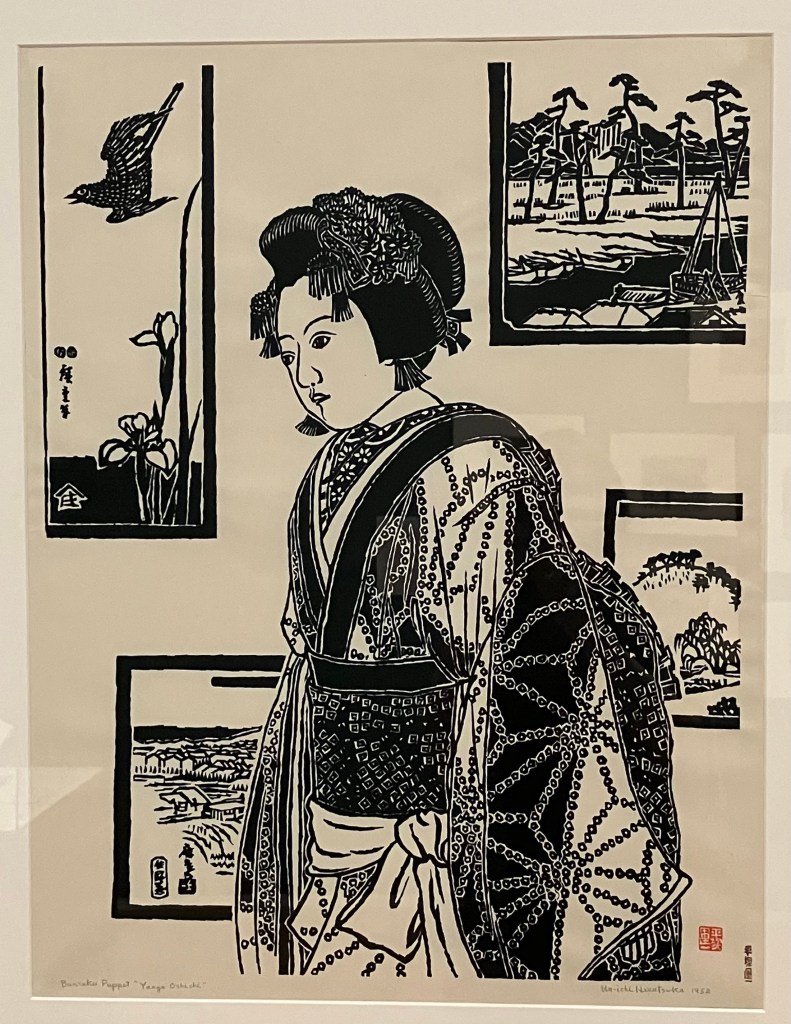
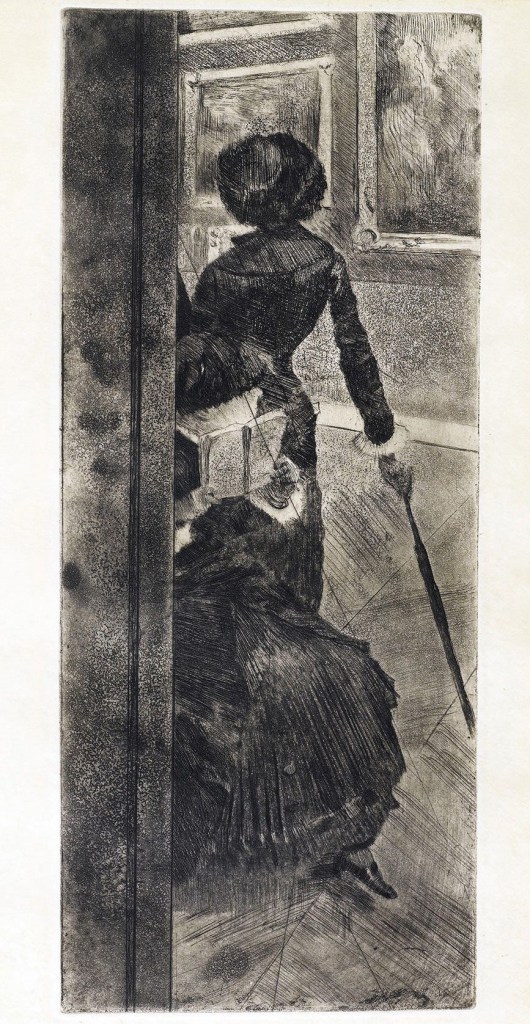
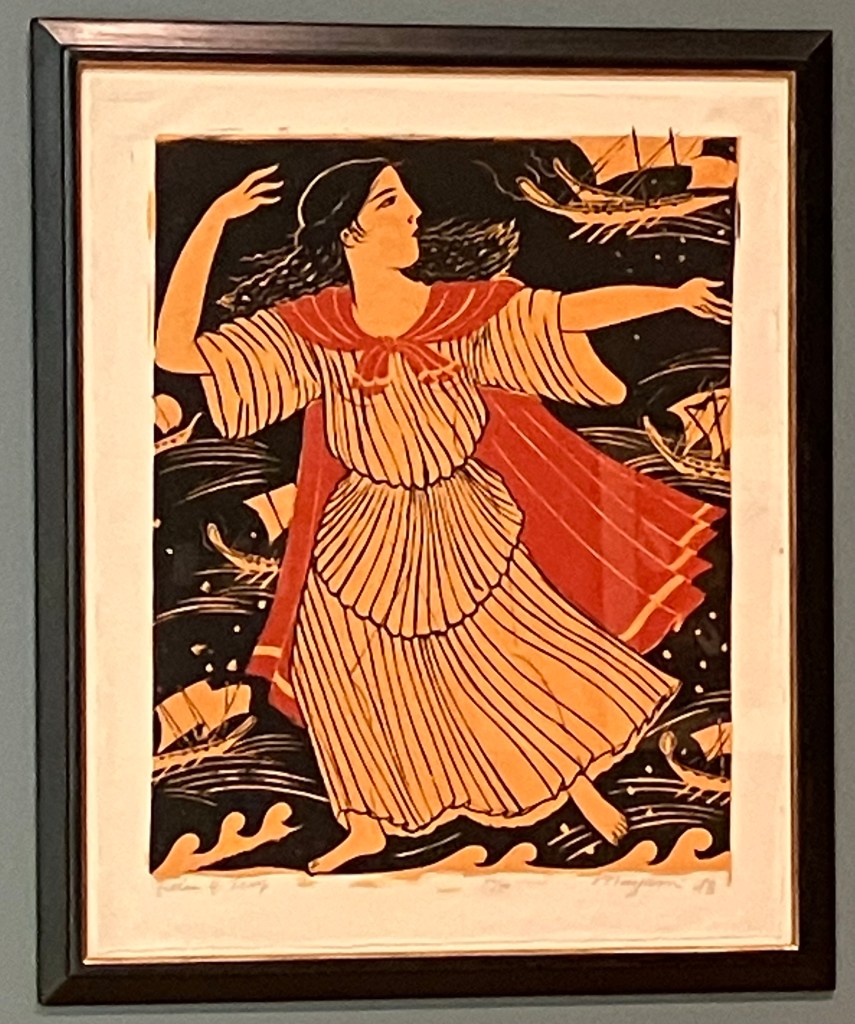
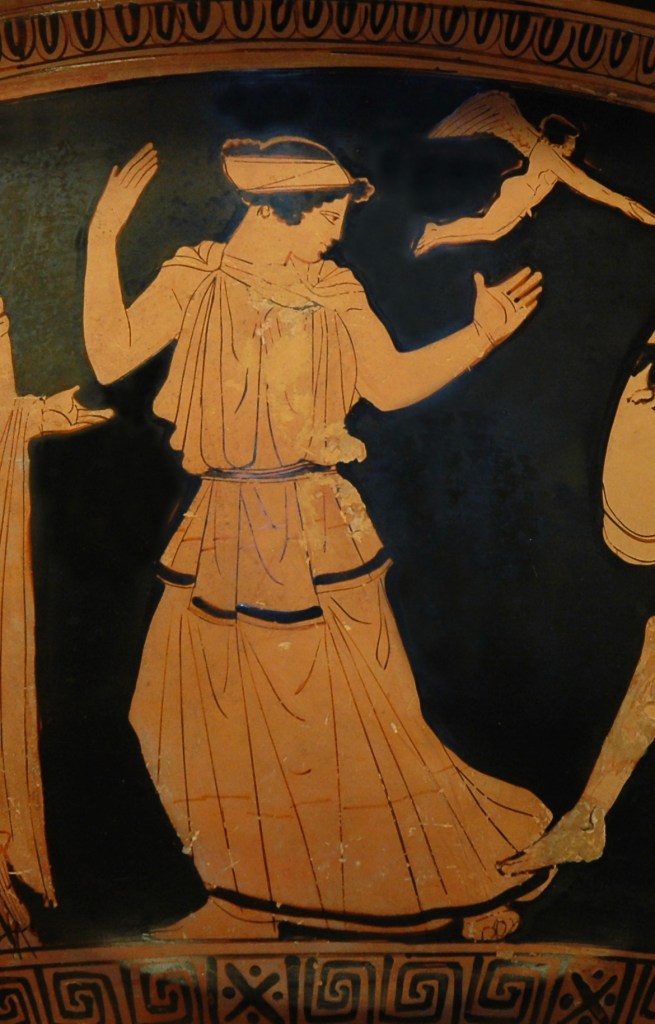
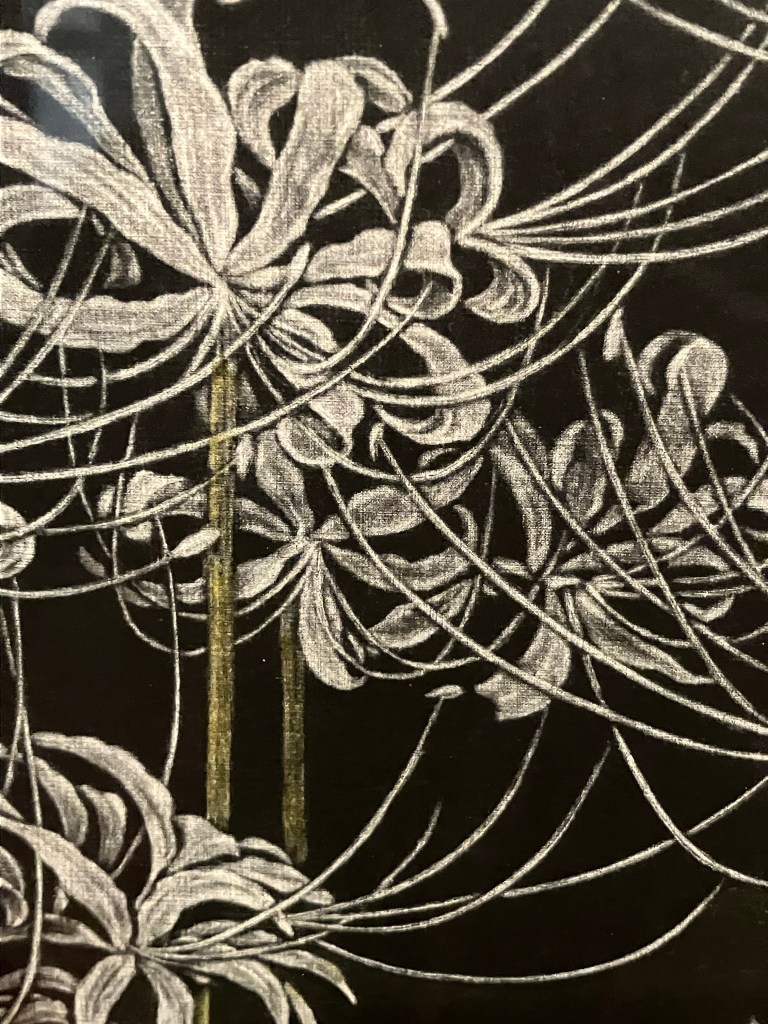
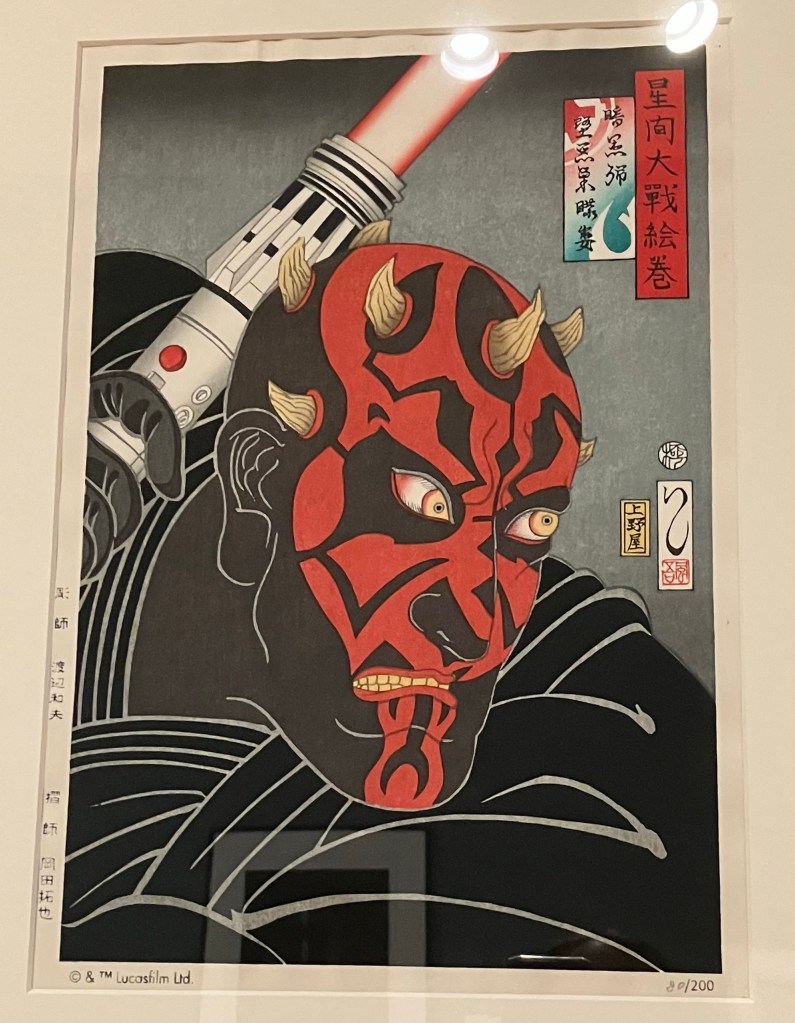
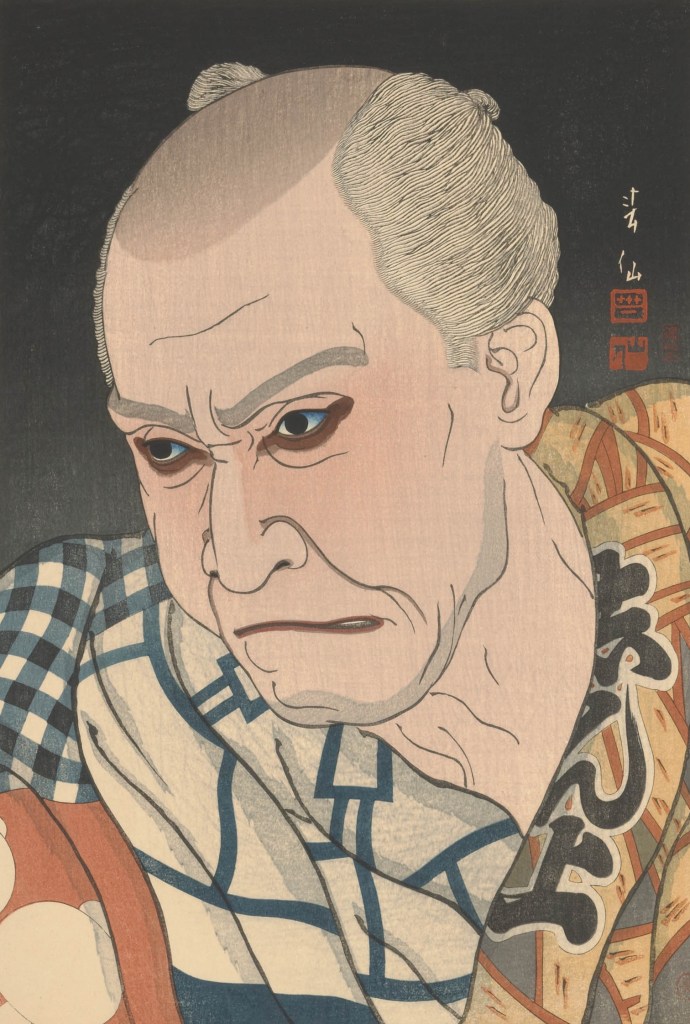
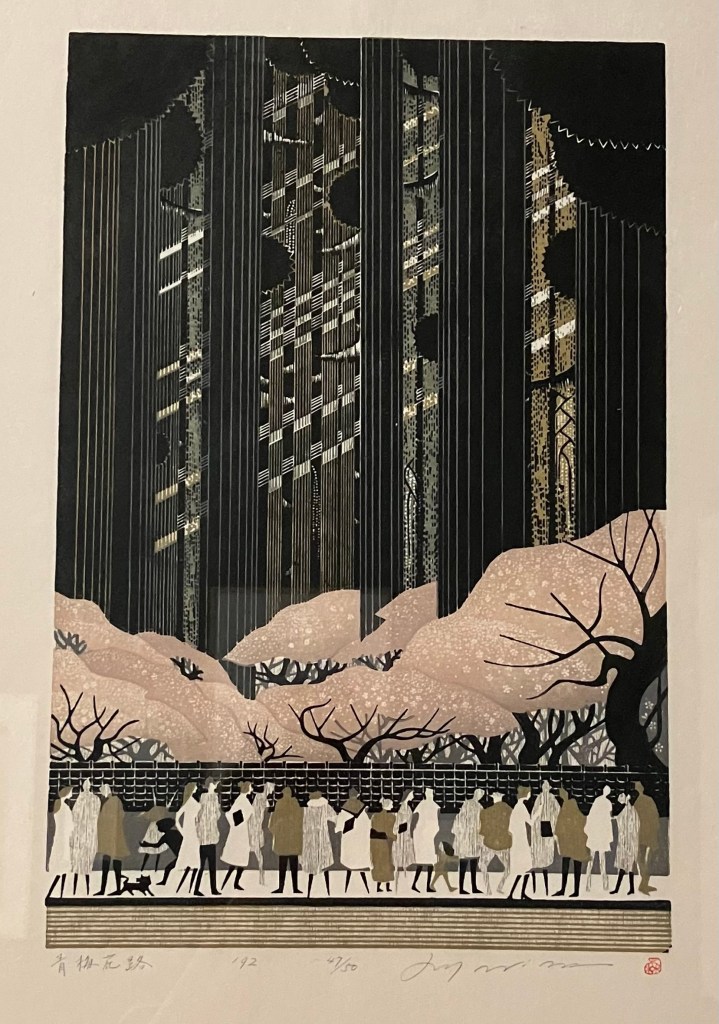
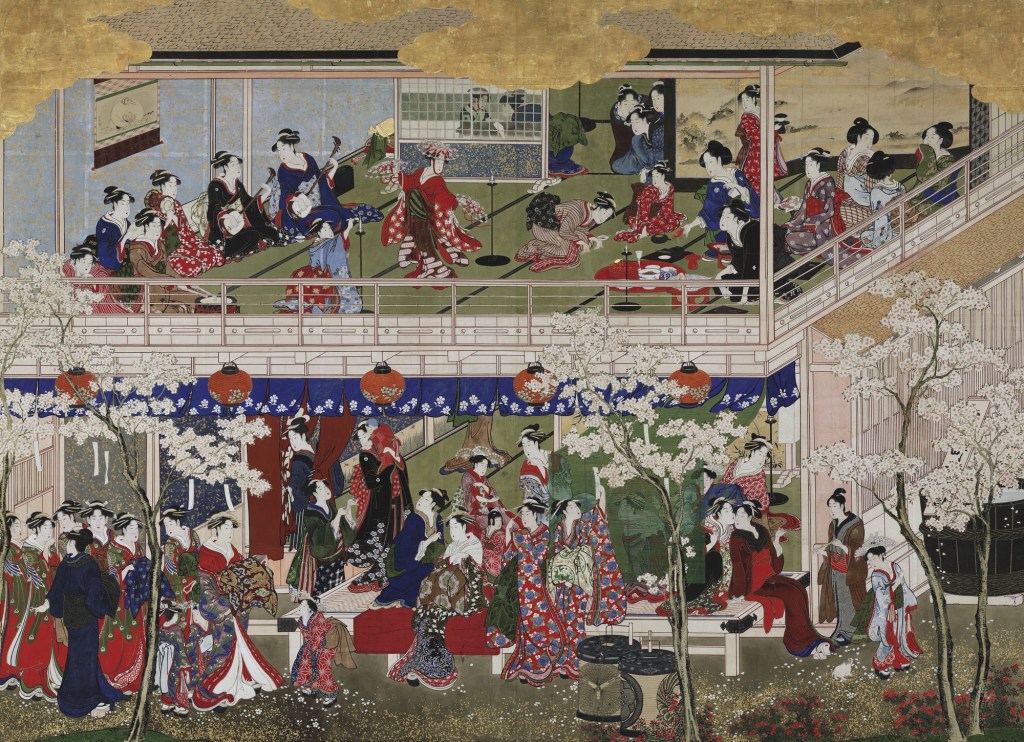
[Catching Whitebait at Nakaumi, Izumo (Izumo nakaumi shirauo tori) (1924), Oda Kazuma; Watanabe Shozaburo, publisher. As you’ve probably guessed from this print’s traditional subject matter and by having a publisher credited, Oda Kazuma is working in the shin-hanga school. This is a good example of how shin-hanga is somewhat different from ukiyo-e, though, as you can see Oda playing with more western ideas of light and shading than perhaps more traditional techniques. Compare this print with Van Gogh’s Starry Night Over the Rhône (1888) below👇][See also how Oda’s work differs from this classic Hiroshige ukiyo-e depiction of boats at night? (Moon over Ships Moored at Tsukuda Island from Eitai Bridge)[The Garden Viewed from a Western Style Building (Vokan yari teien o nozamu) (1920), Kawase Hasui; Watanabe Shözaburo, publisher. Another Watanabe Shozaburo-published shin-hanga print, this one by Kawase Hasui, one of the most prolific artists of the movement. Here, we see a very ukiyo-e-like landscape, but with the modern twist of the presence of a western-style veranda, as opposed to a more classical Japanese vista with perhaps a pagoda.][Woman in a Summer Kimono (Natsui no onna) (1920), Hashiguchi Goyō. Here is a good example of how shin-hanga blended western influences with traditional ukiyo-e subjects, more specifically, with the bijin-ga women’s portraits. Compare this print to Torii Kiyonaga’s ukiyo-e print Bathhouse Women from the late 18th century, or Édouard Manet’s Le Déjeuner sur l’herbe (1862/3) below to see the mixture of techniques and influences👇][Bathhouse Women][Le Déjeuner sur l’herbe][Evening in Pittsburgh (Pittsubaagu no yu) (1928), Yoshida Hiroshi. The Yoshida family is an example of how artistic traditions are still often passed down genealogically in the Japanese arts. Arguably beginning with Yoshida Kasaburo (1861-1894), a ukiyo-e artist, Hiroshi (1876-1950) was both adopted into the family and married into it. He and his wife, Fujio (Kasaburo’s daughter) would carry the family through the shin-hanga era, and their sons and daughters-in-law continue to do likewise into the sōsaku-hanga era. An extensive traveler, Hiroshi is famous for his Japanese-style prints of non-Japanese landscapes. Here, understandably, CMOA is proud to display a print he made of downtown Pittsburgh. The bridge depicted here is an earlier version of the Seventh Street Bridge (the Andy Warhol Bridge), which was torn down shortly after Hiroshi’s visit and replaced with the current iconic yellow suspension bridge.][Bunraku Puppet “Vaoya Oshichi” (1952), Un’ichi Hiratsuka. With Un’ichi, we begin to move away from shin-hanga into sōsaku-hanga. He was a pioneer of making modern ukiyo-e prints in simple black and white—a style so copied by his students and adjacent Japanese artists, so quintessentially “Japanese,” that I assumed it was coming from an early established tradition. Almost recalling free-handed pen and ink drawings, Un’ichi was trying to give the plain white spaces of his woodblocks the same dynamism that the pre-Meiji artists used color for in their compositions. Degas does something similar in his black and white drawings of fellow artist Mary Cassatt walking the Louvre below👇][Mary Cassatt at the Louvre: The Paintings Gallery (1879-80), Edgar Degas][In a similar style of wood blocking, here are some bookplates by Nippon Zöshohyo Kyökai from the late 1930s][Helen of Troy (1978), Oda Mayumi. Here we have sōsaku-hanga taking on a thoroughly western subject, the mythological heroine Helen. Oda uses Japanese printing to mimic the red-figure pottery technique of ancient Greece. Compare her Helen to the Helen on the krater below from the 5th century BCE👇][Detail of Helen on an Attic krater, 5th century BCE][And compare Oda’s approach to ancient Greek art to Yoshida Hiroshi’s shin-hanga print, The Acropolis Ruins (1925)][Red Darkness – 1 (Les Ténèbres Vermillon/ Akai Yami) (1970), Kurosaki Akira. As you can see, by the 1960s and 70s, many Japanese artists had embraced western surrealism, but carried over the craftsmanship of ukiyo-e into new mediums. Kurosaki in particular was passionate about paper making, and used more modern printing techniques like silkscreen to enhance what woodblock could do, rather than simply discarding the older ways.][Manzyusyage (Flowers of Heaven) (2020), Hamanishi Katsunori. This is an example of mezzotint, a form of western engraving from the 17th century before lithography became the dominant printmaking technique. One makes small, roughening pits in a metal plate (usually copper), and those pits retain any pigments spread over the plate. This was one of the first ways to introduce texture to printed pictures, and the technique arrived in Japan during the Meiji period. Hamanishi is using it in sōsaku-hanga for a variation on a familiar ukiyo-e subject: the kachō-e, or “bird and flower” genre. Compare with a traditional print by Hokusai below👇][Peonies and Canary (c. 1834)][Detail from Manzyusyage, so you can see the texture of the flowers left by the mezzotint][Star Wars: Dark Lord Fallen Nest (2017), Ishikawa Masumi. Here, in perhaps a lighter vein, Ishikawa Masumi takes another traditional ukiyo-e subject, the kabuki actor portrait (yakusha-e), and adapts it to depict Stars Wars villain Darth Maul. Compare this sōsaku-hanga print to a yakusha-e-style shin-hanga print by Natori Shunsen from earlier in the exhibition and a traditional ukiyo-e print from Tōshūsai Sharaku below👇][The Actor Onoe Matsusuke IV as Koheii (1925), Natori Shunsen][Ōtani Oniji III in the Role of the Servant Edobei (1794), Tōshūsai Sharaku][Flower Viewing at Oume (1992), Morimura Ray. Lastly, I wanted to end on one more sōsaku-hanga take on a classic ukiyo-e subject: a flower viewing (hanami). Compare Morimura’s contemporary crowd milling about the abstract starkness of his painting to master golden age artist Kitagawa Utamaro’s chaotic composition on this theme from the late 17th century below👇][Yoshiwara no Hana (“Flowers in Yoshiwara”) (c. 1791/2)]
[…] art books. If you want a more thorough breakdown of this era of Japanese print art, check out my previous post, but below are just some of the new pieces that caught my […]
[…] two rotations, hence why I feel like I have less to say. If you want to catch up, those entries are here and here. But I did like this piece by Yamamura Toyonari (Kōka) (1885-1942), Dancing at the New […]







 Sarah Holz
Leave a comment